
Nepal e-Visa 2027 - How It Works, What It Costs, and Who Cannot Use It

You can get a Nepal tourist visa in two ways: online before you fly, which the Department of Immigration calls an Electronic Travel Authorisation (ETA) or eVisa, or at Tribhuvan International Airport when you land. The fees are the same either way: US$30 for 15 days, US$50 for 30 days and US$125 for 90 days. Visa on arrival has not been withdrawn. If you are trekking for 12 days or more, buy the 30-day visa. A tourist visa can be extended in Kathmandu or Pokhara for US$3 a day (minimum 15 days), up to 150 days in a calendar year.
Written by Shreejan Simkhada, CEO of The Everest Holiday, from a family of three generations of family guides. TAAN Member #1586. Last updated 4 October 2026. Every fee, rule and step below comes from the Department of Immigration's own website. Where its pages disagree with each other, I say so.
What does a Nepal tourist visa cost and allow?
| Item | What the Department of Immigration says |
|---|---|
| Fees | 15 days US$30, 30 days US$50, 90 days US$125, online or on arrival |
| When the days start | Your stay is counted from the day you enter Nepal |
| Extension | US$3 a day, minimum 15 days, at the Department in Kathmandu or the Pokhara office |
| Maximum stay | 150 days per visa year (1 January to 31 December), extensions included |
| Overstay fine | US$5 a day |
| Passport | Valid for at least 6 months before the date of travel |
| Refunds | A visa cannot be withdrawn once issued and the fee is not refundable |
Sources: the Department's visa fees page, eVisa page and visa information page.
Should I use the e-visa or visa on arrival?
Both give you the same tourist visa. The difference is where you do the work and how you pay.
| Online (ETA / eVisa) | On arrival at Kathmandu | |
|---|---|---|
| Where you apply | Department portal, before you fly | Online form before you fly, or the kiosk machines at the airport |
| Where you pay | Online in US dollars by card (Submission ID issued) | Bank counter at the airport, or online by card before you arrive |
| What you carry | Printed eVisa, per the Department's eVisa page | Online form, payment receipt and passport |
| Extra cost | Card gateway fee, see below | None stated for the counter; the same card fee applies if you pay online first |
| Best for | People who like admin finished before they leave | People whose dates may still move |
My own answer: if your dates are fixed and you want the payment out of the way, apply online. If your plans might move, or you simply do not want to think about it, use visa on arrival. The Department also suggests a third way for anyone who dislikes the airport queue: get the visa from a Nepali embassy or mission in your own country, which its FAQ gives as the alternative to waiting in line at Tribhuvan.
Carry some US dollars in cash whichever you choose. The Department says several payment modes are accepted at the airport bank counter and also advises carrying some cash. If a card is declined, the Department says a relative, friend or travel agent in Nepal can pay on your behalf.
How does the online application work and how early should I apply?
The Department's steps are short. You open the Department portal, enter your personal and passport details, upload a profile photo and a passport photo, choose 15, 30 or 90 days, review everything and pay. After payment you print or save your submission receipt with its barcode and show it at the immigration desk.
The card payment goes through the connectIPS gateway. The Department says it adds a convenience fee of 3.5 per cent or the Nepali rupee equivalent of one US dollar, whichever is higher. On that rule the fee works out at about US$1.05 on the 15-day visa, US$1.75 on the 30-day and US$4.38 on the 90-day (calculated from the published rule). Do not pay twice for the same Submission ID. If the page crashes, wait and check the payment status before trying again.
On timing, the Department publishes two clocks and does not explain how they fit. The printed submission receipt is valid for 15 days. A visa obtained online or from a mission must be used within six months of issue. It also warns that ETA verification may take longer than a visa-on-arrival form and publishes no turnaround time. My own reading is to apply in the last two to three weeks before you fly, so the receipt is still valid when you land and you still have time to fix a mistake. That is my judgement, not a Department rule.
Check your spam folder for the approval email, keep the Submission ID, and print everything. The Department's payment guide also says the visa sticker is issued only at the immigration desk and that you present your application form and payment receipt there. The eVisa page says to print the eVisa and carry it. The two lines do not match, so carry all three: the printed eVisa, the receipt and your passport.
What are the passport and photo requirements?
Your passport must be valid for at least six months before the date you travel, according to the eVisa page. For the online application the eVisa page asks for a scan of the passport and a recent passport photo on a white background. For a visa extension it says to bring your passport and a recent passport-size photo.
The Department's pages do not say whether you need a printed photo at the airport immigration desk. Put one spare passport-size photo in your document folder. It costs nothing to carry.
Which nationalities cannot get a visa on arrival?
The Department lists twelve countries whose citizens cannot get a visa on arrival and must apply in advance through a Nepali embassy or the online mission portal: Nigeria, Ghana, Zimbabwe, Swaziland (now called Eswatini), Cameroon, Somalia, Liberia, Ethiopia, Iraq, Palestine, Afghanistan and Syria. All other passport holders may get a visa on arrival at Tribhuvan International Airport and other designated entry points.
Some published lists include Iran as well. The Department's page does not, so I have used the Department's list. If you hold an Iranian passport, check with your nearest Nepali embassy before you book flights. The Department does not publish a processing time for mission visas, so start as early as you can.
Who gets a free visa?
| Group | What the Department says |
|---|---|
| Indian citizens | No visa needed |
| Children under 10 | No fee. The eVisa page says all nationalities except US citizens, up to 30 days, with normal fees for a 90-day visa. The visa information page and the FAQ give no US exception, so US families should confirm before travel. |
| SAARC citizens (except Afghanistan) | Free for up to 30 days, once per visa year |
| Chinese nationals | Free tourist visa, up to 150 days per visa year |
| Non-Resident Nepali card holders | Free |
Free-visa applicants still complete the online application, according to the Department.
US citizens also have a separate reciprocity visa on the Department's fee page: US$160, valid five years, with 180 days of stay per year, and it asks for a bank statement of at least US$10,000, a health insurance certificate and a police report. The same page lists the ordinary tourist visa for all foreigners, and nothing there says a US trekker must take the reciprocity visa. I have left it out of the planning below.
Is the Nepal tourist visa multiple entry?
The Department's eVisa page labels the 15, 30 and 90-day tourist visas as multiple entry, and its FAQ says every visa issued at an entry point, Tribhuvan included, is a tourist visa with multiple-entry facility. The fee page, however, lists an extra "+US$25 multi re-entry" line beside the extension fees, and the portal has an upgrade service for single or multiple re-entry. The pages do not explain the difference.
If you plan to leave Nepal and come back on the same visa, for example a side trip to India or Bhutan, ask the immigration officer to confirm your visa allows re-entry before you pay for anything extra. I would not assume either answer.
How many days do I need on my visa?
Your stay counts from the day you enter, and I would count the day you land as day one. The Department does not say how the entry day is counted, so I take the cautious reading. These are the trek lengths from our own itineraries. They are the days in each itinerary, not your arrival day in Kathmandu or any days you add before or after it.
| Trek (our itinerary) | Itinerary days | 15-day visa | 30-day visa |
|---|---|---|---|
| Ghorepani Poon Hill | 6 | Fits | Comfortable |
| Upper Mustang | 10 | Tight | Comfortable |
| Everest Base Camp | 12 | Tight, one delayed Lukla flight uses your spare days | Comfortable |
| Manaslu Circuit | 12 | Tight | Comfortable |
| Everest Three Passes | 17 | Does not fit | Comfortable |
The verdict columns are my judgement from the day counts. The 30-day visa costs US$20 more than the 15-day, and for any trek of 10 days or more I would pay it. If you are combining a trek with a long stay, the 90-day visa at US$125 is cheaper than extending (see the next section).
How do I extend my Nepal visa?
Tourist visas can be extended inside Nepal at the Department of Immigration at Kalikasthan in Kathmandu or at the Immigration Office in Pokhara. The Department says the fee is US$3 a day with a minimum of 15 days, and the total stay cannot go beyond 150 days in the visa year. Bring your passport and a recent passport-size photo. Its FAQ says Pokhara does not issue visas on arrival but does renew tourist visas.
The portal also lists an online "Visa Extension" service. Check with the Department what it asks for and whether you must still attend in person. The Department's published office hours are Monday to Friday, 9:00 to 16:00 in winter (16 Kartik to 15 Magh) and 9:00 to 17:00 in summer (16 Magh to 15 Kartik). The Department's tourist visa line, as printed on its eVisa page, is +977-01-6630747, and its email is [email protected].
Using the published fees, here is what extending costs against buying a longer visa at the start. The totals are calculated from the published fees.
| You want | Buy at the start | Cost |
|---|---|---|
| 30 days | 30-day visa | US$50 |
| 30 days | 15-day visa plus 15-day extension | US$30 + US$45 = US$75 |
| 45 days | 30-day visa plus 15-day extension | US$50 + US$45 = US$95 |
| 90 days | 90-day visa | US$125 |
| 90 days | 30-day visa plus 60-day extension | US$50 + US$180 = US$230 |
| 150 days (the maximum) | 90-day visa plus 60-day extension | US$125 + US$180 = US$305 |
Two cautions. If you have already stayed in Nepal earlier in the same calendar year, the 150-day cap counts those days too, because the Department states it as a combined maximum. And the offices follow the government calendar: our Dashain 2026 post reports government offices closed from 17 to 23 October 2026 under the Nepal Gazette holiday notice. The Department's FAQ says permits are not normally issued on public holidays. Do not leave an extension for that week.
If you overstay, the fine is US$5 a day. Do not plan around extending. Treat it as the answer to a weather delay, not as the plan.
What happens at Kathmandu airport when I land?
The Department describes three steps for visa on arrival. First, fill in the arrival card and the online tourist visa form, either on its website before you fly or on the kiosk machines at the airport, and print the receipt with the barcode. Second, pay at the bank counter, or show the receipt if you already paid online. Third, go to the immigration desk with your form, receipt and passport, and the officer issues the visa.
The Department gives no waiting times, so I have not either. For the walk from the aircraft to the taxi, see our Kathmandu airport arrival guide and our step-by-step visa on arrival guide.
Our own Everest Base Camp package page says travellers who already hold a visa can use the express line at immigration. That is our package note and it is not on a Department page, so treat it as a courtesy and not a published rule. The package also excludes the visa fee, so you pay it yourself, and it excludes Kathmandu hotels before and after the trek. Our Standard package includes airport pick-up from Tribhuvan to your hotel.
Is my visa also my trekking permit?
No. The visa lets you into Nepal. Each trekking area has its own permits on top, bought separately. The Department's FAQ adds that a trekking permit application does not need you to be in Nepal, but you must at least hold an ETA, and the Department's restricted-area notice says a permit application can be filed on your visa application Submission ID, not only on an issued visa number.
| Route | Permits and fees per person |
|---|---|
| Everest Base Camp | TIMS NPR 2,000, Khumbu local fee NPR 3,000, Sagarmatha National Park NPR 3,000, total NPR 8,000 |
| Annapurna routes (Poon Hill, Annapurna Base Camp) | Annapurna Conservation Area NPR 3,000, plus TIMS |
| Upper Mustang (restricted) | US$50 per person per day |
| Manaslu Circuit (restricted) | September to November US$100 for the first week plus US$15 a day; December to August US$75 for the first week plus US$10 a day |
A restricted-area permit does not replace TIMS. It is issued only through a registered trekking agency, and the Department's restricted-area notice (decision of 22 March 2026) allows a single trekker, with a licensed guide and a limit of seven trekkers per guide. Permits need at least 48 hours in government working days. Full detail is in our permits guide, TIMS guide and Everest permits post.
A licensed guide and agency-issued TIMS card are required on most trekking routes under the Nepal Tourism Board rule from 31 March 2023; the Everest (Khumbu) region does not enforce it locally, but we always trek with a licensed guide.
What goes wrong with Nepal visas?
- Paying twice. Government payments are non-refundable. Keep your Submission ID and check payment status before you retry.
- Third-party sites. The Department says to use only the official .gov.np websites and says it is not liable for money lost through third-party sites or agents. Never share your card OTP or CVV.
- Typos. Enter your name and passport number exactly as printed in your passport. That is my habit and not a Department rule, but a mismatch is the likeliest thing to cause trouble at the desk.
- A short visa. A 15-day visa on a 12-day trek leaves almost no room for a weather delay at Lukla. Pay the extra US$20.
- Passport validity. It cannot be fixed at the airport, so check it before you book flights.
- Insurance. The visa covers nothing. Buy insurance at home, with altitude and helicopter cover; see our insurance guide.
What the Department does not publish
The Department does not publish processing times for the ETA or for mission visas, queue times at Tribhuvan, whether a printed photo is needed at the desk, which currencies the airport counter takes, or how the entry day is counted. Treat any figures you see for these as unofficial. If you are unsure about your own passport, send me the details and I will tell you which route and how many days I would choose.
How can The Everest Holiday help?
We have been arranging permits and paperwork for trekkers since 2016. The visa is the simplest part, and we will tell you which route and length suits your dates, what address to put on the form, and when to apply. Start from the trek you want: the 12-day Everest Base Camp trek, the 6-day Poon Hill walk or the 17-day Everest Three Passes. If you are new to Kathmandu, our first-time Kathmandu post covers the first day.
If you need to change your dates, we offer free rescheduling with at least 72 hours' notice, to any date within one year. The 10% deposit itself is not refunded if you cancel. Prices are in US dollars, paid in cash or by card, and a card payment of the balance carries a 3.5% charge. Message me on WhatsApp at +977 9810351300 or email [email protected].
Written by Shreejan Simkhada, CEO of The Everest Holiday, from a family of three generations of family guides. TAAN Member #1586. Fees and rules checked against the Department of Immigration's website on 4 October 2026.
Planning a trip to Nepal?
Drop us your details and tell us what you have in mind. We will put together a personalised plan and get back to you.
Not sure which Nepal trek is right for you?
Take our free 2-minute quiz and get personalised recommendations based on your fitness, experience, and travel style.
Find Your Perfect Trek →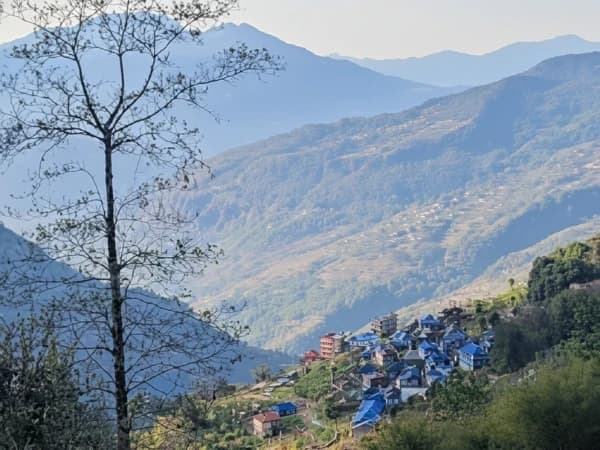
Tikhedhunga: The First Night on the Poon Hill Yoga Trek and the Foot of the Stone Steps
Tikhedhunga is a village at about 1,500 m at the foot of the Ulleri stone steps. Distances to Ghorepani, permits, best months and the trips that pass through.
Read More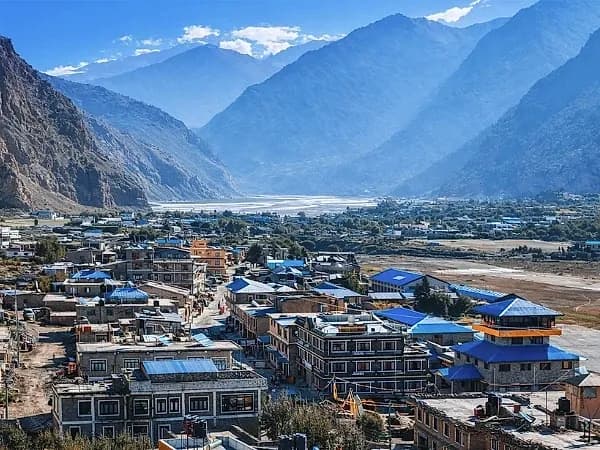
Tukuche: The Thakali Village on the Kali Gandaki Road
Tukuche is a Thakali trading village at about 2,590 m in the Kali Gandaki valley. Distances to Marpha and Kalopani, permits, best months and the trips that pass through.
Read More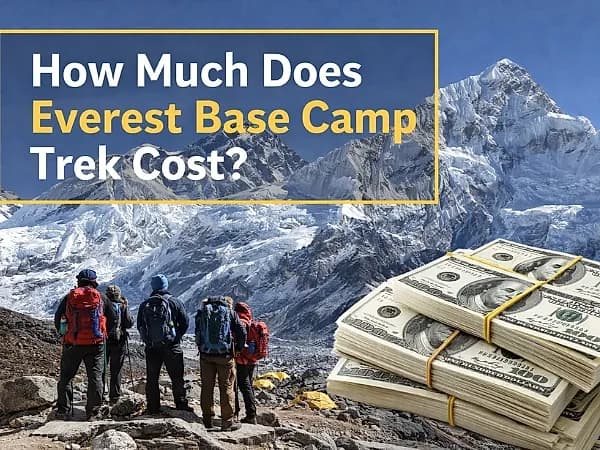
Everest Base Camp Trek Cost from Uzbekistan: Soum Prices, Flights, Visa and Payment
Everest Base Camp trek cost from Uzbekistan: trek prices in dollars and soum, Tashkent to Kathmandu fares, visa on arrival, halal food and how to pay.
Read More Chat with Shreejan