Lukla, Pokhara, Jomsom, Simikot: everything about Nepal's domestic flights. Delays, costs, weight limits, cancellations, and how we handle rebooking for you.
Govt Regd. No.: 147653/072/073
Travel Agency Licence: 2838/072
Nepal Domestic Flights: Everything Trekkers Need to Know

Written by Shreejan Simkhada, CEO of The Everest Holiday and third-generation Himalayan guide. TAAN Member #1586.
Last updated 1 October 2026. Fares are for a foreign passport holder, one way, in US dollars, with VAT, fuel surcharge and airport tax already inside. Airlines revise fares once or twice a year, so treat each number as accurate to within a few dollars.
Flying to Lukla specifically? Our Kathmandu to Lukla flight guide covers the Ramechhap window, delays and Tenzing-Hillary Airport in detail.
What do you need to know about Nepal domestic flights as a trekker?
The short answer: a domestic flight costs a foreign visitor roughly USD 125 to 255 one way, the mountain flights are the dear ones, and the flight to your trailhead is the part of the trip most likely to change. Kathmandu to Lukla is about USD 254 each way. Ramechhap to Lukla is about USD 209. Kathmandu to Pokhara is about USD 124. Weather delays are normal, not rare, and bags are weighed hard.
Here is something nobody tells you before you book a trek in Nepal: the flight to the trailhead might be the most memorable part of your trip. Not always for the right reasons.
Nepal's domestic flights are small aircraft threading through mountain valleys, landing on airstrips that would make a European pilot resign on the spot. They are also the fastest way to reach most trekking regions. And they cancel. Often. Sometimes for days.
I have spent ten years managing these flights for our trekkers. My father dealt with them before me. Between us we have seen fog delays in Lukla, wind cancellations in Jomsom, and backlogs that ran for days. None of it ruined a trek, because we plan for the delay before you even arrive in Nepal.
This guide covers which flights go where, what they cost, how much you can carry, what you may not carry, what happens when things go wrong, and what our rule is when they do. On our own treks the flights are inside the package price and we book them for you.
What are the main domestic flight routes for trekkers in Nepal?
Not every trek needs a flight. The Annapurna Circuit and Langtang Valley Trek start with road journeys. But several of Nepal's most popular routes depend on a flight to reach the trailhead.
Kathmandu to Lukla (Tenzing-Hillary Airport)
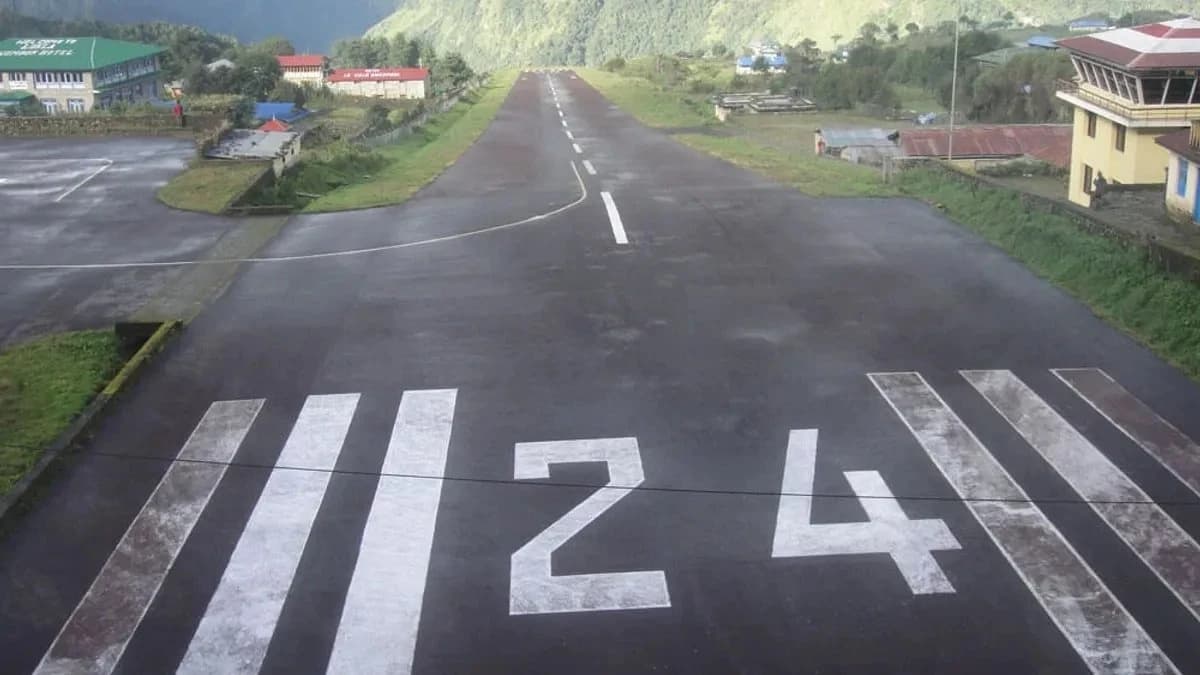
This is the flight. The one that makes the documentaries and the "world's most dangerous airports" lists. The runway at Lukla sits at 2,860 metres, is 527 metres long, slopes at roughly 12 degrees and ends at a cliff. There is no go-around. You land, or you do not attempt it.
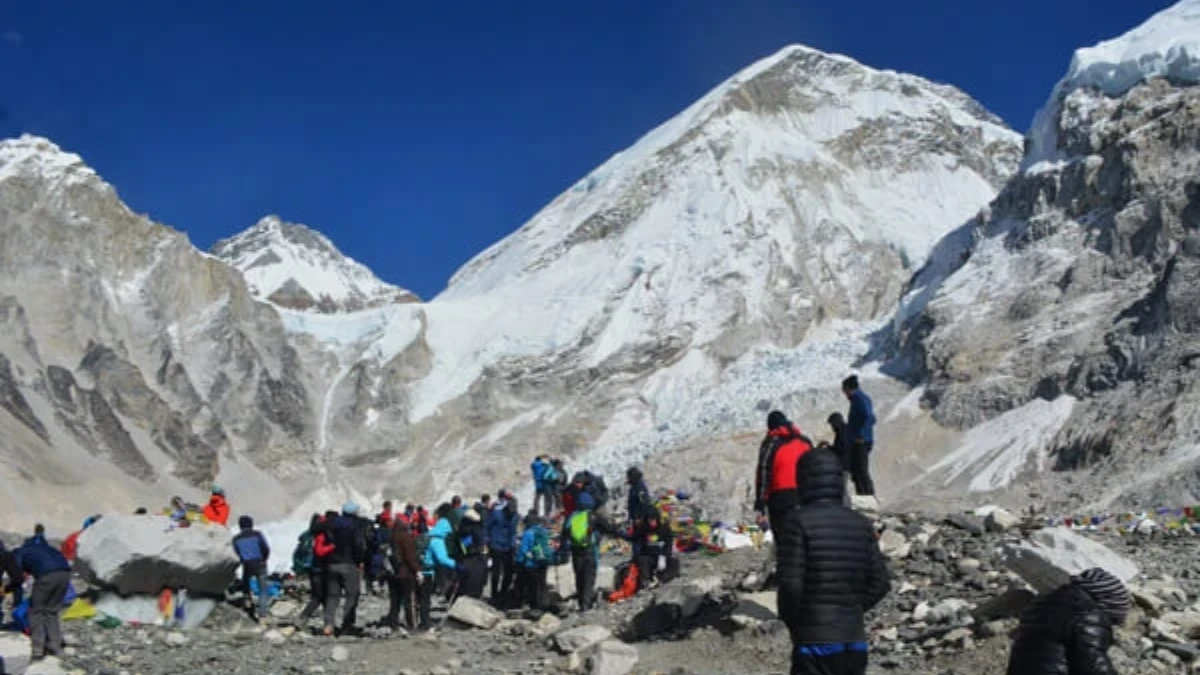
The flight takes about 20 to 30 minutes depending on the airline and the day. On a clear morning the views of the eastern Himalaya are extraordinary: Gauri Shankar, Numbur, and then the Khumbu peaks appearing through the window.
This is the gateway to the Everest Base Camp Trek, the Everest Three Passes Trek and Island Peak Climbing.
The honest truth: Lukla flights cancel frequently. Fog, cloud or crosswind, anything short of clear visual conditions, and the tower stops operations. In peak season a single bad day creates a backlog that can take two or three days to clear. I have seen trekkers stuck in Lukla for four days waiting for a return seat.
Kathmandu to Ramechhap, then Ramechhap to Lukla
In the busy months most fixed-wing Lukla flights leave from Manthali airport in Ramechhap, not from Kathmandu. Ramechhap is a four to five hour drive east of Kathmandu, and the pick-up from your hotel is between midnight and 2 am. It is not glamorous. The reason is practical: Manthali sits lower and further east, and the early flights avoid the wind and cloud that build later in the day.
The windows are roughly 15 March to 15 May and 25 September to 30 November. The dates are set by the Civil Aviation Authority of Nepal, not by us, and they can shift. Helicopters are not part of that diversion and fly Kathmandu to Lukla direct. If you would rather avoid the Lukla flight entirely, our Everest Base Camp Trek by Road (15 Days) reaches the same trailhead with no domestic flight at all. The full comparison is in Ramechhap vs Lukla flight.
Kathmandu to Pokhara
The short hop between Nepal's two main cities takes about 25 minutes and crosses the foothills with the Himalaya on your right. Pokhara is the starting point for the Annapurna Base Camp Trek, the Ghorepani Poon Hill Trek and the Kathmandu-Pokhara-Chitwan-Lumbini Tour.
This route is far more reliable than Lukla. Cancellations happen occasionally in the monsoon or in heavy fog, but most of the year flights run to schedule. The alternative is a six to seven hour drive, scenic but long.
Pokhara to Jomsom
The Jomsom flight follows the Kali Gandaki gorge between the Annapurna and Dhaulagiri massifs. Wind funnels through that gap every afternoon, so these flights run only in the early morning. Our Upper Mustang Trek goes in by road, but we can arrange Kathmandu to Pokhara and Pokhara to Jomsom flights, and back, on request. Wind cancellations are common, especially in late spring. If you are trying to work out how to reach Mustang this season, read Jomsom road reopened: how to reach Mustang in October 2026.
Nepalgunj to Simikot, Juphal, Jumla and Talcha
The remote west runs through Nepalgunj, a Terai city near the Indian border. From there small aircraft fly to Simikot (the Kailash trek via Simikot), Juphal (the Lower Dolpo Circuit), and Jumla and Talcha (the Rara Lake trek). These are Nepal's least reliable flights. The airstrips are short, the weather windows narrow and delays of two or three days are not unusual, which is why we build buffer days into every western itinerary.
Which airlines fly the trekking routes?
Several carriers fly the domestic network, and not all fly every route. The seat on our own Lukla tickets this season was on Summit Air. Tara Air, Sita Air, Yeti Airlines and Buddha Air all publish domestic services, and Sita Air's own site lists daily Lukla flights alongside Jomsom, Rara and Simikot. Which airline you fly on a given day depends on the schedule and availability, and we choose for you. The baggage rules below differ by airline, which is why the table further down matters.
How much do Nepal domestic flights cost for trekkers?
Prices vary by route and by passport. Foreign passport holders pay more than Indian and Nepali citizens on the same seat. The figures below are what a foreigner pays one way. The two Lukla figures are what was printed on tickets we issued this season. The rest come from the airline fare list valid from 3 August 2026.
| Route | Flight time (approx.) | Foreigner fare, one way | Notes |
|---|---|---|---|
| Kathmandu to Lukla | 20 to 30 min | about USD 254 | On our tickets. Return about USD 508. |
| Ramechhap to Lukla | about 20 min | about USD 209 | On our tickets. Needs a pick-up between midnight and 2 am and a 4 to 5 hour drive. |
| Kathmandu to Pokhara | about 25 min | about USD 124 | Most frequent route. |
| Pokhara to Jomsom | about 20 min | about USD 179 | Morning flights only. Wind cancellations common. |
| Kathmandu to Nepalgunj | about 50 min | about USD 176 | Connecting point for the west. |
| Nepalgunj to Simikot | about 45 min | about USD 251 | Limited frequency. Buffer days essential. |
| Nepalgunj to Juphal (Dolpo) | about 45 min | about USD 213 | Very few departures. |
| Nepalgunj to Jumla | about 40 min | about USD 203 | Rara Lake approach. |
| Nepalgunj to Talcha (Rara) | about 45 min | about USD 238 | Rara Lake. Seasonal. |
| Kathmandu to Phaplu | about 35 min | about USD 197 | Lower Everest region. |
| Kathmandu to Tumlingtar | about 35 min | about USD 191 | Gateway to Makalu and the east. |
Flight times are approximate and the schedule changes with the season. Only the two Lukla sectors are on tickets we have actually issued. The others are list fares.
What does a return Kathmandu to Lukla flight cost in 2026?
About USD 508 for a foreign passport holder, or about USD 417 if you fly from Ramechhap. If you see a page quoting USD 180 to 210 for the Lukla flight, it is using a fare from a couple of years ago. Indian nationals pay NPR 21,601 per sector on the same fare list and Nepali guides far less, so the three fares are genuinely different products on the same seat.
The Ramechhap saving is not free. You lose a night's sleep at the start of the trek, and in the peak windows the fixed-wing flights are moved to Ramechhap whether you chose it or not. Helicopters are exempt from that diversion, which is why our Luxury tier includes one.
When you book a trek with us, domestic flights are inside the package price. You do not compare airlines or deal with ticketing, and we deal with fare changes between the day you book and the day you fly.
What is the baggage limit on Nepal domestic flights?
Short answer: on the mountain flights, about 10 kg checked plus 5 kg hand carry. Lukla and Jomsom aircraft are small, the runways are short, and the airline works out payload to the kilo. On the bigger planes to Pokhara and the Terai the allowance is larger. Every airline sets its own limit and your ticket is the final word.
| Airline | Lukla and Jomsom (mountain) | Pokhara and other trunk routes | Excess baggage |
|---|---|---|---|
| Tara Air | 10 kg checked + 5 kg hand carry, treated as one 15 kg total. Children get a lower allowance (7 kg). | Not published on its policy page. Check with us. | Rate not published. Check with us. |
| Yeti Airlines | 10 kg checked + 5 kg hand carry on Lukla and Jomsom sectors. | 20 kg checked + 5 kg hand carry on other sectors. Higher fare classes can carry more, so read your ticket. | Kathmandu to Pokhara: NPR 150 per kg. No Lukla or Jomsom rate published. |
| Summit Air | Allowance not published on its site. Check with us. | Check with us. | Check with us. |
| Sita Air | Allowance not published on its site. Check with us. | Check with us. | Check with us. |
| Buddha Air | Check with us. | Check with us. | Check with us. |
Some things hold across the board.
- Hand carry size. No airline publishes dimensions. Yeti's conditions say hand baggage must fit under the seat in front or in the enclosed cabin compartment. Keep it a small daypack.
- Excess is paid at the airport. The airline weighs your bags at check-in and you pay any excess at the counter, by the kilo. No airline publishes a Lukla excess rate, so ask us for the current figure before you fly.
- Over the limit does not mean it flies with you. If the aircraft is at its weight limit, the extra bag goes on a later flight. Pack as if your duffel might arrive a day behind you.
- Drone and camera batteries count. They sit inside your hand carry allowance.
What happens to extra luggage we cannot fly?
Most Thamel hotels will store luggage for trekkers, and we arrange that for every group. Whatever you do not need on the trail stays locked at the hotel until you are back. If you arrive at Ramechhap or Tribhuvan over the limit, you can pay the excess or leave the extra weight with our driver, who will take it back to Kathmandu. Fuller guidance is in how much luggage you can bring on a Nepal trek.
For most trekkers this is easy. On our Standard treks a porter carries 20 kg shared between two trekkers, so you should be packing to about 10 kg in the duffel anyway, with a daypack for valuables, camera and medication. If you are carrying climbing gear for Island Peak or similar, tell us early and we will help you split the load.
What happens if my Nepal domestic flight is cancelled?
Flights will cancel. Not might. If you are trekking to Everest in peak season, there is a real chance that at least one flight, usually the return from Lukla, is delayed by weather.
You wake at 5am at Lukla airport. The terminal is already crowded, with 200 trekkers from a dozen companies hoping the cloud lifts. At 7am the first aircraft tries to land. If it cannot, operations pause. By 9am, if nothing has moved, the day is usually written off. Tomorrow it is the same, with today's passengers added to the queue.
How do we handle cancellations?
- Buffer day. We ask you to keep at least one spare day in Kathmandu after any Lukla flight, and we say so up front.
- Rebooking. When a day's flights cancel, our Kathmandu office is already on the phone to get you onto the first available seat the next morning. Your guide stays with you.
- Our delay rule. If the airline cancels or delays your flight, the extra nights in Lukla or Kathmandu and any helicopter are paid by you, as we cannot be liable for the weather or the airline. What we can do is move the value of your fixed-wing ticket across to a helicopter seat, less the airline cancellation charge, bank charges and tax, because those are lost once the ticket is cancelled.
- Helicopter backup. If delays run past the buffer and your international flight is at risk, we can arrange a helicopter from Lukla. As a guide, a shared seat costs about USD 640 per person from Kathmandu to Lukla and about USD 710 per person from Lukla to Kathmandu. These prices include government tax, bank charges and the fuel supplement the helicopter operators have added since the Iran oil crisis pushed fuel prices up. Other sectors and full charters are priced on request. We tell you the price and your options before you decide. This is why we ask for travel insurance that covers helicopter evacuation, bought before you leave home.
- Road alternative. From Lukla it is possible to trek down to Phaplu or Salleri and take a jeep to Kathmandu. It takes about 12 to 14 hours and it is not comfortable, but it works. Our guides can arrange transport at short notice.
- Communication. You know what is happening, what your options are and what we are doing about it.
The worst thing a trekking company can do is pretend flight delays do not happen. The difference between a good experience and a bad one is not whether the flight cancels, it is whether your company has a plan.
Should I take a helicopter instead of a domestic flight?
Helicopters fly between Kathmandu and Lukla and keep flying direct from Kathmandu while the fixed-wing flights move to Ramechhap. They can also pass through gaps in the cloud that a small aircraft cannot, so they are less exposed to weather, although not immune.
As a guide, a shared seat costs about USD 640 per person from Kathmandu to Lukla and about USD 710 per person from Lukla to Kathmandu. These prices include government tax, bank charges and the fuel supplement the helicopter operators have added since the Iran oil crisis pushed fuel prices up. Other sectors and full charters are listed below. A helicopter seat costs a good deal more than the fixed-wing seat, so what you are paying for is weather resilience and a Kathmandu departure, not a lower price.
| Helicopter route | Type | Price (USD) |
|---|---|---|
| Kathmandu to Lukla | Shared seat | 640 per person |
| Lukla to Kathmandu | Shared seat | 710 per person |
| Gorak Shep to Kathmandu | Shared seat | 1,420 per person |
| Gorak Shep to Lukla | Shared seat | 850 per person |
| Pheriche or Dingboche to Lukla or Kathmandu | Shared seat | 1,270 per person |
| Everest Base Camp tour from Kathmandu, landing at Kala Patthar | Shared seat | 1,840 per person |
| Everest Base Camp tour from Kathmandu, flying over without landing | Shared seat | 1,560 per person |
| Pokhara to Annapurna Base Camp and back | Shared seat | 640 per person |
| Pokhara to Annapurna Base Camp and back | Private helicopter | 2,690 per flight |
| Kathmandu to Kyanjin Gompa (Langtang) | Private helicopter | 2,410 per flight |
| Samagaun (Manaslu) to Kathmandu | Private helicopter | 3,960 per flight |
| Gokyo, Ramechhap to Lukla, Jomsom and other routes | Shared or private | On request |
All prices include government tax, bank charges and the fuel supplement. Shared seats depend on availability and the weather on the day, so we confirm them closer to your date, and if no shared seat is available a private helicopter costs more. On the Everest Base Camp tours, the national park permit, local tax and breakfast are extra. Samagaun is in a restricted area and needs special permission.
This is how our tiers work. On the Luxury Everest Base Camp trek the helicopter to and from Lukla is included. On Budget and Standard you fly fixed-wing both ways. A middle option is the Everest Base Camp trek with return by helicopter (10 days), which walks up and flies home. To see what a helicopter does and does not do for you, read Everest Base Camp by helicopter and helicopter scams in Nepal trekking.
How safe are Nepal's domestic mountain flights?
Nepal's domestic aviation has a troubled history. There have been fatal accidents, including the Yeti Airlines crash at Pokhara in January 2023 and the Tara Air crash near Jomsom in May 2022. Pretending they did not happen would be dishonest. The mountain strips at Lukla, Jomsom and Simikot carry inherent risk because of the terrain and weather. The decision to fly or cancel is always the pilot's and the tower's, and many cancellations are safety working as it should. We cannot remove the risk, but we can use reputable carriers, build alternatives into every itinerary and give you straight information. For the long answer, read Is the Lukla flight safe? An honest answer. Many nervous trekkers take our road route to Everest Base Camp and have an equally good trek.
What do trekkers ask us about domestic flights?
What can I not carry on a domestic flight?
This is what the airlines publish. Where there is no published rule, I say so.
- Gas canisters and stove fuel. Not allowed in hand or checked baggage. Summit Air's restricted list names compressed gases and flammable liquids, and Sita Air's names propane, butane and compressed gas cylinders. Buy any fuel after you land, never fly with it.
- Lighters and matches. Summit Air's list names "lighter or heating fuels, matches" as restricted. Do not pack them in your checked bag. Whether you can keep one lighter on you differs by airline, so check with us.
- Lithium batteries and power banks. Spare lithium batteries and power banks go in your hand carry, not the checked bag. Sita Air's page says exactly that. This includes drone batteries and camera batteries.
- Knives and sharp objects. Not in hand carry. Yeti and Sita Air both say so. Yeti also lists tools and sporting goods among the items not allowed in the cabin. Pack a knife in the checked bag, or leave it at home.
- Trekking poles, ice axes and crampons. Pack these in your checked bag, never in hand carry, with the points protected. No airline rule names ice axes or crampons, so if you are carrying climbing gear, tell us and we will confirm with the airline before the flight.
Do I need my passport at domestic check-in?
Yes. Carry your passport in your daypack, not the duffel. Yeti's FAQ says the ticket and a valid ID must be shown at the check-in counter, and its conditions say you will need to prove your identity with your reservation code and valid travel documents. The name on the ticket must match your passport exactly or you can be refused. We ask for your name as printed on your passport when you book.
What time is check-in, and which terminal?
Flights to the mountains leave from the domestic terminal at Tribhuvan Airport in Kathmandu, or from Manthali in the Ramechhap windows. The closing time for check-in differs by airport and is printed on your itinerary, as Yeti's conditions state. We give you the exact pick-up time. Bring your printed ticket and keep your boarding pass, because it gets checked again at smaller airports. Do not turn up late: airlines treat a passenger who misses the reporting time as a no-show.
Which side should I sit on for the views?
From our own flying, sit on the left for Kathmandu to Lukla and the right on the way back. For Kathmandu to Pokhara, sit on the right going out. Some small aircraft do not assign seats on every carrier, so ask at check-in.
Why are mountain flights in the morning?
Cloud and wind build through the day. Lukla and Jomsom have no instrument landing, so the pilot has to see the runway, and Jomsom's afternoon wind funnels through the gorge. The early window is when the weather is most likely to hold. That is also why a delay of a few hours often turns into a cancellation.
What if my flight is cancelled? Do I get a refund?
If the airline cancels a flight for weather, you are rebooked on the next seat. Our own rule: if the airline cancels or delays your flight, the extra nights in Lukla or Kathmandu and any helicopter are paid by you, as we cannot be liable for the weather or the airline. What we can do is move the value of your fixed-wing ticket across to a helicopter seat, less the airline cancellation charge, bank charges and tax, because those are lost once the ticket is cancelled.
If you cancel a ticket yourself, the airline's charges apply. Summit Air and Sita Air both state 10 per cent of the fare is kept if you cancel before 24 hours from flight time, and 33.33 per cent on the same day. Tara Air states 10 per cent up to 12 hours before and 33.33 per cent at one hour before, and Yeti Airlines gives the same figures for its flexible dollar fare (its charges vary by fare type). A no-show is not refunded on any of them. Tara states that a reschedule is free up to one hour before departure, and Yeti says the same for that flexible fare. A name change costs about NPR 1,000, so get the name right the first time. When we cancelled tickets for our own team this season, the airline kept 10 per cent. If you cancel a trek with us, our own terms apply, not the airline's table, so ask us for them.
What about winter and the monsoon?
The monsoon brings cloud and more cancellations on the mountain routes. The Kathmandu to Pokhara route is more reliable but is not immune. I do not have a verified winter pattern to quote you, so ask us for your dates and we will tell you what we are seeing.
Do children and babies pay for a seat?
It depends on the airline. Yeti Airlines says infants under two travel on an adult's lap, pay 10 per cent of the full fare on a dollar ticket, and pay no airport tax. It offers children aged 2 to 12 a 33.33 per cent discount on some fare classes, not on the Everest mountain flight. Tara Air gives children a lower baggage allowance (7 kg). The other airlines do not publish child or infant fares, so check with us and we will confirm before you book.
Do I need insurance that covers a helicopter?
Yes. We ask every trekker for travel insurance that covers helicopter evacuation, bought in your home country before you leave. If a delay runs past the buffer, or you need to be moved from altitude, that cover is what stops a flight problem becoming a money problem.
What about altitude and my ears?
Lukla is at 2,860 metres, so the flight takes you high quickly. The flight is short, but your ears will notice the climb and descent. Swallow, chew a sweet or yawn, and earplugs help with the noise of a small turboprop. On the ground, start the trek slowly and tell your guide how you feel. Pacing is part of the plan on every itinerary.
Can I fly a drone?
Only with permission. Drones need a permit from the Civil Aviation Authority of Nepal, the process takes time and costs money, and the batteries count towards your hand carry weight. CAAN has a drone section on its website. Plan this well before you travel and ask us before you pack one.
Should I book my own domestic flights or let you handle it?
You can book direct with the airlines. We still suggest letting us handle it, for three reasons. We book the right sector for your trek, we recheck the ticket details before you fly because airlines retime flights, and when a day cancels we are already on the phone to the airline rather than you queuing at the counter. If you only want a flight and not a trek, message me on WhatsApp with the route, the date and the names exactly as they appear on your passports, and I will tell you what is available and what it costs before anything is booked. For flight-only bookings we take a 10% deposit, and you pay the rest when you arrive in Kathmandu.
Can I avoid flying to Lukla altogether?
Yes. Our Everest Base Camp Trek by Road (15 Days) reaches the Khumbu trailhead by a drive through the hills to Phaplu and Salleri. It adds a couple of days and removes the Lukla flight and its delay risk.
How far ahead should I book?
Peak season (October to November and March to May) Lukla seats sell out, so book two to three months ahead. Pokhara is easier at short notice, though three to four weeks ahead is wise in the busy months. When you confirm a trek with us, we book your flights straight away.
How do I plan around the delays?
- Keep a spare day. Never book an international flight the same day as your return from Lukla. Leave at least 24 hours, and 48 if you can.
- Carry valuables in your daypack. Checked bags occasionally travel on a later flight. Keep your passport, money, phone and medication with you.
- Dress in layers. The terminals are not heated and early departures are cold.
- Bring water and snacks. During delays you will be glad of them.
- Check your ticket again before you fly. This season, every Ramechhap departure on our tickets moved 30 minutes later without anyone telling us, and we only caught it by comparing files.
Which treks require domestic flights?
| Trek | Flight required? | Route |
|---|---|---|
| Everest Base Camp (12 days) | Yes | Kathmandu or Ramechhap to Lukla and back |
| EBC by road (15 days) | No | Road via Salleri and Phaplu |
| Everest Three Passes | Yes | Kathmandu or Ramechhap to Lukla and back |
| Island Peak Climbing | Yes | Kathmandu or Ramechhap to Lukla and back |
| Annapurna Circuit | No | Road from Kathmandu |
| Annapurna Base Camp | Optional | Road, or fly Kathmandu to Pokhara |
| Langtang Valley | No | Road from Kathmandu |
| Manaslu Circuit | No | Road from Kathmandu to Soti Khola |
| Upper Mustang | No, by road as standard | On request: Kathmandu to Pokhara and Pokhara to Jomsom, both ways |
| Lower Dolpo | Yes | Kathmandu to Nepalgunj to Juphal |
| Rara Lake | Yes | Nepalgunj to Jumla, return from Talcha to Nepalgunj (night there), then Kathmandu |
| Kanchenjunga Base Camp | Yes | Kathmandu to Bhadrapur, then by road |
Plan your trek with us
Domestic flights sound complicated until someone handles them for you. That is what we do. Every trek we operate includes the flights, the airport transfers, a backup plan for cancellations and a team in Kathmandu watching the weather and the schedules for you.
If you have questions about flights, routes or which trek suits you, get in touch. We reply fast and we will give you the same straight answers you have just read.
WhatsApp: +977 9810351300
Email: [email protected]
Browse all treks: www.theeverestholiday.com
Shreejan Simkhada is the CEO and co-founder of The Everest Holiday, a family-run trekking company in Kathmandu, and a third-generation Himalayan guide. TAAN Member #1586. Every booking helps fund our Nagarjun Learning Center.
Domestic flights for trekkers: booked through us. Our Everest Base Camp Trek (12 Days) is private (your group only, no strangers), 2027 dates open, From USD $1399. WhatsApp us for tailored 2027 dates and current departures.
Planning a trip to Nepal?
Drop us your details and tell us what you have in mind. We will put together a personalised plan and get back to you.
Not sure which Nepal trek is right for you?
Take our free 2-minute quiz and get personalised recommendations based on your fitness, experience, and travel style.
Find Your Perfect Trek →Need Help? Call Us+977 9810351300orChat with us on WhatsApp
Latest Travel Blogs
Thamdanda and Surke: The Road Head for Everest Base Camp by Road
Thamdanda is the road head where our Everest Base Camp trek by road starts and ends on foot. How to get there from Phaplu and what the first walk to Paiya is like.
Read More
Poon Hill Trek Permits 2027: ACAP, TIMS, Cost and What You Need
Poon Hill needs two permits: ACAP at NPR 3,000 and a TIMS card at NPR 2,000. Who arranges them, where they are checked, SAARC rates and the 2027 trek prices.
Read More
Mera Peak Climbing Itinerary 2027: 14 Days, Day by Day
Mera Peak in 14 days, night by night. The Hinku valley, a full rest day at Khare, Mera High Camp at 5,780 m, summit day, 2027 prices and the best months.
Read More Chat with Shreejan