
Which Travel Insurance Actually Covers Everest Base Camp?

Written by Shreejan Simkhada, CEO of The Everest Holiday and third-generation Himalayan guide. TAAN Member #1586.
The short answer: most travel insurance does not cover Everest Base Camp, and the policy you already have through your bank card or airline checkout almost certainly stops at 3,000 metres. Base Camp sits at 5,364 metres and Kala Patthar, the viewpoint almost everyone climbs the next morning, at 5,545 metres. To be properly covered you need a policy that explicitly includes trekking to 6,000 metres and emergency helicopter evacuation. In 2027, that means a specific plan tier or an adventure add-on from insurers such as World Nomads (Explorer), True Traveller (Extreme Pack) or battleface, and it means reading one particular clause before you pay.
I am Shreejan Simkhada, founder of The Everest Holiday in Kathmandu. Since 2016 my team and I have coordinated real helicopter evacuations from the Everest trail, and I have watched insurance claims sail through in a day and others collapse over a single line of policy wording. Nothing on this page is theoretical. It is the checklist I wish every trekker read before booking a flight to Nepal.
If you already have a policy and you are not sure it covers you, do the simplest thing: send us your policy PDF on WhatsApp (+977 9810351300) and we will sanity-check the altitude clause and the evacuation wording before you fly. We do this for every trekker who joins our Everest Base Camp Trek (12 days), and it costs you nothing.
Why does standard travel insurance not cover Everest Base Camp?
Because almost every standard policy carries an altitude ceiling, usually 3,000 metres, and everything above that line is classed as an adventure or hazardous activity that needs separate cover. The EBC trail crosses 3,000 metres on day two, at Namche Bazaar (3,440 m), and you then spend eight or nine consecutive days above the ceiling of a normal policy. If something happens at Dingboche (4,410 m), Lobuche (4,940 m) or Gorak Shep (5,164 m), a standard insurer can refuse the entire claim on altitude alone, however genuine the emergency.
Why 6,000 metres and not 5,500? Base Camp is 5,364 m and Kala Patthar is 5,545 m, so a 5,500-metre policy technically fails on the one morning most people care about. Insurers write their altitude bands in round numbers, and 6,000 metres is the standard band that cleanly covers every point on the classic EBC route with margin to spare. It also covers you if your itinerary includes Cho La (5,420 m) or Gokyo Ri (5,357 m). Buy the 6,000-metre band and the whole trek sits inside it. Buy anything lower and you are gambling on where exactly you get sick.
One more distinction that trips people up: trekking cover and mountaineering cover are different products. EBC is a walk. You need trekking (sometimes worded as hiking or trekking without ropes) to 6,000 metres. You do not need mountaineering cover unless you are adding a climbing peak such as Island Peak or Lobuche East, in which case the requirements change entirely.
What does a helicopter rescue really cost if you are uninsured?
A medical evacuation by helicopter from the upper Khumbu to Kathmandu typically costs US$4,000 to US$8,000, and in poor weather, at the highest pickup points, or where multiple shuttle flights are needed, it can pass US$10,000. Nobody quotes you a friendly rate at 5,000 metres. The operator needs a payment guarantee before the aircraft leaves Kathmandu, which in practice means your insurer's assistance company confirming cover, or someone's credit card taking the full amount.
I want to be direct about this, because it is the part trekkers underestimate: if you cannot show valid insurance and nobody can guarantee payment, the helicopter does not launch. Your guide can arrange oxygen, descend with you and call every operator in Kathmandu, but the machine that solves severe altitude sickness in forty minutes is a commercial aircraft with a commercial invoice. Insurance is not paperwork for us. It is the thing that makes the phone call work.
For a fuller picture of how rescue flights are priced and dispatched in Nepal, we have a separate guide to how helicopter rescue works in the Himalayas.
How does a helicopter evacuation actually work on the trail?
On a properly run trek the rescue is guide-initiated and insurance-coordinated, and the sequence matters for your claim. This is the process we follow on our departures:
- The guide makes the call. Our guides carry pulse oximeters and check clients daily above Namche. If someone shows worsening AMS symptoms, or signs of HAPE or HACE (the altitude illnesses the Himalayan Rescue Association treats on this trail every season), the guide decides on descent or evacuation. Nobody argues with the mountain.
- We phone your insurer's 24-hour assistance line, or you do. Almost every policy requires the evacuation to be approved by the insurer's own emergency assistance team before the flight. Skipping this step is one of the fastest ways to lose a claim.
- The assistance company issues a guarantee of payment to a helicopter operator in Kathmandu, and a doctor confirms the evacuation is medically necessary.
- Weather decides the timing. Helicopters fly the Khumbu in visual conditions, usually in the morning. An afternoon emergency may mean descending on foot or by horse to a lower, flyable point and waiting for first light.
- You land in Kathmandu and go straight to hospital, where the paperwork that supports your claim begins: admission notes, diagnosis, discharge summary, invoices.
Notice what makes all of this run: a guide with the authority to act, your insurer's phone number and policy number available offline, and a policy that actually covers where you are standing. We collect every client's insurer, policy number and emergency line before departure precisely so that step two happens in minutes, not hours. Related: When a Helicopter Evacuation Is Not a Rescue: What We Refused and Why.
Why does the adventure sports add-on wording matter so much?
Because insurers do not sell one product called travel insurance. They sell a base policy plus activity packs, and trekking above 3,000 metres is nearly always inside a pack, not the base policy. The pack goes by different names: adventure pack, explorer tier, extreme activities upgrade, hazardous pursuits extension. If you buy the base policy without the pack, you are insured for lost luggage in Kathmandu and uninsured for everything above Namche.
Three wording details to check in the actual policy document, not the sales page:
- The altitude number. Look for the words trekking or hiking with a stated ceiling of 6,000 metres or higher. If the document only says hiking with no altitude, ask the insurer in writing where cover stops.
- Emergency evacuation as a listed benefit, with helicopter rescue not excluded. Some policies cover medical treatment at altitude but cap or exclude search and rescue as a separate item. You want the evacuation flight itself covered, not just the hospital at the end of it.
- Guided versus independent trekking. A few policies only cover high-altitude trekking when it is with a licensed guide or organised operator. On our treks you meet that condition automatically, but read it if you plan any independent walking.
Which insurers cover trekking to 6,000 metres in 2027?
These are examples, not endorsements. We do not sell insurance, we have no commercial relationship with any insurer, and policies change and vary by your country of residence. We checked the details below in July 2026; confirm everything directly with the insurer before buying, in writing, quoting your exact maximum altitude of 5,545 metres.
| Insurer / plan | Covers trekking to 6,000 m? | Helicopter evacuation | Notes (checked July 2026) |
|---|---|---|---|
| World Nomads: Explorer plan | Yes. US plans state hiking cover to 6,000 m on Standard and 6,500 m on Explorer. | Emergency evacuation benefit (US Explorer: up to $500,000), must be approved by their 24/7 assistance team. | Wording differs by country of residence, so check the plan document for your own country. Confirm how search and rescue is treated in your wording; check with insurer. |
| True Traveller: Extreme Pack | Yes. Trekking above 4,600 m sits in the Extreme Pack; the Ultimate Pack is for roped mountaineering to 6,000 m, which EBC does not need. | Helicopter rescue included when medically necessary and authorised by their emergency assistance service. £10m medical cover. | UK and Europe residents only. An excess is reported to apply to Nepal helicopter rescue; check the amount with insurer. Age limits apply on higher packs. |
| battleface | Reported to cover hiking and trekking to 6,000 m; check with insurer and get it in writing. | Runs its own 24/7 emergency and medical assistance; confirm the evacuation benefit limit for your country. | Notable because you can buy mid-trip (cover starts 24 hours after purchase, no cancellation benefit). Useful if you discover a gap after arriving in Nepal. |
| IMG: Signature / iTravelInsured Sport | Partly. iTravelInsured Sport covers adventure activities with search and rescue, but high-altitude wording varies; check with insurer. | IMG Signature is commonly paired with a Global Rescue membership, where Global Rescue performs the field evacuation and IMG covers medical costs. | Mainly for US residents. The IMG-plus-Global-Rescue pairing is the arrangement many US mountaineering operators require. Confirm your altitude in writing. |
Two patterns worth noticing. First, the cheapest tier of a good insurer is usually worthless for EBC; it is the upgrade tier that carries the altitude. Second, residence matters as much as brand: True Traveller will not sell to Americans, most IMG products are built for Americans, and World Nomads writes different policy documents for the UK, US, Australia and Europe under the same name. Search for your country's version, not the brand generally.
What insurance do we require on our Everest Base Camp departures?
Insurance is mandatory on every one of our treks. Before departure we require written confirmation, normally your policy certificate, showing:
- Trekking or hiking cover to at least 6,000 metres for the full trek dates;
- Emergency medical treatment and hospitalisation in Nepal;
- Emergency helicopter evacuation as a covered benefit;
- Medical repatriation to your home country.
We record your insurer's name, policy number and 24-hour emergency assistance number before you fly to Lukla, and your guide carries them on paper. Trip cancellation and baggage cover are your decision; the four items above are not. We will not take a client above Namche without them, because we are the ones standing on the trail at 4 a.m. making the phone call, and we have made it often enough to know exactly what the person on the other end will ask for.
What are the most common reasons claims get refused?
The refusals I have seen over the years almost never involve fraud. They involve ordinary trekkers tripping over predictable clauses. The recurring five:
- The altitude gap. The trekker bought the base policy and never added the pack, or bought a 4,500-metre band for a 5,545-metre trek. This is the single most common failure, and it is discovered at the worst possible moment.
- Not calling the assistance line first. Most policies require the insurer's own team to approve an evacuation before it happens. A helicopter arranged privately and claimed afterwards can be refused even when the emergency was real. Call first; make the insurer part of the decision.
- Alcohol exclusions. Nearly every policy excludes claims where alcohol contributed. At altitude even a small amount worsens dehydration and mimics or masks AMS symptoms. Our guides advise no alcohol above Namche; your insurer quietly insists on it.
- Late or thin documentation. Insurers want contemporaneous evidence: the guide's incident report, oximeter readings if taken, the assistance case number, hospital admission and discharge notes, itemised invoices, receipts. Claims filed weeks later with a one-line summary invite a fight. We help our clients assemble this file while they are still in Kathmandu.
- Pre-existing conditions left undeclared. If you have a heart or lung condition, declare it and get the insurer's written position. An undeclared condition discovered in hospital records can void the whole claim, not just part of it.
What should you check before buying a policy for EBC?
Run through this list with the policy document open. Ten minutes now saves five figures later.
- Trekking or hiking cover to 6,000 metres, stated in the document, valid for your exact dates;
- Emergency helicopter evacuation listed as covered, and search and rescue not excluded;
- Medical benefit of at least US$100,000 plus repatriation;
- Nepal not excluded as a destination, and any guided-trek condition understood;
- The excess for evacuation claims (some insurers apply a specific helicopter excess in Nepal);
- The 24-hour assistance number saved offline and on paper, with your policy number;
- Alcohol, pre-existing condition and acclimatisation clauses read, not skimmed;
- If anything is ambiguous, an email from the insurer confirming cover to 5,545 metres on the EBC trek. Insurers answer these emails daily, and that reply is gold in a dispute.
For cover questions beyond Everest, including Annapurna, Langtang and lower treks with different altitude bands, our general guide to Nepal travel insurance and what your policy needs to cover goes region by region.
Not sure your policy passes? Send it to us
This is the offer I make every trekker, whether or not you book with us: WhatsApp your policy PDF to +977 9810351300 and we will read the altitude clause, the evacuation benefit and the exclusions, and tell you plainly whether it covers Everest Base Camp. We have read hundreds of these documents and coordinated the evacuations they do and do not pay for, so we know exactly which lines matter. If you are still choosing dates, our 12-day Everest Base Camp trek runs with the acclimatisation days, daily oximeter checks and evacuation protocol this whole article assumes. Fly with the right piece of paper in your pocket, and the mountain gets to be the only thing you think about.
Planning a trip to Nepal?
Drop us your details and tell us what you have in mind. We will put together a personalised plan and get back to you.
Not sure which Nepal trek is right for you?
Take our free 2-minute quiz and get personalised recommendations based on your fitness, experience, and travel style.
Find Your Perfect Trek →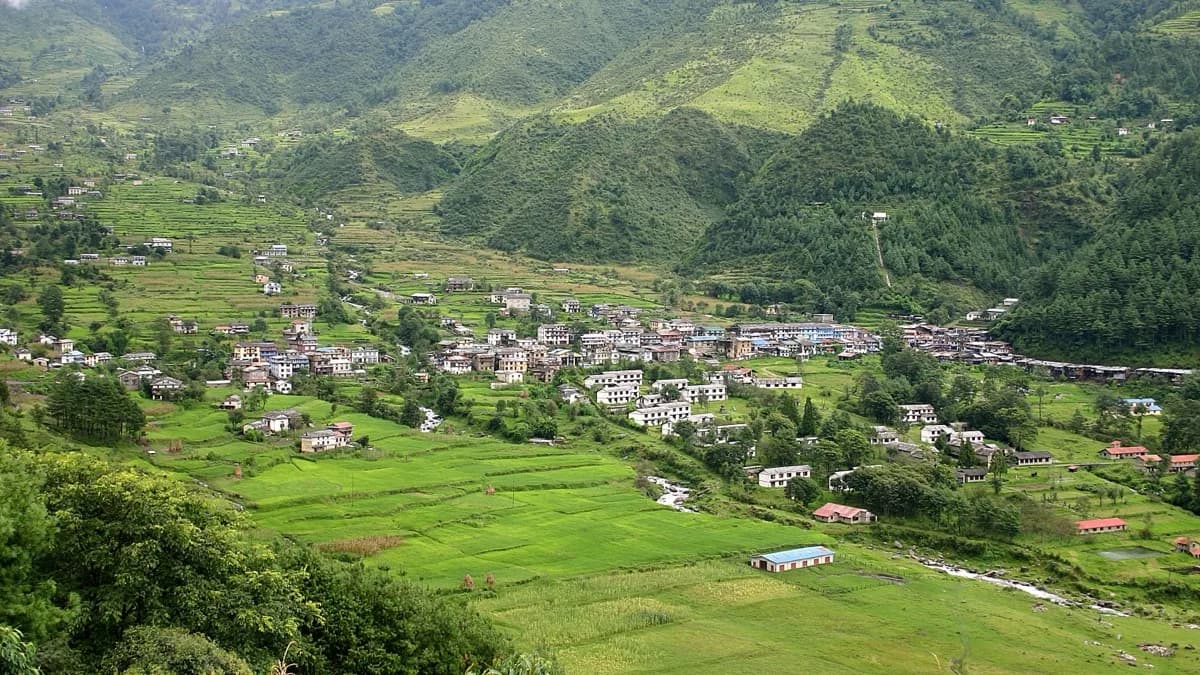
Chheplung: The Village Below Lukla Where the Everest Trails Meet
Chheplung is the small village below Lukla where the walk-in route from the lower Solu valleys joins the Everest trail. Here is what it is like and who stops there.
Read More
Chhusang: The Upper Mustang Village Where the Kali Gandaki Bends
Chhusang is the village on the Kali Gandaki where Upper Mustang starts to look like Tibet. Here is where it sits, what you see, the permit and when to walk it.
Read More
Tamang Heritage Trail in 12 Days: Route, Cost and Who It Suits (2027)
The Tamang Heritage Trail in 12 days: the villages, the day-by-day route, what each tier costs, the road after the September flood and who the trek suits.
Read More Chat with Shreejan