How Hard Is the Everest Three Passes Trek? Who Should Not Do It

Last updated 5 October 2026.
The short answer: our 17-day Everest Three Passes trek is graded Very Strenuous. You cross three passes over 5,300 m, you sleep at 4,500 m or higher for nine nights in a row, and you climb Kala Patthar at 5,545 m in the middle of it. If you can walk 6 to 8 hours on steep rock two days running, and you accept that our guide decides on the morning whether a pass is safe to cross, you can plan for this trek.
This page answers one question: how hard is it, pass by pass and night by night, and who should choose something else. The comparison with Base Camp, the winter odds, the cost and the route story already have their own pages, so we link them instead of repeating them. Read the Base Camp comparison, Three Passes in November and December, the cost and the full 17-day route story when you need them. The trip itself is on our 17-day Everest Three Passes trek page.
How hard is each of the three passes?
| Pass and height | Day | From and to | Climb | Drop | Time and distance | What makes it hard |
|---|---|---|---|---|---|---|
| Renjo La, 5,360 m | Day 6 | Lungden 4,500 m to Gokyo 4,790 m | 860 m | 570 m | 8 hours, 9 km | Pre-dawn start, steep switchbacks on moraine and boulders, patches of old snow, then a descent of over 500 m on steep loose rock where poles help |
| Cho La, 5,420 m | Day 9 | Thangnak 4,700 m to Dzongla 4,830 m | 720 m | 590 m | 6 hours, 16 km | About one hour crossing the Ngozumpa Glacier with loose rock, hidden ice and pools, then a narrow gully and a steep snow and ice headwall that may need fixed ropes, then about two hours down steep loose scree |
| Kongma La, 5,535 m | Day 13 | Lobuche 4,940 m to Chhukung 4,730 m | 595 m | 805 m | 6 to 8 hours, 10.5 km | Boulder maze with a faint path and cairns, hands needed for balance in places, scrambling over big boulders, then steep loose rock and scree and moraine on the way down, on tired legs after Base Camp and Kala Patthar |
Renjo La has the biggest climb of the three at 860 m, and the longest day at 8 hours. Cho La is shorter on paper but the glacier comes first, so you must follow your guide's footsteps exactly across loose rock and hidden ice before you even reach the headwall. Kongma La looks smallest on height gained at 595 m, yet many veterans find it the most demanding, because it comes on day 13 after Lobuche to Base Camp and the Kala Patthar sunrise.
Kongma La is not technical climbing, but it is more than walking, with scrambling and hands needed for balance. The Cho La headwall is the technical section. On Cho La the guide carries crampons, though they are not always needed, and fixed ropes depend on conditions that day. Treat the 6 hours for Cho La as a guide's figure and ask your guide on the day how long it will take. You can read each pass on its own page: Renjo La, Cho La and Kongma La.
How big is each day's climb, and where do you sleep?
| Night | Sleep at | Height | Change |
|---|---|---|---|
| 1 | Phakding | 2,610 m | trailhead |
| 2 | Namche | 3,440 m | climb in |
| 3 | Namche | 3,440 m | rest day |
| 4 | Thame | 3,820 m | +380 m |
| 5 | Lungden | 4,500 m | +680 m |
| 6 | Gokyo | 4,790 m | +290 m |
| 7 | Gokyo | 4,790 m | rest day with Gokyo Ri 5,357 m |
| 8 | Thangnak | 4,700 m | -90 m |
| 9 | Dzongla | 4,830 m | +130 m |
| 10 | Lobuche | 4,940 m | +110 m |
| 11 | Gorak Shep, after Base Camp (5,364 m) | about 5,164 m | +224 m |
| 12 | Lobuche | 4,940 m | down, after Kala Patthar sunrise |
| 13 | Chhukung | 4,730 m | down over Kongma La |
| 14 | Tengboche | 3,860 m | down |
| 15 | Namche | 3,440 m | down |
| 16 | Lukla | 2,860 m | down |
We want to be straight about one night. Medical guidance says that once above 3,000 m you should rise no more than 500 m per night in sleeping height, plus one extra day for every 1,000 m gained. A stricter guideline says no more than 300 m per day to sleep once high. Two rises are bigger than the guidelines: Phakding to Namche at +830 m, which starts below 3,000 m, and Thame 3,820 m to Lungden 4,500 m at +680 m, which is fully above it. The Lungden night comes the night before Renjo La, after a rest day in Namche and a short +380 m day to Thame, and we follow it with a +290 m day into Gokyo and a rest day in Gokyo with Gokyo Ri. If you feel the altitude that evening in Lungden, tell your guide early. Descent is the definitive treatment for severe altitude illness, and our guide decides on the morning whether the pass is safe for you.
Fitness does not protect you from altitude illness, and a past episode is a risk factor. Our altitude sickness guide explains the signs we watch for, confusion and loss of coordination, or chest congestion and breathlessness that keeps getting worse with exertion. After Lungden the sleeping rises are small: +290 m, -90 m, +130 m, +110 m and +224 m. On this trek the hard part is the three pass days themselves, plus day 11 from Lobuche to Base Camp at 6 to 8 hours and 15 km, and day 12 with the Kala Patthar sunrise at about 3.30 am, about 360 m up from Gorak Shep, about 3 hours and 5 km. If you want to arrive ready, start with how to train and our 12-week plan.
What makes the Three Passes harder than Everest Base Camp?
Base Camp is one high point at the end of one trail. The Three Passes is three full pass days with pre-dawn starts, and you must do all three while already high. The full side by side is in our EBC versus Three Passes comparison, so here are the differences that matter most.
Cho La starts with about one hour on the Ngozumpa Glacier, loose rock and hidden ice and pools, then the headwall. Base Camp has nothing like that glacier crossing. All three passes end with long loose descents, Renjo La over 500 m of steep loose rock, Cho La about two hours on scree, Kongma La 805 m down through steep loose rock and scree and moraine. Downhill on loose ground with tired legs hurts more than people expect.
You also spend far more time high. From Lungden onward you sleep at 4,500 m or above for nine nights in a row, up to about 5,164 m at Gorak Shep. Kongma La then comes on day 13, after Base Camp at 5,364 m and Kala Patthar at 5,545 m, so you climb it on the most tired legs of the trip. Once you leave the main trail for a pass, there are fewer easy places to stop and turn back, which is why our guide's morning call is final and we never promise a crossing. For where people normally struggle with height on the Base Camp side, read our EBC altitude profile.
Who should not do the Everest Three Passes trek?
I would rather you choose a different trek than start this one for the wrong reasons. This is a Very Strenuous 17-day trek on our 17-day Everest Three Passes trek page, and it stays hard all the way through. Please read this list with care.
- Do not choose it if you have never walked above 4,000 m and have never done a multi-day trek. From Lungden you sleep at 4,500 m or higher for nine nights in a row and tops out at Kala Patthar at 5,545 m, so it is not the place to find out how your body reacts to height.
- Do not choose it if you cannot manage 6 to 8 hour days on steep loose rock two days in a row. Our itinerary has 8 hours for Renjo La, 6 hours for Cho La, 6 to 8 hours for Kongma La, and 6 to 8 hours from Lobuche to Base Camp, with tired legs between each one.
- Do not choose it if you expect a guaranteed crossing. Weather, snow and ice can change a pass, and the guide decides on the morning whether it is safe to cross. We do not promise a crossing.
- Do not choose it if you want a short or relaxed trek. If that sounds more like you, look at the 15-day Two Passes trek, which does Renjo La and Cho La but not Kongma La, the 15-day Base Camp, Gokyo and Cho La trek, or the 12-day Everest Base Camp trek.
- Do not choose it if you are not comfortable with cold basic lodges at 4,800 m. Above Namche the rooms are simple and the nights are cold. The Dzongla teahouses are basic but warm enough.
- Do not choose it if you have no spare days in your plan, since weather can delay the Lukla flight at either end. A tight international connection adds pressure you do not need on this route.
- Do not choose it if you have had altitude illness before and will not tell the guide, or will not descend when told. Previous altitude illness is a risk factor, and descent is the definitive treatment for severe illness. If you cannot agree to that before you start, this is not your trek.
What are the honest trade-offs?
Every hard trek asks you to give something up. On this one you give up comfort for a long stretch. The days are long, the nights are cold, and the lodges are basic once you are high. Phone signal is limited above Namche, so do not plan on normal contact with home. Bad weather can shut a pass, and when that happens the guide decides. The descents are steep loose rock and scree, so tired knees feel every step.
You also give up the classic route. From Namche you turn west to Thame and Lungden, away from the main Base Camp trail, and you only join it again at Lobuche. That is quieter on those days, but we cannot promise you an empty trail.
What you get in return is the full set in one trip. Three passes, Renjo La, Cho La and Kongma La. The Gokyo lakes and Gokyo Ri. Base Camp and Kala Patthar. You can read the day by day shape of that in the route narrative. If you are thinking about late season, read our honest odds on snow and who decides if a pass is shut in Three Passes in November and December. I wrote it so you know the risk before you book, not after.
How should you prepare for the Three Passes?
Start with the same base I point Base Camp trekkers to. Read how to train for Everest Base Camp and follow the 12-week Everest Base Camp training plan. That plan gives you the structure. For this trek you need to be stronger on the same plan, because the days are longer and the ground is harder.
In practical terms, walk several days in a row with a pack on hills. One good day does not tell you much. Several days in a row tells you how your feet, knees and back cope. Practise descents, not just climbs. Practise with trek poles, because they help on the steep loose descents off each pass. Break in your boots well before Lukla. Learn cold-weather layers so you can add and remove without long stops in the wind.
Tell us your full medical history before you come. That includes any prior altitude illness. It helps us plan the pace and it helps the guide look after you.
On medicine, ask your own doctor. The standard preventive dose of acetazolamide is 125 mg twice daily, but whether you should take it is a medical decision for you and your doctor.
What rescue cover do you need?
Buy travel insurance at home before you travel. It must cover medical costs and helicopter rescue and evacuation up to 6,000 m. Our trek tops out at Kala Patthar, 5,545 m, and I ask for cover to the highest point rounded up to the next 500 m, which is 6,000 m.
Ask your insurer in writing that you are covered for trekking to these heights and for helicopter evacuation. We never recommend insurance bought in Nepal. If you need a rescue, we arrange the rescue and your insurer pays. I explain the same points in our insurance guide and in our altitude sickness guide.
What happens if a pass is not safe to cross?
The guide decides on the morning of each pass whether to cross. That is the whole system. We do not promise a crossing. Snow or ice on the ground, the weather on the day, or how you are feeling can each be enough for a no. The Cho La headwall is the section that may need fixed ropes.
If the answer is no, we do not push on. That can mean waiting a day or changing the route, and the guide can skip that pass and take you by the valley trails, so you still see Gokyo and Everest Base Camp without the crossing. Which option fits depends on where you are on the loop and what the weather is doing, and the guide chooses on the day. Any extra nights that result, and any helicopter you choose to take because of weather or a closed pass, are on your account. That can feel hard after so much effort, but your safety comes first. I cover the colder months in Three Passes in November and December.
The same rule applies to health. Descent is the definitive treatment for severe altitude illness. If you show signs of HACE, with confusion or loss of coordination, or HAPE, with chest congestion, cough and breathlessness that worsens with exertion, we descend until symptoms resolve.
What does it cost, and what are the booking terms?
For one traveller in US dollars the price is Budget 2,755, Standard 4,290 and Luxury 7,200 (1,855, 3,540 and 5,645 per person for two to four). It is cheaper per person for bigger groups, and the package page shows the bands. Full detail is in our Three Passes cost blog and on the 17-day Everest Three Passes trek page.
Budget means no porters, shared rooms and meals not included. Standard means 1 porter per 2 trekkers, private rooms and all meals. Luxury means 1 dedicated porter per trekker and round-trip helicopter to Lukla. A licensed guide is included on every tier. Kathmandu hotels are not included.
Permits are in the price. TIMS is NPR 2,000 for foreigners. A licensed guide and agency-issued TIMS card are required on most trekking routes under the Nepal Tourism Board rule from 31 March 2023; the rule covers the Everest (Khumbu) region too, and we always trek with a licensed guide.
Deposit is 10 percent. You pay the balance in Kathmandu in US dollars or euros, cash or card, and card carries 3.5 percent charge. We do not take Nepali rupees from foreign clients. If your plans change, you can reschedule free with at least 72 hours notice to any date within one year. The deposit itself is not refunded if you cancel. If we cannot run the trip, we refund what you paid, less taxes, bank and card charges and money already spent, such as permits and flights.
The short version
The Everest Three Passes trek is a 17-day Very Strenuous route over Renjo La, Cho La and Kongma La with Base Camp and Kala Patthar at 5,545 m in the same trip. It suits fit trekkers with multi-day altitude experience who accept long days, cold basic lodges, and that the guide decides on the morning whether a pass is safe. If that sounds like you, I will help you plan it.
If you want my honest view on whether this trek fits you, message me on WhatsApp on +977 9810351300 and tell me what trekking you have done.
Written by Shreejan Simkhada, CEO of The Everest Holiday, from a family of three generations of family guides. TAAN Member #1586.
Planning a trip to Nepal?
Drop us your details and tell us what you have in mind. We will put together a personalised plan and get back to you.
Not sure which Nepal trek is right for you?
Take our free 2-minute quiz and get personalised recommendations based on your fitness, experience, and travel style.
Find Your Perfect Trek →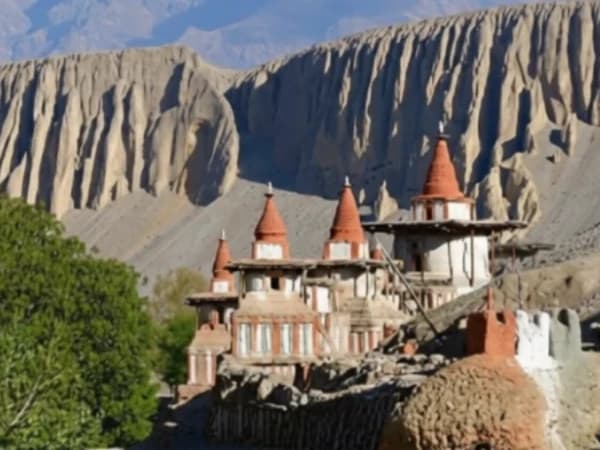
Upper Mustang Itinerary: 10, 12 or 14 Days? What Each Extra Day Adds for 2027
Our live 10-day Upper Mustang itinerary day by day, plus suggested 12 and 14 day outlines, with the USD 50 a day permit worked out for each length.
Read More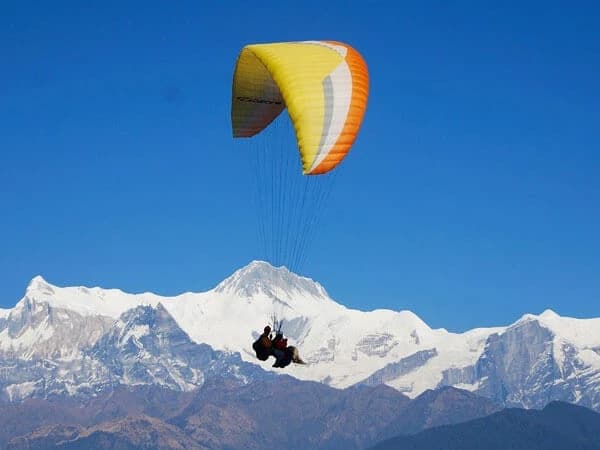
Nepal Weather Month by Month for 2027: Kathmandu, Pokhara and Namche
Average highs, lows and rainfall for Kathmandu, Pokhara and Namche Bazaar, the normal monsoon dates, and which of our treks suit each month in 2027.
Read More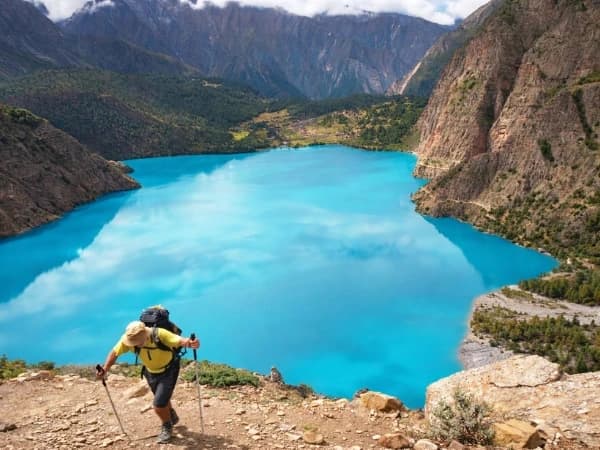
Dunai Village Guide: Height, What Is There and the Trail North for 2027
Dunai is the district town of Dolpa where the Lower Dolpo walk starts. Its height, what is there, the 7 km walk from Juphal, the trail north, best months and 2027 prices.
Read More Chat with Shreejan