
EBC is 12 days to 5,364m. Three Passes is 17 days crossing 3 passes above 5,300m. Same region, wildly different challenge. Here's the honest comparison.
Govt Regd. No.: 147653/072/073
Travel Agency Licence: 2838/072
EBC vs Everest Three Passes: How Much Harder Is It Really?

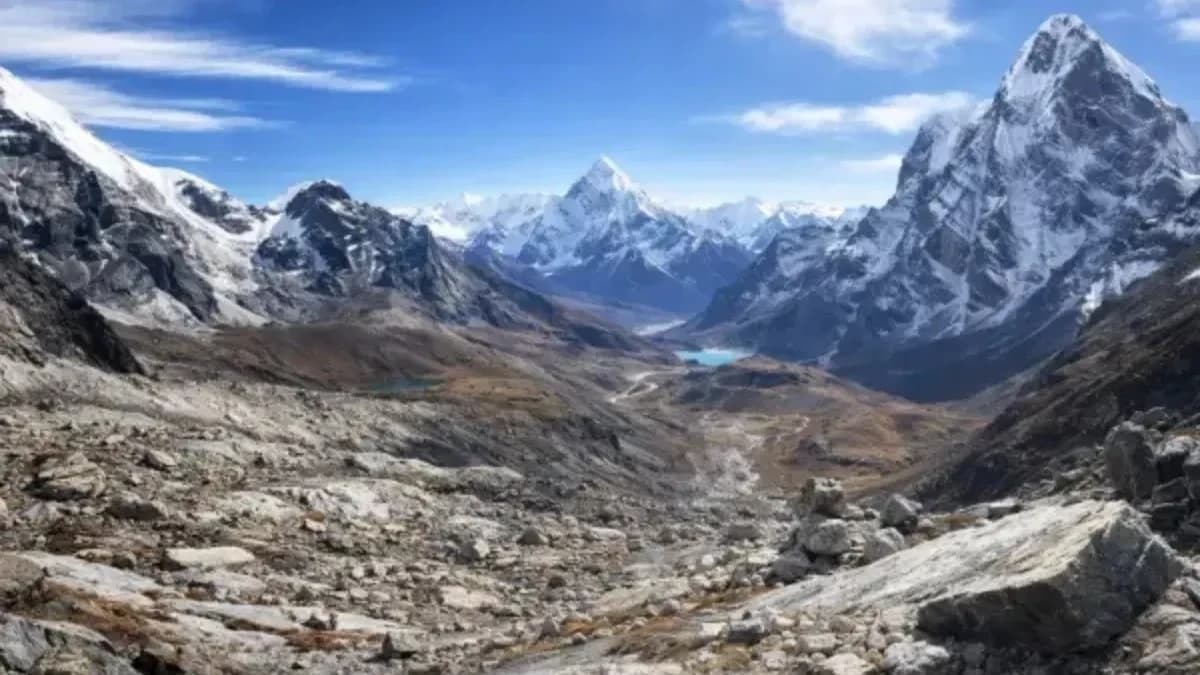
How Much Harder Is the Three Passes Trek Than Standard EBC?
I've guided both of these treks more times than I can remember, and the question I hear most often is: "Should I just do EBC, or should I go for the Three Passes?" It's the right question. Both treks start and finish in the same region. Both take you to Everest Base Camp. But one is a well-trodden path to a famous destination, and the other is a high-altitude odyssey that will test everything you've got.
The honest answer? The Three Passes trek is significantly harder than EBC. Not slightly harder. Not "a bit more challenging." It's a different category of physical and mental effort. But it's also a different category of reward. This guide lays out exactly what each trek demands and delivers, so you can choose with eyes wide open.
EBC vs Everest Three Passes at a glance
- Everest Base Camp (12 days): from $1,399pp, moderate to hard, no passes, best Mar–May & Oct–Nov.
- Everest Three Passes (17 days): from $1,855pp, very hard, 3 passes above 5,300m plus Gokyo Lakes.
- Short answer: Three Passes is a full category harder: choose it only with prior altitude experience; otherwise EBC still delivers the iconic goal.
See the EBC Trek & 2027 Dates See the Three Passes Trek or WhatsApp us
How do EBC and Three Passes compare by the numbers?
| Feature | EBC Trek | Everest Three Passes |
|---|---|---|
| Duration | 12-14 days | 17-21 days |
| Maximum altitude | 5,545m (Kala Patthar) | 5,535m (Kongma La) |
| Passes crossed | 0 | 3 (Kongma La, Cho La, Renjo La) |
| Total distance | ~130 km | ~170 km |
| Crowds (peak) | Busy | Much quieter |
| Technical skills needed | None | Basic scrambling, glacier crossing |
| Teahouse availability | Excellent, lodges every 1-2 hours | Good on main sections, sparse near passes |
| Physical difficulty | Moderate-Hard | Very Hard |
| Altitude days above 5,000m | 2 (Gorak Shep + Kala Patthar) | 5-7 |
| Cost (guided) | $1,200-$1,800 | $1,800-$2,600 |
| Best for | Fit beginners to seasoned trekkers | Experienced trekkers with altitude history |
Compare full itineraries and 2027 departures: Everest Base Camp Trek (12 Days) from $1,399pp · Everest Three High Passes Trek (17 Days) from $1,855pp. WhatsApp us to pick the right one.
The EBC Trek: Nepal's Classic
The Everest Base Camp trek follows the route pioneered by Edmund Hillary and Tenzing Norgay's 1953 expedition team. You fly to Lukla, walk through Sherpa villages, acclimatise in Namche Bazaar, and steadily gain altitude over 12 days until you reach the base of the world's highest mountain.
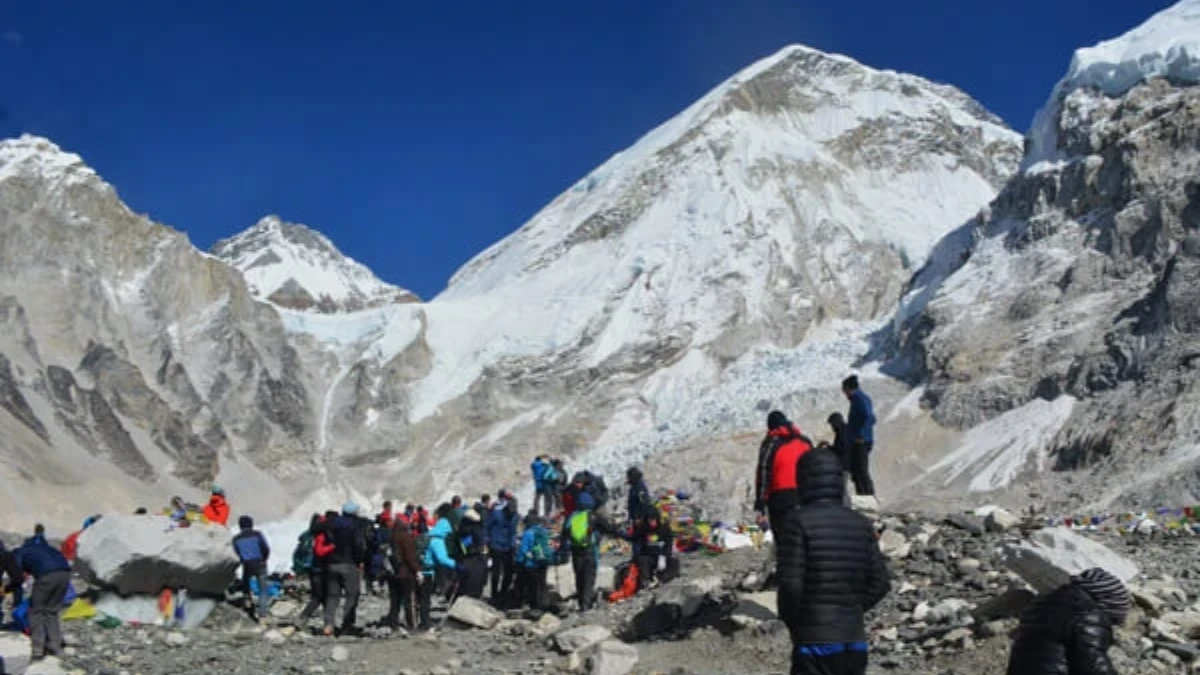
It's not easy. The altitude alone makes it a serious undertaking. But the trail itself is straightforward: well-marked, well-maintained, and serviced by teahouses every hour or two. You don't need technical skills. You don't need mountaineering background. You need fitness, determination, and the willingness to walk uphill for a week and a half.
The EBC Experience Day by Day
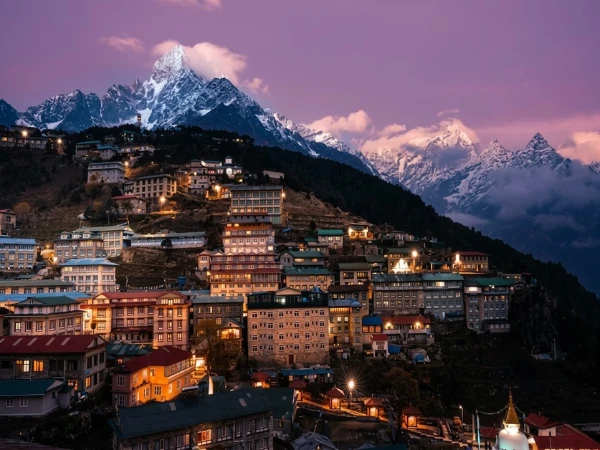
The first three days from Lukla to Namche Bazaar are the adjustment period. You cross suspension bridges, climb through pine forests, and get your first glimpse of Everest from the Namche viewpoint. It's exciting but manageable.
Days four through seven take you through Tengboche (home to the region's most beautiful monastery), Dingboche, and Lobuche. The landscape becomes increasingly barren. Vegetation thins. Glacial moraines replace green valleys. You feel the altitude now: walking is slower, breathing is harder, sleep is lighter.
Days eight and nine are the climax. You reach Gorak Shep (5,164m), hike to Everest Base Camp (5,364m) in the afternoon, and wake before dawn to summit Kala Patthar (5,545m) for the iconic sunrise view. Standing on Kala Patthar as the first light hits Everest's summit pyramid is a moment that justifies every step.
The descent takes three to four days. Your body recovers quickly at lower altitude, and the return through villages you passed on the way up feels like greeting old friends.
EBC Drawbacks
Crowds. During peak October-November season, the trail between Lukla and Gorak Shep is very busy. Teahouses in Namche, Tengboche, and Dingboche fill up. You'll queue for meals, wait for toilet turns, and share dormitory rooms with strangers who snore. Booking accommodation in advance through your agency helps, but the trail congestion is unavoidable.
The Lukla flight is a persistent source of anxiety. Weather delays can strand you for days in either direction. Budget extra days at both ends of your trip. The EBC by road trip option eliminates flight dependency entirely, though it adds driving days.
The route is out-and-back. You walk the same trail down that you walked up. Some trekkers find this anticlimactic. The Three Passes trek solves this by turning the journey into a circuit.
The Everest Three Passes Trek: The Full Experience
The Everest Three Passes trek takes the EBC route and amplifies it dramatically. You still visit Everest Base Camp and Kala Patthar, but you also cross three high passes, Kongma La (5,535m), Cho La (5,420m), and Renjo La (5,360m), and visit Gokyo Lakes, one of the Khumbu's most impressive locations.
It's the complete Everest experience. Where EBC shows you one valley, Three Passes shows you the entire region. Where EBC follows a single trail, Three Passes takes you off the beaten path into territory that most trekkers never see.
The Three Passes: What Each One Demands
Kongma La (5,535m)
The first and technically most demanding pass. The approach from Chhukung involves scrambling over rocky terrain with no clear trail in places. The final 200 metres to the pass are steep and loose. On the descent toward Lobuche, you cross a section of the Khumbu Glacier that requires careful footing.
Respect this one. If you handle Kongma La well, the other two passes will be manageable. If Kongma La defeats you, the Three Passes trek isn't for you, and there's no shame in that.
Cho La (5,420m)
The most famous of the three. The approach involves a glacier crossing: real glacier, with crevasse potential in late season. In good conditions with an experienced guide, it's a straightforward walk across hard snow. In poor conditions, it becomes genuinely dangerous. Your guide assesses the glacier on the morning and, if conditions are unsafe, takes an alternative route.
The descent into Gokyo Valley is steep but rewards you with your first view of the turquoise Gokyo Lakes below. It's one of the great visual reveals in all of Himalayan trekking.
Renjo La (5,360m)
The "easiest" of the three passes, though calling anything at 5,360m easy is misleading. By the time you reach Renjo La, you've been above 4,000m for over a week. Your body is acclimatised but also exhausted. The pass itself is a long, steady climb with a clear trail, but tired legs make every step heavier than it should be.
The view from Renjo La looking back toward Everest and down to the Gokyo Lakes is, in my personal opinion, the single finest viewpoint in the Khumbu. Better than Kala Patthar. Better than Gokyo Ri. Fight me on it.
Three Passes Drawbacks
The difficulty is real. Not everyone completes the full circuit. Altitude sickness, exhaustion, injury, or poor weather force turnarounds. You need to be mentally prepared for the possibility that your body says no, even if your mind says yes.
The duration is a commitment. 17-21 days means three weeks away from work and life. For most people, that's their entire annual leave. You can't rush it: cutting acclimatisation days to save time is how people get seriously ill.
Teahouse availability near the passes is limited. The night before Cho La, you'll likely stay at Dzongla or Thagnag, small settlements with basic lodges that fill up fast. The night before Kongma La (Chhukung) is similarly limited. Book through an agency that reserves beds in advance.
Cost is higher. The extra days, plus the need for more experienced guides and potentially technical equipment (crampons, rope), push the price $500-$800 above a standard EBC trek.
How Much Harder Is Three Passes, Really?
Let me quantify it.
Altitude exposure: On EBC, you spend 2 days above 5,000m. On Three Passes, you spend 5-7 days above 5,000m, including three separate pass crossings. Your body is under sustained high-altitude stress for nearly a week. This is the single biggest difference.
Daily physical demand: EBC's hardest day is the Kala Patthar sunrise hike: about 4-5 hours of steep climbing at extreme altitude. Three Passes has three days that each match or exceed that effort: the three pass-crossing days, each involving 8-12 hours of strenuous walking at altitude.
Technical requirement: EBC needs zero technical skills. Three Passes needs basic scrambling ability (Kongma La), comfort on glacier ice (Cho La), and the mental toughness to keep going when exhaustion tells you to stop.
Fitness multiplier: If EBC requires a fitness level of 7 out of 10, Three Passes requires a 9. The gap between 7 and 9 is much larger than it sounds. It's the difference between running a half marathon and running a full marathon: same sport, dramatically different demand.
Our porter coordinator Pasang has a formula he shares with clients: "Train for EBC by walking hills. Train for Three Passes by walking hills until you want to stop, then walk for two more hours." That extra capacity, the ability to push past fatigue, is what the Three Passes demands.
Gokyo Lakes: The Three Passes Bonus
The Three Passes route includes Gokyo Valley, which standard EBC trekkers miss entirely. The Gokyo Lakes are a chain of six turquoise glacial lakes at altitudes between 4,700m and 5,000m. The largest, Dudh Pokhari, reflects Cho Oyu (8,188m) on a still morning.
Gokyo Ri (5,357m), the viewpoint above the lakes, offers a panorama of four 8,000-metre peaks: Everest, Lhotse, Makalu, and Cho Oyu. Some trekkers rate Gokyo Ri's view above Kala Patthar's, though both are spectacular in different ways.
If you want Gokyo without the Three Passes commitment, the standalone Gokyo Lake trek takes 12-14 days. The EBC with Gokyo Lake combination adds Gokyo to the standard EBC route by crossing Cho La, giving you one pass and the lakes without the full Three Passes commitment. The Everest Two Passes trek is another middle-ground option.
How do I train for EBC or Three Passes?
For EBC
- Start training 8-12 weeks before departure
- Walk hills with a 8-10 kg pack, 3-4 times per week
- Build to 6-hour continuous walking days on weekends
- Include stair climbing, your knees need preparation for Nepal's stone steps
- Cardio fitness: you should be comfortable jogging 5 km without stopping
- No technical skills required
For Three Passes
- Start training 12-16 weeks before departure
- Walk hills with a 10-12 kg pack, 4-5 times per week
- Build to 8-10 hour continuous walking days, ideally at altitude if accessible
- Include back-to-back long days to simulate multi-day fatigue
- Cardio fitness: you should be comfortable running 10 km
- Practise scrambling on rocky terrain, hands-and-feet movement on uneven surfaces
- Previous trek itself above 4,500m is strongly recommended
- Consider a shorter trek first (Langtang, ABC) if you haven't trekked at altitude before
One piece of advice I give every Three Passes client: train when you're tired. Your pass days will come after 10+ days of trekking. Your legs will already be heavy. Your lungs will already be working harder than normal. Training on fresh legs doesn't prepare you for the reality of crossing Cho La on day 14 of a trek. Do your longest training walks the day after a hard session. That's what the Three Passes actually feels like.
Who Should Do Which?
Choose EBC If...
- It's your first high-altitude trek
- You have 12-14 days available
- You want the iconic Everest Base Camp experience without extreme difficulty
- You're fit but not an athlete
- You prefer well-established trails with reliable teahouses
- Your primary goal is to stand at the foot of Everest
Choose Three Passes If...
- You've trekked above 4,500m before and handled altitude well
- You have 17-21 days available
- You want the complete Khumbu experience including Gokyo Lakes
- Physical challenge motivates you
- You prefer quieter trails and fewer fellow trekkers
- You're comfortable with some scrambling and glacier walking
- You've specifically trained for high-altitude endurance
The Middle Ground
Can't decide? Consider these compromise options:
- EBC + Gokyo Lake trek: 16-18 days, includes one pass (Cho La) and Gokyo Lakes without the full Three Passes commitment
- Everest Two Passes trek: skip one of the three passes for a slightly shorter, slightly easier version
- Gokyo Lake trek only: see the Khumbu's most beautiful valley without the EBC crowds or the Three Passes difficulty
Which one should you do first?
My advice is what I would tell a friend. Do EBC first and see whether the Khumbu suits you, then come back for the Three Passes if it does. Trying to fit everything into one trip leaves people too tired to enjoy the best parts. If you are fit and have the time, the Three Passes shows you much more than EBC, including Gokyo and stretches of trail where you are completely alone. Whichever you choose, difficulty is not the same as quality.
What should I trek after EBC or Three Passes?
If you complete EBC and want more, the natural next step is either the Three Passes or an Island Peak climb (6,165m), a trekking peak that adds a summit day to the EBC route. For those wanting a completely different region after the Khumbu, the Annapurna Circuit and Manaslu Circuit offer contrasting landscapes and cultures.
If you complete Three Passes and want even more, you've entered the territory of expedition-style trekking. The Mera Peak climb (6,476m) is the highest trekking peak in Nepal. It requires crampon skills and rope work but not technical mountaineering. Mera is a natural next step for experienced trekkers who enjoy the Three Passes.
For a gentler follow-up to either trek, the Everest View Trek or Short Trek to Namche Bazaar let you revisit the Khumbu without the altitude commitment. Some clients come back just for the apple pie in Namche.
Frequently Asked Questions
Can I add the Three Passes to a standard EBC trek if I'm feeling strong?
Not easily. The Three Passes trek requires specific routing and pre-booked accommodation at lodges near the passes. You can't simply decide at Gorak Shep to "add on" Cho La. If you think Three Passes is a possibility, book it from the start. You can always skip passes if conditions or fitness don't allow, but you can't improvise them into a standard EBC itinerary.
Does age matter on the Three Passes?
Age matters less than fitness and altitude experience. The trekkers who do best on the Three Passes are the ones who prepare properly and have some mountain experience behind them.
How dangerous is the Cho La glacier crossing?
In good conditions with an experienced guide, the risk is low. The glacier is relatively flat, the crossing takes 30-45 minutes, and our guides assess conditions before committing. In poor conditions, fresh snow hiding crevasses, ice, or whiteout, we don't cross. Safety is non-negotiable. We reroute to Gokyo via the valley floor, which adds a day but keeps everyone safe.
Is the Three Passes worth the extra cost and time?
If you have the fitness, time, and budget, yes. The Three Passes trek is widely considered one of the top five treks in the world by those who've completed it. The combination of Everest Base Camp, three high passes, and Gokyo Lakes in a single trek is unmatched. But if you're stretching beyond your comfort zone on any of those three factors (fitness, time, or budget), EBC alone is a serious trek that you'll remember forever.
Can I do Three Passes in monsoon or winter?
We can run the Three Passes all year round, depending on how the weather conditions are. Each departure is decided on the current weather and pass conditions, the guide makes the call on the day, and if a pass is unsafe we take an alternative route instead of pushing on. The passes accumulate snow in winter (December-February) that can make crossings impossible, and the nights are colder and the days shorter. Cho La's glacier becomes more dangerous with fresh snow cover. In monsoon (June-September), visibility drops to near zero on pass days and the trail becomes dangerously slippery. The easiest windows are October-November and March-May. For the colder months in detail, read our guide to the Three Passes in November and December. EBC is slightly more flexible, winter EBC is possible with proper gear, though cold and demanding.
Ready to Choose?
We run everything from a first trip to Everest Base Camp to all three passes in one push, and we will get you there safely. We are three generations of family guides, and the Khumbu is home.
Get in touch:
- WhatsApp: +977 9810351300
- Email: [email protected]
- Browse our EBC Trek and Everest Three Passes Trek packages
Written by Shreejan Simkhada, third-generation Himalayan guide and founder of The Everest Holiday. Licensed by the Trekking Agencies' Association of Nepal (TAAN #1586). Born in the Himalaya, tested on every pass, and still finding new reasons to walk uphill.
EBC or Three Passes? Start with EBC. Our Everest Base Camp Trek (12 Days) is private (your group only, no strangers), 2027 dates open, From USD $1,399. WhatsApp us for tailored 2027 dates and current departures.
Planning a trip to Nepal?
Drop us your details and tell us what you have in mind. We will put together a personalised plan and get back to you.
Not sure which Nepal trek is right for you?
Take our free 2-minute quiz and get personalised recommendations based on your fitness, experience, and travel style.
Find Your Perfect Trek →Need Help? Call Us+977 9810351300orChat with us on WhatsApp
Latest Travel Blogs
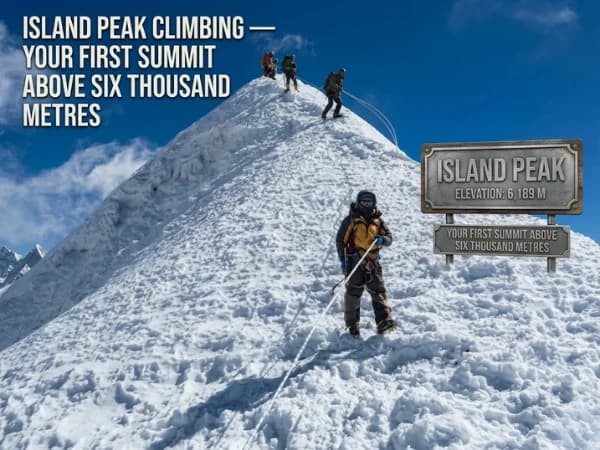
Island Peak Itinerary and Summit Day 2027: 14 Days, Base Camp to the Top
The 14-day Island Peak itinerary day by day, what summit day is like from base camp, where sources disagree on heights, best months and 2027 prices.
Read More
How Difficult Is the Mardi Himal Trek? An Honest Day-by-Day Rating for 2027
An honest day-by-day rating of the Mardi Himal trek: the steep climb to High Camp, the 4,500 m push to Base Camp, altitude risk, who finds it hard and 2027 prices.
Read More
Manaslu Circuit Reopened: What Changed After the 2026 Floods and How to Plan 2027
The Manaslu Circuit over the Larke Pass is open again with extreme caution. What changed in the lower valley after the two 2026 floods, 2027 prices and permits, and how I would plan.
Read More Chat with Shreejan