

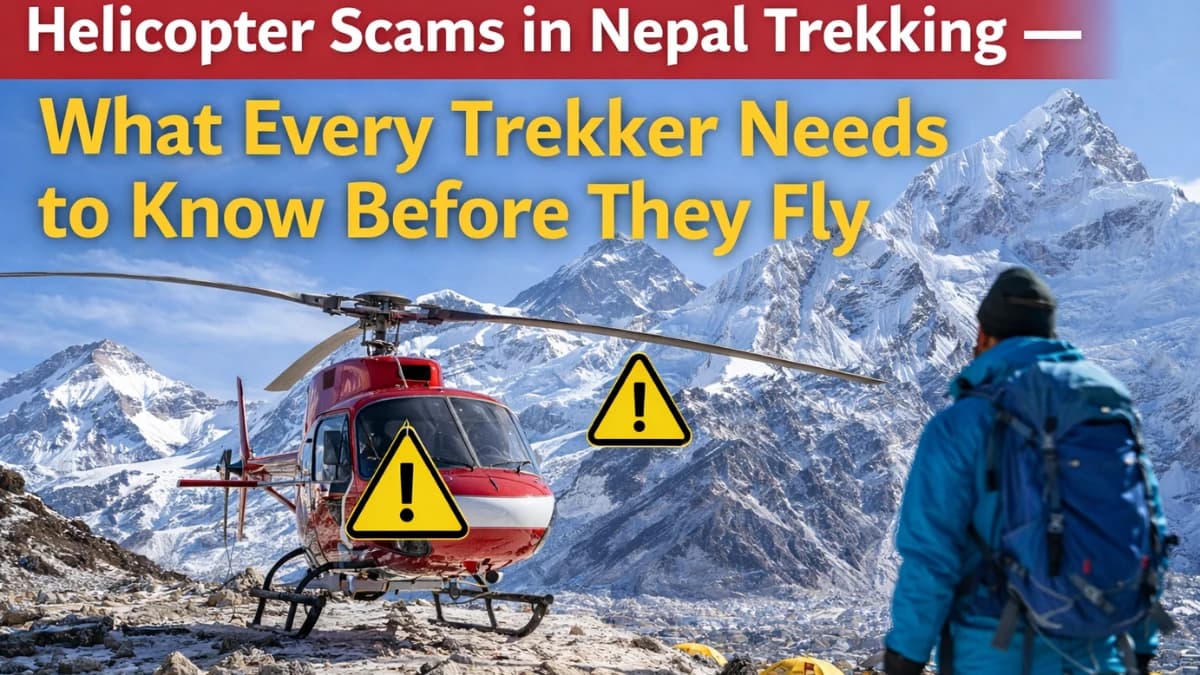
The helicopter arrives in a storm of noise and wind. You are at four thousand metres, maybe five. Someone in your group, or you, has a headache that will not go away, nausea that has lasted two days, or a cough that produces something pink. The guide makes a radio call. Within hours, a helicopter lands on a clearing barely bigger than a tennis court, and you are lifted off the mountain and deposited in a Kathmandu hospital within ninety minutes. It is one of the most extraordinary pieces of infrastructure in adventure travel,a safety net that turns potentially fatal altitude emergencies into expensive but survivable inconveniences.
And it is being abused. Systematically, repeatedly, and at a scale that has caught the attention of insurance companies, embassies, and the Nepal government itself.
The helicopter rescue system in Nepal's trekking regions saves genuine lives every season. It also generates fraudulent claims that cost the global insurance industry millions of dollars per year, inflate premiums for honest trekkers, and, most perversely, undermine the credibility of legitimate evacuations. Understanding how the scam works, how to protect yourself, and how to distinguish a necessary evacuation from an unnecessary one is now an essential part of trek preparation.
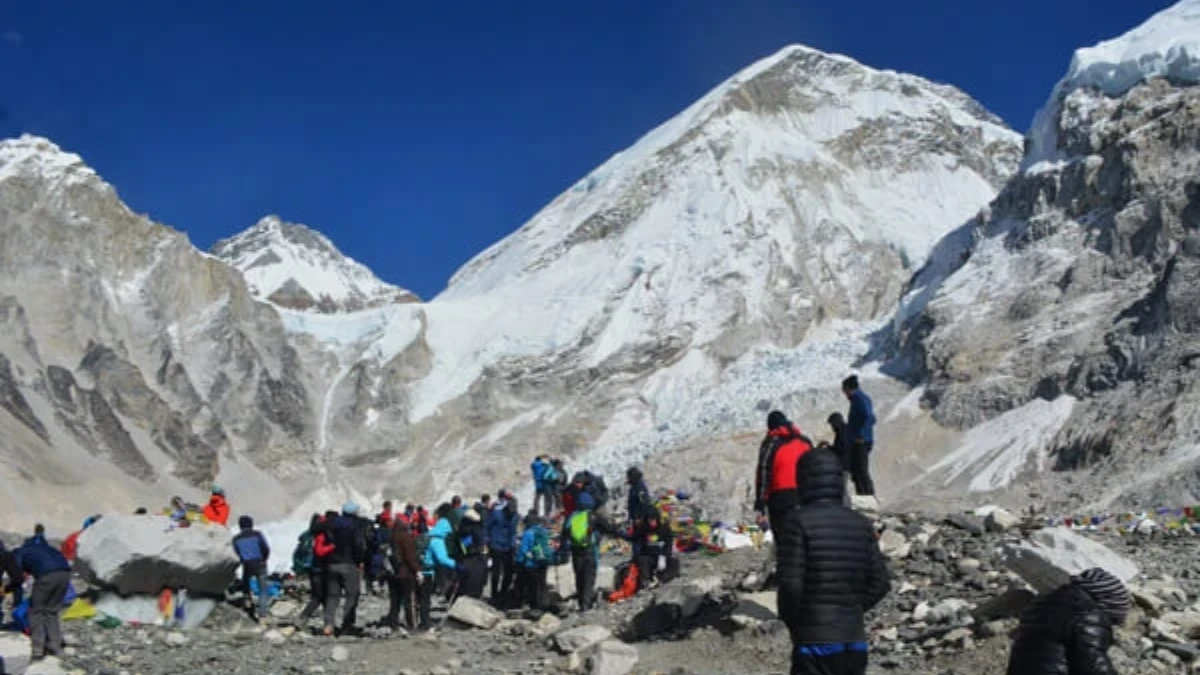
How does the helicopter rescue scam in Nepal trekking work?
The basic mechanism is simple. A trekker develops symptoms, real or exaggerated, at altitude. A guide or teahouse owner suggests a helicopter evacuation. The trekker, frightened and disoriented by altitude, agrees. The helicopter arrives, collects the trekker, and flies them to Kathmandu. The bill, typically three thousand to eight thousand US dollars, is submitted to the trekker's insurance company.
In a legitimate evacuation, this is precisely how the system should work. The problem arises when the evacuation is medically unnecessary.
The variations are numerous. In some cases, guides exaggerate symptoms to trigger an evacuation. A mild headache becomes "suspected HACE." "Routine fatigue becomes an altitude emergency." The trekker, who is genuinely feeling unwell (everyone feels unwell at altitude to some degree), trusts the guide's medical assessment and consents to the helicopter.
In other cases, the guide, the helicopter company, and occasionally the clinic in Kathmandu operate as a coordinated network. The guide receives a commission for each evacuation, reports suggest one hundred to five hundred dollars per referral. The helicopter company charges the maximum rate. The clinic in Kathmandu admits the trekker for "observation" and generates additional bills. The entire chain profits from a single insurance claim.
In the most egregious cases, helicopters that evacuate one trekker pick up additional passengers, other trekkers who want a ride to Kathmandu rather than walking, and charge insurance for each one. One helicopter flight and three or four insurance claims, each at full evacuation rates.
The numbers are significant. In 2023, Nepal saw over five thousand helicopter rescue flights from trekking regions. Industry estimates suggest that thirty to fifty percent of these were medically unnecessary. Insurance companies have responded by tightening claims procedures, increasing scrutiny, and in some cases refusing to cover Nepal helicopter evacuations entirely, which punishes the trekkers who genuinely need them.
Why do helicopter evacuation scams keep happening in Nepal?
Several factors make this scam persistent and difficult to eliminate.
First, the medical assessment at altitude is inherently subjective. Altitude sickness symptoms, headache, nausea, fatigue, and confusion, are real but non-specific. A headache at 4,500 metres could be mild AMS that resolves with rest, or it could be the early stage of HACE that progresses to coma within hours. The person making the assessment is not a doctor. The trekker is not in a position to evaluate their condition objectively. In this ambiguity, the recommendation to evacuate always sounds reasonable.
Second, the trekker has a powerful incentive to agree. They feel terrible. They are frightened. They have insurance that covers the cost. The helicopter is offered as a solution to their suffering. Refusing the helicopter, staying at altitude, continuing to feel terrible, and trusting that their symptoms will resolve, requires medical confidence that most trekkers do not have.
Third, the financial incentives for the guide, the helicopter company, and the clinic are aligned toward evacuation. The trekker's decision to stay on the trail does not benefit anyone in the chain. Nobody profits from a rest day and paracetamol. The profit is in the helicopter.
Fourth, enforcement is weak. Nepal's aviation authority and trekking regulation bodies have acknowledged the problem and introduced some reforms, but the system is difficult to police. The guide's assessment, even if influenced by commission rather than medicine, can justify each evacuation.
The Real Risk: Crying Wolf
The most serious damage of the scam is not financial. It is medical. When insurance companies tighten helicopter evacuation policies, requiring pre-authorisation, imposing caps, or adding exclusions, the trekker who genuinely needs an emergency evacuation faces delays and obstacles. When embassy advisories warn about "helicopter scams," trekkers become suspicious of legitimate evacuation recommendations. When a guide tells a trekker with genuine HAPE that they need a helicopter, and the trekker, having read about the scam, refuses, the consequences can be fatal.
This is the scam's cruelest effect. It erodes trust in the system that saves lives. The trekkers who hesitate pay the price, not the scammers.
How can I avoid helicopter evacuation scams when trekking in Nepal?
Choose your trekking company carefully. This is the single most effective protection. Companies with established reputations, long track records, verified reviews on TripAdvisor and Google, TAAN membership, and transparent business practices, do not participate in helicopter scams because the reputational risk far exceeds the commission income. Budget operators, freelance guides, and informal arrangements are the main targets of the scam.
Understand altitude sickness before you trek. Know the symptoms. Know the progression. Know that mild AMS, headache, nausea, fatigue, is normal above 3,500 metres and resolves with rest and hydration. Know that HACE and HAPE are rare and have specific, recognisable symptoms (ataxia and confusion for HACE; persistent cough with frothy sputum and breathlessness at rest for HAPE). A trekker who understands the difference between "I feel terrible, but my condition is normal" and "I feel terrible, and something is genuinely wrong" is less susceptible to unnecessary evacuation.
Carry your pulse oximeter. They cost fifteen to thirty dollars, weigh less than a phone, and give you an independent reading of your blood oxygen saturation. Your guide should be monitoring SpO2, but having your own device means you can verify the numbers. An SpO2 of 80 percent at 4,500 metres with a headache is a normal altitude response. An SpO2 level of 65 percent, accompanied by confusion and an inability to walk straight, constitutes a genuine emergency. The difference is measurable, and knowing your numbers provides you with information to make better decisions.
Know the descent option. The treatment for altitude sickness is descent. Not a helicopter descent. If you develop symptoms at Lobuche (4,940 m), walking down to Pheriche (4,250 m), a descent of 690 metres over three to four hours, will resolve most AMS symptoms. The Himalayan Rescue Association clinic at Pheriche provides altitude sickness assessments by trained physicians during the trekking season. If descent and medical assessment confirm that helicopter evacuation is necessary, the recommendation carries medical authority that a guide's opinion alone does not.
Ask questions before agreeing. If your guide recommends helicopter evacuation, ask: Can we descend first? Is there a medical clinic nearby? What specific symptoms make you think the condition is an emergency rather than normal AMS? How quickly do you expect symptoms to progress? A guide acting in your genuine medical interest will answer these questions clearly. A guide acting on commission will push urgency,"we need to decide now," "the weather window is closing," "it could get worse fast",without engaging with the specifics.
Contact your insurance company before authorising. Many insurance policies now require pre-authorisation for helicopter evacuations in Nepal. If you have phone or satellite coverage, call your insurer's emergency line before the helicopter is dispatched. The insurer may ask to speak with a medical professional, if there is a doctor at a nearby clinic, this is straightforward. If the insurer approves, you have confirmed coverage. If they require more information, you have a reason to explore alternatives before committing to the flight.
Document everything. If you are evacuated, take photographs and notes. Time, location, symptoms, SpO2 readings, names of the guide and helicopter company, and anything you are told about your condition. This documentation supports a legitimate claim and provides evidence if the claim is questioned.
When do you really need a helicopter rescue while trekking?
None of the above should make you hesitate when a helicopter is genuinely needed. The following situations warrant immediate evacuation regardless of cost, convenience, or suspicion:
Suspected HACE, confusion, inability to walk in a straight line, altered consciousness, hallucinations, severe headache unresponsive to medication, and rapid deterioration. HACE kills at altitude. Descent by walking may not be fast enough. Helicopter evacuation can mean the difference between full recovery and death.
Suspected HAPE, persistent cough with pink or frothy sputum, extreme breathlessness at rest, gurgling sounds when breathing, and blue lips or fingertips. HAPE can progress from manageable to fatal within hours. Descent is the treatment, and a helicopter descent is the fastest descent available.
Traumatic injury, broken bones, deep lacerations, head injuries from falls. The terrain on Nepal's treks includes exposed ridges, loose rock, and icy sections where falls are possible. Injuries that would be routine at sea level become complex emergencies at altitude, where the body's healing capacity is already compromised.
Cardiac or other medical emergencies unrelated to altitude, heart attack symptoms, severe allergic reactions, appendicitis. These require hospital treatment that does not exist on the trail.
In any of these situations, call the helicopter. Do not delay. Do not second-guess. The cost of an unnecessary helicopter ride is money. The cost of not calling a necessary helicopter is measured in outcomes that money cannot reverse.
What is Nepal doing to stop helicopter rescue scams?
The Nepalese government has introduced several measures to combat fraudulent evacuations. Helicopter companies now require more detailed documentation of the medical basis for each evacuation. Insurance companies have stationed representatives in Nepal during peak trekking season to review claims in real time. TAAN has increased enforcement against member companies found participating in evacuation fraud, including licence suspension.
Some insurance companies now work with specific helicopter operators that have agreed to transparency standards, pre-flight medical assessment documentation, standardised billing, and no commission payments to guides. Trekkers can ask their insurer which operators are approved before departing.
The reforms are incremental rather than profound. The system is complex, the incentives are powerful, and the remote locations make oversight difficult. But the trajectory is toward greater accountability, and trekkers who book with reputable companies, carry their own knowledge and equipment, and make informed decisions contribute to a system that works for everyone.
Should helicopter scams stop you from trekking in Nepal?
The helicopter scam is not a reason to avoid trekking in Nepal. It is a reason to prepare properly, book carefully, and understand the medical realities of altitude before you leave home. The vast majority of hikers complete their treks without needing any evacuation. Most evacuated trekkers have genuine medical needs. The scam exists at the margins, and it is at the margins where informed trekkers with reputable companies are least likely to find themselves.
The helicopters that fly into Nepal's trekking regions are, fundamentally, an extraordinary gift,a technology that turns the most remote mountains on earth into places where ordinary people can walk safely, knowing that if the worst happens, rescue is hours away rather than days. The abuse of that gift is real and documented. But the gift itself remains intact. And for the trekker who finds themselves at five thousand metres with a body that has genuinely failed, lungs filling with fluid, brain swelling beyond what rest can resolve, the sound of rotor blades cutting through thin mountain air is the sound of being alive tomorrow.
Protect yourself from the scam. But do not fear the helicopter. Fear the altitude. Respect the altitude. And trust, with the right company, the right preparation, and the right information, that the system will work as it should when you need it most.
Read about insurance requirements on our trek pages. Helicopter evacuation cover is mandatory.
Helicopter scams are the dirty secret of Nepal trekking. A guide tells you that you have altitude sickness when you do not. A helicopter is called. The bill is $5,000. The guide gets a commission. Your insurance company fights the claim. You end up paying. It happens more often than the industry admits, and it happens almost exclusively to trekkers who booked the cheapest operator they could find.
On our treks, the guide decision to evacuate is based on pulse oximetry readings and the Lake Louise Score, not commissions. We do not take helicopter kickbacks. Period.
WhatsApp:+977 9810351300
Email:[email protected]
Written by Shreejan Simkhada, CEO of The Everest Holiday and third-generation Himalayan guide. TAAN Member #1586.
Avoid heli scams: book EBC Heli Return with us, not a broker. Our EBC with Helicopter Return (10 Days) is private (your group only, no strangers), 2026 dates open, From USD $4499. WhatsApp us for tailored 2026 dates and current departures.

 Chat with Shreejan