

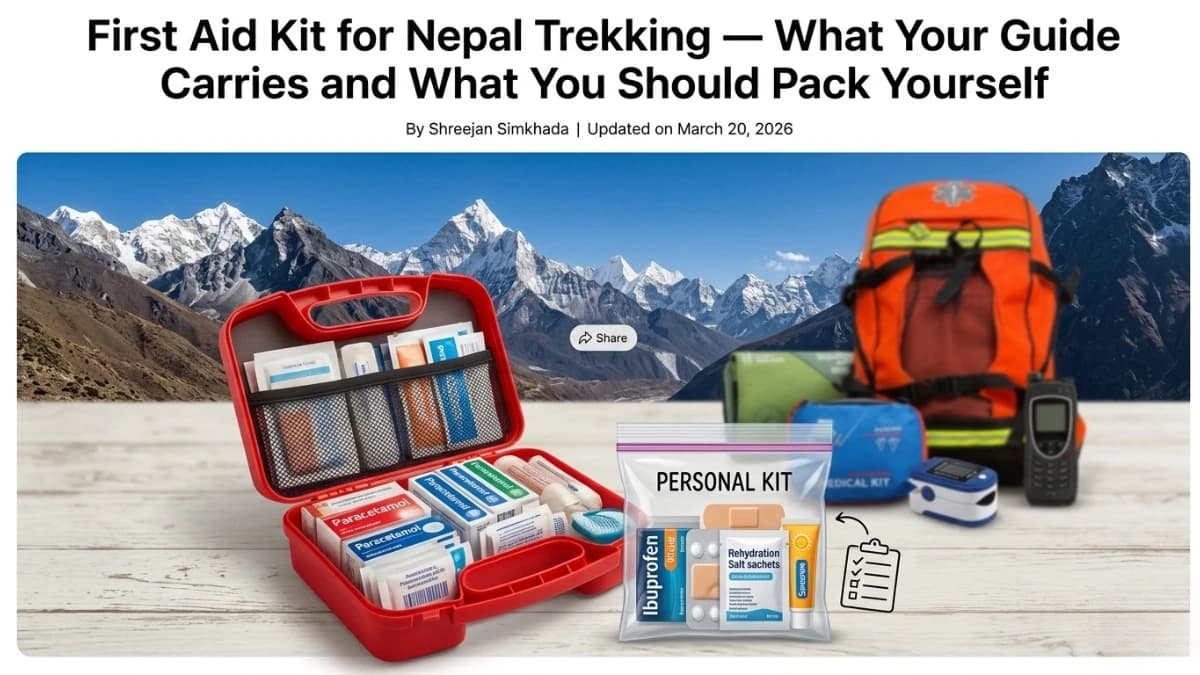
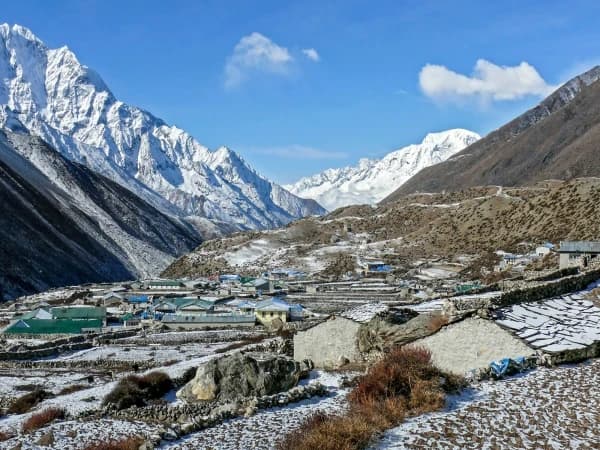
At 4,410 metres in Dingboche, a trekker from Bristol opened his first aid kit for the first time in seven days. Inside: a strip of paracetamol, a box of plasters, and an expired tube of antiseptic cream he had owned since a camping trip in the Lake District four years ago. He needed rehydration salts. He needed ibuprofen for a headache that had been building since Tengboche. He needed blister plasters for the raw patches on both heels that he had been ignoring since Namche.
His guide had all of these things. Guides from reputable trekking companies carry full medical kits with altitude medications, wound care, gastrointestinal remedies, and emergency drugs. But the guide's kit is for emergencies and for the moment when your own preparation fails. It is not a substitute for your own basic medical supplies, the everyday items that prevent small problems from becoming trek-ending ones.
Here is what to carry yourself, what your guide carries, and what you absolutely should not leave home without.
What should I pack in my Nepal trekking first aid kit?
Pain and Inflammation
Ibuprofen, the most useful single medication on a Nepal trek. It manages altitude headaches, reduces inflammation in overworked joints, and helps with the general aches that accumulate over twelve days of sustained walking. Four hundred milligrams as needed, up to three times daily with food. Pack a full box, you will use more than you expect.
Paracetamol, for pain relief when ibuprofen is not suitable, particularly if you have stomach sensitivity. Also useful for reducing fever if you develop an infection.
Gastrointestinal
Oral rehydration salts, the single most important item after painkillers. Diarrhoea at altitude is common, dehydrating, and debilitating. Rehydration salts replace the electrolytes and fluids lost faster than water alone can. Pack six to eight sachets.
Loperamide (Imodium), for severe diarrhoea that does not respond to rehydration alone. This stops the symptoms but does not treat the cause. Use it when you need to function, walking six hours with active diarrhoea is miserable and dangerous, but stop taking it if symptoms persist beyond two days, as your body may need to expel whatever is causing the problem.
Antacid tablets, altitude can cause acid reflux and stomach discomfort, particularly when eating large volumes of dal bhat that your stomach is not accustomed to.
Wound Care
Blister plasters, specifically designed adhesive patches (Compeed or similar) that cushion blisters and prevent them worsening. Regular plasters do not work on blisters, they fall off within an hour of walking. Carry six to eight blister patches. Apply at the first sign of a hot spot, not after the blister has formed.
Adhesive bandages in assorted sizes, for minor cuts and scrapes from rocky terrain.
Antiseptic wipes or cream, for cleaning wounds before covering. Small cuts that seem trivial at sea level take longer to heal at altitude where your immune system is suppressed by reduced oxygen.
Medical tape and a small gauze pad, for larger wounds or securing dressings in places where adhesive bandages will not stick.
Altitude and Respiratory
Diamox (Acetazolamide), if your doctor has approved it. The standard preventive medication for altitude sickness. Pack enough for the full trek plus three extra days. See our separate Diamox guide for dosage and side effects.
Throat lozenges, dry air at altitude causes sore throats in nearly every trekker. The combination of mouth-breathing during exertion and humidity levels below fifteen percent strips moisture from your throat and airways. Lozenges provide relief and stimulate saliva production.
Skin and Sun
Sunscreen SPF 50+, in a tube, not a spray (sprays are wasteful at altitude). Small enough to carry in your daypack pocket so you actually reapply every two hours rather than leaving it in your duffel bag and telling yourself you will apply it at the next stop.
Lip balm with SPF, your lips will crack painfully without daily application above three thousand metres.
Hand cream, dry air and frequent hand sanitiser use leave skin cracked and painful. A small tube of moisturiser applied at bedtime keeps your hands functional.
Other Essentials
Antihistamine tablets, for allergic reactions to food, insect bites, or dust. Also useful as a mild sleep aid at altitude where insomnia is common.
Hand sanitiser, use before every meal. Gastrointestinal illness is the most common health problem on Nepal treks, and hand hygiene is the most effective prevention.
Any personal prescription medication, with enough supply for the full trek plus three to five extra days in case of delays. Carry them in original packaging with the pharmacy label visible, in case customs officials at Kathmandu airport ask questions.
What emergency medical equipment does a Nepal trekking guide carry?
A licensed guide from a reputable company carries a medical kit that includes everything above plus medications that require professional judgment to administer:
Pulse oximeter, a small clip device that measures blood oxygen saturation. Normal at sea level: ninety-five to one hundred percent. At five thousand metres: seventy-five to eighty-five percent is normal. Below seventy percent: serious concern. Below sixty-five: descend immediately.
Dexamethasone, a powerful steroid for emergency treatment of severe altitude sickness (HACE). Not a preventive medication. Only used when the patient cannot descend immediately and needs the drug to buy time until evacuation.
Nifedipine, for emergency treatment of high altitude pulmonary oedema (HAPE). Reduces pressure in the pulmonary arteries while descent is arranged.
Injectable adrenaline (epinephrine), for severe allergic reactions (anaphylaxis). Rare on trek but potentially life-saving.
Complete wound care supplies, bandages, splints, wound closure strips, and materials for immobilising a suspected fracture until evacuation.
Emergency communication, satellite phone or radio for contacting the company office in Kathmandu when mobile signal is unavailable. Related: Diamox and Altitude Medication for Nepal Treks: What Works, What Does Not, and What to Ask Your Doctor.
What should I leave out of my Nepal trekking first aid kit?
An entire pharmacy. Your guide carries the emergency medications. You carry the everyday items. Between the two of you, every reasonable medical scenario is covered.
Antibiotics, unless specifically prescribed by your doctor for a pre-existing condition. Self-prescribing antibiotics on the trail is medically inappropriate and potentially harmful.
Surgical instruments, suture kits, or anything requiring medical training to use. If a wound requires stitches, you need a hospital, not a sewing kit in your daypack.
Snake bite kits. There are no venomous snakes above two thousand metres in Nepal. On the lower approach trails, bites are extraordinarily rare.
How do I pack and organise my first aid kit for Nepal trekking?
Everything in a single waterproof bag, a small dry bag or a ziplock bag. Inside your daypack, not your duffel. You need access to your first aid kit on the trail, not at the teahouse where your duffel arrives two hours after you do.
Label anything that is not in its original packaging. A loose strip of white pills at the bottom of a bag is useless if you cannot remember whether they are ibuprofen or antihistamines at eleven at night with a headache and a torch that is running out of battery.
Check expiry dates before you leave home. The antiseptic cream from four years ago has expired. The blister plasters you bought for a walk in Scotland in 2019 may still work but the adhesive may not. Replace anything you are not certain about. The cost of a fresh first aid kit is trivial compared to the cost of needing it and finding it ineffective.
The Kit That Matters Most
Prevention is a better kit than treatment. Drink water before you are thirsty. Apply sunscreen before you burn. Treat blisters before they form. Tell your guide before symptoms worsen. The most important medical supply on any Nepal trek is not a pill or a plaster. It is the willingness to acknowledge a problem early and address it before it becomes something that no first aid kit, however complete, can fix.
Our guides carry full first aid kits. See the trek pages for what is included in every package.
Your guide carries a first aid kit. You should carry a smaller one too. Paracetamol, ibuprofen, plasters, antiseptic wipes, oral rehydration salts, and your personal medications. That covers 90% of what goes wrong on a trek. The other 10% is what your guide and the helicopter are for.
We provide a full first aid kit on every trek. Your guide is trained in wilderness first aid.
WhatsApp:+977 9810351300
Email:[email protected]
Written by Shreejan Simkhada, CEO of The Everest Holiday and third-generation Himalayan guide. TAAN Member #1586.
First-aid kit for EBC: our guides carry the heavy ones. Our Everest Base Camp Trek (12 Days) is private (your group only, no strangers), 2026 dates open, From USD $1399. WhatsApp us for tailored 2026 dates and current departures.

 Chat with Shreejan