

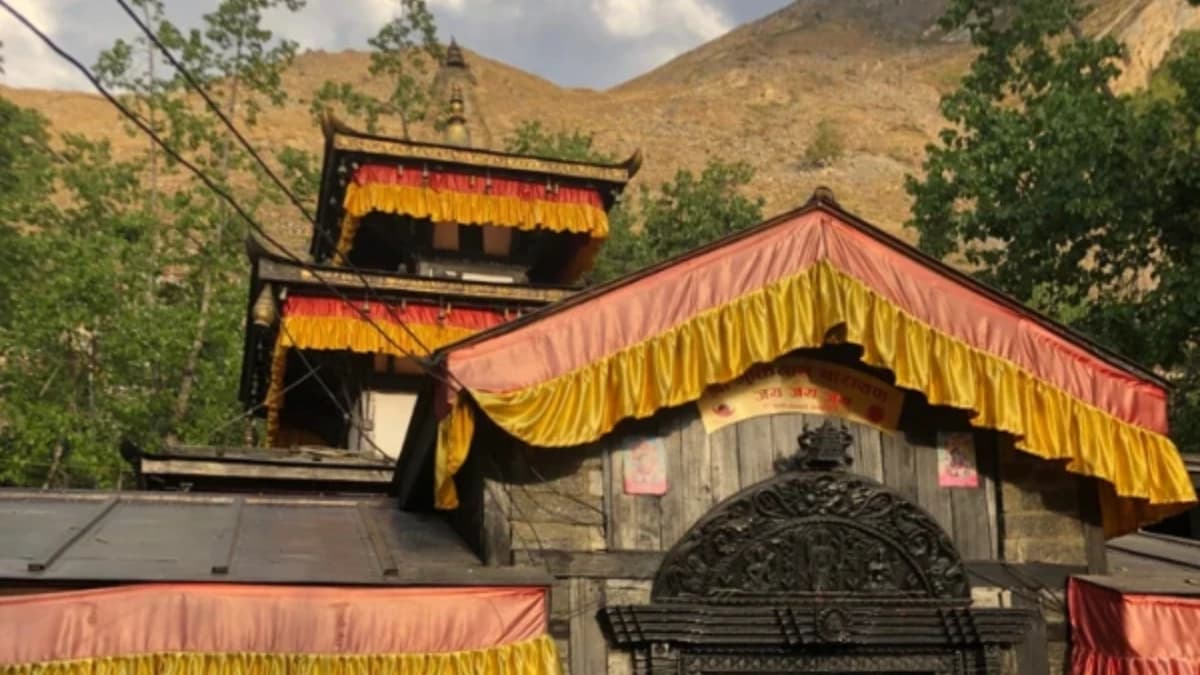
Short answer: Muktinath, at 3,710 m in Mustang district, is a temple sacred to both Hindus and Buddhists, at the foot of Thorong La on the Annapurna Circuit. Trekkers reach it on the day they cross the pass, and pilgrims usually come by road from Jomsom. It sits inside the Annapurna Conservation Area, so you need the ACAP permit. Visit it on our Annapurna Circuit trek.
Written by Shreejan Simkhada, CEO of The Everest Holiday and third-generation Himalayan guide. TAAN Member #1586.
Muktinath is one of Nepal’s most revered sacred sites, attracting thousands of pilgrims and trekkers each year. Located at 3,710 metres in the Mustang district, this ancient temple lies at the foot of the Thorong La Pass, overlooking the arid landscapes of Upper Mustang. Known as the “Temple of Liberation,” Muktinath is sacred to both Hindus and Buddhists, making it a unique site of spiritual harmony in the Himalayas.
The combination of religious reverence, unobstructed mountain views, traditional Mustang culture, and wildlife makes Muktinath a singular Himalayan destination. Pilgrims seek spiritual merit, while trekkers explore rugged trails, ancient villages, and desert-like landscapes.
What Is Muktinath?
Muktinath (also known as Mukti Kshetra, meaning "place of liberation") is one of the most sacred pilgrimage sites in both Hinduism and Buddhism. It sits at 3,710 metres in the Mustang District of northern Nepal, at the foot of Thorong La pass on the Annapurna Circuit.
For Hindus, Muktinath is one of the 108 Divya Desams, the holiest shrines of Lord Vishnu. Bathing in the 108 water spouts surrounding the temple and praying at the shrine is believed to grant moksha (liberation from the cycle of rebirth). Pilgrims travel from across India, Nepal, and Sri Lanka to visit.
For Buddhists, Muktinath holds significance as a place where Guru Padmasambhava (also known as Guru Rinpoche) meditated on his journey to Tibet. The temple complex is called Chumig Gyatsa in Tibetan, meaning "hundred waters." Buddhist pilgrims circle the complex and pay respect at shrines alongside their Hindu counterparts.
This shared sacred space (Hindus and Buddhists worshipping side by side in the same complex) is quintessentially Nepali. It's a living example of the religious harmony that defines this country.
Why Is Muktinath Sacred to Hindus and Buddhists?
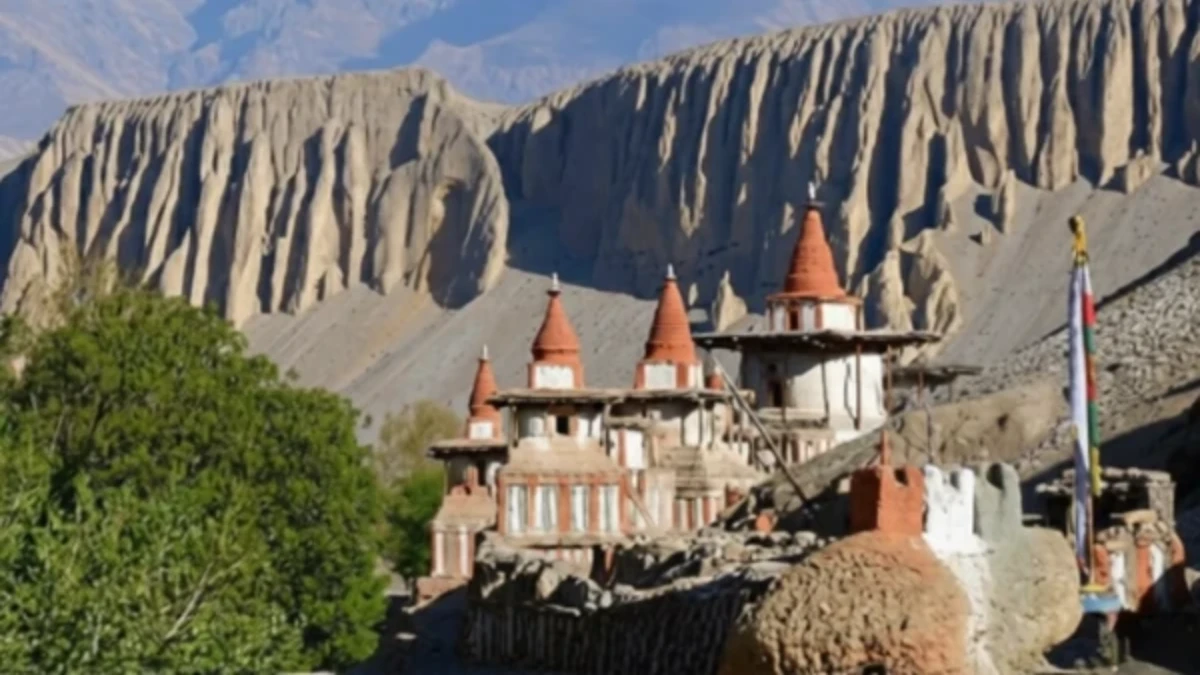
Muktinath’s history is deeply intertwined with Hindu and Buddhist traditions, making it one of the rare places in Nepal revered by both religions. Archaeological evidence and ancient scriptures suggest that the site has been a place of worship for over a thousand years, though local legends claim its significance dates back several millennia.
Early Religious Significance
In Hindu tradition, Muktinath is considered one of the 108 Divya Desams, sacred shrines dedicated to Lord Vishnu. The temple is believed to have been established as a pilgrimage site for devotees seeking moksha, or spiritual liberation. The unique feature of the 108 water spouts, known as Muktidhara, has long been central to Hindu worship. Each spout is believed to correspond to sacred verses and mantras, allowing pilgrims to perform ritual purification by bathing under these holy waters.
Muktinath is associated with the sage Vishwamitra, who, according to Hindu lore, attained salvation at this sacred site. Legends state that bathing in the temple’s waters and paying respect to the deity ensures cleansing of sins, spiritual upliftment, and divine blessings. Over the centuries, kings and local rulers have made donations to the temple, ensuring its preservation and continued importance.
Buddhist History
For Buddhists, particularly those following Tibetan traditions, Muktinath is called Chumig Gyatsa, meaning “Hundred Waters.” The site is linked to Guru Rinpoche (Padmasambhava), who is said to have meditated here while spreading Buddhism across the Himalayas in the 8th century. It is believed that Guru Rinpoche blessed the land, establishing Muktinath as a place where compassion and enlightenment can be sought.
The coexistence of Hindu and Buddhist worship at Muktinath highlights Nepal’s history of religious syncretism, where different traditions blended peacefully over centuries. This interweaving of beliefs contributes to the temple’s spiritual energy and makes it a unique destination for pilgrims and trekkers alike.
Role in Mustang’s Cultural History
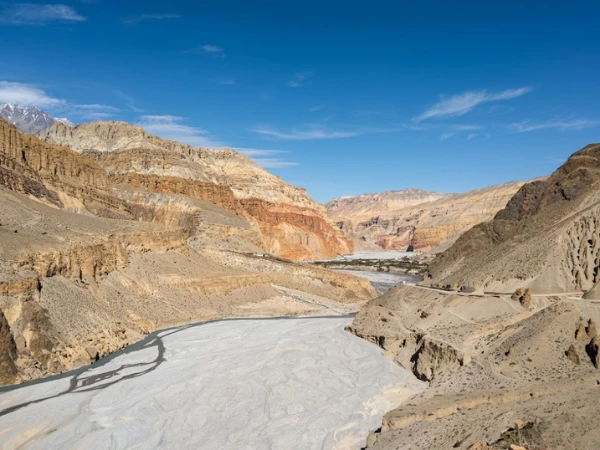
Muktinath is located in the Upper Mustang region, historically part of a Tibetan-influenced kingdom. The strategic location of Muktinath along trade routes connecting Tibet and Nepal made it a cultural hub. Traders, pilgrims, and travellers would often stop at Muktinath, bringing donations, cultural artefacts, and stories from distant lands.
The surrounding villages, including Kagbeni, Tangbe, and Jharkot, developed in connection with the pilgrimage. These villages grew around monasteries, tea houses, and trade posts, forming a cultural landscape that thrives to this day. Muktinath’s history is therefore not just religious; it is deeply embedded in the social, economic, and cultural development of Mustang.
Modern History and Preservation
In recent decades, Muktinath has gained international attention due to trekking routes like the Annapurna Circuit and short pilgrimages from Jomsom. Despite this, the temple has maintained its traditional architecture, rituals, and spiritual importance. Local communities and the Nepalese government work together to protect the temple complex and its surroundings.
The temple survived significant challenges, including harsh Himalayan weather, limited access, and historical political changes. Yet it remains a living heritage site, combining centuries-old religious practices with modern trekking tourism.
Legends and Stories
Many stories are told about Muktinath that link natural phenomena with divine intervention:
The eternal flame at Jwala Mai temple is said to have burned continuously for centuries, representing the undying spiritual energy of the Himalayas.
Local folklore tells of pilgrims who undertook the treacherous journey to Muktinath and were protected by the deity, reinforcing the mountain’s role as a guardian of the people.
The Nilgiri River and the 108 spouts are considered sacred waters, equivalent in purity to the Ganges, adding historical depth to pilgrimage practices.
Muktinath Pilgrimage: Rituals and Practices
Pilgrims follow specific rituals when visiting Muktinath:
-
Purification Bath: Many begin by bathing under the 108 water spouts. Each spout represents a sacred verse, and bathing under all of them is believed to bring purification and spiritual merit.
-
Circumambulation: Pilgrims walk around the temple complex, making prayers and offerings at different shrines.
-
Lighting Butter Lamps: Devotees light butter lamps to symbolise the removal of ignorance and the embracing of spiritual wisdom.
-
Chanting and Meditation: Many spend time chanting mantras, meditating, or seeking blessings from local priests.
These rituals create a powerful spiritual atmosphere that many visitors describe as deeply moving.
The Temple Complex: What You'll See
The 108 Water Spouts
A wall of 108 brass water spouts, shaped like bull heads (makara), lines the courtyard above the main temple. Glacial water pours from each one. Devout pilgrims strip down and pass beneath all 108 spouts, a ritual purification that takes about 20-30 minutes in near-freezing water at this altitude.
You don't have to do all 108. Many visitors walk the line, let a few spouts pour over their hands, and feel the sting of the cold. The number 108 is sacred in Hinduism: it represents the wholeness of creation. Walking the full line is an act of devotion, not a requirement for visitors.
The Jwala Mai Temple (Eternal Flame)
Below the main temple, a small Buddhist gompa houses the famous eternal flame. Natural gas seeps through underground rock fissures and ignites, producing a steady flame that has burned for centuries. A small waterfall trickles past it. The coexistence of fire, water, and earth in one small shrine is considered a miracle by devotees and a geological curiosity by scientists.
The flame is modest. Don't expect a roaring fire. It's a small, steady flicker behind a metal grate, easy to miss if you don't know where to look. But its symbolism is immense. The combination of elements (fire, water, earth, and the thin air at this altitude) represents the unity of all creation in both Hindu and Buddhist philosophy.
The Vishnu Temple
The main pagoda-style temple houses a gold statue of Lord Vishnu. It's a modest structure by temple standards, but its location (surrounded by 6,000 and 7,000-metre peaks, with the wind howling through the valley) gives it an intensity that larger temples in the lowlands cannot match.
Non-Hindus are welcome to enter the courtyard but may be asked to remove shoes and cover their heads. Photography is permitted outside the inner sanctum.
The Shaligram Ammonites
The area around Muktinath, particularly the Kali Gandaki riverbed below, is rich with ammonite fossils known as shaligrams. These 140-million-year-old spiral fossils are sacred to Hindus, who consider them physical manifestations of Vishnu. Black shaligrams with visible spiral patterns are especially prized.
You'll see them displayed in the temple and sold quietly by locals along the trail. Technically, exporting shaligrams from Nepal is illegal, though enforcement is minimal. The ethical choice is to appreciate them at the temple and leave them in Nepal.
How to Get to Muktinath
Option 1: The Annapurna Circuit Trek
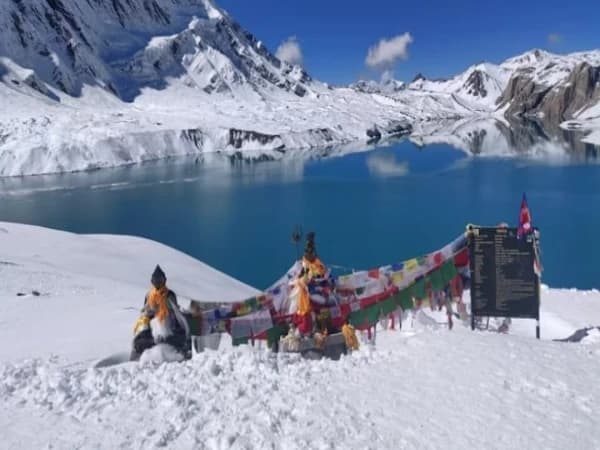
The most popular approach. Trekkers on the Annapurna Circuit reach Muktinath after crossing Thorong La pass (5,416m). After the early-morning pass crossing, you descend to Muktinath on the same day. Most trekkers arrive exhausted but elated, and the temple visit the following morning feels like a spiritual reward for the physical effort.
Our Annapurna Circuit with Tilicho Lake itinerary includes both the Tilicho Lake detour and proper time at Muktinath, giving you the best of the high-altitude Annapurna experience in a single trip.
Option 2: From Jomsom
Muktinath is about 20 kilometres north of Jomsom, connected by a jeep road and a trekking trail. From Jomsom, you can walk to Muktinath in 5-6 hours (uphill), or take a jeep in about 1.5 hours. Many pilgrims who fly to Jomsom from Pokhara use the jeep road.
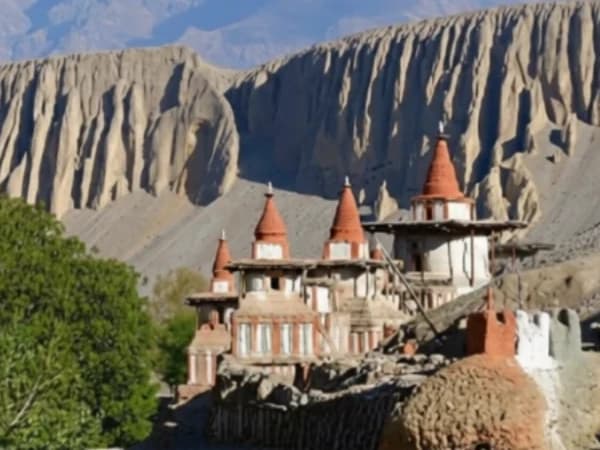
Walking up from Jomsom you pass through Kagbeni, where the valley narrows and the first Tibetan-style flat-roofed houses appear, and then Jharkot, an old fortified village with a Buddhist monastery about half an hour below the temple. Both are worth stopping in. They are a large part of why walking this stretch beats driving straight through it.
Option 3: By Motorbike
Our Lower Mustang Motorbike Tour includes Muktinath on the route. Riding a Royal Enfield through the Kali Gandaki gorge and up to the temple is one of the most dramatic motorbike rides in Nepal. The Upper Mustang Motorbike Tour also passes through Muktinath on the return leg from Lo Manthang.
Option 4: Helicopter
Charter helicopters from Pokhara to Muktinath are available for pilgrims and tourists who can't make the trek. The flight takes about 30 minutes and lands near the temple. This is primarily used by elderly Indian pilgrims during the May-October pilgrimage season.
Option 5: The Short Pilgrimage Trek
Pilgrims who want to walk but do not have three weeks can start lower down the Kali Gandaki at Tatopani or Marpha and walk up to Muktinath over several days. It follows the same valley as the Annapurna Circuit but skips Thorong La completely, so there is no 5,416 metre pass to cross. We build this one to order, usually for family groups with a wide spread of ages and fitness.
Best Time to Visit Muktinath
| Season | Conditions | Notes |
|---|---|---|
| March-May | Warming temperatures, clear mornings, occasional afternoon cloud. | Good for trekking. Some snow on Thorong La in March. |
| June-September | Monsoon. Lower trails are wet, but Muktinath sits in a rain shadow and stays relatively dry. | Peak pilgrim season. Hindu devotees visit in large numbers. Temple at its busiest. |
| October-November | Peak trekking season. Clear skies, cold nights (-5 to -10°C), warm days. | Best for trekkers. Temple busy with both trekkers and pilgrims. |
| December-February | Very cold. Thorong La may be closed by snow. Jeep road may be icy. | Quiet but harsh. Only for prepared visitors. |
If you're coming specifically for the pilgrimage experience, the summer months (June-August) offer the most lively atmosphere. Hundreds of pilgrims arrive daily, performing rituals, singing bhajans, and creating a spiritual energy that the quieter trekking-season visits lack.
For trekkers, October and November offer the best weather and the most reliable Thorong La crossing.
What to Expect at Muktinath
The Cold
At 3,710m, mornings are cold even in October. If you're bathing in the 108 spouts, the water temperature sits barely above freezing. Bring a towel and warm dry clothes to change into immediately. Your body temperature will drop quickly.
The Wind
Muktinath sits in the Kali Gandaki valley, which funnels ferocious afternoon winds. Plan your temple visit for early morning when the air is calm. By noon, the wind can make the exposed courtyard genuinely unpleasant.
Our guide Dorje has a saying about the Kali Gandaki wind: "Before noon, the valley belongs to you. After noon, it belongs to the wind. Don't argue with the wind." In fifteen years of guiding, I've never heard better advice for this region.
The Crowds
During peak pilgrimage season (June-August), the temple can be genuinely crowded with Indian pilgrims arriving by jeep and helicopter. The atmosphere is festive and communal. During the October trekking season, it's busy but manageable. In the off-season, you may have the temple nearly to yourself.
The Altitude
At 3,710m, altitude can affect anyone. If you've arrived by jeep or helicopter without acclimatising, take it slow. Drink water. Don't rush the temple steps. Mild headache and breathlessness are normal and should improve within a few hours. If symptoms worsen, descend to Jomsom (2,720m).
Where to Stay Near Muktinath
The village of Ranipauwa, about 15 minutes' walk below the temple, has a dozen teahouses and small hotels. Facilities are basic but adequate. Rooms cost NPR 500-1,500 per night, meals NPR 400-700. During peak season, rooms fill by mid-afternoon, so arrive early or have your guide book ahead.
Most Annapurna Circuit trekkers spend one night in Muktinath/Ranipauwa before continuing down to Jomsom the following day. If you're visiting on a day trip from Jomsom by jeep, accommodation isn't necessary.
On every trek and tour we run that visits the temple, your lodge is booked for you and is included in the price. Your guide arranges the room on arrival, so you are not looking for a bed at 3,710 metres at the end of a long day.
Culture and Local Lifestyle
The Mustang region, including Muktinath, is home to a blend of Tibetan-influenced cultures. People primarily speak Lopa or Tibetan dialects alongside Nepali. Traditional houses are often built of stone and mud, with bright prayer flags and mani walls lining the village paths.
Agriculture and livestock (especially yaks and goats) are central to life here, with barley, buckwheat, and potatoes among the key crops. Trade and tourism also play important roles in the local economy, especially around pilgrimage sites.
Hospitality is a hallmark of Mustang culture. Teahouses and lodges in nearby villages offer warm meals, local spirits, and genuine interaction with residents who are often eager to share stories of their valleys, mountains, and beliefs.
The Kali Gandaki Valley: Muktinath's Wider Context
Muktinath is the spiritual centrepiece of the Kali Gandaki valley, but the surrounding area rewards exploration:
- Kagbeni: A medieval village 15 km south, marking the gateway to Upper Mustang. Narrow alleys, ancient monastery, and a haunting atmosphere that makes you want to stay longer than planned.
- Jomsom: The administrative centre with an airport, ATMs, and the starting point for Upper Mustang expeditions.
- Marpha: Famous for apple orchards, apple brandy, and some of the best bakeries on any trekking trail in Nepal.
- Lubra: A tiny Bon village (Nepal's pre-Buddhist faith) with a monastery that almost no trekkers visit. Well worth a detour.
The Spiritual Experience: What Sets Muktinath Apart
Nepal has thousands of temples. What makes Muktinath different isn't the architecture (it's modest) or the size (it's small). What sets it apart is the convergence.
Fire and water share the same shrine. Hindus and Buddhists worship in the same complex. The holiest shrine of Vishnu sits at the foot of the highest trekking pass in the Annapurna range. Pilgrims who've never walked more than a few kilometres stand beside trekkers who've just crossed a 5,416-metre pass. Wealth means nothing here. Fitness means nothing. The old woman who took a jeep from Jomsom and the young climber who walked from Besisahar both stand in the same cold water, both gasp at the same cold.
That's what I've observed over years of guiding here. Muktinath doesn't require belief. It requires presence. And at 3,710 metres, with thin air and cold water and an eternal flame, presence arrives whether you invite it or not.
Practical Tips for Visiting Muktinath
- Visit early morning. Arrive by 7:00 AM if possible. The wind picks up after 11 AM.
- Bring warm layers. Even in October, early mornings are below freezing at this altitude.
- Carry a towel if you plan to walk under the 108 spouts.
- Dress modestly. Cover your shoulders and knees. This is an active pilgrimage site.
- Remove shoes before entering the temple area.
- Don't photograph rituals without asking permission first. Pilgrims bathing deserve privacy.
- Entry fee: NPR 200 (~$1.50 USD) for foreign visitors.
- Altitude awareness: If you arrived by vehicle without acclimatising, move slowly. Sit down if dizzy. Hydrate constantly.
Permits. You need the Annapurna Conservation Area Permit (ACAP) for the whole Kali Gandaki valley. Muktinath, Kagbeni and Jomsom sit outside the restricted zone, so no restricted-area permit is needed to reach the temple itself. That only applies if you carry on north of Kagbeni into Upper Mustang, which is charged separately and per day.
Why Visit Muktinath?
Muktinath offers a rare combination of:
-
Spiritual enlightenment and religious significance
-
Trekking adventure with Himalayan landscapes
-
Insight into Mustang’s Tibetan-influenced culture
-
Unique flora, fauna, and desert-like high-altitude terrain
Muktinath offers something rare: a place where Hindus, Buddhists, and trekkers all stop and fall quiet for the same reason.
Is Muktinath Worth the Pilgrimage?
Yes, and for two different reasons depending on why you are going. For a pilgrim it is one of the 108 Divya Desams, and one of the very few you can still reach on foot. For a trekker it is the point on the Annapurna Circuit where green Nepal stops and the Tibetan plateau begins. Most people arrive expecting a temple and find that it is the walk in, up the deepest gorge on earth, that stays with them.
Combining Muktinath with Other Nepal Experiences
Muktinath fits naturally into several itineraries. After the Annapurna Circuit, many clients continue to Pokhara for rest, then head to Chitwan National Park for jungle safaris or south to Lumbini. Our Kathmandu Pokhara Chitwan Lumbini Tour covers these highlights together.
If the Annapurna region captivates you, shorter treks explore different faces of the range. The Ghorepani Poon Hill Trek delivers striking sunrise views in just 4-5 days. The Annapurna Base Camp Trek takes you into the heart of the Annapurna Sanctuary. The Mardi Himal Trek offers ridge walking with fewer crowds.
For Nepal's other great walk, the Everest Base Camp Trek takes you to the foot of the world's highest mountain. The Langtang Valley Trek offers similar Tibetan culture much closer to Kathmandu. And the Manaslu Circuit Trek provides a quieter, more restricted alternative to the Annapurna Circuit with its own high pass at Larkya La (5,160m).
Frequently Asked Questions
Do I need to be Hindu or Buddhist to visit Muktinath?
No. Muktinath welcomes visitors of all faiths and none. The temple complex is open to everyone. Respect the rituals (don't interrupt prayers, dress modestly, remove shoes where indicated), but you're welcome to explore freely.
How difficult is the trek to Muktinath?
Coming via the Annapurna Circuit over Thorong La, it's challenging (the pass day is usually 7 to 10 hours at high altitude). From Jomsom by foot, it's a moderate 5-6 hour uphill walk. By jeep from Jomsom, about 1.5 hours with no physical effort.
Can elderly or mobility-limited visitors reach Muktinath?
Yes. The jeep road from Jomsom reaches within a few hundred metres of the temple. Helicopter charters from Pokhara are also available. Inside the complex, the terrain is uneven stone, so walking sticks help. The 108 spouts involve a gentle uphill walk of about 200 metres from the main entrance.
Is it safe to bathe in the 108 water spouts?
The water is near-freezing. The shock of cold water at altitude can cause hyperventilation. Start slowly, don't rush, and have warm dry clothes ready immediately after. People with heart conditions should consult their doctor before attempting the full circuit.
How long should I spend at Muktinath?
Most visitors spend 1-2 hours at the temple complex. Add another hour if you're doing the full 108-spout ritual. A half-day is enough to see everything thoroughly. Some trekkers stay an extra night to revisit at sunrise, when the mountain light on the temple is extraordinary.
Related Treks & Guides
- Annapurna Base Camp
- The Annapurna Circuit Trek- 12 Days
- Ghorepani Poon Hill Yoga Trek
- Fewa Lake
- Sarangkot
Muktinath is where Hinduism and Buddhism meet at 3,710 metres. The 108 water spouts, the eternal flame burning from natural gas behind a waterfall, and the pilgrims who have walked here for centuries: it is one of the most powerful sacred sites in Nepal. Trekkers on the Annapurna Circuit pass through without understanding what they are seeing. Take an hour. Sit. Watch the pilgrims. It will change the rest of your trek.
Muktinath is on our Annapurna Circuit Trek. We schedule time here for a proper visit.
WhatsApp:+977 9810351300
Email:[email protected]
Shreejan Simkhada is the CEO and co-founder of The Everest Holiday, a family-run trekking company in Kathmandu, and a third-generation Himalayan guide. TAAN Member #1586. Every booking helps fund our Nagarjun Learning Center.
Muktinath is day 10 on Annapurna Circuit. Our Annapurna Circuit Trek (12 Days) is private (your group only, no strangers), 2027 dates open, From USD $1,175. WhatsApp us for tailored 2027 dates and current departures.


 Chat with Shreejan