

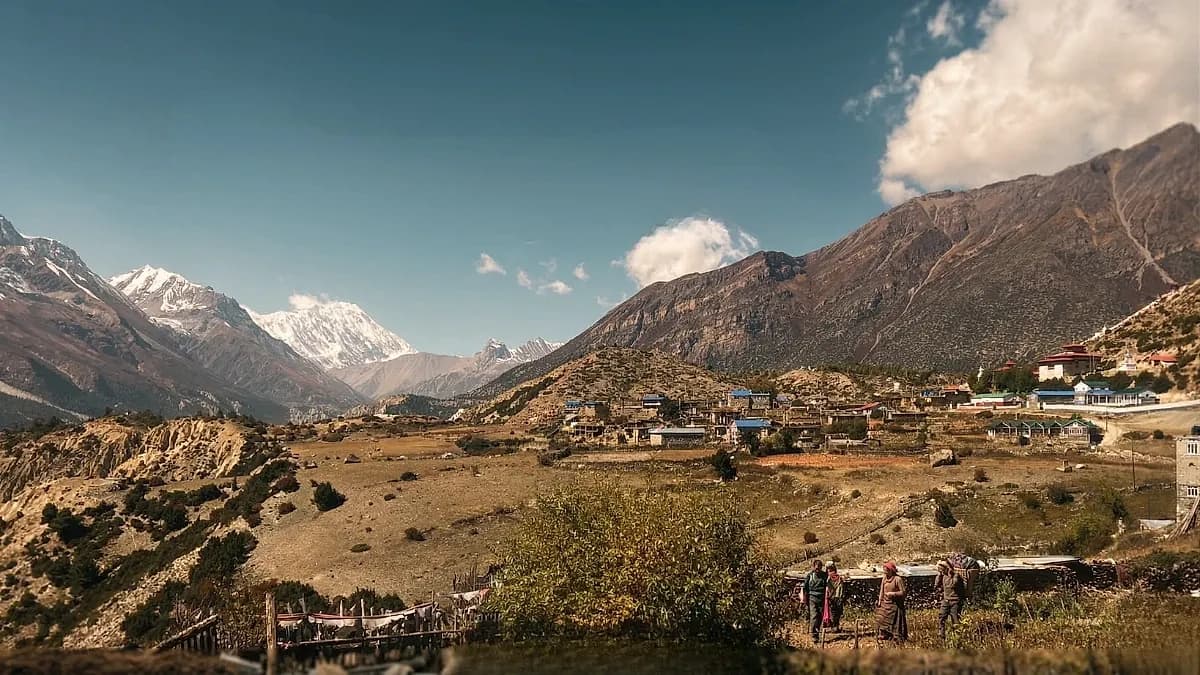
Short answer: Manang, at 3,540 m, is the main village on the upper Annapurna Circuit, in a wide valley below the Annapurna range and the Gangapurna glacier. Almost every trekker spends an extra day here to acclimatise before the climb to Thorong La (5,416 m), walking higher in the day and sleeping lower. That rest day is the most important day of the trek. It is built into our Annapurna Circuit trek.
If there's one place on the Annapurna Circuit that trekkers remember long after they've returned home, it's Manang. Sitting at 3,540 metres in a wide, sun-drenched valley with the Annapurna range towering above, this is where the trek shifts from a pleasant hill walk into a genuine high-altitude adventure. And it's where your body needs time to catch up with your ambitions.
I've walked through Manang more times than I can count, in every season and in every kind of weather. Some days the village sits under a perfect blue sky with Gangapurna glacier gleaming white above the rooftops. Other days the clouds roll in thick and fast, and you can't see past the nearest prayer flag. Both versions of Manang are worth experiencing.
What makes this village special isn't just the scenery, though that alone would be enough. It's the people, the culture, the tiny bakeries selling surprisingly good cinnamon rolls, and the fact that spending a day or two here might genuinely save your life when you head for Thorong La Pass.
Why Manang Matters, The Acclimatisation Day You Shouldn't Skip
Let's be direct about this. Manang exists on most itineraries for one critical reason: acclimatisation. At 3,540m, you're at the altitude where acute mountain sickness (AMS) starts becoming a real concern. Your body needs time to produce more red blood cells and adjust to the thinner air. Rushing through Manang to save a day is one of the most common mistakes trekkers make on the Annapurna Circuit, and it's one of the most dangerous.
The golden rule of altitude trekking is "climb high, sleep low." Your rest day in Manang isn't about lying in bed watching Netflix on your phone (though the Wi-Fi in some lodges is surprisingly decent these days). It's about hiking up to a higher elevation during the day, ideally reaching 4,000m or above, and then coming back down to sleep at 3,540m. This trains your body to handle the altitude you'll face over the coming days.
Most trekkers spend one full rest day here, but if you're feeling any symptoms, headache, nausea, poor sleep, loss of appetite, stay a second day. There's no shame in it. Our guides carry pulse oximeters and check oxygen levels each morning. If your readings are low, we don't move. It's that simple.
There's also a small health post in Manang run by the Himalayan Rescue Association (HRA). During the main trekking seasons (March to May and September to November), they give free altitude sickness talks in the afternoons. Go to one, even if you think you already know everything about AMS. The doctors there have seen it all, and their advice is practical and specific to the conditions on Thorong La.
What is there to do in Manang on a rest day?
A rest day in Manang doesn't mean a boring day. The valley offers some of the best short hikes on the entire circuit, and the village itself has enough character to keep you exploring for hours.
- Hike to Ice Lake (4,620m), the best acclimatisation day hike available
- Walk to Gangapurna Lake, a short, easy stroll from the village
- Visit Braga monastery, one of the oldest in the region
- Explore the old quarter of Manang with its flat-roofed stone houses
- Browse the small shops for last-minute trekking gear and supplies
- Attend the HRA altitude sickness talk
- Sit in a bakery with a cup of masala tea and watch the clouds move across Annapurna III
How do you reach Gangapurna Lake from Manang?
You can reach Gangapurna Lake in about 20 to 30 minutes from the centre of Manang. It's an easy walk along a well-marked trail, and it's the first thing most trekkers do when they arrive.
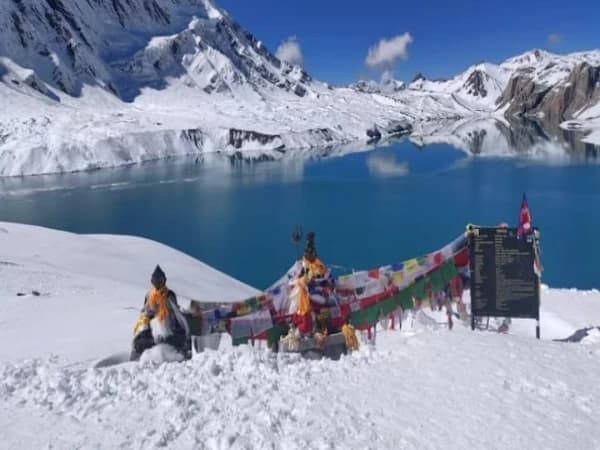
The lake sits at the base of the Gangapurna glacier, and the colour of the water changes depending on the light, sometimes milky turquoise, sometimes deep grey-blue. On a clear morning, the reflection of Gangapurna peak (7,455m) in the still water is one of those views that makes you stop talking and just stand there.
You'll hear the glacier cracking and groaning as chunks of ice shift and occasionally calve off into the lake. It sounds dramatic, and it is. Don't get too close to the water's edge near the glacier side, rockfall and ice collapse happen without warning.
This walk is perfect for the afternoon you arrive in Manang. It gets you moving gently at altitude without pushing too hard, and it's flat enough that even trekkers feeling the first effects of the thin air can manage it comfortably.
How long and hard is the Ice Lake hike from Manang?
If you only do one thing on your rest day in Manang, make it the hike to Ice Lake (Kicho Tal). This is, in my opinion, the single best acclimatisation day hike on the entire Annapurna Circuit.
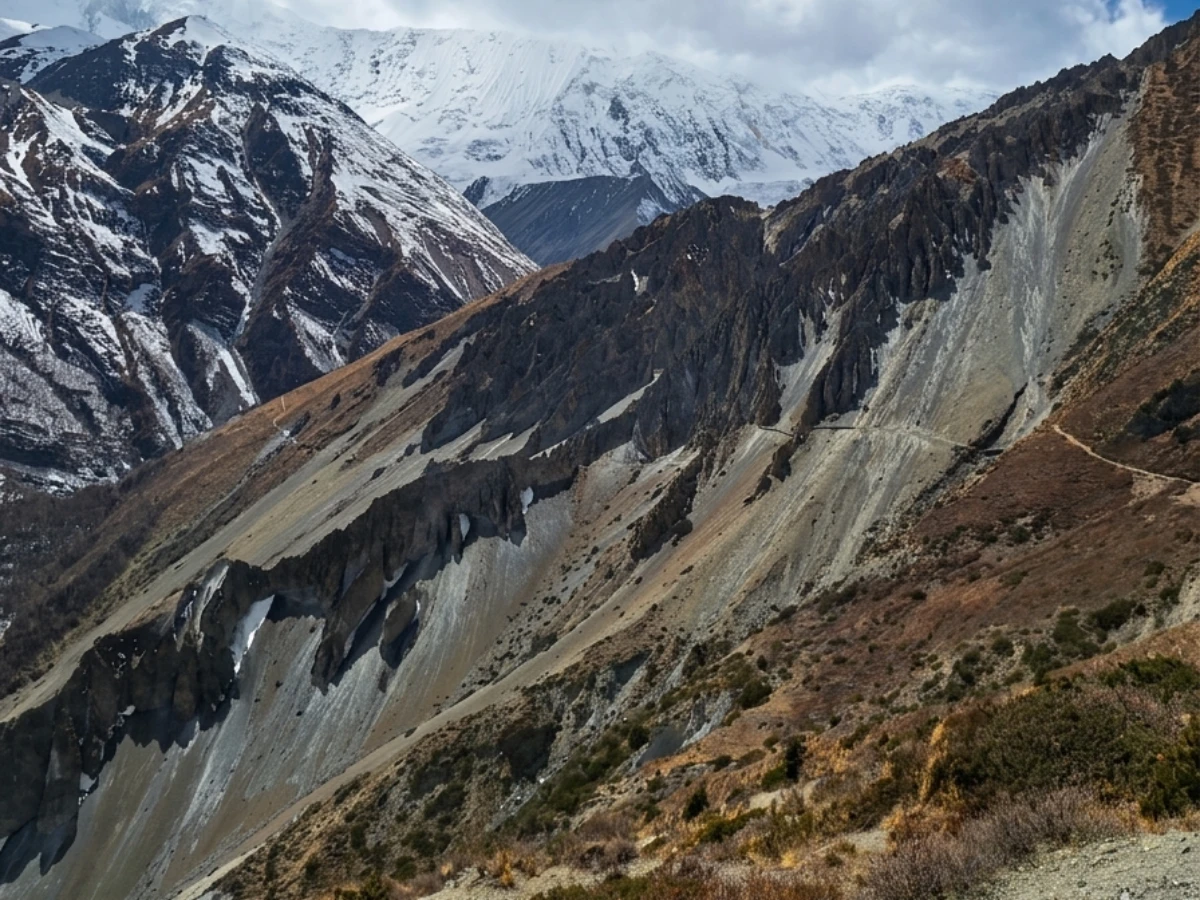
Ice Lake sits at 4,620m, over a thousand metres above Manang. The trail climbs steeply through a forest of juniper and scrub before opening out onto a high alpine meadow with views that genuinely stop you mid-step (and not just because of the altitude). On a clear day, you can see Annapurna II, Annapurna III, Annapurna IV, Gangapurna, Tilicho Peak, and the Great Barrier wall stretching across the horizon.
The lake itself is small and often partially frozen, even in autumn. The water is impossibly clear. You'll likely have yaks for company up there, grazing on the sparse grass around the shore.
Plan for 5 to 7 hours round trip. Leave early, by 7:00 or 7:30 at the latest, because clouds typically build by midday and you'll want clear skies for the views at the top. Bring plenty of water, sun protection, and a warm layer. It's significantly colder at 4,620m than it is in Manang, even on a sunny day.
The climb is steep and you'll feel the altitude in your lungs, but that's exactly the point. Pushing your body to 4,620m and then descending back to sleep at 3,540m is textbook acclimatisation. You'll sleep better that night, and your body will be measurably more prepared for Thorong La.
A word of caution: if you're experiencing any AMS symptoms, don't attempt Ice Lake. Stick to the flatter walks around the valley, Gangapurna Lake, Braga village, or simply wandering around Manang. There's no point pushing to 4,620m if your body isn't ready.
What is Braga Monastery near Manang and how old is it?
About 30 minutes' walk from Manang, the village of Braga (3,360m) is home to one of the oldest and most atmospheric monasteries in the Annapurna region. The gompa is believed to be around 500 years old, and it clings to the hillside above the village like it grew out of the rock itself.
Inside, you'll find hundreds of clay statues of Buddhist deities lining the walls, ancient thangka paintings, and butter lamps flickering in the dim light. The caretaker monk will usually open the doors for visitors, a small donation is appreciated. Photography rules vary, so always ask first.
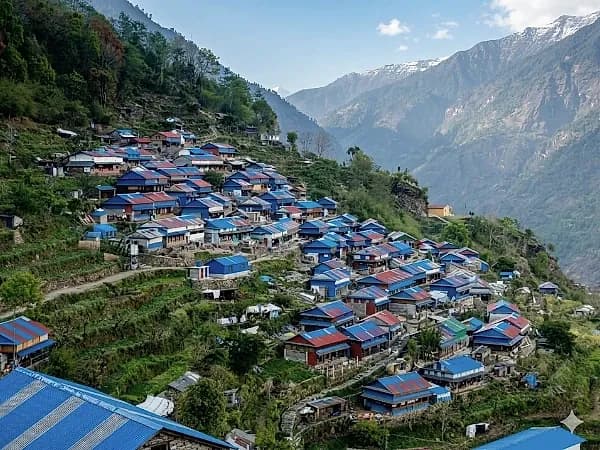
Braga itself is worth exploring. The village is built in the traditional Manang style, flat-roofed stone houses stacked tightly together on the hillside, with firewood piled on every roof and prayer flags strung between the buildings. It feels like stepping back several centuries, and in many ways you are. The Manangis have lived in this valley for generations, and their Tibetan-influenced culture is quite different from what you'll have seen in the lower hills.
You can combine Braga with the walk to Gangapurna Lake for a half-day loop that covers the valley's highlights without too much effort.
Where should you stay in Manang?
Manang has more lodges than most villages on the circuit, and the standard is generally good. You won't find luxury here, this is teahouse trekking at 3,540m, but you will find clean rooms, thick blankets, and common areas with wood-burning stoves where trekkers gather in the evenings.
Most lodges offer twin rooms with basic beds and shared bathrooms. A few of the newer places have attached bathrooms and hot showers (solar-heated, so morning showers are warmer than evening ones). Expect to pay more for a hot shower here than at lower altitudes, heating water takes real fuel at this elevation.
Some popular lodges include Yak Hotel, Hotel Manang, and Tilicho Hotel. During peak season (October and November especially), Manang gets busy. If you're trekking independently, arrive by early afternoon to get your pick of rooms. With a guided group through The Everest Holiday, your accommodation is arranged in advance, so you don't need to worry about availability.
One tip: ask for a room that gets morning sun. Nights in Manang are cold, often dropping below freezing, and a room that warms up with the sunrise makes a real difference to your comfort.
What food and supplies can you buy in Manang?
Manang is the last village on the Annapurna Circuit where you'll find a decent range of food and supplies before Thorong La. Take advantage of it.
The bakeries here are legendary among circuit trekkers. After days of dal bhat and noodle soup, a fresh cinnamon roll, apple pie, or slice of chocolate cake feels like a five-star meal. The German Bakery and several lodge bakeries all compete for the title of best pastries in the Himalayas.
For meals, you'll find the usual teahouse menu, dal bhat (always the best value and the most filling), fried rice, noodle soups, momos, pancakes, and pasta. Some lodges also serve pizza, though your expectations should be adjusted for altitude. Dal bhat is still king up here. The Nepali saying "dal bhat power, 24 hour" exists for a reason, it's the fuel that gets you over passes.
There are several small shops in Manang selling:
- Chocolate bars and energy snacks (stock up, prices only go up from here)
- Basic trekking gear, gloves, hats, sunglasses, trekking poles
- Batteries and power banks
- Diamox (acetazolamide), available at pharmacies if you need it, though consult a doctor first
- Sim cards and phone credit top-ups
- Sunscreen and lip balm with SPF (essential at this altitude)
If you need to charge devices, most lodges offer charging for a small fee. Don't rely on finding sockets in your room, carry a portable power bank.
What is the weather like in Manang?
Manang sits in a rain shadow, which means it gets far less precipitation than the southern side of the Annapurna range. The valley feels drier, more open, and almost Tibetan in character, brown hills, sparse vegetation, and enormous skies.
During the main trekking seasons:
- Spring (March to May): Daytime temperatures reach 10-15C in the sun. Mornings and evenings hover around freezing. Occasional snow is possible but rare in the valley itself. Wildflowers appear on the lower trails.
- Autumn (September to November): The most popular season. Clear skies, excellent visibility, daytime temperatures of 8-12C. Nights drop to -5C or colder by November. This is when the views are at their sharpest.
- Winter (December to February): Cold. Very cold. Daytime temperatures may not rise above freezing, and nights can hit -15C or lower. Many lodges close. Only experienced trekkers should attempt the circuit in winter.
Regardless of when you visit, bring layers. Manang can go from warm sunshine to biting wind in minutes. A down jacket, thermal base layers, a good windproof shell, and a warm hat and gloves are non-negotiable at this altitude.
What comes after Manang on the way to Thorong La?
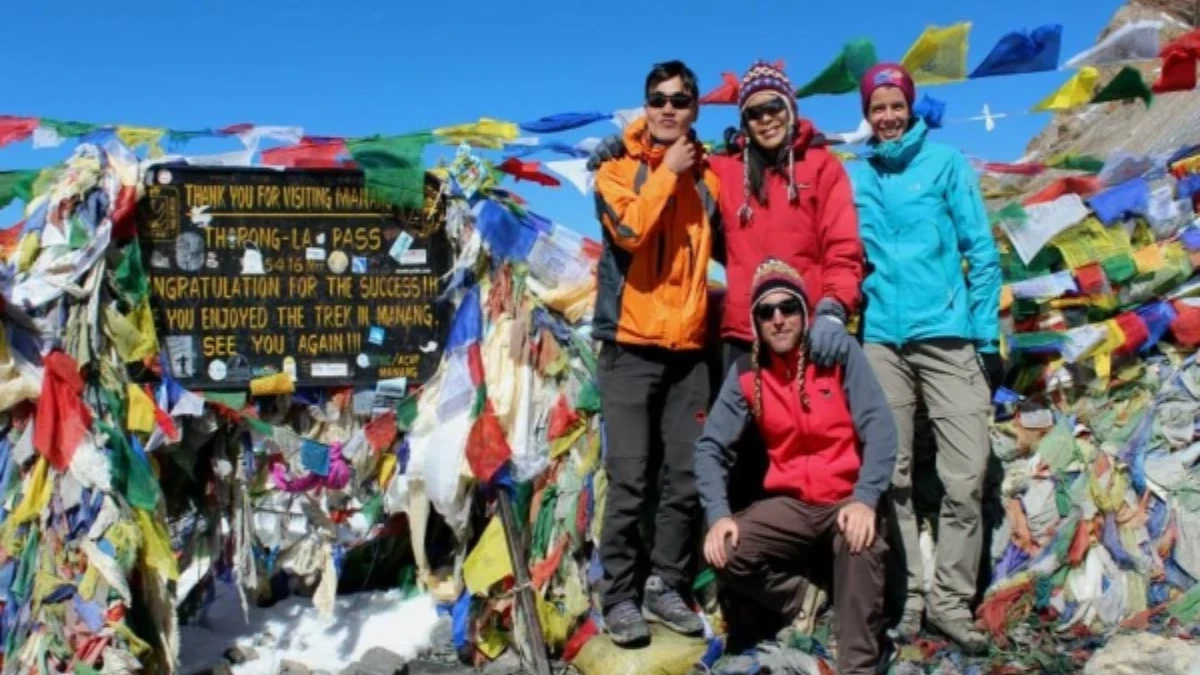
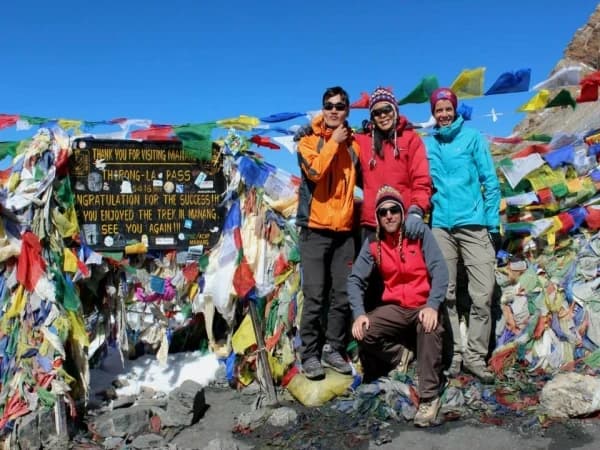
After your rest day (or days) in Manang, the trek continues deeper into the high country. The next stops are Yak Kharka (4,018m) and Thorong Phedi (4,525m) before the big day, crossing Thorong La Pass at 5,416m, the highest point on the Annapurna Circuit.
How well you've acclimatised in Manang directly affects how you'll handle the pass. Trekkers who took their rest day seriously, hiked to Ice Lake, stayed hydrated, and listened to their bodies almost always have a smoother crossing. Those who rushed through Manang or skipped their acclimatisation hike are the ones who struggle, or worse, have to turn back.
From Manang, most itineraries follow this schedule:
- Day 1: Manang to Yak Kharka (4,018m), 3 to 4 hours
- Day 2: Yak Kharka to Thorong Phedi (4,525m), 3 to 4 hours
- Day 3: Thorong Phedi to Thorong La (5,416m) to Muktinath (3,800m), 7 to 10 hours, starting before dawn
Your guide will brief you on the pass crossing the evening before. At The Everest Holiday, we check weather forecasts, assess each trekker's condition, and make the call on timing. Most groups leave Thorong Phedi between 3:00 and 4:00 in the morning to reach the pass by sunrise or shortly after. It's a long, tough day, but standing at 5,416m with prayer flags snapping in the wind and the entire Himalayan panorama spread out around you is one of those life moments you don't forget.
Manang is where you prepare for that moment. Respect the altitude, enjoy the valley, eat well, sleep well, and let your body do what it needs to do. The pass will wait for you.
Trek the Annapurna Circuit with The Everest Holiday
We've been guiding trekkers through the Annapurna region for years, and our guides know every trail, every lodge, and every acclimatisation trick in the book. All our Annapurna Circuit itineraries include proper rest days in Manang because we don't believe in cutting corners at altitude.
Chat with Shreejan on WhatsApp: +977 9810351300
Email: [email protected]
Browse our treks: www.theeverestholiday.com
Manang is the main acclimatisation stop on the Annapurna Circuit Trek. The Annapurna Circuit with Tilicho Lake route detours from here to reach Nepal's highest lake.
Manang is your acclimatisation day on Annapurna Circuit. Our Annapurna Circuit Trek (12 Days) is private (your group only, no strangers), 2027 dates open, From USD $1,175. WhatsApp us for tailored 2027 dates and current departures.


 Chat with Shreejan