

Written by Shreejan Simkhada, CEO of The Everest Holiday and third-generation Himalayan guide. TAAN Member #1586.
Let's be straight with you: Thorong Phedi isn't a place you come to relax. It's a place you come to prepare. At 4,525 metres, tucked into a steep rocky valley at the base of the Thorong La Pass, this tiny settlement exists for one reason, to give trekkers a place to sleep, eat, and gather their nerves before the biggest day of the Annapurna Circuit.
Thorong Phedi at a glance
Short answer: Thorong Phedi is a small lodge settlement at 4,525 m, at the foot of the Thorong La (5,416 m) on the Annapurna Circuit. Most trekkers sleep here or at High Camp, then leave between 3 and 5 am. Pass day to Muktinath usually takes 7 to 10 hours, depending on weather, snow and pace. On our 12-day Annapurna Circuit trek we sleep at Thorong High Camp on day 9 and cross the pass on day 10.
| Altitude | 4,525 m, at the foot of the Thorong La |
| Region | Annapurna Conservation Area (ACAP) |
| Purpose | Base camp for crossing the Thorong La (5,416 m), the high point of the Annapurna Circuit |
| High Camp | An optional higher lodge at about 4,900 m, an hour above Phedi |
| The crossing | Trekkers set off before dawn to reach the pass before the wind rises |
| Trek it on | Annapurna Circuit Trek, Annapurna Circuit with Tilicho Lake |
Thorong Phedi lies within the Annapurna Conservation Area, managed by Nepal’s National Trust for Nature Conservation.
Tomorrow morning, you'll wake up in the dark, pull on every layer you've got, and start climbing towards 5,416 metres. That's the reality of Thorong Phedi. It's not glamorous. But it's one of the most memorable nights you'll spend in the mountains, because everything that happens here, the nervous energy, the early dinner, the sound of wind against the lodge walls, the alarm going off at 3 am, is all building towards something extraordinary.
I've guided people through Thorong Phedi more times than I can remember, and every single time there's the same mix of excitement and anxiety around the dinner table. That's normal. That's how it should feel. Here's everything you need to know to be ready.
How Do You Get to Thorong Phedi?
Most trekkers arrive at Thorong Phedi from Yak Kharka (4,018m) or sometimes directly from Manang (3,519m) if they're pushing it, though I wouldn't recommend that. The walk from Yak Kharka takes about three to four hours and follows the Kone Khola valley upwards through increasingly barren terrain.
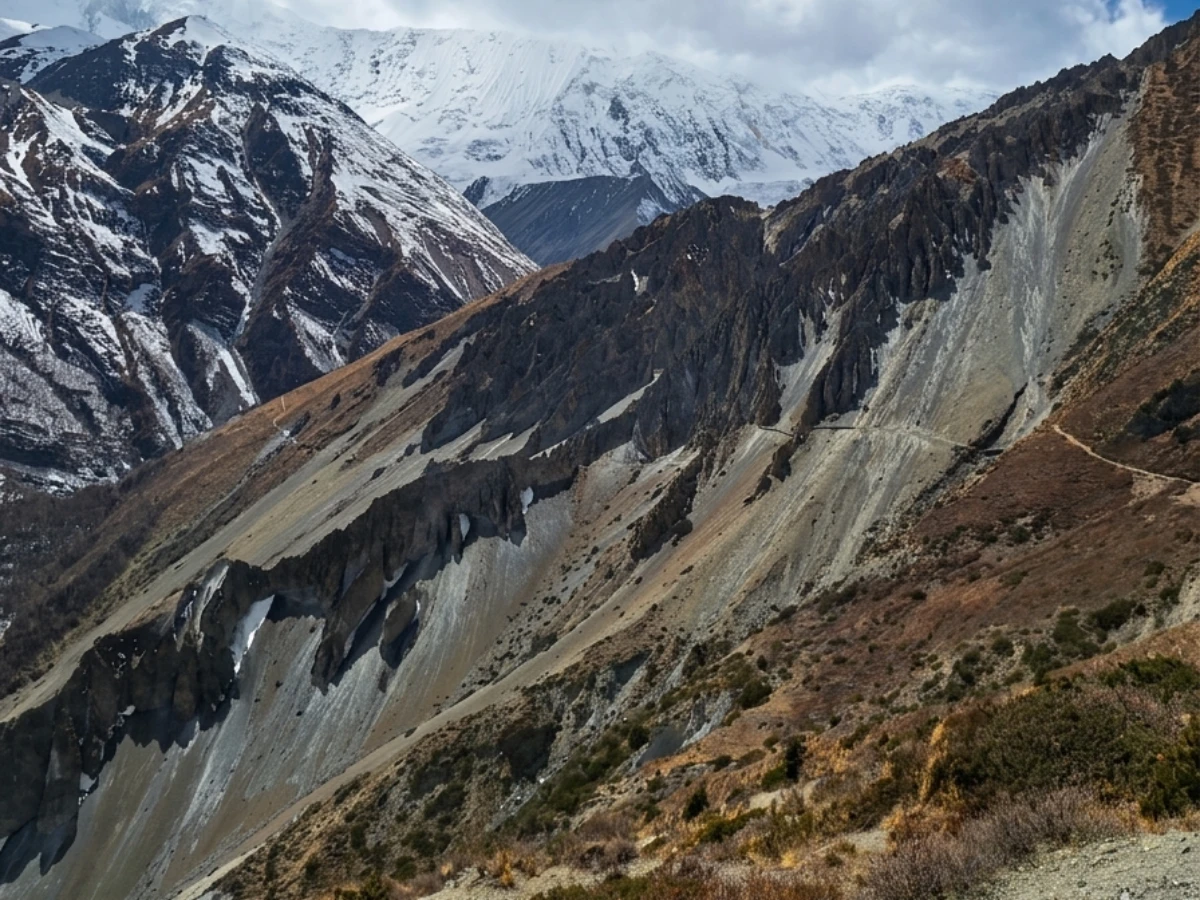
The landscape changes noticeably in this section. The last trees disappeared a while ago, and by the time you reach Thorong Phedi, you're surrounded by brown and grey rock, scree slopes, and the occasional patch of tough grass. It's stark, exposed, and beautiful in that high-altitude way where the sky feels closer than it should.
The trail itself isn't technically difficult, but the altitude makes everything harder. Steps that would be effortless at sea level require genuine effort here. Your breathing is heavier, your pack feels heavier, and you'll find yourself stopping more often than you'd like. That's all perfectly normal at 4,500 metres. Don't fight it, just keep a steady pace and drink water constantly.
"Phedi" means "foot of the hill" in Nepali, and that's precisely what this place is. Look up from the lodges, and you can see the trail switchbacking up the steep slope above you, that's where you're heading tomorrow. Some people find this motivating. Others find it terrifying. Both reactions are valid.
Where Can You Stay at Thorong Phedi?
Thorong Phedi has two or three lodges, depending on the year and which ones are operating. Don't expect luxury. At this altitude, the lodges are basic stone and corrugated metal buildings designed to keep the wind out and provide a warm meal and a bed. That's about it.
Here's what you can realistically expect:
- Rooms: Small, usually with two beds, thin mattresses, and heavy blankets. Walls are thin. You'll hear the wind, and you'll hear your neighbours. Earplugs aren't a bad idea
- Toilets: Shared, basic. Some lodges have rudimentary flush toilets; others have outdoor pit toilets. At 4,525m, nobody's judging
- Hot water: Sometimes available for washing, but don't count on it. A hot shower at Thorong Phedi is a bonus, not a guarantee
- Charging: Most lodges have charging points, often for a small fee. Charge everything here, your phone, your headtorch, and your camera. You'll need the headtorch tomorrow morning
- Food: Dal bhat, noodle soup, fried rice, pasta, tea, and coffee. The menus are limited compared to lower-altitude lodges, and everything costs more because it all has to be carried up. Eat a big dinner, you'll need the energy. Stick to cooked food and hot drinks
One thing I always tell my trekkers: don't compare Thorong Phedi lodges to what you had in Manang or Pisang. They're different places serving a different purpose. The lodge at Phedi keeps you alive, warm, and fed at 4,525m. That's enough.
Should You Stay at Thorong Phedi or Go to High Camp?
About 45 minutes to an hour above Thorong Phedi, at around 4,900 metres, there's a place called High Camp (sometimes called Thorong High Camp or simply Upper Camp). It's a single lodge perched on the mountainside, and staying here shaves roughly 300 metres and an hour off your pass-day climb. On our Annapurna Circuit itinerary, the walk up to High Camp from Ledar the day before takes 4–5 hours.
The question every trekker asks: Should I stay at Thorong Phedi or push up to High Camp?
Here's my honest take, based on years of guiding this route:
Arguments for High Camp:
- Shorter climb on pass day, you start at 4,900m instead of 4,525m, so you've got about 515m of ascent instead of 890m
- You can leave slightly later in the morning (though still very early)
- If you're feeling strong and well-acclimatised, the extra altitude gain today means less work tomorrow
Arguments for staying at Thorong Phedi:
- Better lodges with more space and slightly better food
- Sleeping at 4,525m instead of 4,900m means better rest, and rest matters enormously before the pass
- If you're already feeling the altitude (headache, nausea, poor sleep), going higher is a bad idea
- More trekkers stay at Phedi, so there's a bit more social energy, which helps with the nerves
My recommendation for most trekkers: stay at Thorong Phedi. Sleep matters more than most people realise, and you'll sleep better 300 metres lower. The extra hour of climbing in the morning is manageable if you've rested properly. I only suggest High Camp for trekkers who are very well acclimatised, feeling strong, and want to reduce the pass-day effort.
If you do go to High Camp, know that the lodge there is even more basic than Thorong Phedi. The rooms are small, it gets frigid at night, and the food options are minimal. But the sunset views are extraordinary, you're looking straight across at the Annapurna range, and the sky turns colours you didn't know existed.
How Do You Handle Altitude Sickness at Thorong Phedi?
I'm not going to sugarcoat this. At 4,525 metres, altitude sickness is a real and present concern. Most trekkers will feel something at this height,a mild headache, slight breathlessness, poor appetite, and difficulty sleeping. These are normal symptoms of being at altitude, and they don't necessarily mean you're in trouble.
What you need to watch for are the warning signs that things are getting worse:
- Severe headache that doesn't improve with paracetamol and water
- Persistent vomiting, not just nausea, but actually being sick
- Confusion or disorientation, if someone can't walk in a straight line or seems mentally foggy, this is serious
- Extreme fatigue, tiredness beyond what walking should cause
- Crackling or gurgling sound when breathing, this could indicate fluid in the lungs (HAPE) and is a medical emergency
- Loss of coordination, stumbling, inability to do simple tasks
If you or anyone in your group shows these symptoms, you will not cross the pass tomorrow. You go down. Immediately. No discussion, no "let's wait and see." Altitude sickness can kill, and the treatment is always the same: descend.
Our guides carry a pulse oximeter and check oxygen levels every evening at high altitude. We know what the numbers should look like, and we'll tell you honestly if we think you're not ready for the pass. Please listen when we do. We're not trying to ruin your trek, we're trying to keep you safe.
Things you can do to help yourself at Thorong Phedi:
- Drink water. Three to four litres a day minimum at this altitude. Your urine should be clear or light yellow, if it's dark, you're dehydrated
- Eat well. Your appetite might be poor, but force yourself to eat a proper dinner. Carbohydrates are your friend, rice, pasta, and potatoes. You need fuel for tomorrow
- Avoid alcohol. I know, after a hard day's trekking, a beer sounds good. But alcohol dehydrates you and worsens altitude symptoms. Save it for Muktinath tomorrow evening
- Don't take sleeping pills. They suppress breathing, which is the last thing you want at altitude. If you can't sleep, that's okay. Rest quietly, breathe slowly, and trust that even lying down with your eyes closed is helping your body
- Diamox (acetazolamide): If you've been prescribed this by your doctor, take it as directed. It helps with acclimatisation and can reduce symptoms. But it's not a magic pill, it doesn't prevent altitude sickness; it just helps your body adjust faster. Talk to your doctor before the trek, not at Thorong Phedi
What Is Pass Day Like from Thorong Phedi?
Here's how the biggest day of your trek will go. From the high lodges over Thorong La and down to Muktinath, pass day usually takes 7–10 hours, depending on weather, snow and your walking pace.
3:00-4:00 am: Your alarm goes off. It's cold. Really cold. Minus ten to minus twenty Celsius is normal up here, and your room isn't much warmer than outside. Get dressed quickly, you should have laid out all your layers the night before. Thermal base layer, fleece midlayer, down jacket, waterproof outer shell. Warm hat, gloves (bring spares), and a buff or balaclava for your face. Two pairs of socks.
4:00-4:30 am: Breakfast in the lodge. It won't be fancy, probably porridge, toast, tea, and maybe some biscuits. Eat as much as you can stomach. Fill your water bottles and add purification tablets. Make sure you have snacks in your pockets, chocolate bars, nuts, and dried fruit. You'll need them.
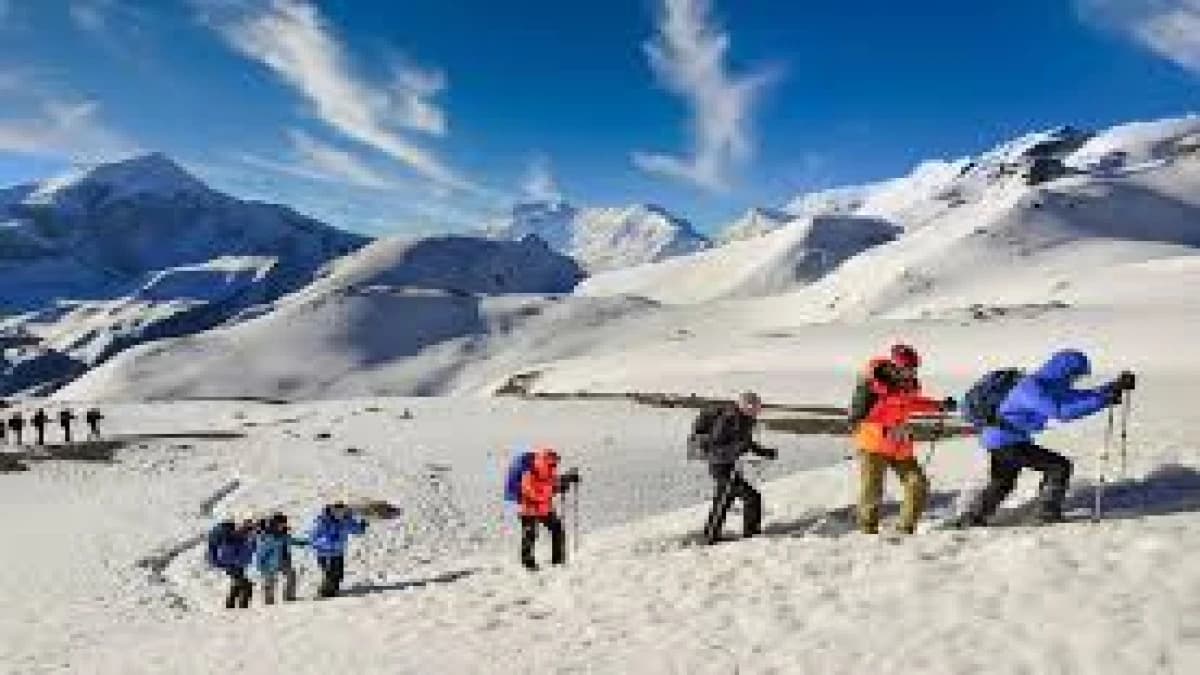
4:30-5:00 am: Leave Thorong Phedi by headtorch. The trail climbs steeply above the lodge on a well-worn path. You'll be walking with other trekkers,a line of headtorch beams moving slowly up the mountainside. It's surreal and oddly beautiful.
5:00-7:00 am: The steep climb to High Camp and beyond. This is the hardest physical section. The trail zigzags up loose scree and rock. Take it slowly. Breathe deliberately. Step, breathe, step, breathe. There's no rush, the pass isn't going anywhere. If you need to stop every 20 steps, that's fine. Everyone around you is doing the same thing.
7:00-9:00 am: The trail levels out somewhat as you approach the pass. You can see prayer flags ahead. The last section is a long, gradual incline across a wide, rocky plateau. Every step feels like an achievement because the air is so thin. Keep going. You're almost there.
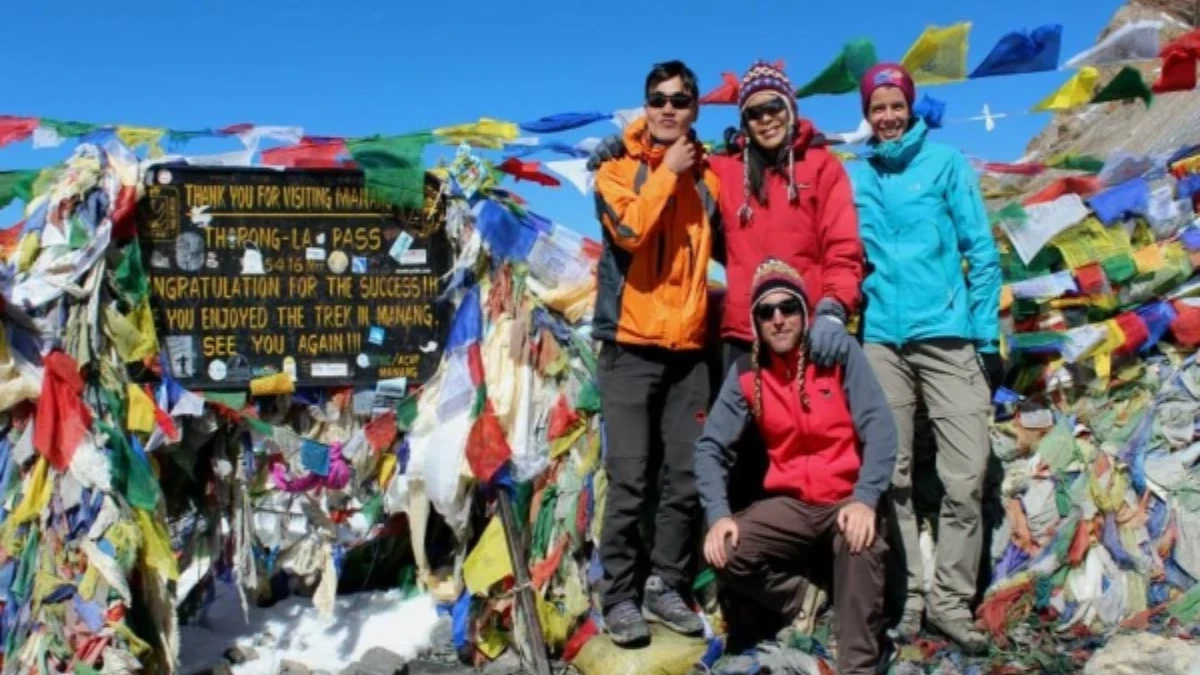
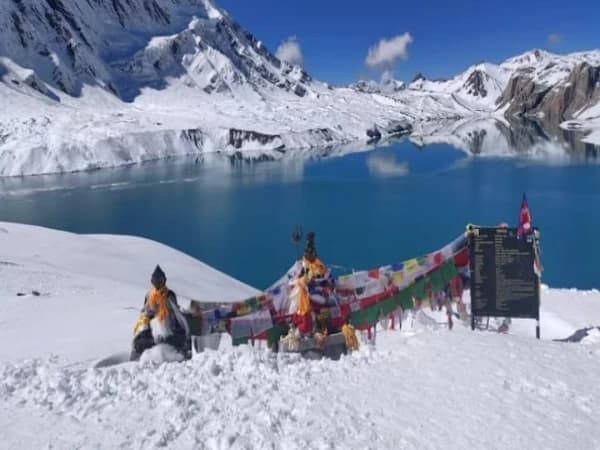
9:00-10:00 am (approximately): Thorong La Pass, 5,416 metres. Prayer flags, a small signboard, and some of the most spectacular mountain views you'll ever see. You've done it. Take photos, catch your breath, have some chocolate, and feel proud of yourself. But don't stay too long, the weather can change fast at this altitude, and you've still got a long descent ahead.
10:00 am- 2:00 pm: The descent to Muktinath (3,800m). It's steep, it's hard on the knees, and it drops over 1,600 metres. But with every step, you'll feel the air getting thicker and your body recovering. By the time you reach Muktinath, you'll be exhausted, elated, and ready for that beer you skipped last night.
What Should You Pack for Thorong La Pass Day?
- Headtorch with fresh batteries, non-negotiable. You're starting in complete darkness
- All your warm layers, down jacket, thermal base layers, fleece, waterproof shell
- Warm hat and gloves, bring a spare pair of gloves in case the first pair gets wet
- Sunglasses and sunscreen, once the sun comes up at altitude, the UV is brutal. Snow blindness is a real risk
- Water bottles, at least two litres. Water bladder hoses can freeze at this altitude, so bottles are more reliable
- Snacks, high-energy food you can eat while walking. Chocolate, nuts, energy bars, dried fruit
- Trekking poles, if you've been using them, you'll really want them on the descent to Muktinath. The steep downhill is punishing on the knees
- Camera, but keep it inside your jacket to protect the battery from the cold. Cold batteries die fast
What Comes After Thorong La on the Annapurna Circuit?
After crossing the pass, you'll descend to Muktinath, one of the most sacred sites in Nepal. At 3,800 metres, it sits in the Mustang district and holds deep significance for both Hindus and Buddhists. There's a temple, 108 water spouts, and a sense of calm that's quite something after the intensity of the pass crossing.
Most trekkers spend one night in Muktinath before continuing down to Kagbeni, Jomsom, and eventually Marpha, Tatopani, and the circuit's end. The lodges in Muktinath are significantly more comfortable than Thorong Phedi, hot showers, better food, warmer rooms. You'll appreciate the upgrade.
If you're doing the Annapurna Circuit anticlockwise (the standard direction), the pass is the climax of the trek. Everything after Muktinath is descent, through the dramatic Kali Gandaki valley, past apple orchards in Marpha, and alongside hot springs at Tatopani. The hard work is done.
Is Thorong La Pass Worth the Difficulty?
Thorong Phedi and the Thorong La crossing are physically and mentally demanding. There's no way around that. But here's what I tell every trekker who sits in the lodge at Phedi looking nervous about tomorrow: thousands of people cross this pass every year. Old people, young people, experienced mountaineers, and complete beginners who've never trekked before in their lives. If you've acclimatised properly, you're hydrated, you're reasonably fit, and you listen to your guide, you can do this.
The key is preparation. Take your acclimatisation days seriously in Manang. Don't skip them to save time, they exist to keep you safe. Drink more water than you think you need. Eat even when you're not hungry. Sleep even when you can't sleep properly. And trust your guide. We've been up and down this pass in sunshine, snow, wind, and everything in between. We know what we're doing, and we'll get you across safely.
The moment you stand at Thorong La, 5,416 metres above sea level, with prayer flags snapping in the wind and the entire Annapurna range spread out around you, that moment makes every difficult step worth it. I've seen it in the faces of hundreds of trekkers, and it never gets old.
Get some rest tonight. Eat your dal bhat. Drink your water. Charge your headtorch. Tomorrow is going to be one of the best days of your life.
Thorong Phedi is the last settlement before Thorong La Pass (5,416m) on the Annapurna Circuit Trek. Our 12-day itinerary sleeps at Thorong High Camp on day 9 and crosses the pass on day 10. The Circuit with Tilicho Lake also crosses here.
Thorong Phedi is where the fun stops and the real work begins. You arrive in the afternoon, eat early, set your alarm for three in the morning, and try to sleep knowing that Thorong La Pass is sitting above you in the dark. Nobody sleeps well at Thorong Phedi. The altitude headache, the anxiety, the wind: it is part of the experience. And then you get up at 3 AM and you walk, and by noon you are on the other side of the pass looking at the Mustang desert, and everything you worried about was worth it.
Thorong La is the big day on our Annapurna Circuit Trek. Our guides have crossed Thorong La hundreds of times. They know exactly when to push and when to turn back.
WhatsApp:+977 9810351300
Email:[email protected]
Our itinerary sleeps at High Camp the night before the pass. Our Annapurna Circuit Trek (12 Days) is private (your group only, no strangers), 2027 dates open, From USD $1,175. WhatsApp us for tailored 2027 dates and current departures.


 Chat with Shreejan