

Fewa Lake: The Heart of Pokhara
Short answer: Fewa Lake is the second largest lake in Nepal, about 4 km long, right beside Pokhara at about 820 m. The clearest views of the Annapurna range are in October and November, and the water is calmest early in the morning. A shared barge to Tal Barahi temple was NPR 100 return in a January 2026 report, and our Pokhara City Day Tour adds the lake to a full day out.
In Nepal, there is a lake that surrounds the mountains. Not literally, of course, but when the wind stops and the water calms, the Annapurna range floats upside down on the surface of the lake. The mirroring of every peak, ridge, and snowfield is so clear that it leaves you wondering which world is real and which is a reflection. This is Fewa Lake, which is the second largest lake in Nepal and the centre of Pokhara.
Fewa is more than just a body of water. It is a presence, a living thing that gives the metropolis along its eastern shore its shape. Fewa is what makes Pokhara possible, and the mountains that feed Fewa are what make it possible. They make one of the most beautiful places on Earth when they are together.
Fewa Lake quick facts
| Detail | What to know |
|---|---|
| Where | Pokhara, western Nepal, with the town at about 820 m. Lakeside hotels and cafes line the shore. |
| Size | About 4 km long and 5.7 square km in area. Average depth about 8.6 m, deepest point about 24 m. |
| Boat hire | A private boat with a boatman cost about NPR 1,500 an hour in a January 2026 report. A shared barge to Tal Barahi temple was NPR 100 return, and a life jacket NPR 20 to 30. Check the price board at the ticket office before you pay. |
| Tal Barahi temple | About 5 minutes across the water. Most visitors spend around 30 minutes on the island. Saturdays are the busiest day. |
| Best months | October and November for the clearest air, March to May for warm days and spring colour. Monsoon cloud often hides the mountains from June to September. |
| Best time of day | Early morning for calm water and mountain reflections, and the hour before sunset for the colour on the peaks. |
Want the lake as part of a full day out? Our Pokhara City Day Tour takes you round the Old Bazaar, Davis Falls, a cave and the International Mountain Museum with a licensed guide and a private vehicle. It starts from USD 95 per person for 2 to 4 travellers on the Budget option, or USD 140 for one traveller. A Fewa boat ride is not in the price, but we can add it on the day. Pay in USD or EUR. Rescheduling is free on 72 hours notice. The 10% deposit itself is not refunded if you cancel.
The Lake's Shape
Fewa Lake is around four kilometres long from north to south and covers about 5.7 square kilometres. It seems like a piece of sky that fell to earth and splashed into the valley. There are deep bays along its beaches. There are small peninsulas that enter its waters. The lake narrows into a channel at its western end. This channel feeds the Seti River, which finally carries its waters to the Ganges and the sea.
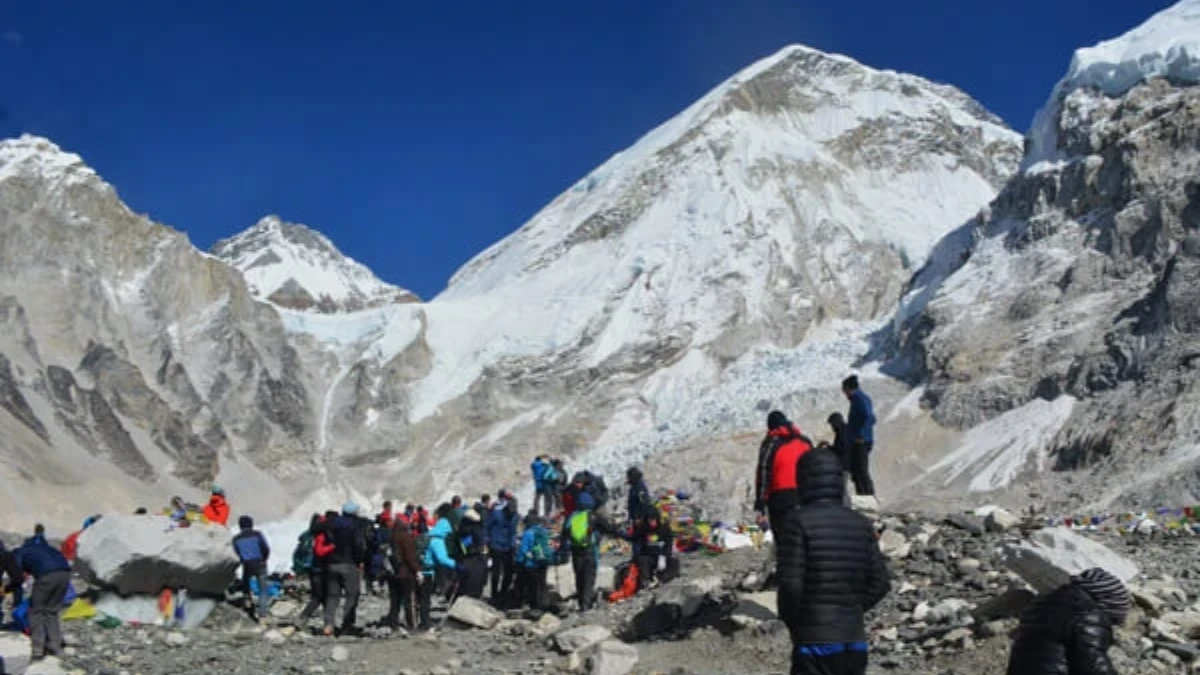
The lake is shallow for its size, about 8.6 metres deep on average and about 24 metres at its deepest point. But it has enough water to feel big. It feels big when you stand on its shore and look across to the other bank. When you row out to the middle, the shore moves away, and the mountains move closer, and you feel like you're between two worlds.
Which mountains can you see from Fewa Lake?
The lake itself is gorgeous, but what makes Fewa special are the things that rise behind it. The Annapurna range, a wall of ice and rock, appears impossibly large. It runs along the northern horizon. The fishtail mountain, Machhapuchhre, is the most beautiful. Its two peaks seem like a fish jumping out of the sea, and people look at it all year long.
In silence, the mountains appear twice: once in the sky and once in the water. Photographers meet at dawn to take pictures of this reflection. They wait for the exact time when the first light hits the peaks, and the lake properly holds them. The picture has grown famous and is now on postcards and calendars, but seeing it in person is a different experience. No picture can show how quiet, big, and old it feels to be there.
How much does it cost to rent a boat on Fewa Lake?
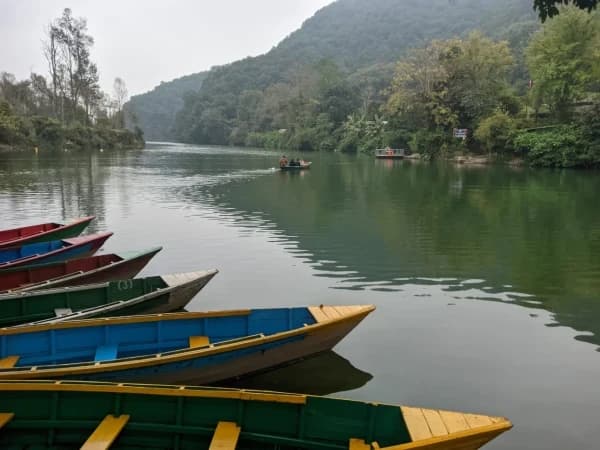
There are many boats on Fewa Lake. Motorboats are prohibited to maintain peace, but rowboats, paddleboats, and the occasional sailboat can be seen enjoying the afternoon breeze. They are brilliant hues like red, blue, yellow, and green, and they look like flowers on a field of silver.
A private boat with a boatman cost about NPR 1,500 for an hour in a January 2026 report, while the shared barge across to Tal Barahi was NPR 100 return. Ask to see the price board at the ticket office, and agree the price before you step in. You may either row yourself or hire a boatman. Either way, you'll be drawn to the lake's centre, where the city fades, and the mountains take over. Many of the boatmen are from this area and were born here. They know the lake as well as you know your house. They can tell you where to fish, where Machhapuchhre's reflection is best, and where the water is deepest.
Some boatmen will transport you across the lake to the World Peace Pagoda. This will take around forty minutes of rowing and then a climb up the forested hill. Some people just float, letting you sit in silence and admire the mountains, sky, and water without saying anything.
How do you reach Tal Barahi Temple on Fewa Lake?
A little island rises out of the water toward the middle of the lake. The Taal Barahi Temple is on it, and it is devoted to the goddess Durga in her guise as a boar. The temple is tiny, with two-story pagoda-style buildings painted white and gold. But its location gives it power. You can't walk there. You have to take a boat across the lake that separates the sacred from the everyday.
Every day, pilgrims come here to pray for protection and blessings, ring the bells that hang at the entryway, and bring flowers and food. Saturdays and the Dashain festival are the busiest times at the temple. Devotees come in waves, and their boats fill the channel like a parade on water.
Even if you're not Hindu or don't believe in goddesses or boar incarnations, visit the temple. The experience of being on that island, surrounded by water, is more important than the theology, with the mountains watching from above and the city humming softly in the background.
What can you do at Pokhara Lakeside by Fewa Lake?
There is a paved promenade along the eastern shore of Fewa that goes on for several kilometres. This is the hub of Pokhara's tourism area, where hotels, restaurants, stores, pubs, travel offices, and trekking outfitters are all along the water's edge.
During the day, the promenade is calm. People who are travelling have coffee at lakeside cafes while they read, write postcards, or just watch the boats sail by. Store owners put out their goods: pashmina scarves, singing bowls, thangka paintings, climbing gear, and whatever else a guest could desire or need. The lake, not the city, sets the rhythm of life here.
The promenade changes by night. The sunset makes the mountains look pink and gold. The lights of the restaurants start to come on, and the lake starts to get darker. Nepali folk, Western pop, and ambient mellow music come from open doors. Couples hold hands as they stroll. Families have meals outside at tables. The city lights shine on the lake, while the lake lights shine on the city.
The Hour of the Sunset
The hour before sunset at Fewa is holy. People from the area and tourists alike assemble at the water's edge, taking up space on the stone steps that lead down to the lake, claiming benches along the promenade, or just standing where they are. They are looking west, toward the mountains, and they are waiting.
At first, the light shifts slowly, then swiftly. The white tips change colours from yellow to orange to pink to purple to grey. The lake reflects each change, making the exhibition twice as big. Boats drift slowly, and the people on them are likewise watching and waiting. The bells of the temple ring out across the river. The noise of the city goes away. Everything is perfect for a short time.
The spectacle concludes when the sun goes down behind the mountains. People stay for a while, not wanting to leave, but ultimately, they go to supper, their hotels, and then the night. The lake gets dark, the stars come out, and Fewa settles down for the night.
Is the water in Fewa Lake clean and safe?
The water at Fewa is not as clear as it used to be. The rise of Pokhara, the number of tourists, and the runoff from nearby fields have all had an effect. The water can look greenish in some places, especially close to the coast, because of algae. The government has tried to clean it up, safeguard it, and fix the damage, but the job is big, and progress is slow.
The lake is still gorgeous, though. You can't see the pollution from far away, from a boat, or from the middle. You can only see the vast water, the mountains reflected in it, and the sky. And maybe that's all it takes. Maybe a lake that has given so much for so long deserves to be forgiven.
What birds can you see at Fewa Lake?
There are birds in Fewa. You may see them in the early morning, before the boats come out. Cormorants dry their wings on posts, kingfishers dive for fish, and egrets stand still in the shallow water. Ducks paddle in tiny groups, and their heads go under the water. Swallows fly low, and they sip while they fly.
In the winter, migrating birds come from the north to escape the cold of the Himalayas and find the lake's relative warmth. They relax here for weeks before heading south again, or they stay for the whole season and add their voices to the chorus. Birdwatchers bring binoculars and notebooks to write down what they see, which adds to the lists that show how many birds live in the lake.
The Fishermen
Not all of Fewa's visitors are tourists. Some are fishermen, which is a tradition that goes back even before Pokhara. They go out in small boats, usually by themselves, and cast nets or lines in the hopes of catching something. Their boats are simpler than the rental boats. They are made of wood, are not painted, and are sometimes just a dugout canoe. They also move with a purpose that tourists don't have.
They capture little fish, which they primarily sell to eateries by the lake or take home to eat with their families. It isn't a rich life, but it is a life connected to the lake that depends on its health and is defined by its cycles. These fishermen are the first to feel the effects of changes in the weather, pollution, and fish populations. They are the lake's conscience, a living link to a time when its waters were clean and full of life.
How long is the hike to the World Peace Pagoda?
A trail goes up through the woods from the northern shore of Fewa to the World Peace Pagoda. It takes about an hour to walk, depending on your speed and the heat. The walk goes through woodlands, tiny past shrines and places to relax, and finally comes to the shiny white stupa that sits on top of the hill.
The pagoda is worth the climb; it's a Japanese-style stupa built by Buddhist monks from all over the world. But the vista is the best part. From here, you can see the lake's shape and how it connects to the mountains. Pokhara is on the shore, and there is a strip of development between the lake and the hills. And above that, the Annapurnas rise in their timeless beauty.
The view from the pagoda is what every picture seeks to show and every tourist tries to remember. Finally, we can see and understand Fewa Lake in its entirety from above.
What is the best time to visit Fewa Lake?
Fewa changes with the seasons. During the summer, the monsoon makes the water rise, and the clouds cover the mountains. The lake gets gloomy and restless as the rain hits its surface like drumbeats. There are fewer people who arrive, and those who do stay under umbrellas to watch the storm pass.
The water gets clearer in the winter, and the mountains stand out against the sky. The morning mist rises from the ground and burns off as the sun rises. The days are comfortable and cool, but the nights are frigid. The present is the time of year for photographers, romantics, and anyone who wants things to be clear.
Spring offers warmth and colour. Rhododendrons blossom on the hills around the lake, and the water shows off their pink and red colours. In the fall, the air is clear after the monsoon, and the mountains are at their best. These are the seasons when Fewa is at its best, most beautiful, and most alive.
The Lake at Night
Fewa changes into something else at night. The tourist boats are no longer there; they are tied up along the coast. The fishermen are back home. The lights on the promenade shine off the water, making a second city of gold that flickers. The mountains are now hidden in the dark, but you know they are there, watching and waiting for morning.
A few boats are still drifting, usually young couples looking for seclusion and romance. Their voices are quiet and personal, and they carry across the water. The island's temple lights shine brightly, visible from every direction. And an owl screams out, its voice reverberating in the quiet.
This is Fewa at night. The lake isn't full of postcards and pictures; it's dark, deep, and enigmatic, like it has always been, with its mysteries hidden in the calm of its waters.
Tips for your first boat ride on Fewa
- The shared barge is the cheapest way to reach Tal Barahi. A private boat costs more but lets you drift wherever you like.
- Life jackets are required. You can rent one beside the ticket office for NPR 20 to 30.
- Ask for the price including tax. A January 2026 report says 13% VAT may be added to barge fares.
- Go early. The water is calmest, the mountains are clearest, and the boats are fewest before mid-morning.
- If you have a rest day between treks, pair the lake with a half day in town. Our Pokhara City Day Tour is an easy day with a little walking and some steps.
Hotel & Contacts
|
Hotel |
Contacts |
|
Hotel Barahi Pokhara |
+977 61-450617 |
|
Fish Tail Lodge by Annapurna |
+977 61-455071 |
|
Majestic Lake Front Hotel & Suites |
+977 61-591601 |
|
Waterfront Resort by KGH Group |
+977 9801166303 |
|
Hotel Lake Himalaya |
+977 61-590107 |
Related Treks & Guides
- Annapurna Base Camp
- The Annapurna Circuit Trek- 12 Days
- Ghorepani Poon Hill Yoga Trek
- Sarangkot
- Bamboo Village on the Annapurna Base Camp Trek
Fewa Lake at sunrise, before the tourist boats and the paragliders, is one of the most peaceful places in Nepal. The reflection of Machhapuchhre in the still water, the sound of temple bells from Barahi Island, and the smell of woodsmoke from the lakeside restaurants opening for breakfast: this is Pokhara at its best. Come early.
We include Pokhara in most of our Annapurna region treks. If you want extra days to explore the lake and the town, we can arrange that.
For adventure seekers, paragliding over Phewa Lake is one of Pokhara's signature experiences and pairs naturally with a rest day in town.
WhatsApp:+977 9810351300
Email:[email protected]
Written by Shreejan Simkhada, CEO of The Everest Holiday and third-generation Himalayan guide. TAAN Member #1586.
Fewa Lake is the Pokhara stop on our Kathmandu-Pokhara tour. Our Kathmandu & Pokhara Tour (7 Days) is private (your group only, no strangers), 2027 dates open, From USD $749. WhatsApp us for tailored 2027 dates and current departures.

 Chat with Shreejan