

Overview: Why Pokhara Deserves More Than One Night
If Kathmandu is Nepal's beating heart, Pokhara is where the country takes a long, slow breath. Sitting at around 800 metres above sea level, with the Annapurna range filling the entire northern horizon, this lakeside city is the place where most trekkers begin and end their Himalayan adventures. But here's what a lot of travellers get wrong: they treat Pokhara as a transit stop. One night before the trek, one night after, and then straight back to Kathmandu.
That's a mistake. Pokhara has enough to fill three or four days easily, and the pace of life here is so different from Kathmandu that you'll wonder if you're still in the same country. The traffic is lighter, the air is cleaner, and everywhere you turn there's a view of either water or mountains, often both at once.
I've been bringing trekkers through Pokhara for years, and I always tell them the same thing: give this city some time. Before an Annapurna trek, after one, or just as a break from the capital, Pokhara rewards you for slowing down.
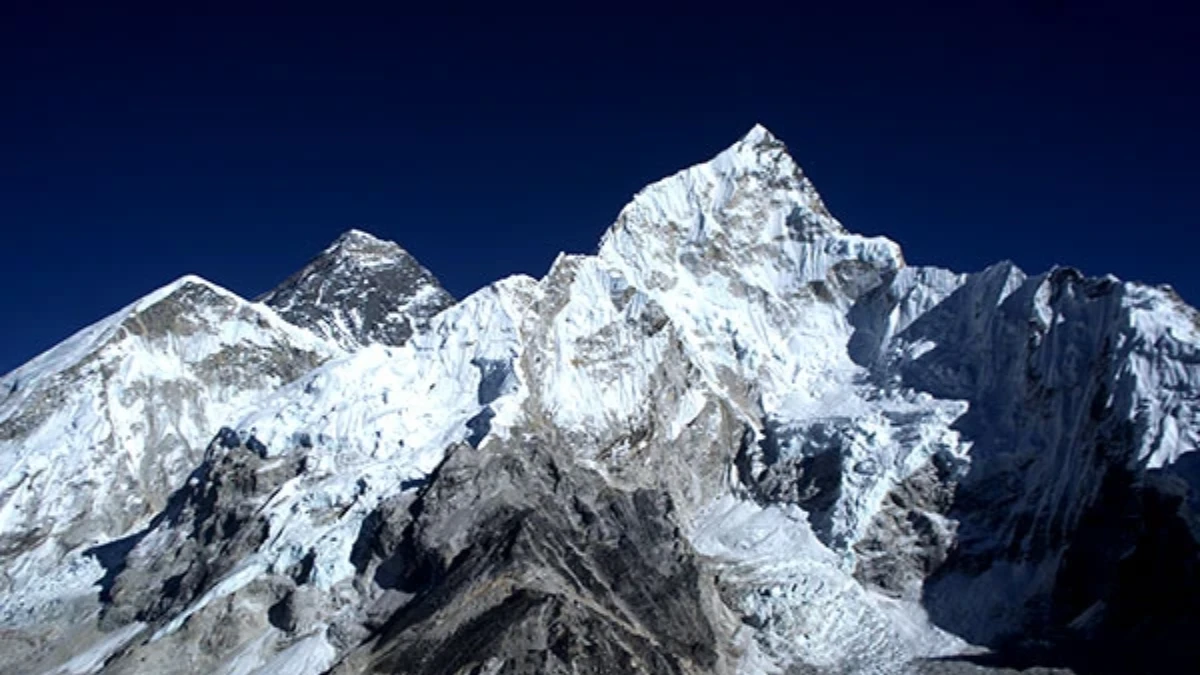
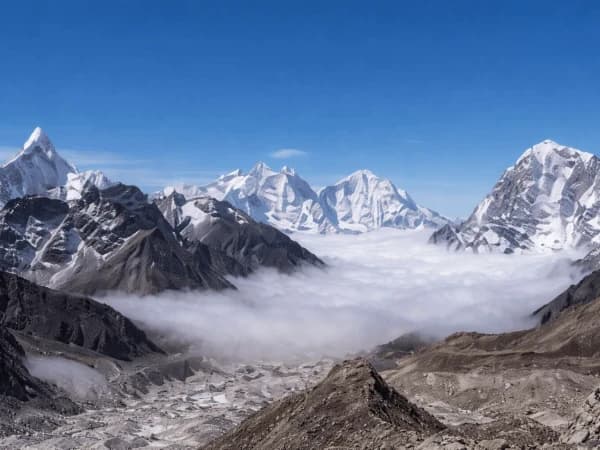
The city sits on the shore of Fewa Lake, with the Annapurna massif, including Machhapuchhre (Fishtail Mountain) at 6,993 metres, rising directly behind it. On a clear morning, that reflection of snow-capped peaks in still lake water is one of the most photographed scenes in Nepal for good reason. It never gets old, even for those of us who've seen it hundreds of times.
How Do You Get to Pokhara From Kathmandu? Private Car
By Tourist Bus
The most popular option for budget travellers is the tourist bus from Kathmandu. It leaves from the tourist bus park near Thamel every morning around 7:00 AM and takes roughly 6 to 7 hours, depending on road conditions and stops. The fare is around USD $8-12 for a standard tourist bus.
The road follows the Prithvi Highway through river gorges, past terraced hillsides, and through small towns where you'll stop for dal bhat at a roadside restaurant around midday. It's not the most comfortable ride in the world, the road has improved enormously in recent years, but there are still sections with bumps and curves. If you're prone to motion sickness, sit near the front and take a tablet before you leave.
The scenery, though, is genuinely beautiful. You'll follow the Trisuli River for a good portion of the journey, and on a clear day you'll catch glimpses of the Himalayan range getting closer with every hour.
By Flight
If you'd rather skip the road, domestic flights from Kathmandu to Pokhara take about 25 minutes and cost USD $80-130 one way. Airlines like Yeti Airlines and Buddha Air operate multiple flights daily. The flight itself is spectacular, on the right side of the aircraft you'll see Ganesh Himal, Manaslu, and the Annapurna range laid out below you.
Pokhara's new international airport opened in 2024, so the facilities are modern and well-organised. From the airport to Lakeside is about a 30-minute taxi ride.
By Private Car or Jeep
For a bit more comfort and flexibility, we can arrange a private car or jeep transfer. This costs more than the bus, roughly USD $100-150 for the vehicle, but you can stop wherever you like, travel at your own pace, and avoid sharing space with twenty other passengers. If you're travelling as a couple or small group, the per-person cost isn't much more than a flight, and you get the scenic route without the bus experience.
The Lakeside Area, Pokhara's Main Strip
Nearly everything a traveller needs in Pokhara is found along the Lakeside strip, which runs along the eastern shore of Fewa Lake. This is where you'll find the hotels, restaurants, trekking gear shops, travel agencies, and bars, all within easy walking distance of each other.
Lakeside is split roughly into three sections. The northern end (sometimes called Dam Side) is quieter and a bit more local. The central section is the busiest stretch, packed with restaurants, bookshops, and souvenir stalls selling everything from singing bowls to yak wool shawls. The southern end stretches toward the lake's southern shore and tends to be more relaxed, with some lovely boutique guesthouses tucked into side streets.
The whole strip is walkable in about 30 to 40 minutes, but you'll rarely cover it in one go because you'll keep stopping, for a coffee, to browse a shop, or just to stare at the mountains. Compared to the narrow, chaotic lanes of Thamel in Kathmandu, Lakeside feels spacious and calm. The road runs parallel to the water, with the lake always visible through gaps between buildings, and the mountains towering behind everything.
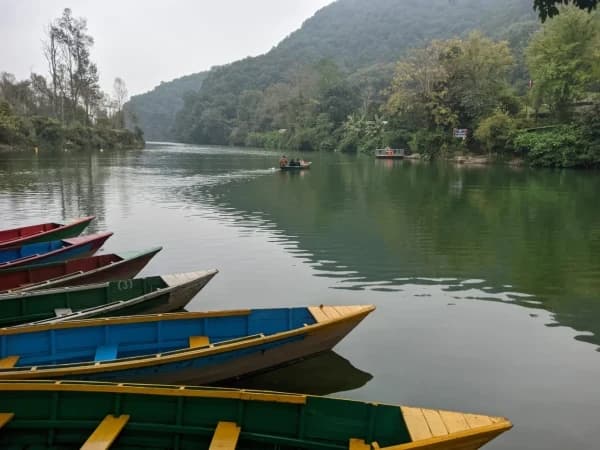
One thing I always mention to visitors: the lake side of the road is where the magic happens. Walk down to the water's edge in the early morning before the tourist boats start up, and you'll find local women washing clothes, fishermen casting nets from wooden boats, and maybe a dozen colourful rowing boats bobbing gently at their moorings. It's a simple scene, but it stays with people.
What are the best things to do in Pokhara?
Fewa Lake Boating
Renting a brightly painted rowing boat on Fewa Lake is one of those Pokhara experiences that everyone should have at least once. You can hire a boat for about NPR 400-600 per hour (roughly USD $3-5) from several points along the Lakeside shore. Row yourself or hire a boatman, either way, get out to the middle of the lake where the Tal Barahi Temple sits on a tiny island. The temple is a Hindu shrine dedicated to Goddess Barahi, and it's worth stepping onto the island for a few minutes.
For the best trip, go early morning or late afternoon. Midday sun on the water can be intense, and the mountain reflections are best when the light is softer. On a still morning, the reflection of Machhapuchhre in the lake is almost surreal.
Sarangkot Sunrise
If you do one thing in Pokhara, make it this. Sarangkot is a hilltop viewpoint at about 1,600 metres, perched above the city with a 180-degree panorama of the Annapurna range. You'll need to leave your hotel around 4:30 to 5:00 AM depending on the season, drive or take a taxi up the winding road (about 25-30 minutes), and be in position before the sun comes up.
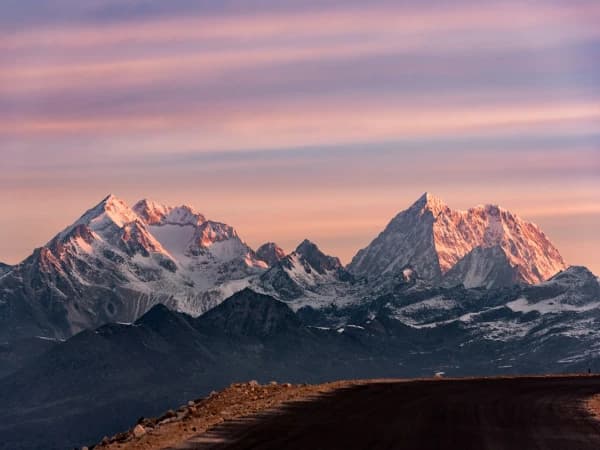
What happens next is hard to describe. The peaks, Dhaulagiri, Annapurna I, Annapurna II, Annapurna III, Annapurna IV, Machhapuchhre, turn from grey silhouettes to deep orange to blazing gold as the sun rises behind you and hits the snow. Below you, the Pokhara valley is filled with mist, and Fewa Lake is just visible through the haze. Bring a warm layer because it's chilly up there before sunrise, even in spring.
A taxi from Lakeside to Sarangkot costs about NPR 1,500-2,000 (USD $11-15) each way, or you can arrange a return trip with waiting time. Some people hike up, it takes about 1.5 to 2 hours from the base, and take a taxi back down. If you're feeling energetic, the hike up in the dark with a headtorch is quite an adventure in itself.
World Peace Pagoda (Shanti Stupa)
On a ridge above the southern end of Fewa Lake sits the World Peace Pagoda, a white Buddhist stupa built by Japanese monks. The pagoda itself is simple and serene, but the real draw is the view, you can see the entire lake, the Lakeside strip, and the full Annapurna range from up here. It's one of the best viewpoints in Pokhara, and far less crowded than Sarangkot.
You can reach it by boat across Fewa Lake followed by a steep 30-40 minute hike up from the southern shore, or by taxi around the longer road route. The boat-and-hike option is more fun and gives you a proper sense of arrival when you reach the top. Budget about 2-3 hours for the round trip including time at the pagoda.
Devi's Fall (Patale Chhango)
About 2 kilometres southwest of the Lakeside area, Devi's Fall is a waterfall that disappears into an underground tunnel. The name comes from a Swiss visitor named Devi (or David, depending on who's telling the story) who was swept into the falls decades ago. During monsoon season the water is thundering and impressive; in dry season it's a gentler flow but still interesting because of the unusual geology, the water literally drops into a hole in the ground.
Entry is about NPR 50 (less than a dollar), and you can visit in 20-30 minutes. It pairs naturally with Gupteshwor Cave, which is directly opposite.
Gupteshwor Mahadev Cave
Right across the road from Devi's Fall, this limestone cave extends deep underground and connects to the same water system. Inside you'll find stalactites, a small Hindu shrine dedicated to Lord Shiva, and, if you go deep enough, a view of Devi's Fall from below. It's dark, damp, and atmospheric. Bring good shoes with grip because the floor is slippery in places. Entry is about NPR 100.
International Mountain Museum
If you're interested in the history of Himalayan climbing and trekking, this museum on the southern edge of Pokhara is well worth a couple of hours. It covers the geology of the Himalayas, the history of mountaineering in Nepal, profiles of the major peaks, and the culture of mountain communities. There are exhibits on famous expeditions, traditional climbing equipment, and scale models of the Himalayan range. It's a good place to visit before heading out on a trek, it puts everything into context.
What adventure activities can you do in Pokhara?
Paragliding
Pokhara is one of the best paragliding destinations in the world, and it's not hard to see why. You launch from Sarangkot, soar above Fewa Lake with the Annapurna range in front of you, and land on a field near the Lakeside strip about 20-30 minutes later. Tandem flights with an experienced pilot cost around USD $70-100, and you don't need any previous experience, the pilot does everything while you hold on and try to remember to breathe.
The best months for paragliding are October to April when thermal conditions are most reliable. Morning flights tend to have calmer air; afternoon flights can be more dynamic with stronger thermals that take you higher. Most operators include a GoPro video and photos, which is well worth having because you'll want to show people back home.
We can book paragliding for our trekkers as part of your Nepal itinerary, just let us know and we'll arrange it with a trusted operator.
Zip-Lining
The zip-line at Sarangkot was once listed as one of the longest and steepest in the world. You launch from near the Sarangkot viewpoint and fly 1.8 kilometres across the valley at speeds up to 120 km/h. It's intense, it's over quickly, and the views while you're flying are extraordinary. Costs around USD $60-80.
Ultra-Light Flights
For something different, ultra-light aircraft flights take you along the Annapurna range at close quarters. A 15-minute flight costs around USD $100-120 and a 30-minute flight around USD $180-200. You fly right alongside the mountains in an open cockpit, it's a completely different perspective from anything you'll get on the ground.
Where are the best places to eat in Pokhara?
Lakeside has an enormous number of restaurants for a city of its size, and the food quality has improved dramatically over the past decade. You can eat everything from traditional Nepali dal bhat to wood-fired pizza to Korean bibimbap, all within a few hundred metres of each other.
For Nepali and Local Food
Don't miss momos, steamed dumplings filled with buffalo meat, chicken, or vegetables. They're Nepal's national snack and Pokhara does them well. For a proper Nepali meal, look for places serving dal bhat (lentil soup, rice, vegetables, pickle, and often meat). It's unlimited refills as a rule, you eat until you physically can't anymore. Thakali food, which comes from the Annapurna region, is excellent in Pokhara. Look for Thakali restaurants that serve set meals on a round metal plate (thali).
Lakeside Cafes
The cafe scene in Lakeside is surprisingly good. There are several places doing proper espresso coffee, fresh baked goods, and healthy breakfast bowls. Many have rooftop terraces or lake-facing seating where you can linger for hours. Busy Bee Cafe, AM/PM, and Godfather's are popular spots along the main strip. For something quieter, wander into the side streets toward the southern end of Lakeside.
Evening Restaurants
In the evening, Lakeside comes alive. Restaurants put tables out on the pavement, fairy lights go on, and the atmosphere is relaxed and social. You'll find travellers swapping trek stories over cold Everest beers and plates of grilled fish from the lake. Prices are very reasonable by international standards, a good dinner with drinks rarely costs more than USD $10-15 per person.
Nightlife
Pokhara isn't a party town in the Thamel sense, but there are a handful of bars and live music venues along Lakeside that stay open until late. Several rooftop bars have pool tables and good cocktail menus. The vibe is more relaxed conversation and acoustic guitar than thumping bass, which, after a long trek, is usually exactly what people want.
Where Should You Stay Near Sarangkot?
Accommodation in Pokhara ranges from basic guesthouses at USD $5-10 per night to luxury lakeside resorts at USD $150+. The sweet spot for most travellers is the mid-range, clean, comfortable rooms with hot water, wifi, and lake or mountain views for USD $20-50 per night.
- Budget (USD $5-15): Simple guesthouses with clean rooms, hot showers, and often a rooftop terrace. You'll find dozens along the Lakeside strip and in the side streets. At this price you won't get air conditioning, but you rarely need it in Pokhara, the lake breeze keeps things comfortable.
- Mid-Range (USD $20-50): Comfortable hotels with good beds, attached bathrooms, wifi, and often a restaurant on site. Many have balconies with mountain or lake views. This is where most of our trekkers stay, and the quality is excellent for the price.
- Luxury (USD $80-200+): Boutique hotels and resorts, some with pools, spas, and private lake access. If you're celebrating finishing a big trek or want to treat yourself, Pokhara has some beautiful high-end options. Tiger Mountain Pokhara Lodge and Temple Tree Resort are standouts.
Our advice: stay in central Lakeside if you want to be close to restaurants and shops. Stay at the southern end if you want more peace and quiet. And whatever you do, ask for a room with a mountain view, waking up to Machhapuchhre outside your window is something you won't forget. Related: Best Hotels in Pokhara with Mountain Views: Where to Stay in 2027.
Which treks can you start from Pokhara?
For most trekkers, Pokhara is the starting point for some of Nepal's greatest trails. This is where the Annapurna region begins, and several of the country's most popular treks launch from road heads just a few hours outside the city.
Annapurna Circuit
The classic Annapurna Circuit is one of the world's great long-distance treks, a loop around the entire Annapurna massif that takes 12-18 days and crosses the Thorong La pass at 5,416 metres. The starting point is typically reached by a drive from Pokhara to Besisahar or Chame. Most trekkers return to Pokhara via Jomsom and Tatopani or Nayapul.
Annapurna Base Camp
The Annapurna Base Camp trek (often called ABC) is shorter, around 7-12 days, and takes you into the heart of the Annapurna Sanctuary, a natural amphitheatre surrounded by peaks over 7,000 metres. The trailhead at Nayapul is about 1.5 hours from Pokhara by road. It's one of our most popular treks and a brilliant option for people who want a proper Himalayan experience without committing to two or three weeks.
Poon Hill
If you're short on time, the Poon Hill trek is a 4-5 day route that gives you incredible mountain views without going to extreme altitude. The highest point is only about 3,210 metres, making it accessible to almost anyone with reasonable fitness. The sunrise from Poon Hill, with Dhaulagiri and the Annapurna range spread out before you, is one of Nepal's classic moments. The trek starts from Nayapul, same as ABC.
Mardi Himal
This newer route has become very popular in recent years. The Mardi Himal trek is a 5-7 day trek that takes you up a ridge directly facing Machhapuchhre and Annapurna South. It's less crowded than ABC and Poon Hill, with a wilder, more adventurous feel. High Camp sits at around 3,580 metres, with Mardi Himal Base Camp a morning's climb above it at 4,500 metres, and views that rival anywhere in Nepal.
We run all of these treks from Pokhara with our own licensed guides. If you'd like to combine a few days in Pokhara with a trek into the Annapurna region, we'll design an itinerary that works for your schedule and fitness level. Just get in touch and we'll plan it together.
What are the best day trips from Pokhara?
Begnas and Rupa Lakes
About 30 minutes east of Pokhara, these twin lakes are far quieter than Fewa and perfect for a half-day escape. Begnas Lake has a few boating options and lakeside restaurants, but you won't find the crowds of Lakeside. Rupa Lake is even more secluded. A morning here feels like stepping into a different Nepal entirely, green hills, still water, birdsong, and barely another tourist in sight.
Bandipur
About 2 hours from Pokhara along the highway toward Kathmandu, the hilltop town of Bandipur is one of Nepal's lesser-known spots. A preserved Newari trading town with cobblestone streets, traditional buildings, and panoramic mountain views, it makes a perfect day trip or overnight stop. If you're driving between Kathmandu and Pokhara, breaking the journey here is highly recommended.
Tibetan Refugee Camps
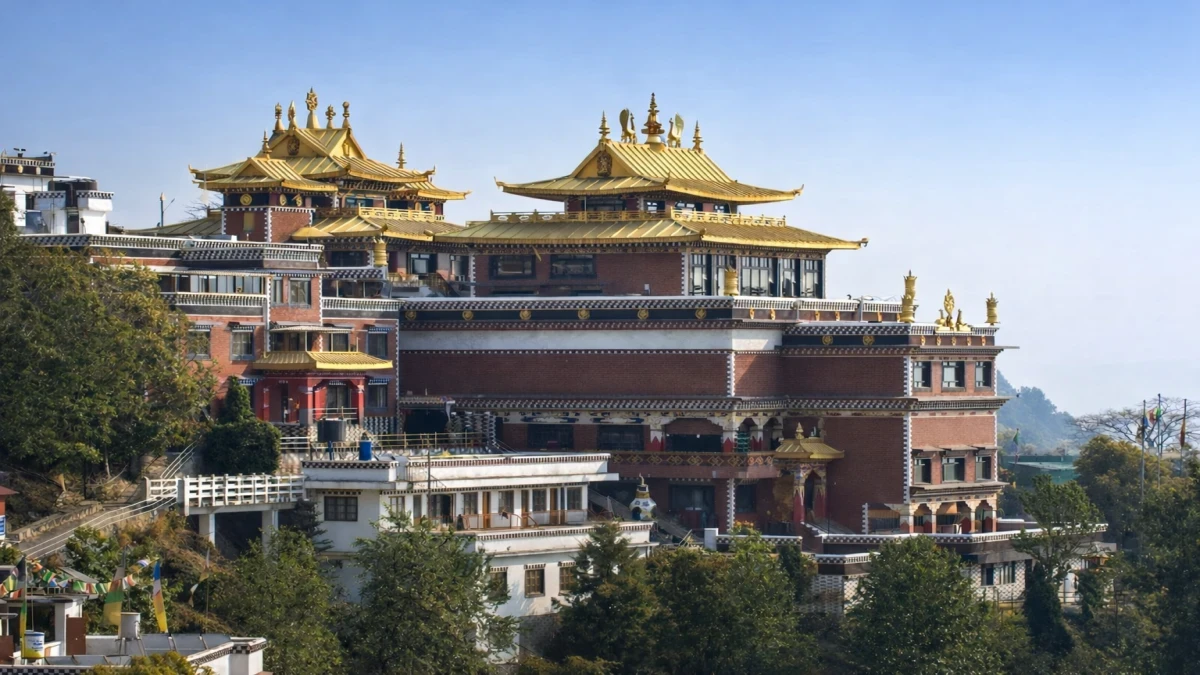
There are several Tibetan refugee settlements near Pokhara, some established in the 1960s. Tashiling and Paljorling camps have small carpet-weaving workshops, monasteries, and shops selling Tibetan handicrafts. Visiting is a respectful and fascinating way to learn about the Tibetan community in Nepal. The handmade carpets are worth a look if you're looking for a meaningful souvenir.
When Is the Best Time to Visit Sarangkot and Pokhara?
Pokhara's weather follows the same broad pattern as the rest of Nepal, but because it sits in a valley that catches moisture from the south, it gets more rainfall than Kathmandu, in fact, it's one of the wettest places in Nepal during monsoon.
- October to December (Autumn): The best time. Clear skies, crisp air, spectacular mountain views. This is peak trekking season and Pokhara buzzes with activity. Temperatures are comfortable, warm days around 20-25 degrees Celsius, cool evenings around 8-12 degrees.
- January to February (Winter): Cold mornings and evenings (down to 5-8 degrees), but often clear and sunny during the day. Mountain views can be excellent. Fewer tourists, lower prices, and a quieter atmosphere. You'll want a warm jacket for early mornings.
- March to May (Spring): Warming up steadily, with rhododendrons blooming in the surrounding hills from March. Haze can build up by April and May, sometimes obscuring mountain views in the afternoon, but mornings are usually clear. April and May are the second peak trekking season.
- June to September (Monsoon): Heavy rain, especially July and August. Mountain views are rare, and some trekking routes are risky due to landslides and swollen rivers. However, the landscape is incredibly green and lush, waterfalls are at their most powerful, and prices are at their lowest. If you don't mind getting wet, monsoon Pokhara has its own beauty.
What Should You Know Before Visiting Sarangkot?
- Money: ATMs are available along Lakeside, and most accept international cards. Carry some Nepali rupees for smaller shops, boats, and taxis. Many restaurants in Lakeside accept USD or will take card payments, but it's always good to have cash as a backup.
- Getting around: Lakeside is easily walkable. For Sarangkot, the airport, or attractions outside the centre, taxis are cheap and readily available. Negotiate the fare before you get in, there are no metres. Renting a bicycle or scooter is also popular and gives you freedom to explore at your own pace.
- Wifi: Most hotels and cafes have free wifi. It's generally decent for messaging and browsing, though don't expect high-speed streaming everywhere. If you need reliable internet, pick up a Nepali SIM card with data at the airport or in Lakeside, Ncell and NTC both offer tourist SIM packages.
- Trekking permits: If you're heading into the Annapurna region, you'll need an Annapurna Conservation Area Permit (ACAP) and a TIMS card. These can be obtained in Pokhara at the Nepal Tourism Board office near the airport or through your trekking company. We handle all permits for our trekkers so you don't need to worry about the paperwork.
- Altitude: Pokhara itself is at about 800 metres, so altitude sickness isn't a concern here. It's actually an ideal place to acclimatise and rest before heading into the higher mountains. If you're arriving directly from a high-altitude trek, Pokhara's lower elevation will feel like a relief.
- Safety: Pokhara is a very safe city for tourists. Lakeside is well-lit at night and there's a visible police presence. Use common sense as you would anywhere, keep valuables secure and be aware of your surroundings, but you shouldn't feel anxious walking around, even after dark.
- Bargaining: Expected in souvenir shops and with taxi drivers. Not expected in restaurants. A friendly smile and a reasonable counter-offer usually gets you a fair price. Don't haggle too aggressively, a few hundred rupees difference matters more to the seller than it does to you.
Pokhara is one of those places that gets under your skin. It's beautiful, it's relaxed, and it's surrounded by some of the highest mountains on earth. Come for the adventure, the views or a few quiet days by the lake, and you'll understand why so many travellers come to Pokhara and find it hard to leave.
If you'd like us to plan your time in Pokhara alongside a trek in the Annapurna region, or anywhere else in Nepal, we're here to help. We've been doing this for three generations, and we'd love to show you our country.
Chat with Shreejan on WhatsApp: +977 9810351300
Email: [email protected]
Browse all our Nepal treks:www.theeverestholiday.com
Couples planning a Nepal honeymoon should also see our Nepal honeymoon guide, which pairs Sarangkot sunrise with the most romantic stops across the country.
Sarangkot pairs with our Kathmandu-Pokhara tour. Our Kathmandu & Pokhara Tour (7 Days) is private (your group only, no strangers), 2027 dates open, From USD $749. WhatsApp us for tailored 2027 dates and current departures.
 Chat with Shreejan