Everest Base Camp Trek Cost From Saudi Arabia: The Real All-In Numbers in Riyals for 2027

Last updated 7 October 2026. Flights are for Dammam (DMM), Riyadh (RUH) and Jeddah (JED), checked on 7 October 2026. Riyal figures use about SAR 3.75 to the US dollar, the market rate on 7 October; it is not an official quote. You pay us in US dollars or euros.
Reaching Kathmandu is the difficult part for anyone living in Saudi Arabia. In my search none of the outbound flights from Dammam, Riyadh or Jeddah was nonstop, and the cheapest return trip started at SAR 2,302. The trek costs the same as it does for anyone else, so this page puts the fares next to the trek price and adds up the whole bill.
The trek itself costs US$1,399 on Budget, US$2,499 on Standard and US$4,999 on Luxury per person for one to four trekkers, about SAR 5,250, SAR 9,370 and SAR 18,750, and the same in 2027. With a return flight, visa, insurance and tips, one person should plan on about SAR 9,720 to SAR 12,190 on Budget, SAR 13,210 to SAR 15,250 on Standard (counted as a solo trekker) and SAR 23,040 to SAR 25,300 on Luxury.
What the three Saudi airports returned
The search was economy, one adult, a cabin bag and a checked bag, outbound on Sunday 25 October 2026 and back on Wednesday 11 November, all on a single ticket.
I ran one search for each city, with one change of plane allowed each way. Dammam returned 15 itineraries from SAR 2,798 to SAR 3,385, Riyadh 15 from SAR 2,302 to SAR 2,900 and Jeddah 15 from SAR 2,813 to SAR 3,385. A nonstop-only search from Dammam returned nothing. No outbound leg in any of the 45 results was nonstop. The only nonstop leg anywhere in them was the way home from Kathmandu to Dammam.
Dammam. The cheapest, SAR 2,798, is Air Arabia through Sharjah on the way out (Dammam 09:25, Kathmandu 21:40 the same day, about 9 hours 30 minutes). The way back is listed as a nonstop under the code H14967: Kathmandu 20:05, Dammam 23:05, about 5 hours 45 minutes. It is sold under Hahn Air's code, so ask which airline actually flies it before you pay. A 04:45 Sharjah connection reaches Kathmandu at 13:50 for SAR 2,816. Fly Dubai through Dubai was SAR 3,041, and IndiGo through Mumbai SAR 3,111.
Riyadh. The lowest fare, SAR 2,302, comes with a night in Mumbai (IndiGo, Riyadh 07:35, Kathmandu 13:45 the next day, about 27 hours 25 minutes) and SriLankan home through Colombo (Kathmandu 13:40, Riyadh 21:45, about 10 hours 50 minutes). For SAR 2,308 IndiGo goes through Delhi and lands in Kathmandu at 09:45 the next morning, about 8 hours 15 minutes after the 22:45 departure. Air Arabia through Sharjah, in at 21:40 the same day, was SAR 2,505.
Jeddah. Fly Dubai both ways through Dubai was the cheapest at SAR 2,813 (Jeddah 07:30, Kathmandu 23:30, about 13 hours 15 minutes; home Kathmandu 09:20, Jeddah 17:10, about 10 hours 35 minutes). IndiGo through Mumbai with a night there was SAR 2,970. Every result included a cabin bag and a checked bag.
The all-in table in riyals
The table is for one traveller. The flight column runs from the cheapest result in any of the three searches to the dearest. The extras column adds a 30-day visa, insurance and tips, plus meals on Budget or pocket money on the other two tiers. Hotels in Kathmandu are extra. Our family homestay is US$15 per person a night, about SAR 60.
| One traveller | Trek, 12 days | Flights from Saudi Arabia | Visa, insurance, tips, extras | Everything, in riyals |
|---|---|---|---|---|
| Budget | SAR 5,250 | SAR 2,302 to SAR 3,385 | SAR 2,180 to SAR 3,560 | SAR 9,720 to SAR 12,190 |
| Standard, solo | SAR 9,370 | SAR 2,302 to SAR 3,385 | SAR 1,540 to SAR 2,490 | SAR 13,210 to SAR 15,250 |
| Luxury | SAR 18,750 | SAR 2,302 to SAR 3,385 | SAR 1,990 to SAR 3,170 | SAR 23,040 to SAR 25,300 |
Budget does not include meals. I plan on US$25 to US$40 a day for them on the trail. The other tiers include food, and I plan on 20,000 to 30,000 rupees (US$130 to US$195) for showers, charging and snacks, drawn from a cash machine in Kathmandu. For tips I plan on US$15 to US$20 a day for a guide and US$10 to US$15 for a porter. These are planning figures, not fixed rates.
Which passport are you holding?
Many of our Saudi enquiries come from residents, and at the Kathmandu desk your passport matters, not your residence permit. Nepal's immigration department sets the rules. Holders of most passports, Saudi ones included, buy a visa on arrival: US$30 for 15 days, US$50 for 30 days (about SAR 190) or US$125 for 90 days. Indian citizens need no visa. Citizens of SAARC countries other than India and Afghanistan get 30 days free once in a calendar year. Chinese passport holders are listed as free, and children under ten pay nothing.
Twelve passports need a visa before travel: Afghanistan, Cameroon, Eswatini (spelt Swaziland on the Nepali site), Ethiopia, Ghana, Iraq, Liberia, Nigeria, Palestine, Somalia, Syria and Zimbabwe. If yours is one of them, start early. The online form can be filled in before you fly, and passports should have six months left. See our visa on arrival guide and e-visa guide.
The Embassy of Nepal in Riyadh is at [email protected] or +966 11 461 1108 and is open Sunday to Thursday, 08:00 to 16:00. Check your own residence permit and ask your employer what you need to leave and re-enter the Kingdom; I cannot advise on Saudi rules.
Employer cover will not do
Do not count on an employer's medical plan to cover trekking in Nepal. Ask your insurer in writing, and treat silence as a no. Buy a travel policy that names trekking to 6,000 m, because Kala Patthar is 5,545 m and a rescue helicopter has to fly above you. It must include helicopter evacuation, which is a very large bill if you pay it yourself, and it should cover illness as well as accidents. See helicopter cover to 6,000 m. Send me the policy wording and I will read it for you, at no charge.
Days off and the Nepali calendar
With the flights, the trek needs 14 to 15 days, and I would add one spare day for a delayed Lukla flight. Ask your employer how much of that your leave allows before you buy a ticket. Nepal is 2 hours 45 minutes ahead of Saudi Arabia all year.
Dashain, from 17 to 23 October 2026, and Tihar, from 8 to 12 November, close government offices, so permits take 48 hours of government working days. In the busy weeks the Lukla flights can leave from Manthali, four to five hours by road from Kathmandu, with a pick-up between midnight and 2 am. Luxury guests fly out by helicopter from Kathmandu.
What the tiers mean on the trail
The route and the guide do not change between tiers. Budget means you carry your own pack, share rooms, buy your own meals and take the fixed-wing flight to Lukla. Standard adds every meal, a private room and one porter for each pair of trekkers, so a solo walker has no porter and hands up to 10 kg to the guide. Luxury gives you a porter of your own, a deluxe private room with a bathroom, fruit, nuts, unlimited soft drinks and a helicopter to Lukla and back. Permits, the licensed guide, airport transfers and a lent down jacket and minus 15 sleeping bag come with all three. There is no single supplement on Standard or Luxury. On Budget, a solo Everest Base Camp trekker pays US$2,275 instead of US$1,399. Kathmandu hotels are charged separately. The route is on the 12-day trek page.
Group prices in riyals
| Tier | 1 to 4 people | 5 to 8 people | 9 to 12 people | 13 to 20 people |
|---|---|---|---|---|
| Budget | SAR 5,250 | SAR 4,870 | SAR 4,500 | SAR 3,750 |
| Standard | SAR 9,370 | SAR 9,180 | SAR 9,000 | SAR 8,810 |
| Luxury | SAR 18,750 | SAR 18,560 | SAR 18,370 | SAR 18,180 |
Private trips and group departures are priced alike, per person, and only your headcount moves you from one band to the next. A twelve-person team from one company pays what twelve cousins would.
No hills, a lot of cold
Nothing in a flat country trains the body for 5,000 metres. You sleep at 5,164 m in Gorak Shep, after five to seven hours of walking on most days, and the two rest days are there to let you adjust. Prepare with stairs, a loaded pack and long walks on consecutive days, as in how fit you need to be. The nights are cold and the cold surprises people from warm countries more than the thin air does. We lend the down jacket and the sleeping bag.
Food on the trail
Teahouse menus run from dal bhat to pasta, soup and pancakes, and our guides steer people away from heavy meat dishes above 4,000 m. I cannot promise halal meat on the trail, so plan on vegetarian meals there. Tell us beforehand and the guide plans each meal, and there is more in our halal trekking guide.
How to pay
To book, send 10 per cent. The other 90 per cent is paid in Kathmandu, in US dollars or euros, in cash with no extra charge or by card with 3.5 per cent added. We cannot take riyals or rupees. If your plans change, you can move to any date within a year at no cost if you tell us 72 hours ahead (seven days for Tibet, Kailash and restricted areas). The deposit itself is not refunded if you cancel. If we are the ones who cannot run your trek, you get back what you paid minus taxes, bank and card charges and anything already spent on permits or flights.
Looking us up
Do not take my word for any of this; check it. The Everest Holiday was registered in Kathmandu in 2016 (company registration 147653/072/073, trekking licence 2090/072) and belongs to TAAN, member 1586. My family has guided for three generations. More than 300 guests have reviewed us on TripAdvisor, Google and Trustpilot. Registrar, TAAN, licence and foreign exchange certificate can each be looked up. A licence alone proves little, because licensed companies have been caught in scams, so ask for a video call before you pay anything. A share of every booking supports the Nagarjun Learning Center. Other Gulf pages: the UAE, Qatar, Kuwait, Oman and Bahrain.
For a quote on your own dates and group, write to me on WhatsApp +977 9810351300 or [email protected].
Shreejan Simkhada, CEO of The Everest Holiday. TAAN 1586.
Planning a trip to Nepal?
Drop us your details and tell us what you have in mind. We will put together a personalised plan and get back to you.
Not sure which Nepal trek is right for you?
Take our free 2-minute quiz and get personalised recommendations based on your fitness, experience, and travel style.
Find Your Perfect Trek →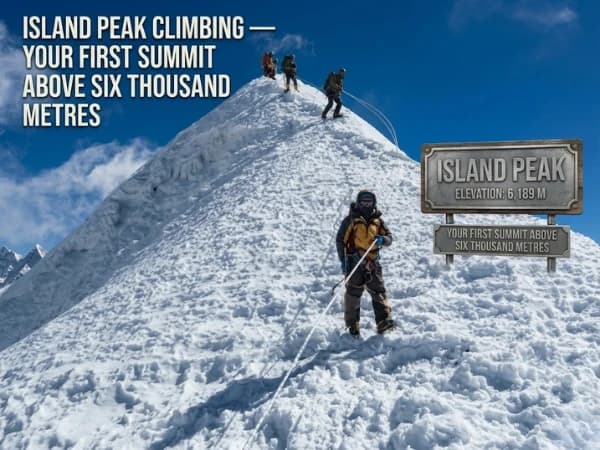
Island Peak Itinerary and Summit Day 2027: 14 Days, Base Camp to the Top
The 14-day Island Peak itinerary day by day, what summit day is like from base camp, where sources disagree on heights, best months and 2027 prices.
Read More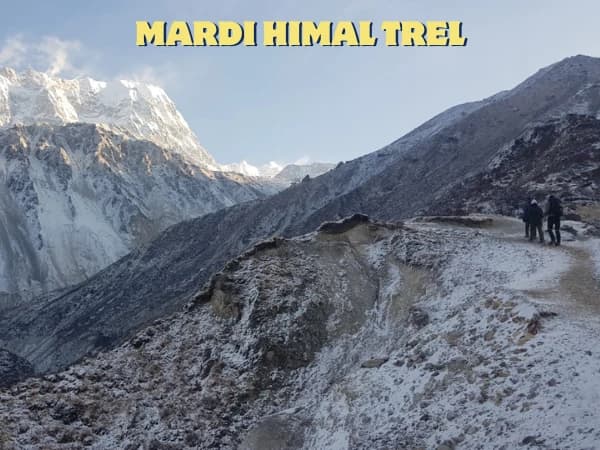
How Difficult Is the Mardi Himal Trek? An Honest Day-by-Day Rating for 2027
An honest day-by-day rating of the Mardi Himal trek: the steep climb to High Camp, the 4,500 m push to Base Camp, altitude risk, who finds it hard and 2027 prices.
Read More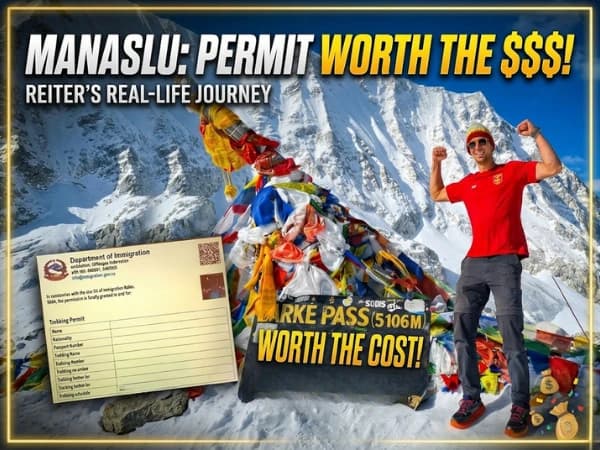
Manaslu Circuit Reopened: What Changed After the 2026 Floods and How to Plan 2027
The Manaslu Circuit over the Larke Pass is open again with extreme caution. What changed in the lower valley after the two 2026 floods, 2027 prices and permits, and how I would plan.
Read More Chat with Shreejan