Halal-Friendly Trekking in Nepal: A Practical Guide for Muslim Travellers
Nepal welcomes over a million visitors a year, and a growing number are Muslim travellers from Malaysia, Indonesia, Bangladesh, Turkey, Pakistan, and the Middle East. If you've been wondering whether Nepal is a practical destination for halal-conscious trekkers, the answer is yes, with some planning.
This page covers everything: halal food on the trail and in Kathmandu, prayer arrangements at altitude, mosques, Ramadan considerations, visa requirements, and our recommended treks. We've written it to be honest and useful, not to oversell. Nepal is not a Muslim-majority country, but it is a deeply respectful one, and with the right preparation, your trek can be comfortable, fulfilling, and entirely aligned with your values.
Nepal's Muslim Community
Nepal is home to approximately 1.4 million Muslims, making up around 4.4% of the population. The Muslim community is concentrated in the Terai (southern plains), Kathmandu Valley, and several hill towns. Kathmandu has several mosques, halal restaurants, and a visible Muslim community, particularly around the Jame Masjid area near Durbar Square and in the Thamel neighbourhood.
Nepal is a secular republic. The constitution guarantees freedom of religion, and Nepalis are known for religious tolerance. Hindu-Muslim coexistence in Nepal is deep and longstanding. You will not face hostility, suspicion, or awkwardness as a Muslim traveller here. Quite the opposite: Nepali hospitality is legendary regardless of your background.
Halal Food in Nepal: What to Expect
In Kathmandu
Kathmandu has genuine halal dining options. The area around Jame Masjid (also called Kashmiri Takiya) in the old city has several halal restaurants serving Nepali, Indian, and Middle Eastern food. In Thamel, the main tourist district, you'll find halal-labelled restaurants catering to Malaysian, Indonesian, and Arab visitors. Numbers have grown steadily over the past five years.
Specific areas to look for halal food in Kathmandu:
- Jame Masjid area (Ghantaghar): Multiple halal restaurants within walking distance of the mosque. Meat is slaughtered according to Islamic practice.
- Thamel: Several restaurants now display halal signs, particularly those catering to Southeast Asian and Middle Eastern tourists.
- New Baneshwor / Battisputali: Halal butchers and restaurants serving the local Muslim community.
If you arrive a day or two before your trek (which we recommend for acclimatisation), you will have no difficulty eating halal in Kathmandu. We recommend arriving at least one full day early: this gives you time to visit a halal restaurant, stock up on any snacks you want to carry on the trail, and adjust to the 1,400m altitude of Kathmandu before heading higher.
Halal Meat Availability in Kathmandu
Chicken and goat meat slaughtered according to Islamic practise are available from halal butchers in several parts of Kathmandu, particularly the Jame Masjid area, New Baneshwor, and parts of Thamel. Halal restaurants serve biryani, kebabs, curries, grilled chicken, and traditional Nepali meat dishes prepared to halal standards. The quality is good and prices are reasonable: a full halal meal in Kathmandu typically costs $3-8 USD.
Buffalo meat is widely consumed in Nepal (it is the most common red meat in the country), and halal-slaughtered buffalo is available from Muslim butchers. Beef from cattle is not available, as cow slaughter is prohibited in Nepal by law.
On the Trekking Trail
Here is where honest information matters. Teahouse kitchens on trekking trails are run by local families, mostly Hindu and Buddhist, and they do not typically follow halal slaughter practices for meat. However, the situation is more workable than it might first appear.
What is naturally halal on every trail:
- Dal bhat: Nepal's national dish. Rice, lentil soup, vegetable curry, pickle, and greens. Completely vegetarian. Served at every teahouse, every day, with unlimited refills. This is what most trekkers eat regardless of religion, because it is filling, nutritious, and perfect for high-energy walking.
- Egg dishes: Omelettes, boiled eggs, fried eggs. Available everywhere. A reliable protein source.
- Vegetable dishes: Fried vegetables, potato curry, cauliflower, spinach, seasonal greens.
- Rice and noodle dishes. Fried rice, chow mein, thukpa (noodle soup), all available in vegetarian versions.
- Tibetan bread, chapati, and roti: Freshly made at most teahouses.
- Momos (dumplings): Vegetable and cheese versions widely available.
- Porridge, muesli, pancakes: Common breakfast options.
- Tea and coffee: Available everywhere. Nepali milk tea (chiya) is superb.
What about meat on the trail?
We advise halal-conscious trekkers to eat vegetarian on the trail. The meat available at teahouses (typically chicken or yak) is not halal-certified, and at higher altitudes, meat quality and freshness become unpredictable anyway. Most experienced trekkers. Muslim or not, eat predominantly vegetarian above 3,000m because it is safer and digests better at altitude.
If you require halal meat, we can arrange it in Kathmandu before and after your trek. On the trail, a vegetarian diet is the practical and reliable approach.
Which Trails Have the Most Food Options?
Lower-altitude treks pass through larger villages with more varied food. The general rule: the lower the altitude and the more popular the trail, the wider your food choices.
- Poon Hill / Ghorepani (max 3,210m): Excellent food variety. Larger teahouses, more menu options, closer to the Pokhara food supply chain.
- Annapurna Base Camp (max 4,130m): Good variety at lower sections. More limited above Deurali, but dal bhat and egg dishes always available.
- Langtang Valley (max 3,870m): Good food throughout. Tamang communities are warm hosts with hearty cooking.
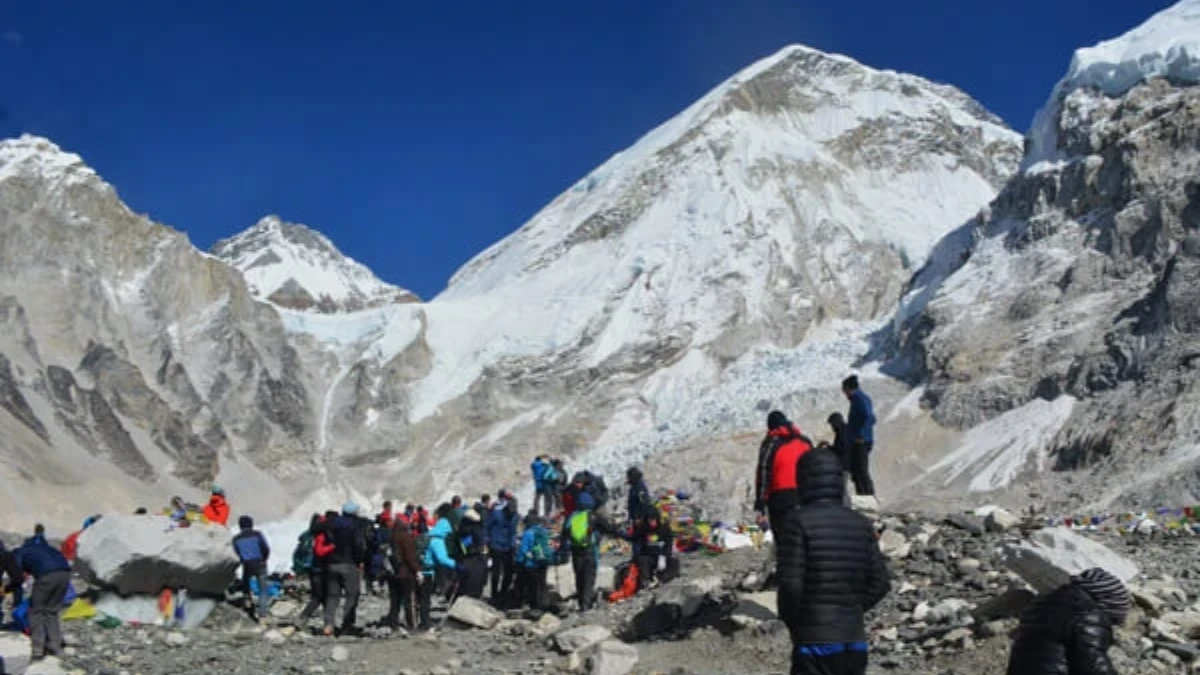
- Everest Base Camp (max 5,364m): Good teahouses up to Namche Bazaar. More basic above Dingboche, but dal bhat and eggs remain available all the way to Gorak Shep.
Can Muslims pray and find qibla while trekking in Nepal?
Trekking and maintaining salah requires some adaptation, but it is entirely manageable. Many Muslim trekkers have done it before you, and our guides are respectful of prayer needs.
Practical Considerations
- Qibla direction: From Nepal, the qibla direction is approximately west-southwest (around 270 degrees from north). A qibla compass app on your phone works reliably in the mountains. Download it before you leave Kathmandu, as mobile signal can be intermittent at altitude.
- Prayer times at altitude: Sunrise and sunset times in the mountains are relatively consistent: sunrise around 5:30-6:15am and sunset around 5:30-6:15pm depending on season. Fajr and Isha times shift accordingly. A downloaded prayer time app (set to your GPS coordinates) is the most reliable method.
- Water for wudu. Water is available at every teahouse. On the trail, streams and rivers are abundant at lower altitudes. Above 4,000m, water sources become less frequent but are still available at camp stops. Carry a small water bottle specifically for wudu if you prefer. Tayammum (dry ablution) is permitted in Islamic jurisprudence when water is scarce, mountain conditions are a legitimate reason.
- Privacy for prayer. Teahouse rooms are private. On the trail, our guides will help you find a quiet spot when you need to pray. The mountains are vast and uncrowded, finding a peaceful place is rarely difficult. Your fellow trekkers, whatever their background, will be respectful.
- Combining prayers: Most Islamic scholars permit combining Dhuhr with Asr, and Maghrib with Isha, during travel. This is especially practical on trekking days when you are walking 6-8 hours. Consult your own scholarly authority before departure if you have questions about this.
- Prayer mat: Bring a lightweight travel prayer mat or use a clean towel. They weigh almost nothing and your porter can carry it with your main bag. Teahouse floors are generally clean but having your own mat is more comfortable.
- Cold-weather wudu: Above 4,000m, water is very cold. Some trekkers warm water in their thermos flask at the teahouse before heading out. This small preparation makes wudu much more comfortable in freezing conditions.
What We Do
When you tell us you are a Muslim trekker, we brief your guide. Our guides are trained to be culturally sensitive. They will:
- Allow time for prayer stops during the trekking day
- Ensure vegetarian meals are prepared for you (no cross-contamination with non-halal meat)
- Help identify suitable private spots for prayer on the trail
- Respect Ramadan fasting if applicable (though we have specific advice on this below)
Where are the mosques in Kathmandu?
Kathmandu has several mosques where you can pray during your time in the city:
- Jame Masjid (Kashmiri Takiya): The oldest and largest mosque in Kathmandu, located near Ghantaghar (the clock tower) in the old city. Daily prayers and Friday Jummah. Walking distance from Thamel.
- Kashmiri Mosque: Near Durbar Square, serving the Kashmiri Muslim community. Beautiful historic building.
- Nepal Jame Masjid: In the Teku area, south of Thamel. Active community with regular prayers.
- Al-Noor Mosque: In Baneshwor area, east of the city centre.
In case you arrive a day early (which we recommend), you'll have time to attend Friday prayers at Jame Masjid and explore the surrounding old city: one of Kathmandu's most atmospheric areas.
Ramadan and Trekking: Our Honest Advice
We respect Ramadan deeply, and we want to be straightforward: trekking at altitude during Ramadan is not advisable.
Here is why:
- Hydration is critical at altitude. Above 3,000m, your body loses water much faster through breathing and sweating. Dehydration is one of the primary triggers for altitude sickness. Going without water from dawn to sunset while trekking 6-8 hours at altitude significantly increases your medical risk.
- Caloric needs are enormous. Trekking burns 3,000-5,000 calories per day. Eating only before dawn and after sunset makes it very difficult to consume enough fuel for safe performance.
- Altitude sickness symptoms overlap with fasting effects. Headache, fatigue, nausea, and dizziness are symptoms of both fasting and altitude sickness. This makes it harder for guides to assess whether you need medical attention.
Our recommendation: Trek before or after Ramadan. If your travel dates overlap partially with Ramadan, schedule the high-altitude portion of your trek outside the fasting period. Islamic scholars widely recognise that strenuous travel is a legitimate exemption from fasting: but ultimately this is a personal decision between you and your faith.
If you do choose to trek during Ramadan, please discuss this with us during the planning stage so we can adjust your itinerary accordingly: potentially choosing a lower-altitude trek, shorter daily walking hours, and ensuring you have maximum nutrition at suhoor and iftar.
What should Muslim women wear trekking in Nepal?
Good news: trekking clothing is modest by nature. Standard trekking gear, long-sleeved base layers, full-length trousers, fleece jackets, covers you from neck to ankle. There is no conflict between modest dress and practical mountain clothing.
- Women: Long-sleeved trekking shirts, full-length trekking trousers, and a buff or scarf are standard trekking wear. If you wear hijab, a moisture-wicking sports hijab or a buff works well under a sun hat or beanie. Many female trekkers of all backgrounds cover their heads at altitude for warmth anyway.
- Men: Full-length trekking trousers and long-sleeved layers are standard. Shorts are rarely worn above 2,000m due to cold, sun exposure, and vegetation scratches.
- Shared accommodation: Teahouses offer private twin rooms. You will not be expected to share a room with strangers. Couples, families, and solo trekkers all get their own rooms.
- Bathing: Teahouses have basic private bathrooms (increasingly with hot showers at lower altitudes). Privacy is not an issue.
Which Nepal treks are best for Muslim travellers?
All our treks are suitable for Muslim travellers with the vegetarian approach described above. However, these three are particularly well-suited due to their food variety, lower maximum altitudes, and well-established teahouse infrastructure:
1. Poon Hill Trek: 5 Days (Our Top Recommendation)
The ideal first Himalayan trek for halal-conscious travellers. Maximum altitude of only 3,210m means minimal altitude risk, excellent food variety at every stop, and larger teahouses with more menu choices. You'll see sunrise over Annapurna and Dhaulagiri: one of the most photographed views in the Himalayas. Short enough for a one-week holiday.
View full Poon Hill itinerary and book
2. Annapurna Base Camp Trek: 9 Days
Walk through rice paddies, bamboo forests, and hot springs to the amphitheatre of the Annapurna massif at 4,130m. The lower sections pass through substantial villages with excellent food options. The upper section (above Deurali) is shorter and well-serviced. A magnificent trek with manageable altitude.
View full ABC itinerary and book
3. Langtang Valley Trek: 8 Days
The closest major trek to Kathmandu: no internal flights needed. Walk through Tamang villages, yak pastures, and cheese factories with views of Langtang Lirung (7,227m). Maximum altitude 3,870m. The Tamang community are incredibly hospitable hosts and the food is hearty throughout.
View full Langtang itinerary and book
Also Popular
- Everest Base Camp, 12 Days. The iconic trek to 5,364m. Requires strong commitment to vegetarian eating above Namche Bazaar, but dal bhat is available all the way. View EBC itinerary
- Mardi Himal Trek, 7 Days. Quiet ridgeline trail with close-up views of Machhapuchhre (Fishtail). Lower crowds, good teahouses. View Mardi Himal itinerary
- Manaslu Circuit Trek, 12 Days. The quieter alternative to Annapurna Circuit. Restricted area permit required. Remote and striking. View Manaslu itinerary
Pricing: All Treks (USD per Person)
| Trek | Duration | Budget | Standard | Luxury |
|---|---|---|---|---|
| Poon Hill | 6 Days | $499 | $749 | $1,235 |
| Mardi Himal | 7 Days | $454 | $849 | $1,111 |
| Langtang Valley | 8 Days | $490 | $1,050 | $1,800 |
| Annapurna Base Camp | 9 Days | $725 ($1,250 solo) | $1,310 ($1,725 solo) | $2,095 ($3,465 solo) |
| Everest Base Camp | 12 Days | $1,399 ($2,275 solo) | $2,785 ($3,345 solo) | $4,999 ($5,640 solo) |
| Manaslu Circuit | 12 Days | $1,005 | $1,599 | $2,099 |
All prices include permits, a licensed guide and accommodation on every tier, plus a porter and all your meals on Standard and Luxury. On Budget you carry your own pack and pay for your own meals as you go. We offer three tiers so you choose how you want to trek. Pay just a 10% deposit to secure your dates.
Visa Information by Nationality
Nepal offers visa on arrival at Tribhuvan International Airport, Kathmandu. The process is straightforward.
| Country | Visa Required? | Cost (On Arrival) | Duration | Notes |
|---|---|---|---|---|
| Malaysia | Yes: on arrival | $30 (15 days) / $50 (30 days) | 15 or 30 days | Direct flights from KL via airlines like AirAsia, Malindo, and Nepal Airlines |
| Indonesia | Yes: on arrival | $30 (15 days) / $50 (30 days) | 15 or 30 days | Flights via KL, Bangkok, or Delhi |
| Bangladesh | Yes: on arrival | $30 (15 days) / $50 (30 days) | 15 or 30 days | Direct flights from Dhaka (Biman, US-Bangla) |
| Turkey | Yes: on arrival | $30 (15 days) / $50 (30 days) | 15 or 30 days | Flights via Doha, Dubai, or Delhi |
| Pakistan | Yes: on arrival | $30 (15 days) / $50 (30 days) | 15 or 30 days | Flights via Doha, Dubai, or Delhi |
| UAE / Saudi Arabia / Qatar | Yes: on arrival | $30 (15 days) / $50 (30 days) | 15 or 30 days | Direct flights from Doha (Qatar Airways), Dubai, Abu Dhabi |
| Oman / Kuwait / Bahrain | Yes: on arrival | $30 (15 days) / $50 (30 days) | 15 or 30 days | Flights via Doha or Dubai |
What to bring: Valid passport (6+ months validity), one passport-size photo, USD cash for the visa fee (exact amount helps), and a completed arrival card (available at the airport or online in advance).
Travel insurance: Mandatory for all trekkers. Must cover helicopter evacuation and medical treatment to the highest point of your trek: 6,000 m for Everest Base Camp, 5,500 m for the Annapurna Circuit, 4,500 m for Annapurna Base Camp and Mardi Himal, and 3,500 m for Poon Hill. Check that your policy covers adventure activities and high-altitude trekking specifically.
When Is the Best Time for Halal-Friendly Nepal Trekking?
- October to November: Peak season. Clearest skies, stable weather, best mountain views. Book 2-3 months in advance.
- March to May: Spring. Warmer temperatures, rhododendrons in bloom. Slightly more cloud in the afternoons but beautiful trekking conditions.
- December to February: Cold but clear at lower altitudes. Fewer crowds. Best for Poon Hill and Mardi Himal. Not recommended for EBC or Manaslu unless experienced.
- June to September: Monsoon. Avoid for most treks. Exception: Upper Mustang and Dolpo (rain shadow areas).
Ramadan timing note: Ramadan shifts approximately 10 days earlier each year. Check the dates for your travel year and plan accordingly: ideally booking your trek outside the fasting period for the safety reasons described above.
Eid al-Fitr or Eid al-Adha in Nepal: If your trip coincides with Eid, the Muslim community in Kathmandu celebrates openly. You can join Eid prayers at Jame Masjid, where the congregation can number in the thousands. It is a lovely way to experience Nepal's diversity.
What is included in a Nepal trek package?
- All trekking permits (TIMS card, National Park / Conservation Area entry, restricted area permits where applicable)
- Licensed English-speaking guide
- Porter (one porter per two trekkers, maximum 20kg per porter, 10kg each)
- All teahouse accommodation (private twin rooms)
- All meals during the trek (Standard and Luxury tiers)
- Ground transport from Kathmandu to trailhead and return
- Kathmandu airport transfers
- Welcome and farewell dinners
- First aid kit and pulse oximeter
- Emergency evacuation coordination
Not included: International flights, Nepal visa, travel insurance, personal trekking equipment, lunch and dinner in Kathmandu (we can recommend halal restaurants), personal spending and tips.
About The Everest Holiday
We are a Himalayan family company based in Kathmandu. Our family has three generations of guiding in the Himalayas, and our grandfather Hari Lal Simkhada arranged logistics for Himalayan expeditions. Our father Ganesh Prasad Simkhada has held senior positions at the Nepal Tourism Board and Nepal Mountaineering Association. Today, Shreejan Simkhada and Shamjhana Basukala run The Everest Holiday with 80+ guides and staff.
- TAAN Member #1586: Nepal's official trekking agency association
- Tourism Licence 2838/072: Government of Nepal
- Over 300 reviews on TripAdvisor (4.9 stars), Google (4.9 stars) and Trustpilot (4.7 stars)
- Selected by Nepal Tourism Board to represent Nepal at MATKA 2026 Helsinki
- Secure online payment through Himalayan Bank Limited: a 10 percent deposit by card confirms your trek and the balance is paid in Kathmandu.
We have welcomed trekkers from over 40 countries, including Malaysia, Indonesia, Turkey, Bangladesh, and the Middle East. We understand the needs of Muslim travellers because we have guided them before: and because Nepal's own Muslim community is part of our national fabric.
Our charity, the Nagarjun Learning Center
A portion of every booking supports the Nagarjun Learning Center, founded by our family. We provide free education and hot meals to 70 children across 7 learning centres in rural Nepal, free medical care to 600+ people, and empowerment programmes for 275+ women. The centre is verified and listed on the UN Partner Portal.
Your trek does not just change your life: it changes theirs.
Frequently Asked Questions: Muslim Trekkers in Nepal
Is halal food available on trekking trails in Nepal?
Certified halal meat is not available on trekking trails. However, the staple trekking diet, dal bhat (rice, lentils, vegetables), egg dishes, noodles, bread, and vegetable momos, is naturally halal. Most trekkers eat predominantly vegetarian on the trail anyway, as it is safer and more reliably fresh at altitude. Halal meat (chicken and goat) is readily available in Kathmandu before and after your trek.
Can I pray five times a day while trekking?
Yes. Our guides accommodate prayer stops during the trekking day. Teahouse rooms are private for prayer. On the trail, quiet spots are easy to find: the mountains are vast and uncrowded. Download a qibla compass and prayer times app before leaving Kathmandu. From Nepal, qibla direction is approximately west-southwest.
Are there mosques in Kathmandu?
Yes. Kathmandu has several mosques including Jame Masjid (the largest, near Ghantaghar), Kashmiri Mosque (near Durbar Square), and Nepal Jame Masjid (Teku area). Friday Jummah prayers are held at all of them. The Jame Masjid area also has multiple halal restaurants.
Can I trek during Ramadan?
We strongly advise against trekking at altitude during Ramadan. Dehydration from fasting significantly increases altitude sickness risk, and the caloric demands of trekking (3,000-5,000 calories per day) are very difficult to meet with only pre-dawn and post-sunset meals. We recommend scheduling your trek before or after Ramadan. If your dates overlap, please discuss this with us so we can plan a lower-altitude option with adjusted walking hours.
Is Nepal safe for Muslim travellers?
Nepal is one of the safest countries in Asia for all travellers. It is a secular republic with a Muslim population of approximately 4.4%. There is no history of religious tension against Muslim visitors. Nepalis are famously hospitable regardless of religion, nationality, or background. Crime against tourists on trekking trails is extremely rare.
What should women wear while trekking?
Standard trekking clothing is inherently modest: long-sleeved base layers, full-length trousers, and fleece jackets. If you wear hijab, a moisture-wicking sports hijab or a buff/scarf works well under a sun hat or warm beanie. Many female trekkers cover their heads at altitude for warmth regardless of religion. You will not feel out of place.
Do I need a visa for Nepal?
Citizens of Malaysia, Indonesia, Bangladesh, Turkey, Pakistan, and all Middle Eastern countries receive visa on arrival at Kathmandu airport. Cost is $30 for 15 days or $50 for 30 days (USD cash). Bring your passport (6+ months validity) and one passport-size photo.
Can I book a female guide?
Yes. We have female guides available upon request. If you are a solo female trekker or a women's group and would prefer a female guide, let us know when booking and we will arrange it.
Is alcohol served at teahouses?
Some teahouses sell beer and local spirits, but there is absolutely no expectation or pressure to drink. Many trekkers, of all backgrounds, do not drink alcohol on the trail, as it worsens dehydration and altitude sickness symptoms. Your guide will never encourage alcohol consumption.
Can I bring my own halal food from Kathmandu?
Yes, and some trekkers do. You can buy halal snacks, dried meat, nuts, and energy bars in Kathmandu before departure. However, teahouse meals are included in Standard and Luxury packages, and the vegetarian options are filling, nutritious, and freshly cooked. Most Muslim trekkers find the trail food more than adequate without supplementing.
Plan Your Nepal Trek Today
If you are a first-time trekker from Kuala Lumpur, an experienced hiker from Istanbul or a family group from Dhaka, we will make your Nepal experience personal, safe, and respectful of your values. Every detail is your choice: dates, pace, tier, route, and dietary needs.
Tell us your requirements when you enquire, and we will plan your trek around them. That is what a family company does.
WhatsApp:+977 9810351300 (Shreejan responds within 30 minutes during Nepal business hours)
Email:[email protected]
Website:theeverestholiday.com
Three generations. One family. Your Himalayas.
Looking for a halal-friendly Nepal trek? Our Everest Base Camp Trek (12 Days) is private (your group only, no strangers), 2027 dates open, From USD $1399. WhatsApp us for tailored 2027 dates and current departures.


 Chat with Shreejan