Everest Base Camp Trek Cost From France: The Real All-In Numbers in Euros for 2027
Written by Shreejan Simkhada, CEO of The Everest Holiday and third-generation Himalayan guide. TAAN Member #1586.
Last updated 9 September 2026. Package prices read from our booking system on that date; they hold for 2027 departures. Euro figures use 1 US dollar = 0.86 euro, the rate in the first week of September 2026, rounded.
French trekkers ask me better questions about insurance than anyone else I deal with, and they are usually the ones who have already read the small print and found the hole in it. So this page is written the way I would answer you on the phone: what the Everest Base Camp trek actually costs from France, all in, in euros, what is not in the price, and where the cheap quotes get their money from. The arithmetic is shown so you can hold it against any other offer.
The short answer
A twelve-day Everest Base Camp trek costs a French trekker roughly €3,000 to 3,300 all in on a budget package once you add your own trail meals, about €3,750 to 4,050 on a standard package with meals and porters, and €5,900 to 6,300 for the luxury version with helicopter transfers. In US dollars, which is what we quote in, that is about $3,500 to 3,850, $4,350 to 4,700 and $6,850 to 7,300. The flight from Paris is the second-biggest line after the trek itself. Everything below is where the rest goes.
What does the trek package itself cost?
Our own prices for the twelve-day trek, per person, are $1,399 on the budget tier, $2,785 on standard and $4,999 on luxury. In euros that is about €1,200, €2,150 and €4,300. The tiers are not marketing labels, they are three genuinely different trips.
On budget you carry your own bag, you buy your own meals on the trail, rooms are shared and you fly to Lukla on a fixed-wing aircraft. On standard all your meals are included, you share one porter between two trekkers, and rooms are private. On luxury you get a porter to yourself, private deluxe rooms, all meals plus fruit and soft drinks, and the Kathmandu to Lukla legs are by helicopter in both directions. A down jacket, a sleeping bag rated to minus fifteen and a duffel are provided free on the standard and luxury tiers, and the jacket and sleeping bag are free on budget too. We do not rent them to you.
One thing every operator is quiet about: Kathmandu hotel nights are not inside any trek package, ours included. You need two or three of them, and I have costed them separately below rather than hiding them.
The day-by-day is on the Everest Base Camp trek page. If you want the numbers for your own dates, message me on WhatsApp and I will send them.
Does it get cheaper as a group?
Yes, and the discount is by group size only. The price is identical whether you book privately or not, and we never put strangers into your group to fill it.
| Group size | Budget | Standard | Luxury |
|---|---|---|---|
| 1 to 4 | $1,399 | $2,785 | $4,999 |
| 5 to 8 | $1,299 | $2,520 | $4,949 |
| 9 to 12 | $1,199 | $2,399 | $4,899 |
| 13 to 20 | $999 | $2,349 | $4,849 |
A club or an association of a dozen walkers saves real money on the budget tier. On standard and luxury the saving is smaller, because the meals and the porters scale with the people.
How much are flights from France to Kathmandu?
There is no direct flight, and there never has been. Everyone changes once, usually in the Gulf or in India. From Roissy the common routings are Qatar Airways via Doha, Etihad via Abu Dhabi, Air India via Delhi, Gulf Air via Bahrain and Turkish via Istanbul. Air India carries the largest share of this route and often has the lowest fare; the Gulf carriers are more comfortable and cost more. Door to door is around twenty to twenty-two hours with one stop.
Fares move a great deal with the season. Booked a few months out, a return from Paris runs roughly €600 to 900. The bottom of that band appears in the quiet months and on the Delhi routing; October, which is the busiest trekking month, sits at the top and sometimes above it. Bargain fares in the €400s do exist off-season, and I have had clients pay €1,100 for booking six weeks before an October departure. Book early for autumn and the flight stops being the part that hurts.
If you are flying from Lyon, Marseille, Nice or Toulouse, expect a second connection and roughly €60 to 120 more, or take the TGV to Roissy and fly from there.
Visa, permits and insurance
Nepal tourist visa for French passport holders: US$50 for 30 days, about €43, paid on arrival at Kathmandu airport in cash or by card. You can complete the online arrival form up to 15 days before you fly and skip the kiosk queue. Bring one passport photo. The visa on arrival guide walks through it step by step.
Sagarmatha National Park permit: NPR 3,000, about €17. Khumbu Pasang Lhamu municipality permit: NPR 3,000, about €17. TIMS card: NPR 2,000, about €11. On any decent package, ours included, all three are bought for you and sit inside the price. I list them so you can see where the money goes.
Insurance is the one item you must buy yourself, and the one item not to economise on. Three French-specific traps, and I see all three every season:
First, the carte Vitale and the Assurance Maladie do nothing for you in Nepal, and the carte européenne d'assurance maladie is valid inside Europe only. Neither will pay a rupee towards a helicopter.
Second, the insurance attached to a Visa Premier or Gold Mastercard is where most people think they are covered and are not. That cover is usually capped, usually limited to the first ninety days, and almost always excludes alpinisme et trekking en haute altitude above a stated ceiling, often 3,000 or 4,000 metres. Kala Patthar is 5,545 metres.
Third, a standard assurance voyage may cover rapatriement sanitaire but exclude secours et recherche en montagne, which is the line that actually pays for the helicopter. You need both named.
Buy a policy whose wording names trekking to 6,000 metres, higher than Kala Patthar rather than equal to it, because a rescue helicopter has to fly above you to reach you. Read the conditions générales, not the summary page. Budget €100 to 200 for two to three weeks. Ask for the confirmation in writing, because the helicopter operator in Kathmandu telephones the insurer before it lifts. Send me the wording before you fly and I will tell you honestly if it has a hole in it.
What will I spend on the trail?
On a standard or luxury package with meals included, trail spending is small: hot showers at NPR 500 to 800 higher up, wifi, battery charging, snacks and a bakery stop in Namche. €16 to 25 a day covers it comfortably.
On a budget package you buy your own meals, and prices climb with altitude because everything above Namche arrives on a porter's back or a yak. Plan on €38 to 50 a day for three lodge meals and tea, so roughly €450 to 600 across the trek.
Add two or three Kathmandu hotel nights. A clean tourist-class double in Thamel runs €60 to 90 a night; a five-star runs €170 and up. Carry the trail money in Nepali rupees from Kathmandu. Euros change easily in Thamel at a fair rate, or use a Kathmandu ATM, but do not count on the trail: the only cash machines on the route are in Namche and they are often empty.
How much should I tip?
Tipping matters more here than it does in France, and it matters genuinely to the crew, whose wages are modest. Nobody will make you feel awkward about it. A fair guideline is about ten per cent of the trek price, pooled: on a standard trek, think €175 to 250 for the guide and €120 to 170 for the porter, adjusted for group size and how the team looked after you. Hand it over on the last trekking day, in rupees, euros or US dollars.
The full arithmetic, from Roissy
Standard package, one trekker sharing rooms:
| Item | EUR | USD |
|---|---|---|
| Trek package, standard tier | 2,150 | 2,499 |
| Return flights Paris to Kathmandu | 800 | 930 |
| Nepal visa, 30 days | 43 | 50 |
| Insurance with 6,000 m cover | 130 | 150 |
| 3 Kathmandu hotel nights | 220 | 255 |
| Trail extras, 12 days | 200 | 230 |
| Tips for guide and porter | 360 | 420 |
| Total | about 3,900 | about 4,530 |
The same arithmetic puts the budget route at about €3,100 once you add roughly €520 of trail meals and tip the guide alone, and the luxury route at about €6,100. If someone quotes you dramatically less than the bottom of that range for the same twelve days, a line has been cut somewhere, and it is usually wages, an acclimatisation day, or the safety margin. The fuller breakdown of what sits under every operator's pricing is in what Everest Base Camp really costs.
How many days off work do I need?
The trek is twelve days on the ground. Add two nights in Kathmandu before it and one after, plus the flights, and you are away for about sixteen days door to door. That is a little over three weeks of congés payés if you count weekends in your favour, and it fits comfortably inside the French five weeks. Most of my French clients take the trek in one block and keep a few days back, because Lukla flights can be delayed by weather and you do not want to be counting hours at the end.
Build in two spare days at the Kathmandu end. Not because anything usually goes wrong, but because when Lukla closes for weather it closes for a day or two, and a trekker with a rigid flight home is the one who ends up paying for a helicopter out.
When should I go?
October is the most reliable month and the busiest. Mid-November into early December is cold at night but the air is clear and the trails are quiet, and I often prefer it. March and April are warm with rhododendrons in flower and are the second season. June to mid-September is the monsoon, and I will talk you out of it. December to February is clear, very cold and nearly empty.
One honest warning about autumn that most operators leave out: from about 25 September to 30 November, fixed-wing flights to Lukla do not leave from Kathmandu. They go from Manthali instead, which means a pickup between midnight and 2 am and a four to five hour drive. It is not a scandal, it is how the season works, and helicopters are exempt. But you should hear it from me now rather than discover it the night before. The month-by-month detail is in Everest Base Camp weather month by month.
If you are looking at autumn 2026 specifically, read which treks are open after the Rasuwa flood first. The Everest region was not affected, but other regions were, and you should know which is which before you commit.
What does France Diplomatie say?
The Ministère de l'Europe et des Affaires étrangères places the whole of Nepal in vigilance renforcée, and that has been the standing position rather than a new alarm. It flags flood and landslide risk along the Bhote Koshi and Trishuli valleys and in Rasuwa district, which is accurate and which is exactly why the Rasuwa page above exists. It also recommends, in plain terms, that you be insured for secours et évacuation en montagne and for rapatriement sanitaire. That is the same advice I give you, from a source with no interest in selling you a trek. Read it yourself on the Conseils aux voyageurs page for Nepal and check the date at the top, because it moves.
Which Everest trek should a French trekker book?
If this is your first time at altitude, take the twelve-day Everest Base Camp trek and do not let anyone sell you a shorter one. The itinerary is short as it is, and the acclimatisation days in it are the reason people get to Base Camp rather than turning back at Dingboche.
If you have walked high before and want the better trip, Everest Base Camp with Gokyo Lakes via Cho La is the one I would book for myself. The Gokyo valley carries roughly a fifth of the traffic of the main corridor and the lakes are the best thing in the region.
Strong walkers with three weeks should look at the Everest Three Passes. And if you cannot face the Lukla flight at all, Everest Base Camp by road reaches the same place with a longer approach and no small aircraft.
How do I pay from France?
We quote in US dollars, so there is no exchange-rate guesswork between us, and your bank converts at its own rate on the day. A 10 per cent deposit confirms the booking. It goes by card through Himalayan Bank's secure gateway, and the balance is paid in Kathmandu in US dollars or euros, in cash or by card. If you pay the balance by card there is a 3.5% charge. Cash in Kathmandu has none.
You need a card carrying the Visa or Mastercard logo, credit or debit. A French Carte Bleue co-badged with Visa or Mastercard is fine; a national-only CB card will not clear on a foreign payment page. A SEPA transfer cannot reach a Nepali bank, so do not try to arrange one. When the 3D Secure step appears, approve it in your banking app, otherwise the payment simply fails and we start again.
If your plans change, I move your trek to any date within a year at no charge; I just need at least 72 hours' notice. If you cancel instead, the deposit is not refunded, and I will not pretend otherwise. If we are the ones who cancel, you are refunded what you have paid, less taxes, bank and card charges, and anything already spent on your behalf such as permits and flights.
Check us before you pay
Trekking scams in Nepal are real and they make the news, so do not take my word for any of this. The Everest Holiday Pvt. Ltd. was registered in Kathmandu on 8 April 2016, company registration 147653/072/073, trekking licence 2090/072, member 1586 of the Trekking Agencies' Association of Nepal. Every legitimate operator holds the same paperwork and will send it to you without being offended that you asked. I should say plainly that even fully licensed operators have been involved in scams, so the paperwork is a floor and not a guarantee. Ask me for a call before you send a deposit; I am on WhatsApp all day. If a company will not get on a call with you, walk away. Our reviews are on TripAdvisor and Google under our own name, and you should read the critical ones as well as the kind ones.
The questions French clients always ask me
Do your guides speak French? Honestly, mostly not. Our guides work in English, and a few have some French. If you want a genuinely French-speaking guide, tell me early and I will tell you truthfully whether I can find one for your dates rather than promise and improvise.
Is the food a problem? No. Dal bhat twice a day is the staple and it is good. Vegetarians eat very well on this trail. Tell me about any allergy in writing before you fly, because a lodge kitchen at 4,000 metres has limited room to improvise.
Can I do it at sixty? Yes, and plenty do. Altitude cares far less about age than about pace and acclimatisation. If you walk regularly in the Alps or the Pyrenees you are better prepared than most twenty-five-year-olds who train in a gym.
Is Everest Base Camp too crowded now? In October, the main corridor is busy and I will not pretend otherwise. If crowds would spoil it for you, take the Gokyo route or come in late November.
What is the single biggest mistake? Buying the wrong insurance, then a trek that is too short. In that order.
Prefer to talk to someone in Europe? Our Europe representative, Shradha Simkhada, is based in Espoo, Finland. Phone and WhatsApp: +358 45 353 8606.
If you want the real numbers for your dates and your group, write to me on WhatsApp. I answer myself, and I will tell you if the trek you are asking about is the wrong one for you.
Shreejan Simkhada is the CEO and co-founder of The Everest Holiday, a family-run trekking company in Kathmandu, and a third-generation Himalayan guide. TAAN Member #1586. Every booking helps fund our Nagarjun Learning Center.
Planning a trip to Nepal?
Drop us your details and tell us what you have in mind. We will put together a personalised plan and get back to you.
Not sure which Nepal trek is right for you?
Take our free 2-minute quiz and get personalised recommendations based on your fitness, experience, and travel style.
Find Your Perfect Trek →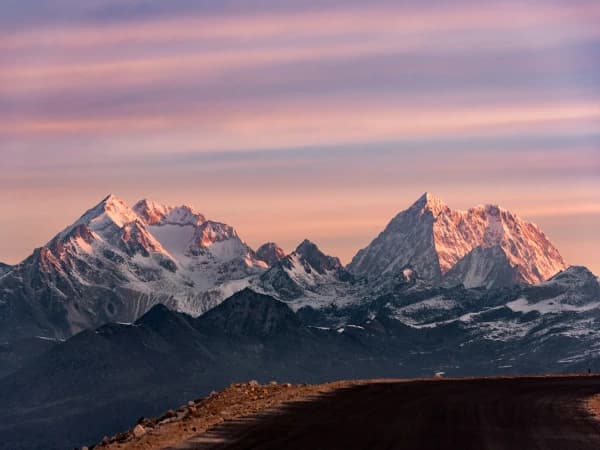
Christmas and New Year Treks from Pokhara 2026/27: 3 to 5 Days
<p>Short treks from Pokhara for Christmas and New Year 2026/27: Panchase 3 days, Poon Hill 4 days and Mardi Himal 5 days. Weather, snow, what is open, and prices by group size.</p>
Read More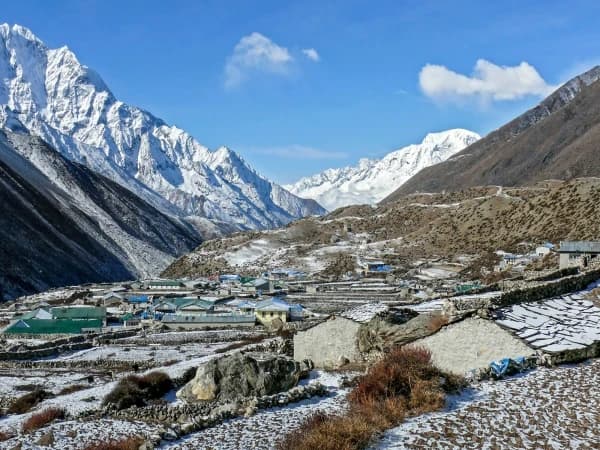
Thamdanda and Surke: The Road Head for Everest Base Camp by Road
Thamdanda is the road head where our Everest Base Camp trek by road starts and ends on foot. How to get there from Phaplu and what the first walk to Paiya is like.
Read MorePoon Hill Trek Permits 2027: ACAP, TIMS, Cost and What You Need
Poon Hill needs two permits: ACAP at NPR 3,000 and a TIMS card at NPR 2,000. Who arranges them, where they are checked, SAARC rates and the 2027 trek prices.
Read More Chat with Shreejan