
Annapurna Base Camp Teahouses and Food: Where You Sleep Each Night

On our 9-day Annapurna Base Camp trek you sleep in eight different beds: Pokhara (820 m), Ghandruk (1,940 m), Chomrong (2,170 m), Deurali (3,174 m), Annapurna Base Camp itself (4,130 m), Bamboo (2,310 m), Jhinu Danda (1,780 m) and Pokhara again. Only the four nights from Ghandruk to Base Camp, plus Bamboo and Jhinu Danda, are teahouse nights; the two Pokhara nights are in a hotel. What the beds and meals are like depends on your tier. On Standard and Luxury the trek meals are in the price, on Budget they are not. Rooms get simpler as you climb.
This post is the night-by-night sleeping and eating guide. For the route itself read our Annapurna Base Camp trek guide and the amphitheatre story. For money, distance and difficulty, see the cost breakdown, the distance guide and the difficulty rating. We do not repeat them here.
Where do you sleep each night on our 9-day Annapurna Base Camp trek?
Heights and walking times are from our itinerary. The change is the difference in sleeping height from the night before.
| Night | Sleep at | Height | Change from the night before | The day |
|---|---|---|---|---|
| 1 | Pokhara (hotel) | 820 m | Start | Drive from Kathmandu, 7 to 8 hours, about 200 km |
| 2 | Ghandruk | 1,940 m | +1,120 m | Drive to Nayapul, then a short jeep ride to Kimche, about 3 hours walking |
| 3 | Chomrong | 2,170 m | +230 m | About 4 hours |
| 4 | Deurali | 3,174 m | +1,004 m | About 7 hours, with lunch at Himalaya Hotel (2,890 m); the Chomrong staircase is about 2,500 stone steps |
| 5 | Annapurna Base Camp | 4,130 m | +956 m | 2 to 3 hours, with a tea stop at Machhapuchhre Base Camp (3,720 m) |
| 6 | Bamboo | 2,310 m | 1,820 m lower | About 6 hours, 15 to 19 km |
| 7 | Jhinu Danda | 1,780 m | 530 m lower | About 4 hours; the natural hot springs are a short walk below the village |
| 8 | Pokhara (hotel) | 820 m | 960 m lower | About 4 hours to Nayapul, then drive to Pokhara |
| 9 | Drive to Kathmandu | 1,400 m | 7 to 8 hours, then the farewell dinner |
Two notes. First, Machhapuchhre Base Camp (MBC) is a tea stop on our plan, not a night. Our MBC guide describes teahouses with beds there, so if you want it as a night, that is a variation I would quote separately. Second, the drop from Base Camp (4,130 m) to Bamboo (2,310 m) is 1,820 m. Kathmandu hotels are not included in any trek tier, so we quote them separately.
For village-by-village detail, our own pages cover Ghandruk, Chomrong, Deurali, Himalaya, Bamboo and Jhinu Danda. The road end is in our Nayapul guide.
Is the sleeping height sensible?
Medical guidance advises that once above 3,000 m you ascend no more than 500 m per night in sleeping altitude, and allow an extra night to acclimatise for every 1,000 m of sleeping altitude gained. Our two biggest nights are the Deurali night (+1,004 m) and the Base Camp night (+956 m). That is well over the guideline on both, and it is a fast schedule.
The honest answer is that this is a short itinerary with big jumps. What we do about it: an oximeter is in the first aid kit on every tier, our guide checks you in the evening, and if you are getting worse you do not go up. If you want a gentler plan, ask before you book for an extra night at Deurali or MBC. I would quote it for your tier; it is not in the standard price. I deal with the cold and the short days of the winter months in our winter post, and with the day-by-day effort in the difficulty post. The general science is in our altitude sickness guide.
What are the rooms like, and what changes by tier?
This is what each tier includes.
| Budget (USD 1,250 solo) | Standard (USD 1,725 solo) | Luxury (USD 3,465 solo) | |
|---|---|---|---|
| Rooms on the trek | Local teahouse or lodge, shared room | Standard teahouse or lodge, twin room as a private room, attached bathroom wherever possible | Luxury hotel and lodge, private deluxe room, attached bathroom whenever available |
| Meals on the trek | Not included. You order and pay at the teahouses | Breakfast, lunch and dinner. A cup of tea or coffee with each meal and 2 litres of warm water a day are included | All meals, plus fruit and dry fruit and nuts, and unlimited soft drinks. Only alcohol is excluded |
| Porter | None. You carry your own bag | One porter for every two trekkers (20 kg per porter). A solo trekker has no porter and the guide carries up to 10 kg | One dedicated porter per trekker |
| Kathmandu to Pokhara | Local transport | Shared tourist-standard vehicle | Private vehicle |
| SIM card | Not listed | Limited data | Unlimited data |
| Hot springs at Jhinu Danda | You pay at the gate, about 100 rupees | Entrance included | Entrance included |
Attached bathrooms depend on what each lodge has, and at Deurali and Base Camp there is a limit to what any lodge can offer. Budget guests share a room at every stop. All tiers have a licensed guide, the Annapurna Conservation Area permit and the TIMS card in the price, so nothing extra to buy at the checkpoints. Sleeping bags and down jackets are lent if you do not have your own, and Standard and Luxury also lend a duffle bag. Tell us at your online briefing or the arrival briefing in Kathmandu. Our sleeping bag post and staying warm at night cover the practical side, and the general teahouse guide covers rooms on every route.
The rest is our guides' experience of the lodges, so expect some variation.
- Chomrong: our village guide says over a dozen lodges, twin rooms and a common room with a stove. It is the last place with reliable wifi, hot showers and phone charging.
- Deurali: two or three stone-walled, tin-roofed teahouses; basic rooms with two beds and thin mattresses, no heating, an outside bathroom. The menu is dal bhat, noodle soup and tea.
- Himalaya (lunch stop): electricity is limited, usually solar for a few evening hours, and no mobile network.
- Bamboo: three or four simple teahouses, no wifi, electricity from a micro-hydro system, mild nights.
- MBC: three or four teahouses, gas-stove common rooms, blankets provided with a sleeping bag recommended, shared bathroom, no hot showers.
At Annapurna Base Camp itself you sleep in a teahouse at 4,130 m. Expect the simplest rooms of the trek.
What do you eat, and what does each tier cover?
The food is the lodge menu, cooked by the lodge family. Dal bhat is a legume and rice dish of thick lentil soup (dal) and cooked rice (bhat), and one of the most common everyday meals in the region. Our village guides describe the menus on this route as dal bhat, noodle soup and tea at the high stops, with a wider Nepali and Western menu lower down at Chomrong. The meals for the day are in the teahouse menu guide, and the food poisoning guide has the hygiene side.
What is paid for depends on the tier, as in the table above. On Budget no food or drink is included, so you order and pay at the teahouses. Please ask us how much to plan for food each day before you book Budget. On Standard all trek meals are included, with a cup of tea or coffee with each meal and 2 litres of warm water a day. Other drinks outside meals, such as bottled water, soft drinks, juice and alcohol, are extra. On Luxury soft drinks are unlimited and only alcohol is extra.
Three things apply to every tier:
- In Pokhara only breakfast is included at the hotel. Lunch and dinner there are your choice and cost.
- There are no meals included on the two long drives, Kathmandu to Pokhara on day 1 and back on day 9.
- The farewell meal in Kathmandu is complimentary, with a certificate.
Medical guidance also advises avoiding alcohol for the first 48 hours at high altitude.
Where can you charge your phone, shower or get wifi?
Mobile data is not reliable above Chomrong. Chomrong is the last place with reliable wifi, hot showers and phone charging. From there, facilities get simpler, with solar power for a few evening hours at Himalaya, no wifi at Bamboo, and no hot showers at MBC. For Deurali and Base Camp, plan on no charging, wifi or hot showers.
- Charge everything at Chomrong, and carry a fully charged power bank.
- Do not plan work calls or uploads above Chomrong, even with the SIM we arrange on arrival in Kathmandu.
- Our wifi and charging guide gives general ranges for Nepal as a whole.
- Luxury does not list showers, charging or wifi as included. Do not assume them.
Is the water safe and what do you drink?
On Standard, 2 litres of warm water a day is included. Otherwise you buy water or treat your own. I would not drink untreated stream water; our safe drinking water guide covers boiled water, tablets and filters.
Do you need to book rooms, and what about the busiest nights?
You do not book the rooms; we arrange them on every tier. Our October post says the pressure in the peak month falls on the few lodges at MBC and ABC, not on the lower trail. October is when it is tightest, so book early for those dates.
For winter, see our winter post. Which lodges in the sanctuary are open then is not fixed, so ask us before you book, and ask anyone else the same question in writing.
What if you feel unwell or the night is cold?
Tell the guide at once. The guide checks oxygen with the oximeter in the first aid kit, and you do not go higher if you are getting worse. Rescue is arranged by us and paid by your insurance, so buy cover at home before you travel, never in Nepal. For Annapurna Base Camp, cover should include helicopter rescue and evacuation to 4,500 m. Our insurance guide explains what to check. On a cold night, our sleeping bag and warmth pages above are the ones to read. A licensed guide and agency-issued TIMS card are required on most trekking routes under the Nepal Tourism Board rule from 31 March 2023; the rule covers the Everest (Khumbu) region too, and we always trek with a licensed guide.
Who is this style of sleeping not for?
- If you need a private heated room with your own bathroom every night, the upper nights will not give you that, on any tier.
- If you must be online, plan for no signal above Chomrong.
- If you cannot manage a jump of about 1,000 m in sleeping height on two nights running, ask us for the extra night before you book.
- If you are on Budget and do not want to carry your own bag, choose Standard or Luxury.
What does it cost, and how do you book?
Our live prices for the Annapurna Base Camp trek are USD 1,250 on Budget, USD 1,725 on Standard and USD 3,465 on Luxury, per person for one traveller. Larger groups pay less each. A porter of your own can be added at USD 25 per day, plus 13% VAT and a 3.5% bank charge. The deposit is 10%. You pay the balance in Kathmandu on arrival in USD or EUR, cash or by card. Card carries a 3.5% charge. We cannot take Nepali rupees from foreign clients. Rescheduling is free with at least 72 hours' notice, to any date within 1 year. If you cancel instead, the deposit and anything else you have paid are not refunded. If we cannot run the trip, we refund what was paid less taxes, bank and card charges and money already spent.
Message me on WhatsApp +977 9810351300 with your dates and tier and I will answer you myself.
Written by Shreejan Simkhada, CEO of The Everest Holiday, from a family of three generations of family guides. TAAN Member #1586.
Last updated 5 October 2026.
Planning a trip to Nepal?
Drop us your details and tell us what you have in mind. We will put together a personalised plan and get back to you.
Not sure which Nepal trek is right for you?
Take our free 2-minute quiz and get personalised recommendations based on your fitness, experience, and travel style.
Find Your Perfect Trek →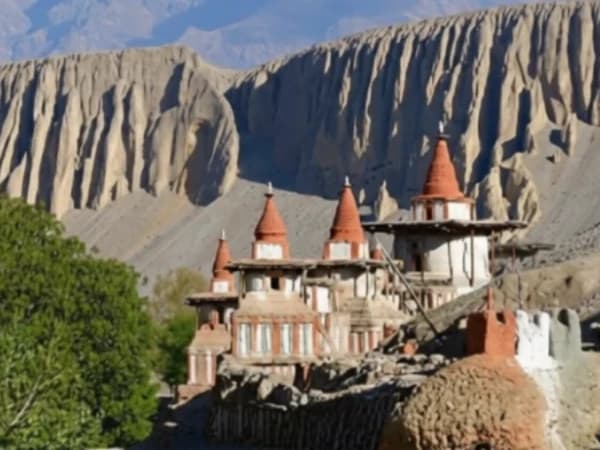
Upper Mustang Itinerary: 10, 12 or 14 Days? What Each Extra Day Adds for 2027
Our live 10-day Upper Mustang itinerary day by day, plus suggested 12 and 14 day outlines, with the USD 50 a day permit worked out for each length.
Read More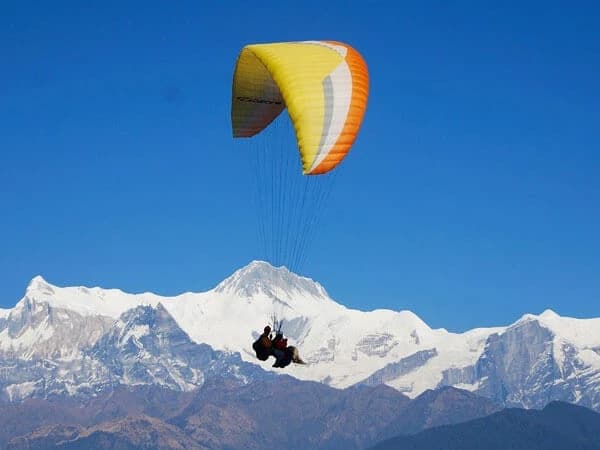
Nepal Weather Month by Month for 2027: Kathmandu, Pokhara and Namche
Average highs, lows and rainfall for Kathmandu, Pokhara and Namche Bazaar, the normal monsoon dates, and which of our treks suit each month in 2027.
Read More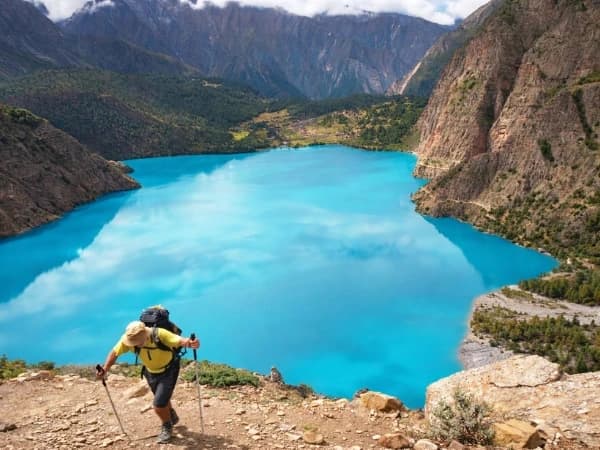
Dunai Village Guide: Height, What Is There and the Trail North for 2027
Dunai is the district town of Dolpa where the Lower Dolpo walk starts. Its height, what is there, the 7 km walk from Juphal, the trail north, best months and 2027 prices.
Read More Chat with Shreejan