

This question comes up in almost every pre-trek WhatsApp conversation: do I need to bring my own sleeping bag to Nepal, or do the teahouses provide bedding? The answer depends on where you are trekking, what time of year you go, and honestly, how cold you are willing to be at night.
What Teahouses Actually Provide
Every teahouse in Nepal provides a bed with a mattress and a pillow. Most also provide a blanket or quilt, sometimes two. On popular trails like the Everest Base Camp and Annapurna routes, the bedding quality has improved significantly over the past decade. At lower altitudes (below 3,000 metres), the blankets are usually sufficient for comfort in peak season.
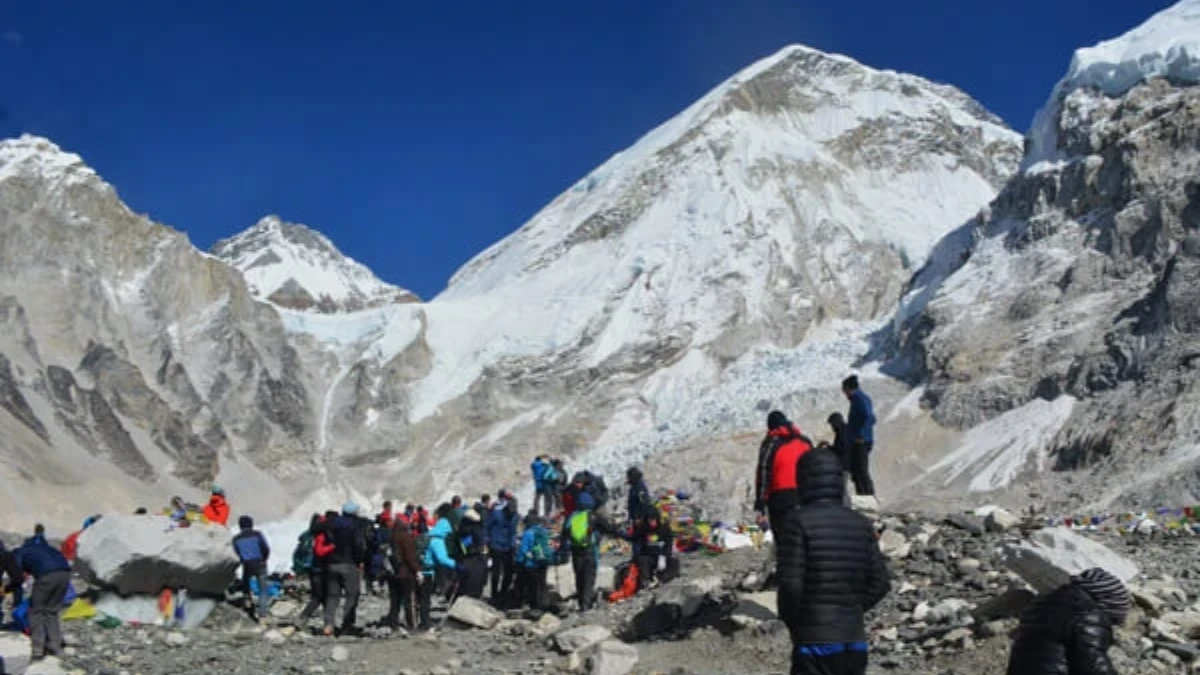
The problem starts at altitude. Above 3,500 metres, nighttime temperatures drop to minus 5 to minus 15 Celsius depending on the season. Above 4,500 metres, minus 15 to minus 25 is normal. The blankets provided at high-altitude teahouses are thin, sometimes damp, and rarely enough to keep you warm through a full night. You wake at 2 AM shivering, pull your jacket over the blanket, and spend the rest of the night in uncomfortable half-sleep. This affects your energy the next day, which at altitude is a genuine safety concern.
Do You Need Your Own Sleeping Bag for Nepal?
Yes, you need a sleeping bag if your trek goes above 3,000 metres, but you almost certainly do not need to buy one. We provide one rated to minus fifteen, free, on every trek and every tier, so if you are booking with us this is not a cost or a packing problem. Buy or bring your own only if you are trekking independently or you would rather use your own bag. This includes Everest Base Camp, Annapurna Base Camp, Annapurna Circuit, Manaslu Circuit, Langtang Valley, and essentially every multi-day trek that involves high-altitude passes or base camps.
You probably do not need one for low-altitude treks like the Royal Trek, Pokhara day hikes, or the first two days of the Poon Hill trek (though you will want one for the night at Ghorepani at 2,860 metres if trekking outside peak season).
What We Provide
On all our trek packages, we provide sleeping bags at no extra charge if you do not have your own. We also provide down jackets free on every tier, and duffel bags on the Standard and Luxury packages. If you prefer to buy your own sleeping bag (which makes sense if you plan to trek again in the future), we help you find quality options affordably in Kathmandu's Thamel district before your trek begins.
What Rating Do You Need?
Sleeping bag temperature ratings can be confusing. Here is what you actually need for Nepal trekking:
| Trek | Max Altitude | Sleeping Bag Rating Needed |
|---|---|---|
| Poon Hill / Ghorepani | 3,210m | Comfort to 0°C / 32°F |
| Langtang Valley | 3,870m | Comfort to -5°C / 23°F |
| Annapurna Base Camp | 4,130m | Comfort to -10°C / 14°F |
| Annapurna Circuit (Thorong La) | 5,416m | Comfort to -15°C / 5°F |
| Everest Base Camp | 5,364m | Comfort to -15°C / 5°F |
| Mera Peak / Island Peak | 6,000m+ | Comfort to -20°C / -4°F |
Pay attention to the "comfort" rating, not the "extreme" or "survival" rating. The extreme rating is the temperature at which the bag keeps you alive, not comfortable. A bag rated to minus 15 extreme leaves you shivering all night at minus 10. The comfort rating is the temperature at which a standard sleeper has a comfortable night.
Buy at Home or in Kathmandu?
Both options work, with trade-offs:
Buying at home:
- You can research brands, read reviews, and try the bag before you travel
- Quality outdoor brands (Mountain Equipment, Rab, Sea to Summit, The North Face) cost 150 to 400 USD for a bag rated to minus 10 to minus 15
- You know exactly what you are getting
- The bag takes space in your luggage
Buying in Kathmandu (Thamel):
- Local and unbranded bags cost 50 to 100 USD for a minus 10 to minus 15 comfort rating
- Branded bags (North Face, Mountain Hardwear) are available but most are copies, not originals. Some copies are decent quality; some are not.
- You can test the bag, feel the fill, and check the stitching before buying
- We help our clients choose a good bag in Thamel. Our guides know which shops sell quality and which sell overpriced copies.
- No luggage space used on the flight to Nepal
For most first-time trekkers doing one Nepal trip, buying in Kathmandu makes sense. For serious trekkers who plan multiple trips, invest in a quality bag at home. Read our Thamel shopping guide for more on where to buy gear.
Should You Bring a Sleeping Bag Liner?
A sleeping bag liner adds 5 to 15 degrees of warmth to any sleeping bag and weighs almost nothing. A silk liner (30 to 50 USD) adds 5 to 8 degrees. A thermal fleece liner (20 to 40 USD) adds 10 to 15 degrees. Liners are also useful for hygiene: you wash the liner, not the sleeping bag.
If your sleeping bag is borderline for the temperatures you expect, a liner is cheaper and lighter than buying a warmer bag. Many experienced Nepal trekkers carry a moderate sleeping bag plus a thermal liner and have a versatile system that works from 3,000 to 5,000 metres.
Down or Synthetic: Which Sleeping Bag Is Better for Nepal?
Down sleeping bags are lighter, pack smaller, and are warmer for their weight. A quality 600-fill down bag rated to minus 10 weighs around 1 to 1.3 kg and packs into a small compression sack. The downside: if down gets wet, it loses almost all its insulating ability. In Nepal's teahouses, where damp can be an issue, this matters.
Synthetic sleeping bags are heavier and bulkier but retain warmth when damp. A synthetic bag rated to minus 10 weighs 1.5 to 2 kg. They are also cheaper: a synthetic minus 10 bag costs roughly half the price of an equivalent down bag.
For Nepal trekking, either works. Down is better if weight and pack size matter (which they do when your porter has a weight limit). Synthetic is better if you are on a budget and not worried about a slightly heavier pack. Most bags available in Kathmandu's Thamel are synthetic.
Tips From Years of Booking Trekkers
- Sleep in your clothes. Thermal base layers, warm socks, and a beanie hat make a bigger difference than any sleeping bag upgrade. Your body generates heat; the sleeping bag traps it. More layers inside equals more trapped heat.
- Use a hot water bottle. Fill your Nalgene bottle with hot water (every teahouse has a kettle) and put it at the foot of your sleeping bag before you get in. It radiates warmth for hours and dries the inside of the bag. This single trick transforms cold nights at altitude.
- Eat before bed. Your body generates heat from digestion. A dal bhat dinner or hot chocolate before sleeping keeps your internal furnace running through the night.
- Cinch the hood. Most heat escapes from your head. A sleeping bag with a hood that cinches around your face keeps significantly more warmth in than one that leaves your head exposed.
- Air your bag daily. Turn your sleeping bag inside out and drape it in the sun for an hour each morning. This evaporates the moisture from your body heat overnight and keeps the insulation working properly.
Common Sleeping Bag Questions for Nepal Trekking
Can I rent a sleeping bag in Kathmandu instead of buying?
Yes. Rental costs 1 to 2 USD per day from Thamel shops. Over a twelve-day EBC trek, that is 12 to 24 USD. Rental bags are decent but have been used by many people before you. A liner inside a rental bag solves the hygiene concern. We provide sleeping bags free on our treks, so renting is only relevant for independent trekkers.
Do I need a sleeping bag for the Poon Hill trek?
In October and November (peak season), the teahouse blankets at Ghorepani are usually sufficient. In December through February or March, bring a sleeping bag rated to 0 to minus 5 for the one or two nights above 2,500 metres. The Poon Hill sunrise viewpoint at 3,210 metres is cold at 4:30 AM regardless of season.
What about luxury lodge treks?
High-end lodges on the luxury EBC route and Annapurna lodge treks provide quality duvets, heated rooms, and hot water bottles. You do not need a sleeping bag on a luxury lodge trek. These lodges are a different experience from standard teahouses.
Can I use a sleeping bag on the bus or plane in Nepal?
The tourist bus from Kathmandu to Pokhara takes six to seven hours and the air conditioning can be aggressive. A sleeping bag liner or travel blanket is genuinely useful. Domestic flights are short enough that it does not matter.
What size should I get?
Standard sleeping bags fit people up to about 180 cm (5'11"). If you are taller, look for a "long" or "wide" version. A bag that is too small restricts movement and compresses the insulation at your feet, reducing warmth. A bag that is too large has excess air space that your body has to heat, also reducing warmth. Get the right size.
Do You Need Your Own Sleeping Bag? The Short Answer
If your trek goes above 3,000 metres, you need a sleeping bag. We provide them free on all our treks, so if you book with us, this is not a cost or packing concern. If you are trekking independently, buy one in Kathmandu for 50 to 100 USD or bring one from home. A sleeping bag is the single most important piece of gear for comfortable nights on Nepal's high-altitude trails.
Have questions about gear for your specific trek? WhatsApp us at +977 9810351300 and I will tell you exactly what you need and what we provide.
Read our complete packing guide | View EBC trek packages
Sleeping bag for EBC? Included on every tier, budget included. Our Everest Base Camp Trek (12 Days) is private (your group only, no strangers), 2027 dates open, From USD $1399. WhatsApp us for tailored 2027 dates and current departures.
 Chat with Shreejan