

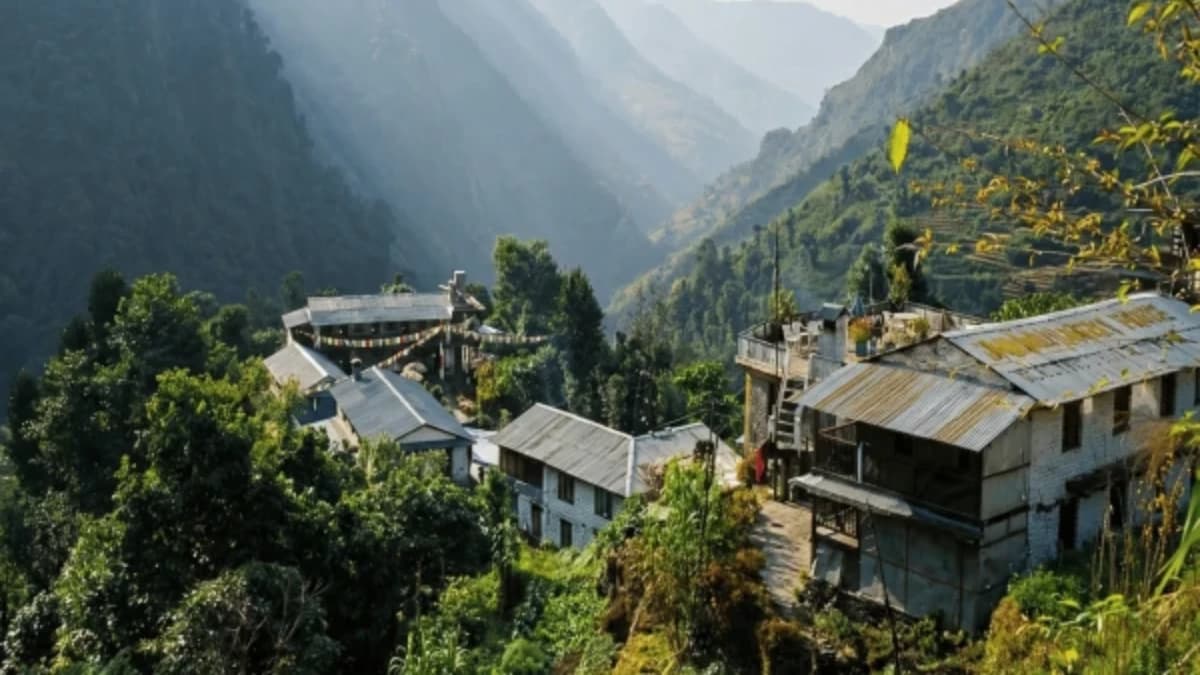
Short answer: Jhinu Danda is the stop on the Annapurna Base Camp trail with natural hot springs by the Modi Khola river, a short walk below the village, and most trekkers stop there on the way down to soak their legs. It is the classic second-to-last night of the trek. Relax there on our Annapurna Base Camp trek.
After four days of walking uphill, through rhododendron forest, across suspension bridges, past waterfalls that thunder from cliffs a hundred metres above, you descend stone steps to a riverbank where steam rises from the rocks and the water is warm. Not lukewarm. Warm. The kind of warm that makes your muscles unknot and your bones soften and the accumulated altitude-fatigue of the Annapurna Sanctuary dissolve into the Modi Khola river alongside the mineral-rich water that has been heated somewhere deep beneath the Himalaya and pushed to the surface at a spot that could not be better positioned if a spa designer had placed it there.
Jhinu Danda's hot springs are one of the worst-kept secrets on the Annapurna Base Camp trail. Every trekker who has done ABC tells the next trekker about them. Every guide includes them in the itinerary. Every travel blog lists them as a highlight. And yet, and this is the thing about Nepal's hot springs, the experience still surprises you. Because no amount of description prepares you for the specific, physical, almost indecent pleasure of sitting in naturally heated water at the bottom of a Himalayan gorge, surrounded by jungle-covered cliffs and the sound of a glacial river, with legs that have carried you to 4,130 metres and back and that have earned every mineral molecule the water offers.
Where Are the Jhinu Danda Hot Springs?
Jhinu Danda (sometimes written Jinhu Danda or Jhinu) sits at approximately 1,780 metres on the return route of the Annapurna Base Camp trek. The village perches on a ridge above the Modi Khola river, "danda" means ridge in Nepali, and the hot springs are a twenty-to-thirty-minute walk downhill from the village to the riverbank. The descent is steep, stone steps through dense subtropical forest, and the return climb after soaking, with relaxed muscles and fading daylight, feels longer than the descent.
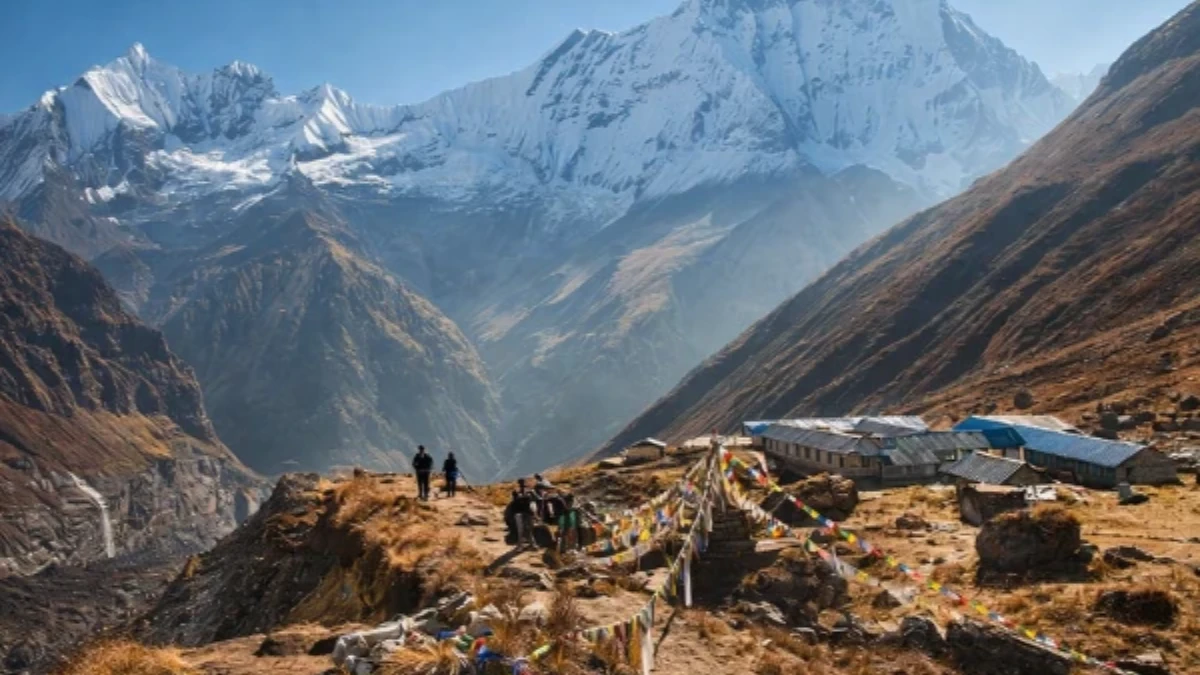
On the standard ABC itinerary, Jhinu Danda is typically Day 7 or Day 8, the penultimate or final night of the trek, after you have descended from ABC through Dovan and Bamboo. Some itineraries place it as a side stop from Chhomrong, with a dedicated afternoon for the hot springs. Either way, it comes at the right moment, when your body is tired, your muscles are sore, and the prospect of sitting in warm water is more motivating than any mountain view.
How hot are the Jhinu Danda hot springs?
The springs emerge from the riverbank at the confluence of a small tributary and the Modi Khola. The water temperature is approximately thirty-five to forty degrees Celsius, bath temperature, not scalding. The mineral content includes sulphur (you can smell it, a faint, not unpleasant egg-like scent), iron, and various trace minerals that locals believe have therapeutic properties for joint pain, skin conditions, and muscle recovery.
The bathing area has been developed with stone walls that create two or three pools of different sizes. The pools are filled by the natural spring water and overflow into the Modi Khola. The river water, glacial, blue-white, and cold enough to make you gasp, runs alongside the hot pools, and the braver trekkers alternate between the hot spring and the cold river in a natural contrast therapy that is either invigorating or insane depending on your perspective.
There is a small changing area and a basic toilet facility. A local family operates a tea shop at the springs, selling drinks and snacks to soaking trekkers. The setup is simple, this is not a spa, it is a riverbank with warm water, but the setting is extraordinary. The gorge walls rise steeply on both sides, covered in tropical vegetation. The river roars past. Birds call from the canopy above. And the sky, visible as a narrow strip between the gorge walls, holds the last light of the afternoon in a way that makes the entire scene feel lit for a photograph.
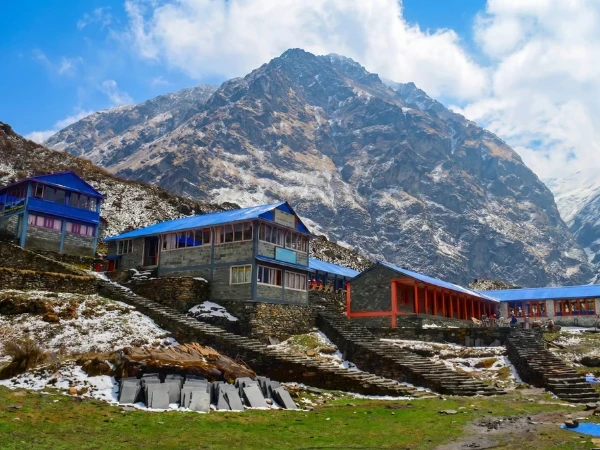
Entry to the hot springs costs a small fee, approximately one hundred to two hundred Nepali rupees (less than two dollars). Bring a towel, swimwear (or shorts and a T-shirt, modest clothing is appropriate), and a dry bag or plastic bag for your wet clothes afterward.
When is the best time of day to visit Jhinu Danda hot springs?
The best time to visit is late afternoon, three to five o'clock. The morning light does not reach the river gorge until late, and the springs are in shadow. By afternoon, the sunlight angles into the gorge and illuminates the water, the steam, and the surrounding vegetation in warm, golden light. The temperature difference between the warm pool and the cool air creates wisps of steam that rise from the water surface and drift through the trees, an effect that photographers love and that gives the place an almost mystical atmosphere.
Allow one to two hours for the springs. Twenty minutes of soaking is enough for the therapeutic benefit. Most trekkers stay longer, because the combination of warm water, mountain scenery, and post-trek exhaustion creates a state of relaxation so complete that getting out of the pool requires an act of will that altitude-depleted brains struggle to produce.
The return climb from the springs to Jhinu Danda village takes twenty to thirty minutes uphill. Do it before dark, the stone steps are uneven and unlit, and a post-soak stumble on a dark staircase is exactly the wrong way to end a successful trek.
What Is Jhinu Danda Village Like?
The village itself is small, a dozen teahouses and lodges on a ridge with views of the Modi Khola gorge and, on clear mornings, the Annapurna peaks to the north. The lodges are comfortable by trekking standards, clean rooms, hot showers (solar-heated, not spring-fed), and a standard menu of dal bhat, noodle soup, and the particular Gurung touches, gundruk soup, sel roti, that distinguish Annapurna region teahouses from those in the Khumbu.
The village sits at 1,780 metres, low enough for comfortable sleeping, warm enough for a single blanket rather than the full sleeping-bag-and-down-jacket combination required at altitude, and oxygen-rich enough that the headache and breathlessness of ABC (4,130 metres) feel like a distant memory. The descent from the Annapurna Sanctuary to Jhinu Danda is like descending from winter to summer in a single day, the temperature rises, the vegetation thickens, the air sweetens, and the body releases the tension it has been holding since it crossed above three thousand metres.
The evening at Jhinu Danda, after the hot springs, after the climb back, after a shower and a change of clothes, is one of the most relaxed evenings on the entire trek. The common room is warm without the stove. The food tastes better because your appetite, suppressed by altitude for days, has returned with enthusiasm. And the conversation, with other trekkers who have just completed the same trek you have, has the easy, warm quality of shared accomplishment. Where did you stay at ABC. Did you see the sunrise. How cold was it. Did you cry. Everyone has the same stories, and the sharing of them, over tea and dal bhat in a warm teahouse at 1,780 metres, is itself a form of celebration.
Why are hot springs in Nepal naturally hot?
Nepal sits on a geologically active zone, the collision boundary between the Indian and Eurasian tectonic plates, the same collision that created the Himalayas. This tectonic activity generates heat deep underground, and where groundwater encounters this heat and finds a path to the surface, hot springs emerge. Nepal has dozens of natural hot springs, concentrated along the fault lines that run through the mountain ranges.
The water at Jhinu Danda has been underground for decades or centuries, percolating through rock, dissolving minerals, absorbing heat from the earth's interior, and emerging at the surface at a temperature and mineral composition that has remained stable for as long as anyone has been measuring it. The sulphur content gives the water its faint smell and its reputed skin-healing properties. The warmth relaxes muscles by increasing blood flow and reducing muscle tension. And the minerals, absorbed through the skin during soaking, provide trace elements that the body has been depleting through days of physical exertion at altitude.
Whether the hot springs have genuine therapeutic properties beyond muscle relaxation is debated by science and endorsed by tradition. The locals have used the springs for generations. Trekkers report feeling noticeably better after soaking, less sore, more flexible, more rested. Whether this is the minerals, the heat, the relaxation, or the placebo effect of sitting in warm water in a beautiful place after a week of hard walking is a question that science can answer and that the trekker sitting in the pool does not care about. It works. The muscles soften. The body recovers. And the walk to Nayapul the next morning, the final walk of the trek, feels easier than it has any right to feel.
What Other Hot Springs Are on Nepal Treks?
Jhinu Danda is the most accessible hot spring on a major trekking route, but Nepal has others worth knowing about.
Tatopani (1,190 metres) on the Annapurna Circuit, the name literally means "hot water" in Nepali. The springs at Tatopani are larger and more developed than Jhinu Danda's, with concrete pools beside the Kali Gandaki river. Trekkers on the Circuit's western descent stop here for a soak after crossing Thorong La. The setting, a wide river valley with Dhaulagiri visible upstream, is different from Jhinu Danda's intimate gorge but equally spectacular.
Singha Tatopani in the Myagdi district, less visited, more remote, and reportedly hotter than the Annapurna springs. Requires a dedicated trip rather than a trail-side stop.
Kodari on the Nepal-Tibet border, hot springs near the Arniko Highway, accessible by road from Kathmandu. Damaged in the 2015 earthquake and partially restored.
Are the Jhinu Danda hot springs worth visiting?
The hot springs at Jhinu Danda are not a spa treatment. They are not a luxury add-on. They are part of the trek, as much a part of the Annapurna Base Camp experience as the sunrise at ABC or the view from Poon Hill. They are the moment when the trek shifts after days of climbing and pushing, you suddenly find yourself descending into the lush, warm, sensory richness of the lower valleys.
And they are a reminder, offered by the earth itself, through water heated by the same tectonic forces that built the mountains you just walked through, that the Himalayas give back. They take your breath at altitude. They freeze your water at five thousand metres. They test your muscles and your will on every uphill step. And then, on the way down, they offer warm water rising from deep underground, steam drifting through tropical trees, and the specific, physical, geological kindness of a planet that built the highest mountains on earth and then, at their base, provided a bath.
Plan Your Annapurna Sanctuary Trek
If Jhinu Danda has convinced you that the Annapurna Sanctuary belongs on your list, here are the treks that take you there and the trail-stop guides that will help you walk it well.
- Annapurna Base Camp Trek - 9 Days : the classic route that ends at Jhinu Danda's hot springs.
- Mardi Himal Base Camp Trek - 7 Days : a quieter sister route through the same Annapurna foothills.
- Poon Hill Trek - 6 Days : the shorter Annapurna option for trekkers with less time.
- Sinuwa Village Guide : the next stop above Chhomrong on the Sanctuary trail.
- Annapurna Conservation Area Guide : the protected region the entire trek passes through.
Jhinu Danda is on the return leg of the Annapurna Base Camp Trek. Many trekkers stop here specifically for the hot springs after days of walking in the cold. The Poon Hill Trek also passes nearby.
Jhinu Danda's hot springs are the reward the Annapurna Base Camp trek gives you on the way down. After five days of climbing, your knees ache, your shoulders are stiff, and then you walk down stone steps to a river with naturally heated pools and you sink in and everything hurts less. It is not medicinal in any scientific sense. It is medicinal in every other sense.
Jhinu Danda is on the descent of our Annapurna Base Camp Trek. We schedule a long lunch here so you can soak properly.
WhatsApp:+977 9810351300
Email:[email protected]
Written by Shreejan Simkhada, CEO of The Everest Holiday and third-generation Himalayan guide. TAAN Member #1586.
Jhinu Danda hot springs is the ABC recovery stop. Our Annapurna Base Camp Trek (9 Days) is private (your group only, no strangers), 2027 dates open, From USD $725. WhatsApp us for tailored 2027 dates and current departures.
 Chat with Shreejan