
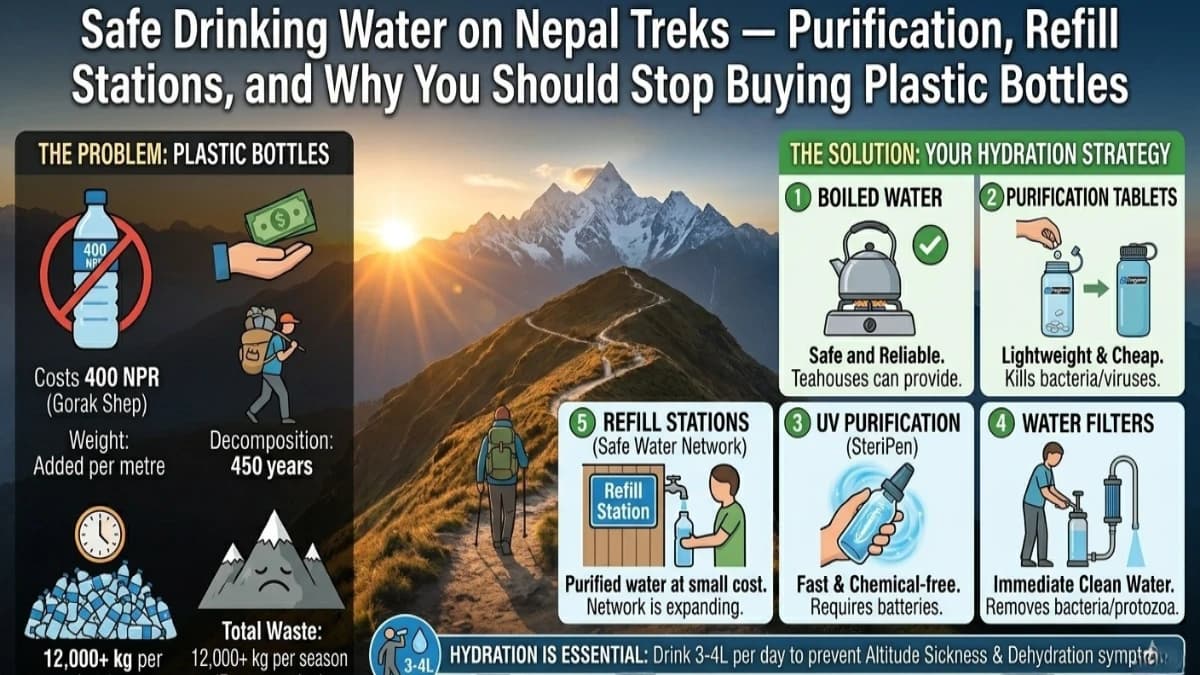
At Gorak Shep, the last settlement before Everest Base Camp, altitude 5,164 metres, a one-litre plastic water bottle costs four hundred Nepali rupees. That is roughly three US dollars for something that costs thirty cents in Kathmandu. The bottle was carried up by a porter or a yak, gaining value with every metre of altitude gained. By the time it reaches your hand, it has travelled for days through one of the most remote supply chains on earth.
You drink the water in ten minutes. The bottle takes four hundred and fifty years to decompose.
The Sagarmatha region alone generates over twelve thousand kilograms of solid waste per trekking season. A significant portion of that waste is plastic water bottles purchased by trekkers who did not know, or did not care, that alternatives exist. Alternatives that are cheaper, lighter, and do not leave a trail of plastic across one of the most fragile ecosystems on the planet.
This guide is about how to stay hydrated on a Nepal trek without contributing to the problem. Three to four litres per day. Every day. At altitude where dehydration mimics and worsens altitude sickness. Using methods that keep you healthy and the mountains clean.
Why You Need Three to Four Litres
At altitude, your body loses water faster than at sea level. The air is drier, humidity above four thousand metres can drop below fifteen percent. Your breathing rate increases, expelling more moisture with each exhale. And the acclimatisation process itself increases urine output as your kidneys work to balance blood chemistry for the reduced oxygen.
The result: you dehydrate faster than you realise, and the symptoms of dehydration, headache, fatigue, nausea, dizziness, are identical to the symptoms of altitude sickness. Many trekkers who think they have altitude sickness actually have dehydration. The treatment is the same for both (drink water, rest, descend if severe), but the prevention is different. Altitude sickness prevention requires acclimatisation days. Dehydration prevention requires drinking three to four litres per day whether you feel thirsty or not.
The Options
Boiled Water from Teahouses
Ask the teahouse kitchen to fill your water bottle with boiled water. The cost varies from free at some teahouses to one hundred to two hundred Nepali rupees at others. The water is safe, boiling kills bacteria, viruses, and parasites at any altitude. The wait can be fifteen to thirty minutes depending on how busy the kitchen is.
This is the simplest and cheapest option at lower altitudes where fuel is relatively affordable. Above four thousand metres, where fuel must be carried in, some teahouses charge more or are reluctant to boil large quantities for individual trekkers.
Purification Tablets
Chlorine-based tablets, Aquatabs, Micropur, or similar, kill bacteria and viruses in thirty minutes to two hours depending on the brand and water temperature. They are lightweight, cheap (a few cents per litre), and effective. The downside is a slight chemical taste that some people dislike and that cold water (common at altitude) extends the treatment time.
Iodine tablets are an alternative but are not recommended for treks longer than a few weeks due to potential thyroid effects. They also leave a stronger taste.
Bring tablets from home. They are not reliably available in Kathmandu and virtually unavailable on the trail.
UV Purification (SteriPen)
A SteriPen or similar UV purifier treats one litre of water in sixty to ninety seconds. No chemicals. No taste change. No waiting time. It works by exposing the water to ultraviolet light that destroys the DNA of bacteria, viruses, and protozoa.
The downside: it requires batteries (or USB charging), does not work in very turbid (cloudy) water, and costs fifty to one hundred dollars for the device. But for trekkers who will use it on multiple trips, the per-litre cost quickly drops below any other method.
Water Filters
Pump or gravity filters, such as LifeStraw, Sawyer, or Katadyn, physically remove bacteria and protozoa from water. Some also include chemical elements that kill viruses. They are effective, reusable, and produce clean water immediately without waiting time or chemical taste.
The weight and bulk of a filter is the trade-off. For solo trekkers, a small inline filter adds two hundred grams. For groups, a gravity filter that processes several litres at once is more efficient.
Refill Stations (Safe Water Network)
Along the Everest route, a network of safe water refill stations has been established at several teahouses between Lukla and Gorak Shep. These stations sell purified water at a fraction of the bottled water price, typically fifty to one hundred rupees per litre, and the water is treated to a drinkable standard.
The network is expanding but not yet complete. Not every teahouse participates. Your guide knows which stops have refill stations and can plan accordingly. Related: Nepal Trek Water Guide: How to Stay Hydrated Without Getting Sick.
The Plastic Problem
The Everest region generates an estimated twelve thousand kilograms of solid waste per trekking season. Plastic water bottles are a significant contributor. The bottles are carried up by porters, sold at teahouses, emptied by trekkers, and left behind, because there is no recycling infrastructure above Namche Bazaar and the cost of carrying empty bottles back down exceeds the cost of leaving them.
The Sagarmatha Pollution Control Committee manages waste collection and has implemented a deposit system on the Everest route. Trekkers pay a waste deposit at the start that is refunded upon returning with their waste bag. This helps but does not eliminate the problem, compliance varies, enforcement is imperfect, and the sheer volume of trekkers creates waste faster than collection systems can manage.
Every plastic bottle you do not buy is one less piece of waste in the Himalayas. The purification methods described above, any of them, cost less per litre than bottled water and produce zero waste. The investment is small. The impact, multiplied by fifty thousand trekkers per year, is enormous. Related: Responsible Trekking in Nepal: How to Walk Through the Himalayas Without Wrecking Them.
The Practical Approach
Carry two one-litre water bottles, wide-mouth Nalgene or similar. Fill them at teahouses with boiled or refill-station water. Treat river or tap water with purification tablets or a SteriPen when boiled water is unavailable. Drink consistently throughout the day, not just when thirsty but on a schedule. One litre before breakfast. One litre during the morning walk. One litre with lunch and afternoon. One litre in the evening.
In cold weather above four thousand metres, keep one bottle inside your jacket to prevent freezing. Water bottles left in side pockets overnight will have ice in them by morning. A bottle inside your sleeping bag stays liquid.
And carry the empty bottles home. Or crush them and carry them to the next waste collection point. The mountains gave you the thrill of a lifetime. The least you can leave them is the way you found them.
Safe water is important on every trek. Our guides advise on water sources throughout the EBC Trek, Annapurna Circuit, and all our routes.
Drink the water from the source or purify everything else. That is the rule on Nepal treks. Boiled water, purification tablets, or a SteriPen: any of these works. Do not buy plastic bottles above Lukla or Besisahar. The mountains have enough rubbish without your water bottles joining the pile.
We provide water purification on all our treks. No plastic bottles on the trail.
WhatsApp:+977 9810351300
Email:[email protected]
Written by Shreejan Simkhada, CEO of The Everest Holiday and third-generation Himalayan guide. TAAN Member #1586.
Safe drinking water on EBC: our purification protocol. Our Everest Base Camp Trek (12 Days) is private (your group only, no strangers), 2026 dates open, From USD $1399. WhatsApp us for tailored 2026 dates and current departures.
 Chat with Shreejan