

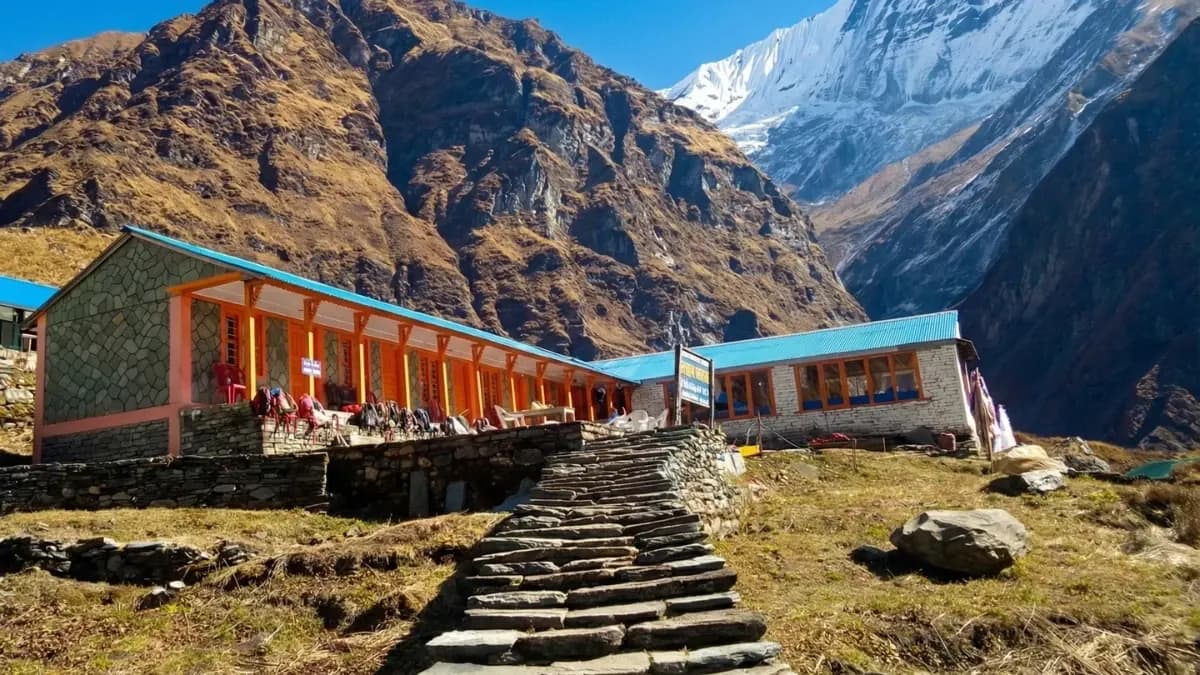
Short answer: Deurali (3,174 m) is where the forest ends on the Annapurna Base Camp trail and the valley opens into rock and snow below the inner Annapurna range. It is the usual last night before Machhapuchhre Base Camp and Annapurna Base Camp. It is on our Annapurna Base Camp trek.
There is a point on the trail to Annapurna Base Camp where the world changes. Not gradually (the Annapurna trail has been changing gradually for days, from rice paddies to forest to bamboo to rhododendron), but suddenly. The trees stop. The trail emerges from the last stand of scrub birch onto a bare hillside of rock and grass, and the valley that has been closing around you for two days suddenly opens into something vast, silent, and entirely mineral. No trees. No birdsong. No shade. Just rock, snow, sky, and the massive walls of the inner Annapurna range rising on every side like the inside of a cathedral whose roof is the stratosphere.
Deurali sits at 3,174 metres at this transition point: the last settlement inside the forest, the first settlement outside it. The name means "pass" in Nepali, and the village occupies a shoulder on the trail where the Modi Khola valley narrows to its tightest point before opening into the Sanctuary above. Below Deurali, the trail is green, enclosed, and warm. Above Deurali, the trail is grey, open, and cold. The village marks the boundary between two worlds, and the trekker who sleeps here, in a stone teahouse on the edge of the tree line, sleeps at the threshold.
How Do You Get to Deurali on the ABC Trek?
Most trekkers reach Deurali from Himalaya Hotel (2,920 metres), a walk of two to three hours that climbs through dense bamboo and rhododendron forest along the Modi Khola river. The trail is narrow, often muddy, and shaded by a canopy so thick that sunlight reaches the path only in scattered patches. Waterfalls drop from the cliffs above, some visible as silver threads through gaps in the trees, others heard but not seen, their roar adding to the river's constant background.
The forest section between Bamboo, Dovan, Himalaya Hotel, and Deurali is one of the most beautiful stretches of trail in Nepal, not for mountain views (the peaks are hidden behind the gorge walls) but for the forest itself. Giant rhododendrons, some over fifteen metres tall, form a canopy that blooms crimson in spring. Bamboo groves creak and sway in the wind. Moss covers every rock and fallen log. And the wildlife, langur monkeys crashing through the canopy, Himalayan tahr spotted on the cliffs above, danphe pheasants calling from invisible positions in the undergrowth, reminds you that this gorge is habitat, not just a trail corridor.
The landslide zones between Himalaya Hotel and Deurali are the most technically challenging sections of the ABC trail. The gorge walls are steep and unstable, and several sections of the trail cross areas where previous landslides have stripped the hillside to bare rock. The trail across these sections is narrow, exposed, and, after rain, slippery. Your guide will assess conditions and choose the safest route. In monsoon season (June-September), these sections can be genuinely dangerous, and some years the trail is temporarily closed.
What Is Deurali Like?
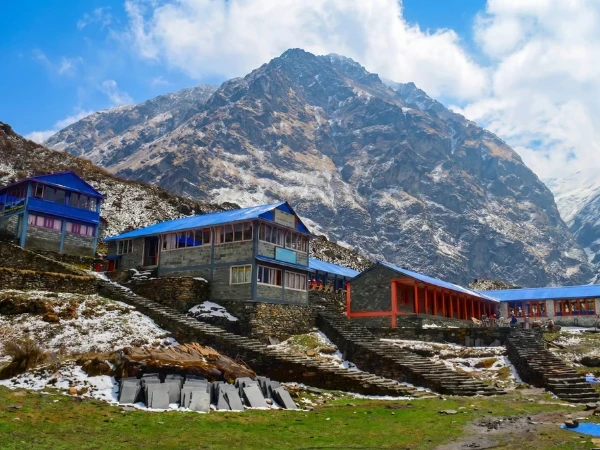
Deurali consists of two or three teahouses on a narrow shelf above the river. The teahouses are stone-walled and tin-roofed, built to withstand the avalanche debris and rockfall that periodically sweep through the gorge. The rooms are basic, two beds, thin mattresses, no heating. The bathroom is outside. The menu is dal bhat, noodle soup, and tea.
The altitude at 3,174 metres is the threshold where most trekkers first feel the effects of reduced oxygen. Mild headache, slight breathlessness, and reduced appetite are common. These symptoms are the body beginning the acclimatisation process that will continue through MBC (3,700 metres) and ABC (4,130 metres) over the next two days. Paracetamol, hydration (three to four litres per day), and a good night's sleep are the standard treatment. If symptoms worsen overnight, particularly if headache becomes severe or vomiting begins, tell your guide in the morning.
The evening at Deurali has a particular quality. The forest noise, birdsong, monkey calls, the rustle of bamboo, that accompanied the lower trail falls silent at the tree line. The river sound changes too, narrower here, faster, the water compressed between rock walls that amplify the flow. And the sky, visible for the first time in two days as the forest canopy falls away, holds stars that the lower trail's tree cover concealed. If the sky is clear, step outside after dinner and look up. The Milky Way at 3,174 metres, without forest canopy or light pollution, is dense enough to cast shadows.
What Happens After Deurali on the ABC Trek?
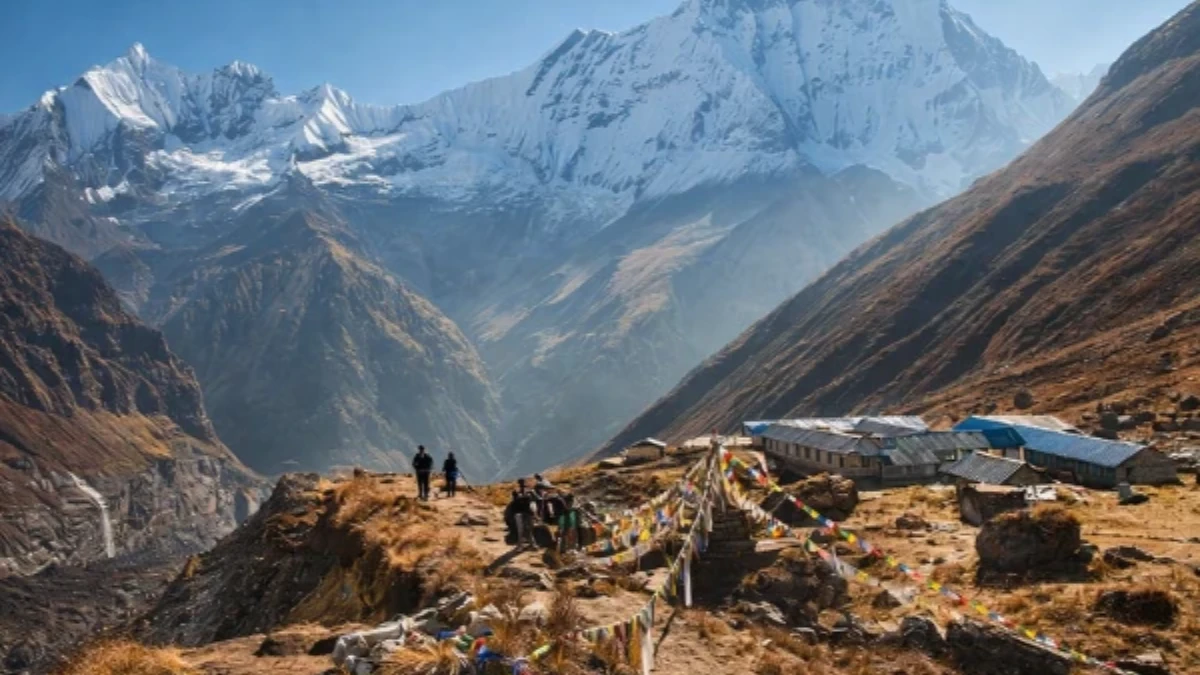
The walk from Deurali to Machhapuchhre Base Camp (3,700 metres) takes three to four hours and crosses the transition from forest to alpine. The first hour is still partially wooded, sparse birch and juniper clinging to the hillside in diminishing numbers. By the second hour, the trees are gone. The landscape is rock, grass, and scree. And the mountains, which have been hidden behind the gorge walls since Chhomrong, begin to appear.
Machhapuchhre emerges first, its distinctive double summit visible above the gorge wall to the east. Then Annapurna III to the north. Then Hiunchuli to the west. Peak by peak, the amphitheatre assembles itself around you as you walk, until you reach MBC and the full panorama is complete. The effect is cinematic, a slow reveal that builds over two hours of walking and that delivers its climax at MBC with the specific dramatic timing that the Himalayan landscape has been perfecting for fifty million years.
This transition, the shift out of the forest into bare mountain, enclosed trail giving way to open sky, green fading to grey, is the experience that defines the ABC trek. Other treks offer higher altitude (EBC) or longer duration (Annapurna Circuit) or more varied culture (Manaslu). The ABC trek offers this: the passage from the inhabited world to the sacred one, through a narrow gorge, past a tree line, and into a natural amphitheatre that the Gurung people called the Sanctuary because it felt too grand and too complete to be anything less.
Deurali is where the passage begins. The village sits at the boundary, and the trekker who sleeps here sleeps at the door of something extraordinary. The door opens tomorrow. And what waits behind it, Machhapuchhre, Annapurna, the amphitheatre, the silence, has been waiting for anyone willing to walk this far for much longer than anyone has been counting.
What Comes After Deurali on the ABC Trek?
Deurali sits at the threshold of the high sanctuary. If you are planning the walk, here are the treks that pass through this gateway and the trail guides that fill in the rest of the route.
- Annapurna Base Camp Trek - 9 Days : the headline route that passes Deurali on the way to the sanctuary.
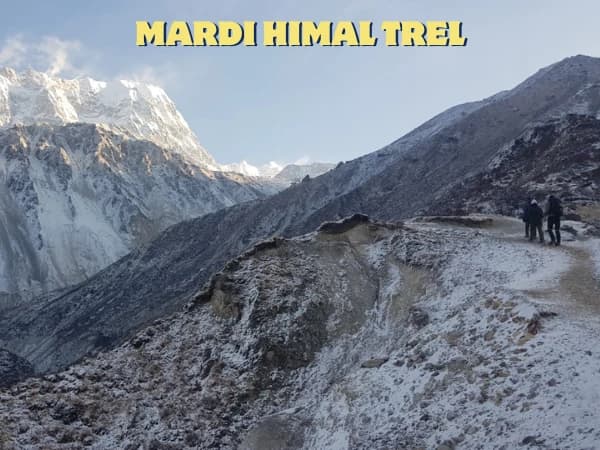
- Mardi Himal Base Camp Trek - 7 Days : a shorter, quieter alternative through the same Annapurna foothills.
- Annapurna Circuit Trek - 12 Days : the longer regional classic for trekkers who want the full Annapurna loop.
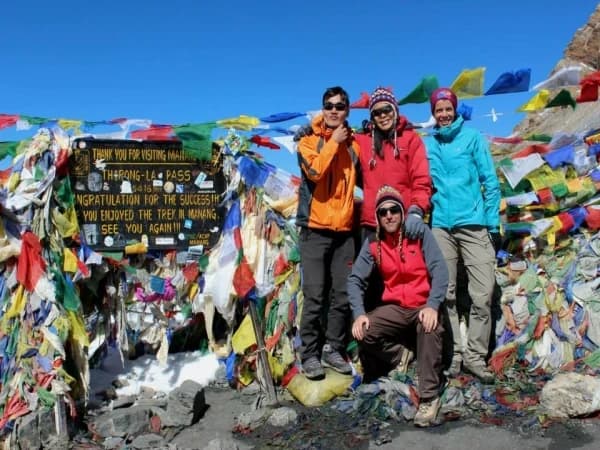
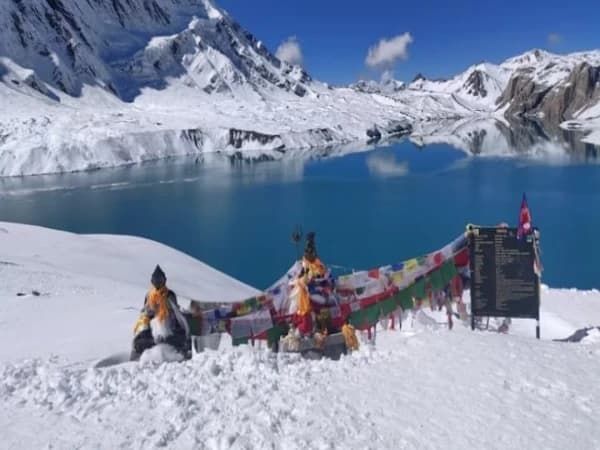
- Thorong La Pass Guide : the iconic 5,416m crossing on the Annapurna Circuit.
- Pokhara Travel Guide : the lakeside city where every Annapurna trek begins and ends.
Deurali marks the transition into the high Annapurna Sanctuary on the Annapurna Base Camp Trek. Above here the forest ends and the glacier terrain begins.
Deurali is the last forest stop before Annapurna Base Camp. The bamboo ends, the trees disappear, and the next morning you walk into the open sanctuary with nothing between you and the mountains. It is the transition point: from green to white, from sheltered to exposed, from hiking to Himalayan trekking.
Deurali is on our Annapurna Base Camp Trek.
WhatsApp:+977 9810351300
Email:[email protected]
Written by Shreejan Simkhada, CEO of The Everest Holiday and third-generation Himalayan guide. TAAN Member #1586.
Deurali is the Sanctuary gateway on ABC. Our Annapurna Base Camp Trek (9 Days) is private (your group only, no strangers), 2027 dates open, From USD $725. WhatsApp us for tailored 2027 dates and current departures.
Continue planning your trek
This is one stop on the Annapurna Sanctuary trail. For the full route, read our full Annapurna Base Camp trek guide. When you are ready for dates and prices, see the Annapurna Base Camp Trek (9 days) or WhatsApp us directly. We reply personally.

 Chat with Shreejan