

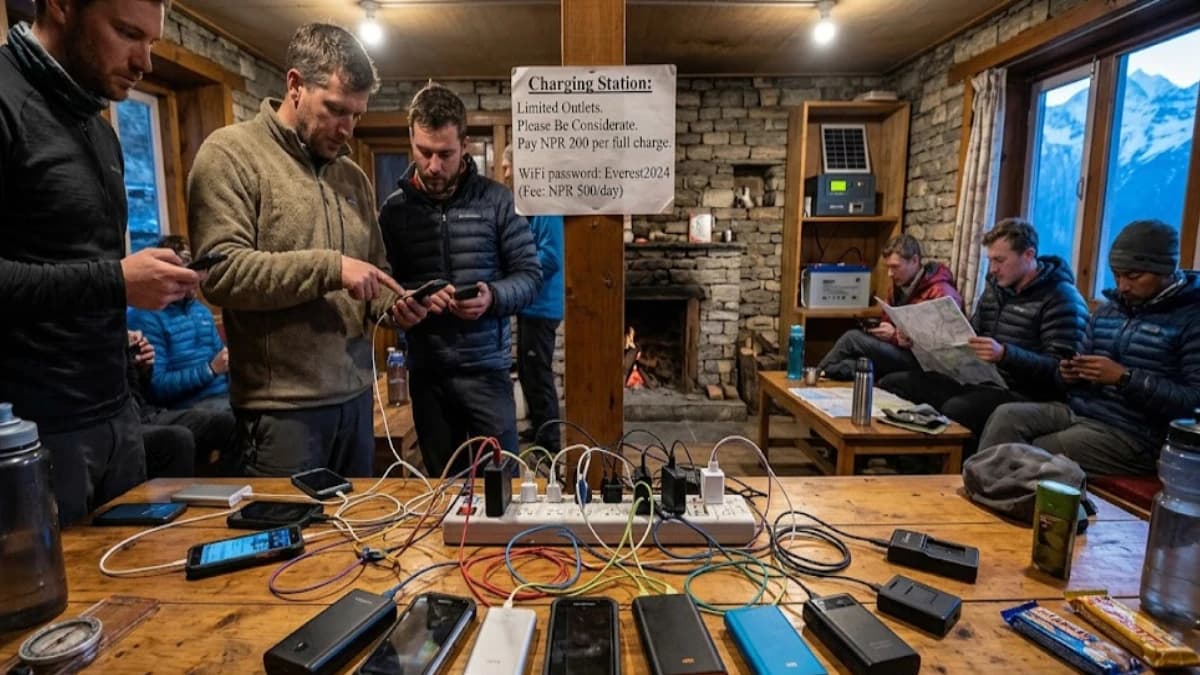
At Lobuche, 4,940 metres and two days from Everest Base Camp, there is one electrical outlet in the teahouse dining room. It is shared between twenty-three trekkers, each of whom owns a phone, a power bank, a head torch, and a camera that collectively require more electricity than the solar panel on the roof can generate in a day. The outlet has become the most contested resource on the mountain, more valuable than a window seat, more fought-over than the last serving of dal bhat.
This is the reality of connectivity at altitude. It exists. It works. But it costs money, requires patience, and degrades with every hundred metres of elevation gained. Understanding what is available, and what is not, prevents the frustration of discovering your limitations at the worst possible moment.
| Zone (altitude) | Charging / device | WiFi | Mobile signal |
|---|---|---|---|
| Lukla–Namche (2,800–3,440 m) | Free or cheap | Good, WhatsApp calls work | 4G |
| Namche–Dingboche (3,440–4,410 m) | NPR 200–300 | Slower, messaging + photos | 3G, then 2G |
| Above Dingboche (Lobuche, Gorak Shep, EBC) | NPR 300–500 | Text only | Minimal to none |
How much does phone charging cost on the Everest Base Camp trek?
Between Lukla and Namche Bazaar, charging is cheap or free at most teahouses. Many lodges at these altitudes have reliable solar panels, hydroelectric generators, or grid connections. Your phone charges overnight. Your power bank charges during dinner. Life feels normal.
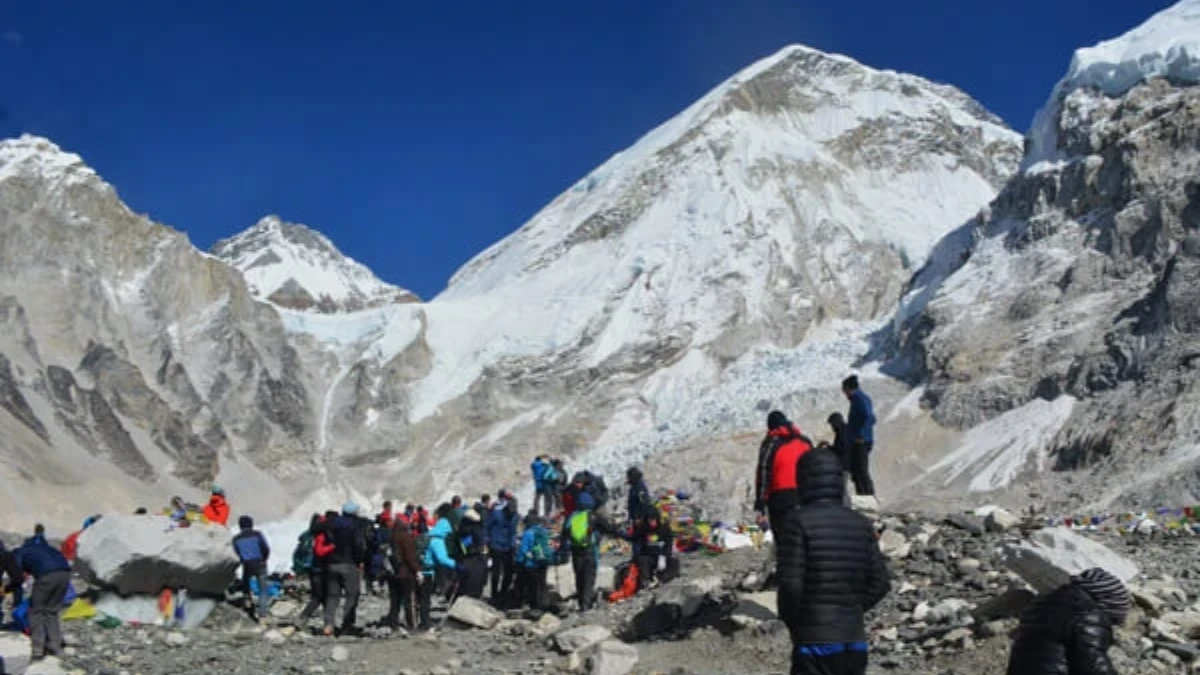
At Namche Bazaar, 3,440 metres, charging is readily available. This is the last settlement where electricity feels abundant. Charge everything here. Fill your power bank to one hundred percent. This is your insurance against the scarcity ahead.
Between Namche and Dingboche, 3,440 to 4,410 metres, charging costs two hundred to three hundred Nepali rupees per device. Outlets are shared. Queues form in the evening. Solar panels provide most of the power, and on cloudy days the supply drops.
Above Dingboche, Lobuche, Gorak Shep, Everest Base Camp, charging costs three hundred to five hundred rupees per device. Outlets are scarce and contested. Solar power is the only source, and at five thousand metres in winter, the panels generate limited output. Some teahouses limit charging to specific hours.
The solution: a twenty-thousand-milliamp-hour power bank. Charged fully at Namche, it keeps a modern smartphone alive for four to five days of moderate use, messaging, occasional photos, offline maps. This covers the high-altitude section of most treks. Without it, you are at the mercy of the outlet queue.
How much does WiFi cost on the Everest Base Camp trek?
Teahouse WiFi exists at most lodges from Lukla to Gorak Shep. The cost ranges from free at lower altitudes to two hundred to five hundred rupees per device per day at higher lodges. The speed ranges from adequate for messaging to insufficient for anything beyond text.
At Namche: good speed. WhatsApp calls work. Photos upload in reasonable time. Email functions. Video calling is possible but not reliable. This is the high-water mark of trail WiFi.
At Tengboche to Dingboche: slower. Text messages and WhatsApp messages get through. Photos upload with patience. Video calls are impractical. Weather forecasts and simple web browsing work intermittently.
At Lobuche to Gorak Shep: minimal. Text-only communication. Photos may not upload until you descend. Weather apps may not update. The WiFi technically exists but its practical utility is limited to confirming that you are still connected to the digital world, even if that connection is measured in bytes rather than megabytes.
Is Everest Link worth buying on the EBC trek?
In the Everest region, a private WiFi network called Everest Link provides dedicated internet at participating teahouses from Namche to Gorak Shep. You purchase a prepaid card at shops in Namche, five hundred to one thousand rupees depending on the data allocation, and log into the network at each stop.
Everest Link is faster and more reliable than standard teahouse WiFi above Namche. It works at most major lodges on the EBC trail. The service is not available between teahouses, when you are walking, you rely on mobile signal or nothing.
Many trekkers use mobile data for the walk and Everest Link at the lodge. The combination provides reasonable connectivity throughout the trek for a total cost of fifteen to twenty dollars, the SIM card plus the WiFi card.
Which SIM card works best for trekking in Nepal?
Ncell provides 4G coverage from Lukla to Namche Bazaar with speeds of one to five megabits per second, functional for most purposes. Above Namche, the signal degrades to 3G, then 2G, then intermittent. At Gorak Shep and EBC, mobile signal is minimal and unreliable.
NTC, Nepal's state-owned network, provides slightly broader coverage in remote areas but generally slower data speeds on the main trekking routes.
A Nepali SIM card (either network) costs about a dollar at Kathmandu airport. On most of our treks the SIM is arranged for you on arrival and included in the price, so this is a cost for independent trekkers rather than for you. Data plans for tourists cost four to sixteen dollars for thirty days depending on the amount of data. This gives you mobile connectivity on the trail where signal exists, independent of teahouse WiFi.
Can you get reliable internet on the Everest Base Camp trek?
You will be able to send WhatsApp messages and receive them at most points on the major trekking routes. You will be able to upload photos at Namche and below with reasonable speed. You will be able to make voice calls at lower altitudes. You will not be able to stream video, participate in video conferences, or download large files at any point above Namche. If your plan is to work remotely from Nepal between treks, do that from Kathmandu or Pokhara, not the trail. Our digital nomad guide to Nepal covers where the wifi is genuinely fast enough.
The connectivity is sufficient for safety, your guide can reach the company office, your insurance provider, and emergency services from most points on the trail. It is sufficient for reassurance, you can message home to confirm you are alive and well. It is not sufficient for maintaining your normal digital life, and, if you allow it, the forced reduction in connectivity becomes one of the unexpected gifts of the trek.
How do I keep my phone charged on the Everest Base Camp trek?
Charge everything at Namche on your rest day. Both your phone and your power bank. To one hundred percent. This is your base of operations.
Above Namche, put your phone in airplane mode when not actively using it. This extends battery life dramatically, a phone in airplane mode uses a fraction of the power it consumes when constantly searching for a weak signal.
When you want to send messages, turn off airplane mode, send and receive, then return to airplane mode. This targeted approach preserves battery for the moments that matter.
Keep your phone warm. Cold batteries drain faster. A phone in an inside pocket, close to your body heat, lasts longer than a phone in a cold outer pocket or daypack side pocket.
And bring a head torch with fresh batteries. Not a phone torch, a proper head torch. Your phone battery is too valuable to waste on illumination when a three-dollar head torch does the job better and lasts ten times longer.
Charging facilities are noted on each day of our itineraries. See the EBC Trek or Manaslu Circuit pages for details.
WiFi exists on most Nepal treks below 4,000 metres. Above that, it is intermittent. The teahouses charge NPR 300-500 ($2-4) per device, the speed is glacial, and the connection drops whenever the generator runs out of fuel. Electricity for phone charging is available at almost every teahouse, NPR 200-400 per charge, and a good power bank eliminates the worry entirely. Bring a 20,000mAh bank and you will not need to charge from a wall socket for five days.
We brief all guests on connectivity before the trek. Questions? Ask us.
WhatsApp:+977 9810351300
Email:[email protected]
Written by Shreejan Simkhada, CEO of The Everest Holiday and third-generation Himalayan guide. TAAN Member #1586.
Wifi on EBC: yes, at most teahouses. Our Everest Base Camp Trek (12 Days) is private (your group only, no strangers), 2026 dates open, From USD $1399. WhatsApp us for tailored 2026 dates and current departures.

 Chat with Shreejan