

Last updated 5 September 2026. Package prices below are read from our booking system on that date and hold for 2026 and 2027 departures.
I get asked this question almost every day. Someone fills out our enquiry form, and within the first two messages it comes: how much does Annapurna Base Camp actually cost?
The honest answer is that it depends on how you trek. A budget trekker spending carefully will spend a completely different amount from someone who wants private rooms and a porter carrying everything. Both are valid. Both get you to the same 4,130-metre amphitheatre surrounded by some of the tallest mountains on earth.
What I can do is break down every cost you will face, from the permit office to the last cup of tea at Jhinu Danda hot springs, so you know exactly what to budget before you book anything.
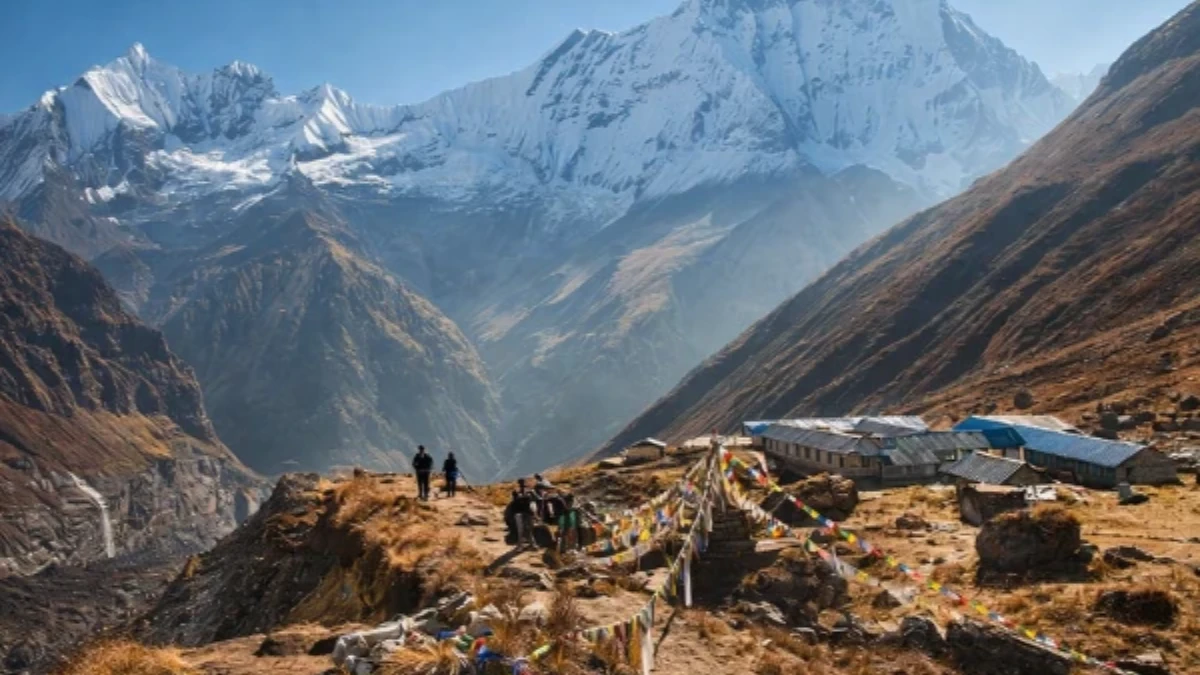
May 2026 price note: Nepal’s fuel costs have risen sharply due to the ongoing conflict in West Asia, which pushed global oil prices to record highs. Nepal Oil Corporation hiked diesel by over 50% and aviation fuel by nearly 98% in a single month. Transport and teahouse food prices have increased as a result. Every number here reflects current 2026 pricing.
How Much Does the ABC Trek Cost in 2026?
If you want a number before reading three thousand words, here it is. A nine-day Annapurna Base Camp trek with a Nepali trekking company costs between 499 and 1,400 US dollars depending on your tier, plus around 1,000 to 1,800 dollars for flights, visa, insurance, and personal spending. Total trip cost from your front door and back: roughly 1,900 to 3,200 US dollars.
If that range is too wide for comfort, keep reading. I will narrow it down to what you specifically will pay.
Package Price: What a Nepali Trekking Company Charges
Most Nepali companies offer the ABC trek in tiered packages. Ours look like this, and they are fairly representative of what a licensed, reputable company charges:
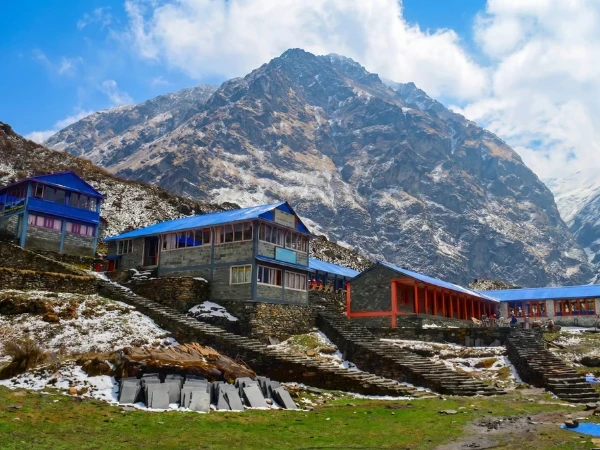
Budget: 499 US dollars
This gets you a government-licensed English-speaking guide, all permits (ACAP and TIMS), ground transport between Kathmandu, Pokhara, and the trailhead at Nayapul, one night in Pokhara with breakfast, a SIM card, first aid kit with pulse oximeter, and a company t-shirt. You pay for your own meals on the trail and there is no porter: you carry your own bag.
Standard: 799 US dollars
Everything in Budget plus all three meals daily with tea, fruit, and two litres of water. Private twin rooms with attached bathroom where available. One porter per two trekkers carrying ten kilograms each. Shared tourist-standard vehicle between Kathmandu and Pokhara. SIM card with limited data. All taxes included.
Luxury: 1,400 US dollars
Everything in Standard plus premium private vehicle, all drinks except alcohol, private deluxe rooms with bed heater, one porter per trekker so you carry nothing, one guide per two trekkers, unlimited data SIM, and duffel bags provided.
Prices drop with group size on every tier, and the price is the same whether you book privately or as a group; we never add strangers to your trek. Per person, from our booking system:
| Group size | Budget | Standard | Luxury |
|---|---|---|---|
| 1 to 4 people | 499 dollars | 799 dollars | 1,400 dollars |
| 5 to 8 people | 449 dollars | 749 dollars | 1,349 dollars |
| 9 to 12 people | 399 dollars | 699 dollars | 1,299 dollars |
| 13 to 20 people | 349 dollars | 649 dollars | 1,249 dollars |
Kathmandu hotels are not included on any tier; the package covers one night in Pokhara with breakfast. A solo trekker pays the one-to-four price.
You can see the full breakdown and book on our Annapurna Base Camp trek page.
What Is Not Included in Any Package
Every company excludes certain costs. Here is what you need to budget separately:
- International flights to and from Kathmandu
- Nepal visa (30 to 125 US dollars depending on duration)
- Travel insurance with helicopter evacuation cover (90 to 250 dollars)
- Accommodation in Kathmandu before and after the trek
- Meals in Kathmandu and Pokhara outside of the trek
- Alcohol and personal snacks on the trail
- Tips for guide and porter
- Personal trekking gear
How Much Do ABC Trek Permits Cost?
The Annapurna Base Camp trek requires two permits. Both are included in our packages, but if you are comparing prices or trekking independently, here is what they cost:
ACAP (Annapurna Conservation Area Permit): 3,000 Nepali rupees for foreigners (about 20 US dollars at the current rate of 151 rupees per dollar). SAARC nationals pay 1,000 rupees.
TIMS (Trekkers Information Management System): 2,000 rupees for foreigners (about 13 US dollars), 1,000 for SAARC nationals. It is issued through the agency and checked at the ACAP checkposts, so it is not optional.
Total permit cost: roughly 33 US dollars. Your company handles the paperwork: you do not need to visit any government offices. For more detail, read our complete permits guide.
How Much Does Transport to the ABC Trek Cost?
The ABC trek starts from Nayapul, which is about an hour’s drive from Pokhara. First you need to get from Kathmandu to Pokhara, and then from Pokhara to the trailhead.
Kathmandu to Pokhara
Following the 2026 fuel price increases, transport prices have risen across Nepal:
- Tourist bus: 12 to 22 dollars one way (six to seven hours)
- Deluxe micro bus: 28 to 50 dollars (same journey, better seats)
- Domestic flight: 120 to 180 dollars one way (twenty-five minutes)
- Private vehicle: 140 to 210 dollars one way
Most trekking packages include road transport between Kathmandu and Pokhara. Our Standard package uses a shared tourist-standard vehicle and our Luxury package a private one. Read our full Kathmandu to Pokhara transport guide for details on each option.
Pokhara to Nayapul: About 1,200 to 1,500 rupees (8 to 10 dollars) by local bus, or included in your package if you booked private transport.
How Much Does Food Cost on the Trail?
If you are on a Standard or Luxury package, all your meals are included. If you booked Budget, or if you want extras beyond what is provided, here is what teahouse food costs on the ABC trail in 2026:
- Dal bhat (the staple meal, unlimited refills): 500 to 900 rupees (3.50 to 6 dollars)
- Pasta, fried rice, noodle soup: 450 to 800 rupees (3 to 5.50 dollars)
- Momos (dumplings): 400 to 700 rupees
- Tea or coffee: 100 to 250 rupees
- Bottled water (1 litre): 150 to 400 rupees (increases with altitude)
- Beer: 500 to 900 rupees
- Chocolate bar or snack: 200 to 400 rupees
A Budget trekker eating three dal bhat meals a day, plus tea and the occasional snack, will spend 25 to 35 dollars per day on food. Over nine days, that is 225 to 315 dollars.
Standard and Luxury trekkers: your meals are covered, but budget 5 to 15 dollars per day for extras like beer, chocolate, and bottled drinks.
What Is the Accommodation Like on the Trail?
The ABC trail has teahouses at every stop. Room prices depend on the season and whether you eat at the teahouse (most offer free or cheap rooms if you order meals there).
- Basic shared room: 200 to 500 rupees per night (1.50 to 3.50 dollars)
- Private room with attached bathroom: 500 to 1,500 rupees (3.50 to 10 dollars)
- Hot shower: 200 to 500 rupees per use
- Device charging: 100 to 300 rupees
- WiFi: 200 to 500 rupees per day
Accommodation is included in all our packages, so this is mainly relevant for independent trekkers.
Flights to Nepal
This is usually the biggest single cost. Return flights to Kathmandu vary enormously by origin:
- From the UK: 450 to 800 pounds return (600 to 1,050 dollars)
- From the US: 800 to 1,400 dollars return
- From Australia: 700 to 1,200 Australian dollars (500 to 850 US dollars)
- From India: 8,000 to 20,000 Indian rupees return (95 to 240 US dollars)
Book three to four months ahead for the best prices. October and November are peak season, so spring (March to May) flights tend to be cheaper.
Nepal Visa
Every foreign national except Indians needs a visa. You get it on arrival at Kathmandu airport:
- 15 days: 30 US dollars
- 30 days: 50 US dollars
- 90 days: 125 US dollars
You need a passport-sized photo and a completed arrival form. The queue takes twenty to forty minutes. For the full process, see our visa on arrival guide.
Travel Insurance
This is mandatory and non-negotiable. The ABC trek reaches 4,130 metres, which means you need a policy that covers:
- Emergency helicopter evacuation up to 5,000 metres minimum
- Medical treatment abroad (at least 100,000 US dollars)
- Trip cancellation
A two-week policy with altitude cover costs 90 to 180 dollars for most nationalities. Read our trekking insurance guide for recommended providers.
What Tips Should You Know?
Tipping is customary in Nepal and deeply appreciated. As a guideline:
- Guide: 15 to 20 US dollars per day
- Porter: 10 to 15 US dollars per day
For a nine-day trek, budget 135 to 180 dollars for your guide and 90 to 135 dollars for your porter. These go directly to the people who made your trek possible. More on this in our tipping guide.
Personal Spending and Extras
Beyond food and accommodation, budget for:
- Kathmandu hotel: 15 to 60 dollars per night depending on standard
- Meals in Kathmandu: 5 to 15 dollars per meal
- Jhinu Danda hot springs: 100 rupees entry (less than a dollar, worth every rupee after seven days of walking)
- Souvenirs and shopping: whatever you fancy
- Kathmandu sightseeing: temple entry fees, taxis
Most trekkers spend 10 to 25 dollars per day on personal extras during the trek, and 30 to 60 dollars per day in Kathmandu.
Gear: Buy or Rent?
You do not need to buy everything new, and you may need less from the shops than you think. On every one of our tiers, including Budget, we provide the sleeping bag and the down jacket at no cost, and a duffel bag from Standard upward. Those are the two most expensive items on most people’s list, already covered. For everything else, Kathmandu’s Thamel district is full of shops selling and renting trekking gear, and trekking poles cost 50 cents to 1 dollar per day.
If you already own hiking boots, a rain jacket, and thermal layers, you can get away with spending very little on gear. Read our Thamel gear shopping guide for details on what to rent versus buy.
What Is the Total Cost for Three Budget Levels?
Here is what the total trip actually costs for three different types of trekker, flying from the UK:
Budget Trekker (carrying own bag, paying own meals)
| Return flights UK to Kathmandu | 650 dollars |
| Nepal visa (30 days) | 50 dollars |
| Travel insurance (2 weeks, altitude cover) | 120 dollars |
| Budget trek package | 499 dollars |
| Food on trail (9 days at 30 dollars) | 270 dollars |
| Kathmandu accommodation (3 nights at 20 dollars) | 60 dollars |
| Kathmandu meals and transport | 80 dollars |
| Tips (guide only, no porter) | 135 dollars |
| Gear rental and extras | 50 dollars |
| Total | 1,914 dollars |
Standard Trekker (all meals included, porter, shared tourist-standard vehicle)
| Return flights UK to Kathmandu | 700 dollars |
| Nepal visa (30 days) | 50 dollars |
| Travel insurance | 140 dollars |
| Standard trek package | 799 dollars |
| Trail extras (beer, snacks, WiFi, over 9 days) | 90 dollars |
| Kathmandu accommodation (3 nights at 35 dollars) | 105 dollars |
| Kathmandu meals and transport | 100 dollars |
| Tips (guide + porter) | 225 dollars |
| Gear and extras | 60 dollars |
| Total | 2,269 dollars |
Luxury Trekker (private guide, porter, best rooms, all drinks)
| Return flights UK to Kathmandu | 800 dollars |
| Nepal visa (30 days) | 50 dollars |
| Travel insurance (premium) | 180 dollars |
| Luxury trek package | 1,400 dollars |
| Trail extras (9 days) | 60 dollars |
| Kathmandu accommodation (3 nights at 60 dollars) | 180 dollars |
| Kathmandu meals and transport | 150 dollars |
| Tips (guide + porter) | 250 dollars |
| Gear and extras | 80 dollars |
| Total | 3,150 dollars |
Which Annapurna trek should you book?
Base Camp is the one most people mean when they ask about Annapurna, but three neighbours use the same guides and the same three tiers, and one of them may fit your time or budget better:
- Annapurna Base Camp, 9 days, from 499 US dollars. The trek this page is about: into the sanctuary at 4,130 metres and out again, with the Chomrong acclimatisation night we refuse to cut.
- Ghorepani Poon Hill, 6 days, from 499 US dollars. Tops out at 3,210 metres, so altitude is not a worry, and the sunrise from Poon Hill is the best view for the effort in Nepal. Good for families and anyone with under a week.
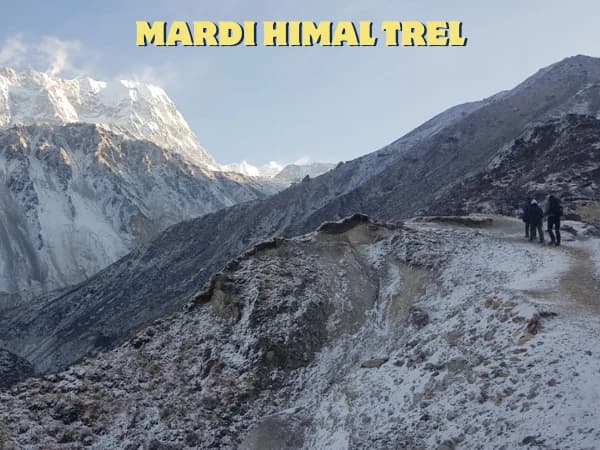
- Mardi Himal Base Camp, 7 days, from 454 US dollars. A quieter ridge walk to about 4,500 metres with Machhapuchhre close enough to touch. The cheapest way onto a high Annapurna viewpoint.
- Annapurna Circuit, 12 days, from 720 US dollars. Crosses the Thorong La at 5,416 metres and ends at Muktinath. A bigger commitment, and the only one of the four that goes over a pass.
More Annapurna reading before you book: every trek in the Annapurna region in one guide, Poon Hill against Mardi Himal for the short-trek question, the day-by-day distances to Base Camp, what the nights at Bamboo and Machhapuchhre Base Camp are really like, and why the sanctuary changes how people see mountains. If the Circuit is still in the running, read about the road that now shares the route first.
ABC vs EBC: Which Is Cheaper?
Annapurna Base Camp is significantly cheaper than Everest Base Camp for one main reason: no Lukla flight. The EBC trek requires a return flight from Kathmandu to Lukla costing 500 to 580 dollars at current fuel-adjusted prices, or an additional three days by road. The ABC trek starts from Pokhara, which is reachable by a seven-hour bus ride for 12 to 22 dollars.
Our Standard EBC package starts at 2,499 dollars compared to 799 for ABC Standard. Add the Lukla flights and the total gap is even wider. If budget is a factor, ABC gives you a world-class Himalayan experience for roughly 30 to 40 percent less than EBC.
Can You Do It Cheaper?
Yes, but with trade-offs. Some trekkers go fully independent with no guide and no porter, eating the cheapest dal bhat at every stop. Under the Nepal Tourism Board licensed-guide rule from April 2023, a guide is required on the Annapurna routes, though enforcement varies on popular trails like ABC.
I would not recommend going without a guide. Not because I run a trekking company, but because the Annapurna region gets sudden weather changes, the trail above Deurali is steep and exposed, and if something goes wrong above 3,000 metres you want someone who knows the evacuation routes and speaks the language. The guide fee is a small fraction of your total trip cost. It is not the place to save money.
Where you can save: book flights early, stay in shared rooms, eat dal bhat (unlimited refills at every teahouse), fill water bottles at purification stations instead of buying bottled water, and trek in shoulder season when everything is slightly cheaper. Read our budget trekking guide for more honest tips.
How Do You Book an ABC Trek Without Overpaying?
Book directly with a Nepal-based company rather than through an international agent. The international operator adds their margin on top of ours, sometimes doubling the price for the exact same trek with the exact same guide. Our book direct guide explains why this matters.
We ask for a 10 percent deposit to secure your booking, paid through Himalayan Bank Limited’s secure payment gateway. The balance is paid in Kathmandu before the trek. The deposit is non-refundable, but if your plans change we move your trek to any date within a year at no charge, with 72 hours’ notice.
What trekkers say about our Annapurna treks
Two reviews from TripAdvisor, quoted as written:
“It was a great experience with my guide Arjun Dura. I was well taken care of throughout the trip. It’s a very nice place. Every day in the journey, the view is unique, every day is fun, it is recommended to come.”
Sarawur, TripAdvisor, April 2022
“I recently did a twelve day Annapurna trek organized by Everest Holiday. Ganesh professionally and swiftly organised the trek, guide and all the permits. He even came to the bus station in the morning to make sure everything went okay. I can highly recommend to have your trek organized by Everest Holidays.”
Sabine, TripAdvisor, October 2021
Check us before you pay
Trekking scams in Nepal are real and in the news, so do not take my word for any of this. The Everest Holiday Pvt. Ltd. was registered in Kathmandu on 8 April 2016, company registration 147653/072/073, trekking licence 2090/072, Trekking Agencies’ Association of Nepal member 1586. Every legitimate operator holds the same paperwork and will send it without being offended that you asked. Ask me for a call before you send a deposit; I am on WhatsApp around the clock. If a company will not get on a call with you, walk away. Our reviews are on TripAdvisor and Google under our own name; read the critical ones as well as the kind ones.
The questions I get asked most about the ABC cost
Is the price the same for a private trek and a group? Yes. Every trek we run is private, your group only, and the discount comes from group size, not from sharing with strangers. Two friends pay the one-to-four price; six friends pay the five-to-eight price.
Are Kathmandu hotels included? No, on any tier. One night in Pokhara with breakfast is included. Tell us your budget and we will recommend and book a Kathmandu hotel for you, or choose your own.
What gear is free? A down jacket and a sleeping bag rated to minus fifteen Celsius, on every tier, at no charge. A duffel bag is provided on Standard and Luxury. Bring your own broken-in boots and layers.
Can I add a porter to the Budget tier? Yes. Budget has no porter by design, which is why it is the cheapest, but ask and we will quote one porter between two trekkers as an add-on.
Can I do this trek alone? Yes. Minimum group size is one, and a solo trekker pays the one-to-four price with the same guide and the same inclusions.
How much is the deposit and how do I pay? Ten per cent by card through Himalayan Bank’s secure gateway to confirm your dates. The balance is paid in Kathmandu before the trek. The deposit is non-refundable, but you can move your dates to any date within a year at no charge with 72 hours’ notice.
Will the price change for 2027? No. The prices on this page hold for 2027 departures.
If you want a quote for your own dates and group size rather than an article’s averages, write to me on WhatsApp and I will send the real numbers, including the unwelcome ones.
If you have specific questions about costs, just message us. I answer most enquiries within a few hours, and I will give you an honest number, not a sales pitch.
View our Annapurna Base Camp trek packages and secure your spot
The Annapurna Base Camp trek is the best value trek in Nepal. Nine days, two base camps, views of eight-thousanders from your teahouse window, and a cost that is genuinely affordable. If you are doing your first Himalayan trek and you have ten days, this is the one I recommend. Not Everest, not the circuit. This.
Check our Annapurna Base Camp Trek (9 days) for the full itinerary and what is included.
Travellers combining the trek with wellness practices may also enjoy our yoga and trekking option.
WhatsApp:+977 9810351300
Email:[email protected]
Written by Shreejan Simkhada, CEO of The Everest Holiday and third-generation Himalayan guide. TAAN Member #1586.
If you're booking from the United States, our dedicated guide for US trekkers covers TSA-friendly gear, dollar conversion, and the flight routes most Americans use to reach Kathmandu.
Booking from the UK? Our UK-trekker country guide breaks the cost down in pounds and covers Cotswold Outdoor / Decathlon gear-sourcing for British trekkers.
Aussies should also see our Australia trekkers' country guide for AUD pricing and Singapore/KL transit options.
German trekkers can find euro-denominated cost details and Frankfurt/Munich routings in our Germany trekkers' country guide.
Canadian trekkers can find CAD pricing, Toronto/Vancouver flight routes, and gear-sourcing notes in our Canada trekkers' country guide.
Singapore-based trekkers can find SGD pricing and Changi connection options in our Singapore trekkers' country guide.
Annapurna Base Camp in 2027
Every price on this page holds for 2027 departures. There is no Lukla flight on this trek, so none of the Manthali disruption either, which is one reason Annapurna is the easier trek to plan a year ahead. If the park or permit fees change for 2027, this page changes the same week.
Annapurna Base Camp cost in 2026? Our Annapurna Base Camp Trek (9 Days) is private (your group only, no strangers), 2026 and 2027 dates open, From USD $499. WhatsApp us for tailored 2026 and 2027 dates and current departures.

 Chat with Shreejan