

The number most people find first is the package price. One thousand dollars. Fifteen hundred. Two thousand. It sits on a website in bold font, and the mind does what minds do: it rounds up, adds a margin for the unknown, and arrives at a figure that feels either affordable or impossible. But the package price is not what the trek costs. It is what the trek company charges for its piece of the puzzle. The actual cost, from the moment you book your flight to the moment you land back home, is a different number entirely, and understanding that number before you commit is the difference between a budget that works and a budget that collapses at altitude.
This is the complete breakdown. Every cost. Every hidden fee. Every optional expense. For every major trek in Nepal. In 2027 prices, verified against what trekkers actually spent last season.
How Much Does a Flight to Nepal Cost?
This is usually the largest single expense, and the one with the most variance. Flights to Kathmandu (Tribhuvan International Airport, code KTM) depend entirely on where you live and when you book.
From the United Kingdom, return flights to Kathmandu typically cost between four hundred and eight hundred pounds. Airlines serving the route include Qatar Airways (via Doha), Turkish Airlines (via Istanbul), Oman Air (via Muscat), and several others with connections through the Middle East or Southeast Asia. Direct flights from Europe do not exist. Every routing involves at least one connection, and the cheapest options often involve two. Flight time ranges from twelve to eighteen hours depending on routing and layover duration.
From the United States, return flights typically cost between eight hundred and fourteen hundred dollars. West Coast departures route through East Asia: Seoul, Hong Kong, or Bangkok. East Coast departures route through the Middle East or Europe. The journey is long: twenty to thirty hours total, and the price reflects both distance and the limited competition on these routes.
From Australia, return flights typically cost between eight hundred and twelve hundred Australian dollars. The most common routing is through Bangkok, Singapore, or Kuala Lumpur. Flight time is twelve to sixteen hours.
Booking three to four months ahead during the shoulder periods (booking in June for an October trek) typically yields the best prices. Last-minute bookings for peak season can double the cost. Flexible dates, departing Tuesday or Wednesday instead of weekend, save fifty to one hundred dollars consistently.
How Much Does a Nepal Visa Cost?
Every foreign national except Indian citizens needs a visa. Nepal offers visa on arrival at Tribhuvan International Airport, which makes the process simple but not free.
Fifteen days: thirty US dollars. Thirty days: fifty US dollars. Ninety days: one hundred and twenty-five US dollars. For most trekkers, the thirty-day visa is the right choice, it covers a fourteen to twenty-one day trip with comfortable margin.
Payment is in US dollars cash, or by card at the electronic kiosks. Bring crisp, undamaged US dollar bills. Worn, torn, or marked notes are sometimes rejected. The kiosk queue is faster than the manual counter. Fill in the online arrival form before you land, the link is available on the Nepal Department of Immigration website, and the process at the airport takes twenty to thirty minutes.
How Much Does Nepal Trekking Insurance Cost?
This is mandatory for all treks booked through registered companies. Not optional. Not recommended. Mandatory. Your trekking company will ask for proof of coverage before departure.
The policy must cover: trekking to the maximum altitude of your trek (6,000 metres for treks above about 4,500 metres such as Everest Base Camp; 5,000 metres is enough for lower treks like Poon Hill or Annapurna Base Camp; peaks need cover to the summit altitude, with climbing included), helicopter evacuation, emergency medical treatment, trip cancellation, and personal belongings. Standard travel insurance does not cover trekking above 3,000 metres, you need a specialist policy or an add-on.
UK providers: World Nomads, Campbell Irvine, Dogtag, BMC (for British Mountaineering Council members). Cost: sixty to one hundred and twenty pounds for a four-week policy covering trekking to 6,000 metres.
US providers: World Nomads, Global Rescue, IMG (International Medical Group). Cost: one hundred to two hundred dollars for similar coverage.
Australian providers: World Nomads, Cover-More with adventure sports add-on. Cost: one hundred to one hundred and fifty Australian dollars.
Helicopter evacuation alone, which is the single most important coverage element, can cost three thousand to eight thousand US dollars without insurance. This is not a theoretical risk. Helicopters evacuate trekkers from the Everest and Annapurna regions multiple times per week during peak season. The cost of insurance is trivial compared to the cost of not having it.
How Much Does a Nepal Trek Package Cost in 2027?
Trek packages from Nepali companies vary enormously in price and inclusions. Understanding what is included, and critically, what is not, prevents budget surprises on the trail.
Everest Base Camp Trek (12-15 days)
Budget packages: fourteen hundred to two thousand US dollars. This typically includes teahouse accommodation (twin-share), all meals on the trek, a guide, permits (Sagarmatha National Park entry, the Khumbu Pasang Lhamu Rural Municipality permit and a TIMS card), and transport to and from the trailhead. Porters may or may not be included, check carefully.
Standard packages: two thousand to two thousand five hundred US dollars. Everything in budget plus better teahouses, a porter included, airport transfers, Kathmandu hotel nights, and sometimes domestic flights (Lukla).
Luxury packages: four thousand to five thousand US dollars. Everything in standard plus private rooms where available, the best teahouses, premium Kathmandu hotel, and a higher guide-to-trekker ratio.
The road route to EBC, driving to Phakding instead of flying to Lukla, removes a return airfare worth about five hundred dollars per person, although the extra days on the trail take back part of that, and it is increasingly popular. The scenic drive through Nepal's hill country adds a day but removes the risk of Lukla flight delays, which can strand trekkers for days during bad weather.
Annapurna Circuit (12-18 days)
Budget: nine hundred to twelve hundred dollars. Standard: thirteen hundred to seventeen hundred. Luxury: eighteen hundred to twenty-five hundred. The Circuit is generally cheaper than EBC because the approach is by road (no domestic flight), teahouse density is high, and permit costs are lower (ACAP permit instead of Sagarmatha National Park entry).
Langtang Valley (7-11 days)
Budget: seven hundred to nine hundred dollars. Standard: one thousand to thirteen hundred. Luxury: fourteen hundred to eighteen hundred. Langtang is the most affordable major trek, shorter duration, road access from Kathmandu (seven to eight hours), and lower permit costs.
Manaslu Circuit (14-18 days)
Budget: thirteen hundred to sixteen hundred dollars. Standard: seventeen hundred to twenty-two hundred. Luxury: twenty-three hundred to three thousand. Manaslu is more expensive because of the restricted area permit (one hundred dollars per person per week in peak season) and the licensed guide the permit requires. The old requirement for two trekkers on every departure was scrapped on 22 March 2026. Camping sections increase operational costs compared to fully teahouse routes.
How Much Do Nepal Trekking Permits Cost?
Every trek requires permits. Your trekking company handles the paperwork, but the costs are either included in your package or added on top, check your booking confirmation.
The official figures come straight from two government sources: the Department of Immigration sets the restricted-area permit fees, and the Nepal Tourism Board lists the national park, conservation area and TIMS fees. If a figure you read elsewhere disagrees with theirs, trust theirs. For the full trek-by-trek permit table, see our complete guide to Nepal trekking permits.
TIMS Card (Trekkers' Information Management System): NPR 2,000 for foreign nationals and NPR 1,000 for SAARC nationals, roughly thirteen US dollars for foreigners. Required for all major trekking areas.
Sagarmatha National Park entry (Everest region): NPR 3,000 for foreign nationals and NPR 1,500 for SAARC nationals, roughly twenty and ten US dollars at current rates. The fee is set in rupees, so the dollar figure moves with the exchange rate rather than with the fee.
ACAP permit (Annapurna Conservation Area): NPR 3,000 for foreign nationals and NPR 1,000 for SAARC nationals, roughly twenty and seven US dollars. Covers the entire Annapurna region including the Circuit, ABC, and Ghorepani-Poon Hill.
Langtang National Park entry: similar to Sagarmatha pricing.
Manaslu restricted area permit: one hundred dollars per person per week in September-November, seventy-five dollars in other months. This is the most expensive permit in standard trekking.
Upper Mustang restricted area permit: fifty US dollars per day. This is the most expensive permit in Nepal trekking overall.
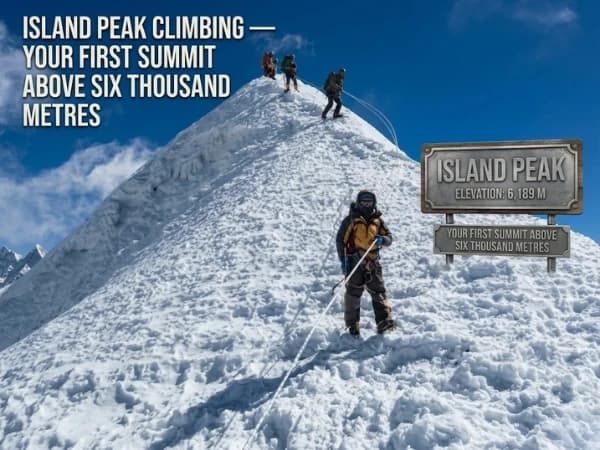
NMA climbing permit (for peaks like Island Peak): approximately three hundred and fifty dollars in peak season. Required in addition to the national park permit.
What Are the Extra Costs on the Trail?
Even an all-inclusive package leaves some costs on your shoulders.
Drinks beyond basic meals. Hot drinks at teahouses cost one hundred to four hundred Nepali rupees (roughly one to three and a half US dollars) depending on altitude. A cup of tea at Namche costs about a dollar. The same cup of tea at Gorak Shep costs three dollars. If you drink four to six hot drinks per day, which you should for hydration, this adds ten to fifteen dollars per day at higher altitudes. Over a twelve-day trek, drinks alone can add one hundred to one hundred and fifty dollars.
Charging devices. Teahouses above Namche charge two hundred to five hundred rupees to charge a phone or camera. A portable power bank eliminates this cost, bring one with at least 20,000mAh capacity.
Hot showers. Available at some teahouses for three hundred to five hundred rupees. The water is lukewarm at best. Most trekkers shower in Namche (on the way up and down) and accept trail dust for the days in between.
Wi-Fi. Available at most teahouses for two hundred to five hundred rupees per session. Speeds decrease with altitude. At Gorak Shep, Wi-Fi is theoretical rather than functional. A local SIM card with data (Ncell or NTC, approximately five hundred rupees for a trekking data plan) works better than teahouse Wi-Fi up to about 4,500 metres. On most of our treks that SIM is arranged for you on arrival and is already in the price, so it is not a line you need to budget for.
Snacks and extras. Chocolate bars, biscuits, and other trail snacks cost two to four times their Kathmandu price at altitude. A Snickers bar at Gorak Shep costs three to four dollars. Bringing snacks from Kathmandu saves money and guarantees availability.
Tipping. Not included in any package. Tipping guides and porters is customary and expected. The convention: fifteen to twenty-five dollars per day for your lead guide, ten to fifteen dollars per day for assistant guides, and eight to twelve dollars per day per porter, divided among the group. For a twelve-day EBC trek with a group of four, this works out to approximately fifty to seventy-five dollars per person. For a solo trekker with one guide and one porter, approximately three hundred to four hundred dollars total.
How Much Should You Budget for Kathmandu?
Most trekkers spend two to four days in Kathmandu, one or two before the trek and one or two after. Budget and standard packages typically include the hotel for the first and last nights. Additional nights are your responsibility.
Budget hotel in Thamel: fifteen to thirty dollars per night. Clean, basic, central. Mid-range hotel: forty to eighty dollars. Comfortable, often with rooftop views. Upscale hotel: one hundred to two hundred dollars. International standard with amenities.
Meals in Kathmandu are inexpensive by Western standards. A dal bhat (the Nepali staple of rice, lentil soup, vegetables, and pickles) costs two to four dollars at a local restaurant. Western food in Thamel, pizza, pasta, burgers, costs five to ten dollars. A meal at an upscale restaurant costs fifteen to twenty-five dollars.
Taxis within Kathmandu: two to five dollars for most journeys. Negotiate the price before getting in, or use the Pathao ride-hailing app. Airport to Thamel: approximately five to eight dollars.
How Much Does Trekking Gear Cost?
If you already own hiking gear, this cost can be minimal. If you are starting from scratch, budget three hundred to eight hundred dollars depending on whether you buy or rent, new or second-hand.
Essential items you should own (not rent): trekking boots (broken in, this is critical), base layers, socks, and underwear. Everything else, down jacket, sleeping bag, trekking poles, daypack, can be rented in Kathmandu's Thamel district for a fraction of the purchase price.
Rental costs in Thamel: down jacket, two to three dollars per day. Sleeping bag rated to minus fifteen Celsius, two to three dollars per day. Trekking poles, one to two dollars per day. For a twelve-day trek, renting these three items costs approximately sixty to ninety dollars, versus purchasing the equivalent quality for four hundred to six hundred dollars.
The quality of rental gear in Thamel ranges from excellent to questionable. Inspect everything before committing. Check zippers. Check down fill (squeeze the jacket, good down rebounds instantly). Check sleeping bag ratings (ask which temperature it is rated to and add five degrees to account for wear). The best rental shops are not the cheapest ones.
What Is the Total Budget for a Nepal Trek?
Budget Trekker, Everest Base Camp by Road, 15 days
Flight from UK: £500 (approximately $630). Visa: $50. Insurance: £80 ($100). Trek package (budget): $1,399. On-trail extras (drinks, charging, snacks): $150. Tips: $200 (sharing guide/porter with group). Kathmandu meals and extras: $80. Gear rental: $70. Airport transport: $10. Contingency (10%): $240.
Total: approximately $2,660 / £2,150
Comfortable Trekker, Everest Base Camp, 15 days
Flight from US: $1,100. Visa: $50. Insurance: $150. Trek package (standard): $2,499. On-trail extras: $200. Tips: $250. Kathmandu hotel (extra night) and meals: $150. Gear (mix of owned and rented): $150. Transport and miscellaneous: $50. Contingency: $350.
Total: approximately $3,850
Luxury Solo Trekker, Everest Base Camp, 15 days
Flight from Australia: A$1,000 ($650). Visa: $50. Insurance: A$150 ($100). Trek package (premium private): $4,999. On-trail extras: $250. Tips (solo, one guide, one porter): $400. Kathmandu hotel (two extra nights, mid-range): $160. Gear (owned): $0. Transport and spa/shopping in Kathmandu: $200. Contingency: $360.
Total: approximately $3,970 / A$6,100
How Can You Save Money on a Nepal Trek?
Take the road route instead of flying to Lukla. It removes a return airfare worth about five hundred dollars, although the extra days on the trail take back part of that, and it adds beautiful hill country scenery. Many trekkers say the drive was their favourite part.
Trek in a group rather than solo. Guide and porter costs are shared. A group of four pays roughly a quarter of the solo supplement. Most companies match solo trekkers with groups if requested.
Book directly with a Nepali company rather than through a Western agent. The Western agent adds a margin, typically twenty to forty percent. The Nepali company does the same work for the same quality at a lower price because there is no intermediary.
Bring snacks from Kathmandu. A kilogram of trail mix, energy bars, and chocolate purchased in Thamel costs a tenth of what the same snacks cost at altitude.
Carry a power bank. Eliminates three to five dollars per day in charging fees.
Choose the shoulder months. Early October, late November, or March offer the same conditions as peak season with lower flight costs and more availability for group departures.
How Does the Deposit and Payment System Work?
Most reputable Nepali companies offer a deposit-based booking system. You pay ten percent at the time of booking, with the balance paid later, which at The Everest Holiday means in Kathmandu in US dollars or euros, in cash or by card (card payments carry a 3.5% bank charge). This protects both parties, you secure your dates and permits without committing the full amount, and the company has confirmation of your commitment.
Payment is typically processed through a Nepali bank's secure gateway, this is a requirement of Nepal Rastra Bank (the central bank) for international payments. You may be briefly redirected to the bank's payment page before returning to the company's site with confirmation. This redirect is normal and is a security feature, not a problem.
Some companies also accept bank transfers via services like Wise (formerly TransferWise), which often offer better exchange rates than credit card processors. Ask your company about available payment methods.
What Does Your Trek Payment Actually Include?
When you look at the total budget, two thousand five hundred to four thousand dollars for a fifteen-day trek to the foot of the highest mountain on earth, consider what you are purchasing. Not a holiday in the conventional sense. An experience that will rewire your understanding of what your body can do, what beauty looks like at scale, and what matters when everything unnecessary is stripped away by altitude and effort.
The money pays for guides who know every stone on the trail. Porters who carry your gear so you can focus on walking. Teahouse owners who cook dal bhat at 4,900 metres. Permit fees that fund national park conservation. And, if you book with a company that gives back, a contribution to education and healthcare for children in Nepal's most remote communities.
It is not cheap. But it is less than a week at a European beach resort. Less than a new iPhone and its first year of service. Less than most people spend on things they cannot remember a year later. And the memory of standing at Kala Patthar at sunrise, watching the first light touch the summit of Everest, is a memory that does not depreciate. It compounds. Every year you carry it, it is worth more than the year before.
Compare our three tiers: Everest Base Camp from USD 1,399 | Annapurna Base Camp from USD 499 | Poon Hill from USD 499
The honest answer is: a Nepal trek costs less than most people expect and more than the cheapest quote on the internet. The cheapest quote is cheap for a reason: underpaid guides, skipped safety equipment, no insurance. The expensive quote is expensive because someone is taking a fat margin. We sit in the middle: fair price, properly paid team, everything included, nothing hidden.
If you want a real quote for your specific trek, dates, and group size, just ask. No obligation.
Travellers planning longer stays should also read our one-month career break in Nepal guide, which breaks down sustained costs.
WhatsApp:+977 9810351300
Email:[email protected]
Written by Shreejan Simkhada, CEO of The Everest Holiday and third-generation Himalayan guide. TAAN Member #1586.
For pound-denominated costs and UK-specific advice, see our guide for UK trekkers.
For euro pricing and European-specific advice, see our guide for German trekkers.
For Canadian-dollar pricing and Toronto/Vancouver routes, see our guide for Canadian trekkers.
How do other Nepal treks compare on cost?
Everest Base Camp is the benchmark, but it is not the cheapest way to trek in Nepal: the Lukla flight alone adds several hundred dollars that most other treks never charge. Here is how the majors compare, like for like:
| Trek | Days | Budget (from) | Standard (from) | Luxury (from) |
|---|---|---|---|---|
| Everest Base Camp | 12 | $1,399 | $2,499 | $4,999 |
| Everest Three Passes | 17 | $1,649 | $2,659 | $4,719 |
| Annapurna Circuit | 12 | $720 | $999 | $1,499 |
| Annapurna Base Camp | 9 | $499 | $799 | $1,400 |
| Manaslu Circuit | 12 | $799 | $1,599 | $2,099 |
| Langtang Valley | 8 | $365 | $650 | $1,000 |
| Ghorepani Poon Hill | 6 | $499 | $749 | $1,235 |
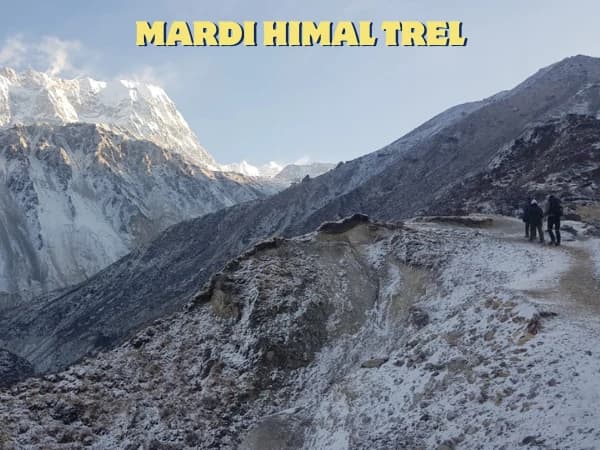
| Mardi Himal | 7 | $454 | $849 | $1,111 |
| Upper Mustang | 10 | $1,290 | $1,930 | $3,500 |
These are our per-person starting prices and cover the guide, permits, accommodation and the inclusions of each tier; the price per person drops as your group grows. Everest carries the Lukla flight, which is why it sits above the rest.
Annapurna Circuit is the best-value major trek in the country. There are no internal flights, so a comparable itinerary typically lands $500–$700 below an EBC trip in total, with just as much variety on the trail.
Ghorepani Poon Hill, at around six days, is the cheapest mainstream option, roughly half the all-in cost of EBC, and spectacularly good value for a first Himalayan trek.
Manaslu Circuit sits between Annapurna and EBC: its restricted-area permit adds $100–$200 over a comparable open-region trek, but there are no flights to pay for.
Upper Mustang is the most expensive of the classics: the government’s restricted-area permit runs $50 per day, which adds roughly $500 to a ten-day itinerary before anything else.
Whichever trek you compare, the same rule from this guide applies: the package price is the starting point, and flights, insurance, tips and trail spending decide the real total.
Nepal trek costs in 2027
Every package price in this guide holds for 2027 departures: the price you see is the price you pay, this year or next, Kailash excepted. What does move from year to year sits outside the package: international airfares, the visa fee, and lodge prices on the trail, which rise a little each autumn. Budget those with a small margin and the package itself will not surprise you.
Honest 2027 cost breakdown? Here is our flagship EBC. Our Everest Base Camp Trek (12 Days) is private (your group only, no strangers), 2027 dates open, From USD $1399. WhatsApp us for tailored 2027 dates and current departures.
 Chat with Shreejan