
Tsum Valley Trek: The Complete Guide to the 16-Day Route, Permits and Cost

Last updated 23 October 2026. This is the route and the numbers as I hold them today. The Manaslu region was hit by a flash flood in September, so please read the route-status section before you fix dates.
The short answer: the Tsum Valley is a restricted-area trek in Gorkha District, in the Manaslu Conservation Area, that turns off the Manaslu Circuit route and walks into a Tibetan-Buddhist valley full of monasteries, prayer walls and small villages. Our version is 16 days from Kathmandu, with a first-week restricted-area permit that costs USD 40 per person in autumn, a licensed guide on every walk, and a Standard price of USD 1,899. It is a moderate trek by our own grading, with no high pass, but it is long, the drive in and out is hard, and the lodges are plain. This guide gives you the route day by day, the permits, the cost, the honest trade-offs, and who should pick a different trek.
What is the Tsum Valley, and where is it?
The Tsum Valley is in Gorkha District, Gandaki Province, with altitudes ranging from about 1,900 metres to over 4,000 metres. It lies within the Manaslu Conservation Area and is bounded by the Ganesh Himal, Sringi Himal and Boudha Himal ranges. The same article says it was opened to trekkers in 2008, and that the people, the Tsumba, speak a dialect of Tibetan origin. The Manaslu Conservation Area covers 1,663 square kilometres, was founded in 1998, and lists 33 mammal species including snow leopard, musk deer and Himalayan tahr.
The valley is also described as a beyul, a hidden valley held as a spiritual refuge in Tibetan Buddhism. Its general article on beyul says Padmasambhava is believed to have blessed such valleys as refuges, but it does not name the Tsum Valley, so I will not claim more than the first source does. Local tradition ties the valley to Milarepa, the Tibetan yogi and poet who lived from 1052 to 1135. Our guide to Milarepa's Cave covers the site on day 7.
For the practical route, think of it as a side valley. The Manaslu Circuit follows the Budhi Gandaki north. Our Tsum itinerary leaves that trail at Lokpa, climbs the Tsum side valley to Mu Gompa at its head, and comes back down the same river system. If the main circuit is what you want instead, read Tsum Valley vs Manaslu Circuit.
What does the 16-day Tsum Valley itinerary look like?
This is our 16-day itinerary, as on the package page. Distances and walking times are our guides' estimates for a fit trekker, not surveyed figures, and a few of the numbers on the package page contradict each other (I list them at the end of this guide rather than hide them).
| Day | Route | Sleep at (m) | Time |
|---|---|---|---|
| 1 | Kathmandu to Soti Khola, by road via Arughat | 730 | 6 to 8 hours driving |
| 2 | Soti Khola to Machha Khola | about 870 | 6 to 7 hours |
| 3 | Machha Khola to Jagat | 1,400 | 5 to 6 hours (our page) |
| 4 | Jagat to Lokpa | 2,040 | 6 to 7 hours |
| 5 | Lokpa to Chumling | 2,386 | 4 to 5 hours |
| 6 | Chumling to Chhokangparo | 3,010 | 5 to 6 hours |
| 7 | Chhokangparo to Nile, past Milarepa's Cave | 3,361 | 5 to 6 hours |
| 8 | Nile to Mu Gompa, with a visit to Dhephyudonma Gompa (4,060 m) | 3,700 | 3 to 4 hours |
| 9 | Mu Gompa to Rachen Gompa | 3,240 | 6 to 7 hours |
| 10 | Rachen Gompa to Gumba Lungdang | 3,200 | 4 to 5 hours |
| 11 | Gumba Lungdang to Ganesh Himal Base Camp (4,200 m) and back | 3,200 | 7 to 8 hours |
| 12 | Gumba Lungdang to Lokpa | 2,040 | 6 to 7 hours |
| 13 | Lokpa to Jagat | 1,400 | 6 to 7 hours |
| 14 | Jagat to Lapu Bensi | 900 | 6 to 7 hours |
| 15 | Lapu Bensi to Arughat Bazaar | 535 | 4 to 5 hours |
| 16 | Drive Arughat to Kathmandu | 1,324 | 9 to 10 hours driving |
Notice what this table says about the shape of the trek. Days 2 to 4 follow the lower Budhi Gandaki trail to Lokpa, days 5 to 8 climb the valley to Mu Gompa, and the rest is the return, so you walk some stretches twice. In time, the longest walk on the way in is day 4. The longest after you are high is day 11, the Ganesh Himal Base Camp excursion, which our page puts at 12 kilometres and 7 to 8 hours with about 1,000 metres of height change.
There is no spare day in the 16. If you want a buffer for landslides or weather on the road, tell us when you ask for a quote and we will add one.
What will you see in the villages and monasteries?
Each stop has its own guide on this site, so I will only point you to them here.
- Arughat, the road end where the walking starts and finishes for this trek.
- Lokpa, where the Tsum side valley leaves the Manaslu route.
- Chumling, the first Tsum village you sleep in.
- Chhokangparo, the higher cultural heart of the valley.
- Nile, described on its own page as the last permanent settlement of the valley.
- Mu Gompa, the monastery at the head of the walk.
- Rachen Gompa, the nunnery you reach on the way back down.
- Gumba Lungdang, the base for the Ganesh Himal excursion.
- Milarepa's Cave, passed on day 7.
These are working religious places, not exhibits. Your guide will tell you where to remove shoes, where not to photograph, and which way to pass prayer walls. Do as he asks without arguing the point, and keep your voice down inside prayer halls.
What permits do you need for the Tsum Valley?
You need four things, and your agency has to arrange the first three before you walk. The restricted-area figures below come from the Department of Immigration fee table. The conservation-area and TIMS figures come from the Nepal Tourism Board pages.
| Permit | Cost per person | Notes |
|---|---|---|
| Tsum Valley restricted-area permit | USD 40 for the first 7 days, September to November. USD 30 for the first 7 days, December to August. | Issued by the Department of Immigration. After the first week an extra daily charge applies. |
| Manaslu Conservation Area permit | NPR 3,000 per entry | Nepal Tourism Board lists it as NPR 1,000 for SAARC nationals. Under-10s are free. |
| TIMS card | NPR 2,000 (NPR 1,000 for SAARC nationals) | Agency-issued. The restricted-area permit does not replace it. |
| Licensed guide | Included in every tier | Compulsory. Named on the permit. |
On the daily charge after the first week: the Department's public fee table shows USD 7 per day, while the agency portal I use shows USD 10 per day in autumn and USD 7 per day from December to August. Where they differ, the portal is what actually charges us, so I treat USD 10 per day as the autumn figure, and I will confirm the exact total in your quote. A trek that crosses from one season into the next is charged month by month at each month's rate.
Three rules matter more than the fees. First, since 22 March 2026 a solo traveller can get a Tsum Valley permit, and we have issued one, but it still needs an agency and a licensed guide, with a maximum of seven trekkers per guide. Second, the permit lead time is at least 48 hours counted in government working days, so Nepali weekends and public holidays do not count: quote it to yourself as "two working days at the very least" and send your passport details early. Third, you cannot walk apart from your guide in a restricted area. He is named on the permit and the army and police posts check it. For the wider picture, see our restricted-area permits guide, the Manaslu solo permit guide and the solo trekking rules. Our Manaslu permits guide covers the full permit set.
How much does the Tsum Valley trek cost?
Our 16-day price per person, from the package page, is USD 999 Budget, USD 1,899 Standard and USD 3,310 Luxury. The package page shows lower prices for larger groups, and a group of one is allowed. Pricing is the same whether your group is private or a fixed departure: the discount is by group size only. All the permits in the table above are included in every tier. Here is what changes between tiers.
| Budget | Standard | Luxury | |
|---|---|---|---|
| Price per person | USD 999 | USD 1,899 | USD 3,310 |
| Meals on the trek | Not included | Breakfast, lunch, dinner, plus fruit once a day | All meals with fruit and nuts, plus tea, coffee, cold drinks, juices and water on demand |
| Porter | None, only the guide | 1 porter per 2 trekkers, 10 kg each | 1 porter per trekker |
| Rooms | Shared teahouse rooms | Private twin, attached bathroom where possible | Private deluxe, attached bathroom where available |
| Road transfers | Local transport | Shared tourist vehicle | Private vehicle |
A few details that catch people out. Kathmandu hotels are not included in any trek tier, so we quote them separately. If you travel alone on Standard, there is no porter of your own: the guide carries up to 10 kg of your bag and you can add a porter for USD 25 per day, plus 13 per cent VAT and the 3.5 per cent bank charge on top. The deposit is 10 per cent and the balance is paid in Kathmandu. Paying the balance by card carries the 3.5 per cent charge, cash in Kathmandu does not, and we cannot take Nepali rupees from foreign clients, only US dollars or euros, in cash or by card. If your plans change, we offer free rescheduling to any date within a year, with at least 72 hours' notice, or seven days for restricted-area treks. The deposit is not refunded if you cancel, and there is no refund when you cancel, only the free rescheduling. If we cannot run the trip, we refund what you paid less taxes, bank charges and money already spent on permits or flights.
Travel insurance must be bought in your home country, not in Nepal. Our package says it must cover medical costs and helicopter evacuation to 4,500 metres, which is the highest point of the trek, 4,200 metres at Ganesh Himal Base Camp, rounded up to the next 500 m. Send us your policy within a week of booking.
Should you take the 16-day Tsum trek or the 19-day Tsum and Manaslu trek?
We also run a 19-day trek that walks the same eight days into Tsum, then comes out through Chumling and carries on up the Manaslu Circuit over the Larkya La. They are different trips, and the package pages grade them differently.
| 16-day Tsum Valley | 19-day Tsum and Manaslu | |
|---|---|---|
| Grade on our package page | Moderate | Very Strenuous |
| Highest point on the itinerary | 4,200 m (Ganesh Himal Base Camp, day trip) | 5,160 m (Larkya La) |
| Price per person (Budget / Standard / Luxury) | USD 999 / 1,899 / 3,310 | USD 1,499 / 2,099 / 3,950 |
| Trek ends at | Arughat, then drive to Kathmandu | Tal, then drive via Besisahar to Kathmandu |
| Route-status exposure | Leaves the main route at Lokpa | Passes Deng and Namrung and crosses the Larkya La |
Choose the 16 if the valley itself is the point, if you do not want to cross a 5,000-metre pass, or if you have two and a half weeks, not three. Choose the 19 if you want both and you have the fitness and the time: it is the version that gives you a high pass as well as the monasteries. The 19-day itinerary spends a second night at Sama Gaon before the climb to Dharamsala and the pass. For the pass itself, read the Larkya La guide, and for permits and cost on the main route, the Manaslu Circuit cost breakdown. Our Manaslu best-time guide covers the months.
How hard is the Tsum Valley trek?
Our package page grades the 16-day as Moderate, and I agree with that for a fit walker who has done a multi-day trek before. There is no technical ground and no pass. But moderate does not mean easy. The reasons it feels harder than the grade suggests:
- Walking days of 6 to 7 hours are normal, and the lower trail has steep ups and downs on narrow paths above the river.
- You reach Mu Gompa at 3,700 metres by day 8 with no dedicated acclimatisation day, so altitude symptoms are possible. Our package page says altitude sickness is a real risk here and that our guides carry an oximeter. Read our altitude sickness guide and what happens on an acclimatisation day before you go.
- The drive from Kathmandu to Soti Khola is 6 to 8 hours and the return drive from Arughat is 9 to 10, on roads that can be closed by landslides in and after the monsoon.
- Lodges are basic. Our package page says hot water can be limited in remote places and Wi-Fi may cost extra. Mobile signal is patchy.
- The return is the same trail you walked up, so a bad stretch is a bad stretch twice.
If you need regular hot showers, a different meal every night or a trail with other trekkers every hour, this is the wrong trek. If you cannot manage seven hours on your feet with a daypack, train for it first, because on a restricted-area route the next lodge is where you sleep, however tired you are.
When is the best time to trek the Tsum Valley?
Our package page names two windows, March to May and September to November, and says snow increases from December. Spring is for clear skies and rhododendrons in the lower valley, and autumn for stable weather and long mountain views. Those are our own seasonal notes for the route, not a measured climate record, and the package page's day and night temperatures can't be verified independently, so I have left the numbers out. The restricted-area permit is also cheaper from December to August (USD 30 against USD 40 for the first week), which is a small reason to look at the shoulder months, although the road and the lodges are less predictable then.
If you want the autumn window, book early, because Dashain closes offices and fills buses: see our Dashain 2026 guide.
Is the Tsum Valley open after the September floods?
This is the question I most want you to ask us before booking, so here is what I know and where it ends. A flash flood on the Budhi Gandaki and the Therang stream at Namrung, in Gorkha District, washed out bridges on the Manaslu trail on 6 September 2026. The district administration suspended the Manaslu Circuit and Larke Pass that day. On 8 September the Trekking Agencies' Association of Nepal announced the route was passable again on a locally built bypass with temporary wooden bridges. The route was then cut again by the 11 October flood on the Budhi Gandaki. On 21 October the Manaslu Conservation Area Project (NTNC-MCAP) said the Manaslu Circuit is open again with extreme caution: you can drive to Machha Khola and walk on to Jagat, and some sections between Khorlabesi and Salleri are still being repaired. Tsum Valley (Lokpa to Chumling) is still under repair. See our flood page for the history.
Here is the part that matters for this guide. Our 16-day itinerary turns off the main route at Lokpa and does not pass Namrung. The 19-day itinerary does, reaching Deng on day 11 and Namrung on day 12. That is what our own itineraries show. The Tsum side valley from Lokpa to Chumling is still under repair, so I will confirm the position for your dates before any Tsum departure. I have not confirmed the road to Soti Khola and the lower trail myself, and I don't want to guess. Message me on WhatsApp on +977 9810351300 with your dates and I will give you the current position before you pay a deposit. We check the route before every departure.
Is the Tsum Valley safe, and who is it not for?
It is a remote trek and we treat it as one. Rescue is arranged through your insurance, helicopters depend on weather, and the road end is days of walking away. Our package includes a first-aid kit and an oximeter, and your guide can turn the group round. Reasons to choose a different trek:
- You want a high pass, a famous summit view or a trail with company. Choose the 19-day trek, or the Annapurna or Everest regions.
- You want to walk alone with no guide. That is not possible on any restricted-area route.
- You have a heart or lung condition, or cannot tolerate cold nights near 3,700 metres. Talk to your doctor first.
- You need to fly out on a fixed date with no slack. Our itinerary has no spare day, and landslides on the road are the reason.
Where figures differ
Some figures on our package page and older blog posts do not line up:
- Machha Khola is given as 870 metres in the itinerary text and 890 metres in the altitude field.
- Day 3, Machha Khola to Jagat, is given as 22 kilometres in 5 to 6 hours, which is faster than any other day on the route. Treat that distance as unconfirmed.
- Our comparison post gives the highest point of the Tsum Valley as Mu Gompa at 3,700 metres, while the package page lists Dhephyudonma Gompa at 4,060 metres and Ganesh Himal Base Camp at 4,200 metres.
- The package inclusions say the trek ends "from Tal", but the 16-day itinerary actually ends at Arughat Bazaar. The 19-day ends at Tal.
If a figure on this page differs from what your guide tells you on the trail, believe the guide, and tell me so I can correct the page.
The short version
The Tsum Valley is the Manaslu region's cultural trek: a long, quiet walk into a Tibetan-Buddhist valley in Gorkha District, with no pass, plain lodges and a restricted-area permit that needs an agency and a licensed guide. Our 16-day trek costs USD 999, 1,899 or 3,310 per person by tier, with every permit included, and a 19-day version adds the Larkya La. The honest cautions are the long road journeys, the lack of a spare day, the September flood damage at Namrung and a few figures on our own pages that I am still correcting. If you want to talk through dates, message me on WhatsApp on +977 9810351300, or see the 16-day Tsum Valley trek and the 19-day Tsum Valley and Manaslu Circuit trek. If you are still deciding between the two regions, start with our Manaslu region guide.
Written by Shreejan Simkhada, CEO of The Everest Holiday, from a family of three generations of guides. TAAN Member #1586.
Planning a trip to Nepal?
Drop us your details and tell us what you have in mind. We will put together a personalised plan and get back to you.
Not sure which Nepal trek is right for you?
Take our free 2-minute quiz and get personalised recommendations based on your fitness, experience, and travel style.
Find Your Perfect Trek →
Best Time to Climb Mera Peak in 2027: Month by Month, Weather and Summit-Day Windows
When to climb Mera Peak in 2027: autumn versus spring, rain at Lukla month by month, the NMA royalty by season, flights via Manthali, insurance height and 2027 prices.
Read More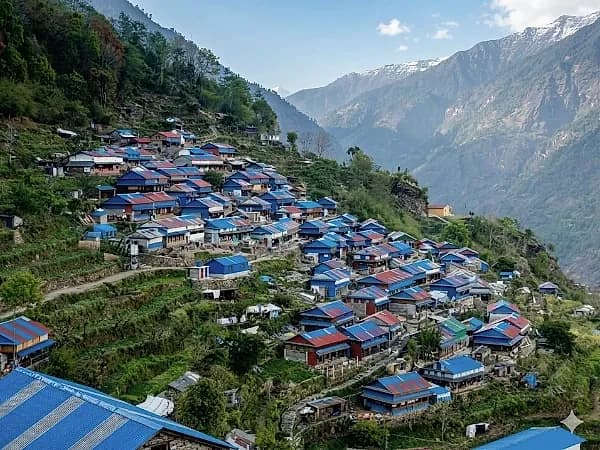
Ruby Valley Trek 2027: The Complete Guide to the 9-Day Route from Syabrubesi to Dhading Besi
The 9-day Ruby Valley trek from Syabrubesi over the Pangsang La to Tipling, Borang and Dhading Besi: day-by-day route, permits, best months and 2027 prices from USD 560.
Read More
Best Time for the Rara Lake Trek: Month by Month for 2027
Rara Lake month by month: measured rain and temperature, where sources disagree on freezing, rhododendron months, October crowds and 2027 prices.
Read More Chat with Shreejan