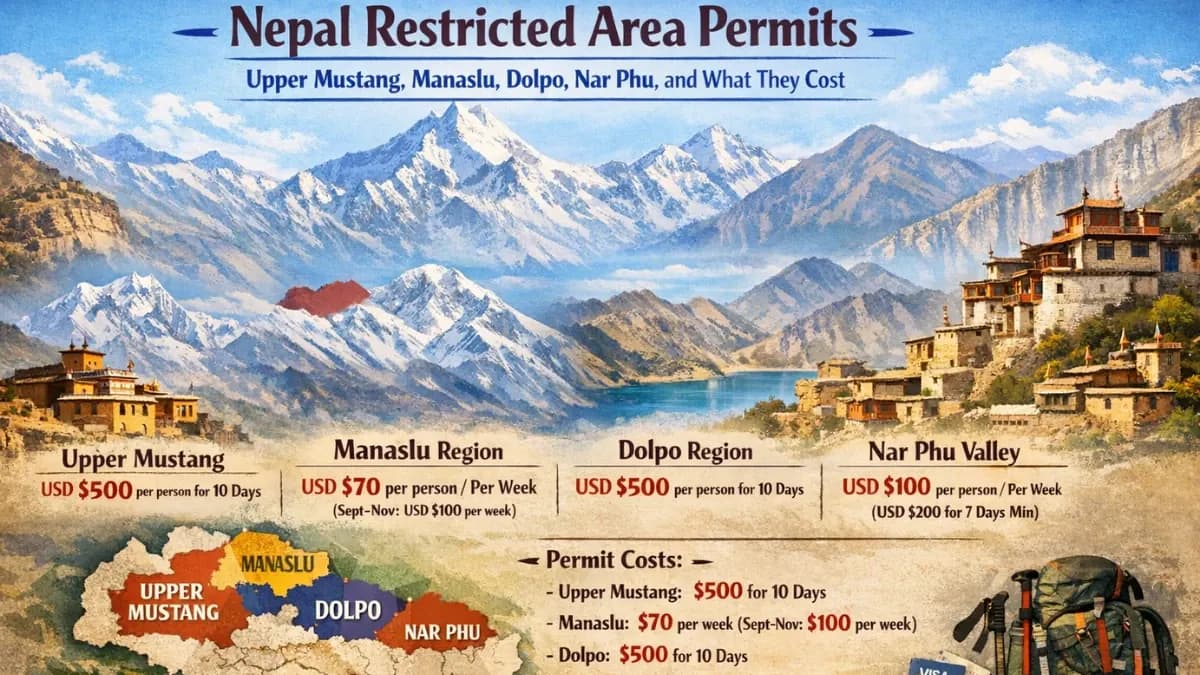
Some parts of Nepal are not open to everyone. Along the northern border, where the Himalayas meet Tibet, certain valleys and regions require a special permit that goes beyond the standard national park entry and TIMS card. These restricted area permits exist for three reasons: to protect culturally sensitive border communities, to limit environmental impact in fragile ecosystems, and to generate conservation revenue that funds the preservation of some of the most extraordinary places on earth.
The permits are expensive. Upper Mustang costs fifty US dollars per day. Manaslu costs one hundred dollars per week in peak season. These fees are not trivial. But what they purchase, access to places where the trail is quiet, the culture is intact, and the landscape has not been shaped by mass tourism, is increasingly rare in a world where most beautiful places have long since been discovered, promoted, and overwhelmed.
| Restricted area | Permit fee (foreigner) | Conservation permit | Solo allowed? |
|---|---|---|---|
| Upper Mustang | USD 50 / day | ACAP NPR 3,000 | Yes (since 22 Mar 2026) |
| Manaslu Circuit | USD 100 / week (Sep–Nov), USD 75 / week (Dec–Aug); +USD 15/10 per extra day | MCAP NPR 3,000 | Yes |
| Tsum Valley | USD 40 / week (Sep–Nov), USD 30 / week (Dec–Aug) | MCAP NPR 3,000 | Yes |
| Nar Phu Valley | USD 100 / week (Sep–Nov), USD 75 / week (Dec–Aug) | ACAP NPR 3,000 | Yes |
| Kanchenjunga | USD 20 / week (USD 25 / week beyond 4 weeks) | KCAP NPR 2,000 | Yes |
| Lower Dolpo | USD 20 / week (+USD 5 / day beyond) | Shey Phoksundo NP fee | Yes |
| Upper Dolpo | USD 500 first 10 days (+USD 50 / day after) | Shey Phoksundo NP fee | Yes |
Fees per Nepal's Department of Immigration, the sole issuer of restricted-area permits. A restricted-area permit does not replace the TIMS card. Under the Nepal Tourism Board and TAAN rules you carry both, and we register every trekker and guide on TIMS so that rescue teams know who is on the trail and where.
Which Nepal Trekking Regions Require Restricted Area Permits?
Upper Mustang
The former kingdom of Lo. A desert landscape behind the Annapurna-Dhaulagiri barrier. Medieval walled city of Lo Manthang. Cave monasteries with eight-hundred-year-old paintings. Fifteen-day trek, maximum altitude 3,840 metres.
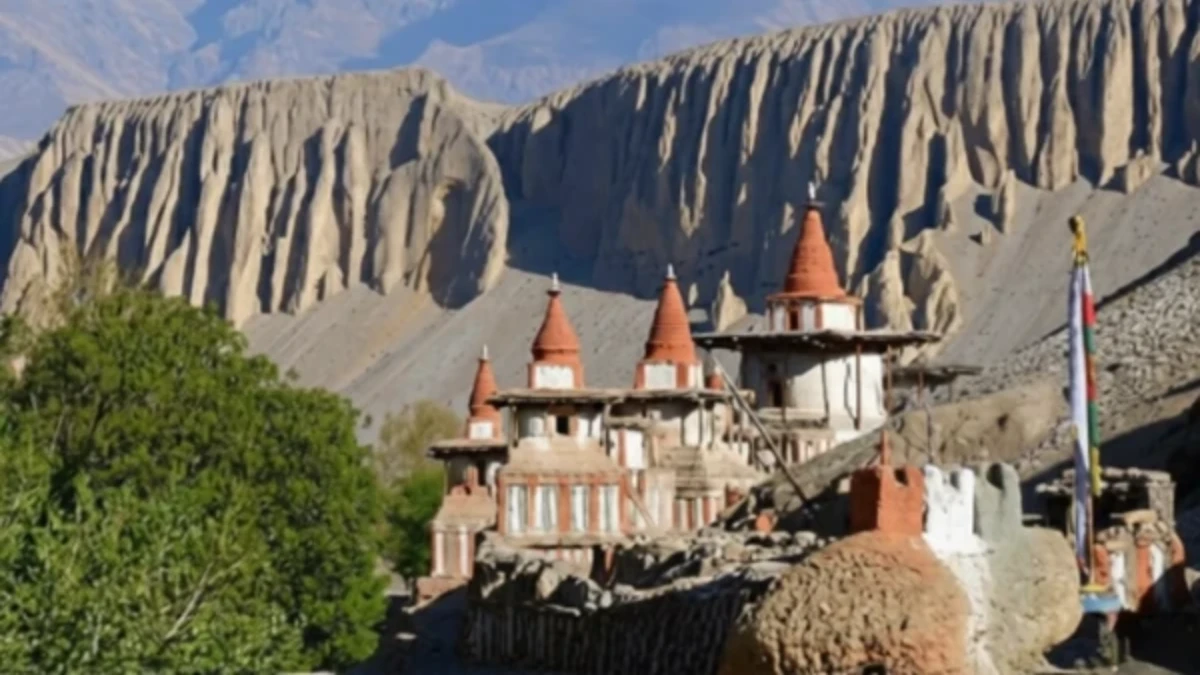
Permit cost: $50 USD per day. Registered agency and licensed guide required, with no minimum group size since 22 March 2026.
Manaslu Conservation Area
Circuit around the world's eighth highest peak. Tibetan Buddhist villages. Larkya La pass at 5,160 metres. Twelve-day trek through genuine wilderness.
Permit cost: $100/week (September-November peak), $75/week (December-August). Registered agency and licensed guide required, with no minimum group size since 22 March 2026.
Lower Dolpo
Peter Matthiessen's "Snow Leopard" country. Phoksundo Lake, turquoise water at 3,600 metres. Remote western Nepal. Fifteen-day trek.
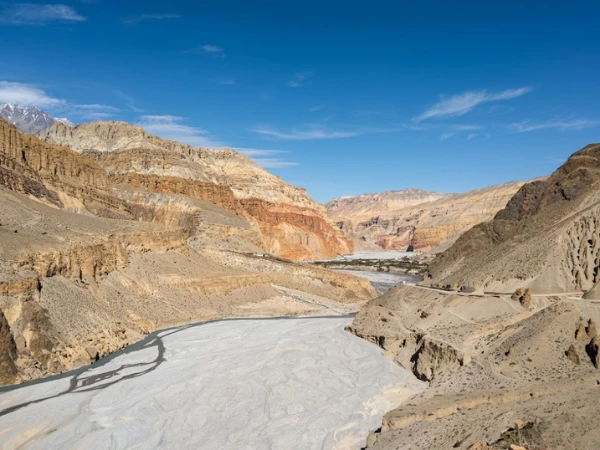
Permit cost: $20 USD per week, plus $5 per day beyond. Agency required.
Upper Dolpo
Even more remote than Lower Dolpo. Requires crossing passes above 5,000 metres. Very limited infrastructure. For experienced trekkers only.
Permit cost: $500 USD for the first 10 days, then $50 per day. Separate from Lower Dolpo permit.
Nar Phu Valley
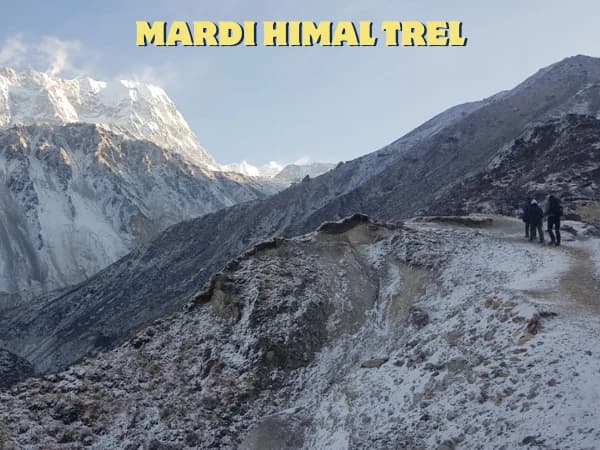
Hidden Tibetan valley behind the Annapurna massif. Often combined with the Annapurna Circuit. Nine-day trek to ancient villages at the edge of Tibet.
Permit cost: $100/week (September-November), $75/week (December-August). No minimum group size since 22 March 2026.
Tsum Valley
Sacred Buddhist valley in the Manaslu region. Living Tibetan culture. Monasteries, mani walls, pilgrimage routes. Sixteen-day trek.
Permit cost: $40 per week (September-November), $30 per week (December-August). Often combined with Manaslu Circuit.
Kanchenjunga
Base camp of the world's third highest mountain in far eastern Nepal. Extremely remote. Limited infrastructure. Nineteen-day trek.
Permit cost: $20 per week (then $25 per week beyond four weeks). Among the cheapest restricted areas, reflecting its remoteness and lower visitor numbers. Related: Shey Phoksundo Lake and the Turquoise Jewel of Dolpo.
What the Permits Buy You
Silence. The restricted area permits work as intended, they limit visitor numbers to levels that preserve the character of the regions they protect. While fifty thousand people trek to Everest Base Camp each year, Upper Mustang receives roughly three thousand. Manaslu perhaps five thousand. Lower Dolpo a few hundred.
The trails are quiet. The teahouses are personal. The villages feel lived-in rather than performed. The culture, Tibetan Buddhist in most restricted regions, continues its centuries-old rhythms without the distortion that mass tourism introduces. Prayer wheels turn at the pace they have always turned. Monks debate in courtyards that have hosted the same debates for five hundred years.
And the landscapes, the red deserts of Mustang, the turquoise lake of Dolpo, the glaciated valleys of Manaslu, exist in a state of preservation that unrestricted areas cannot maintain. The permit fee funds the conservation that makes this preservation possible. Related: Shey Phoksundo National Park: Nepal's Largest Park and the Gateway to Dolpo.
How to Get Restricted Area Permits
You cannot obtain restricted area permits independently. They must be arranged through a registered trekking company, which submits the application to the Department of Immigration in Kathmandu. We need at least 48 hours to process an application, counted in government working days, so weekends and public holidays do not count. Send your documents well before that. Documents required: passport copy, two photos, trek dates and itinerary, and the permit fee in US dollars. Every fee on this page is set by the government and published by Nepal's Department of Immigration, so you can check any figure here against the source rather than taking our word for it.
There is no longer a minimum group size. Until 22 March 2026 most restricted areas required two trekkers, so a solo walker was either paired with a stranger or charged a surcharge to go alone. That rule has gone. You can now book any of these areas as a solo traveller, with a licensed guide, and if a company quotes you a solo surcharge for a restricted area permit, they are working from the old rule.
What has not changed is everything around it. The permit must still be applied for by a registered trekking agency, you cannot lodge it yourself, and a licensed guide is still mandatory. Since April 2023 the Nepal Tourism Board rule has also required a guide in most national parks and conservation areas, so on a route like Nar Phu or Manaslu, where you cross a conservation area boundary as well as the restricted one, the guide is required for the whole walk rather than only the restricted section.
When you book a trek to a restricted area through a company, the permit processing is handled entirely by the company. You provide your passport details. They do the paperwork, the queuing, the payment, and the collection. The permit is ready before you arrive in Kathmandu.
Are They Worth the Cost?
The Upper Mustang permit, fifty US dollars per day, is the most debated. It adds significantly to the cost of an already expensive trek. Some trekkers balk at the price and choose the Annapurna Circuit instead.
But those who go, almost without exception, describe it as the best money they spent in Nepal. Not because fifty US dollars per day is trivial. Because what it purchases, access to a medieval kingdom, a desert landscape unlike anything else in the Himalayas, and the solitude that comes from being in a place that most people will never see, cannot be obtained any other way.
The restricted areas are not budget treks. They are premium experiences protected by premium pricing. And the protection is what makes them premium. Remove the permit and the cost drops. But so does everything that makes the trek worth doing in the first place.
All restricted-area permits are included in our packages. See the Upper Mustang Trek, Manaslu Circuit, Lower Dolpo Circuit, and Nar Phu Valley Trek for full permit details.
Restricted area permits exist because some places in Nepal are too fragile, too sacred, or too close to international borders for uncontrolled tourism. Upper Mustang, Manaslu, Dolpo, Tsum Valley, Nar Phu: these are the treks that cost more and deliver more. The permit system is not a barrier. It is a filter that keeps these places special.
We handle all restricted area permits. The cost is included in your package price.
WhatsApp:+977 9810351300
Email:[email protected]
Written by Shreejan Simkhada, CEO of The Everest Holiday and third-generation Himalayan guide. TAAN Member #1586.
Restricted permits: all handled by us. Our Upper Mustang Trek (10 Days) is private (your group only, no strangers), 2026 dates open, From USD $1290. WhatsApp us for tailored 2026 dates and current departures.
Inside Nar Phu: the valley the permits unlock
If the Nar Phu permit is on your list, these are our guides to what waits behind the checkpoint:

 Chat with Shreejan