

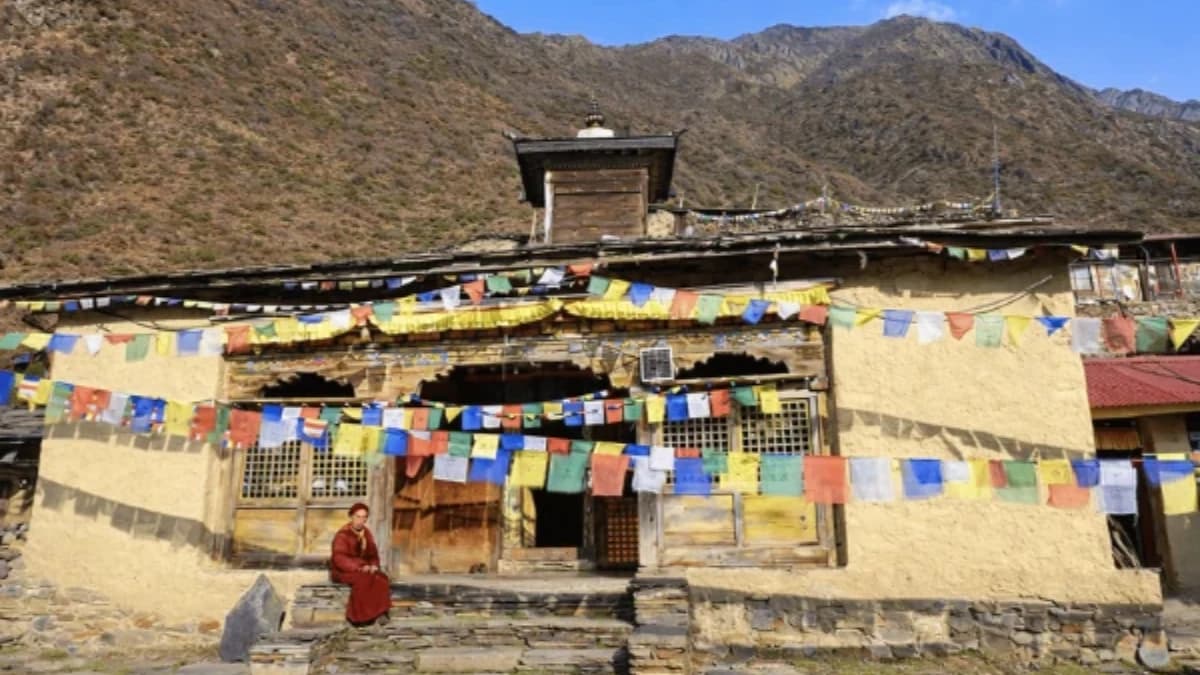
High in the northernmost reaches of Nepal’s Tsum Valley, surrounded by wide alpine landscapes and silent Himalayan peaks, stands Mu Gompa, the most important and remote monastery in the region. Perched above the upper valley near the Tibetan border, Mu Gompa feels less like a destination and more like a threshold between the physical world and a spiritual one. For trekkers and pilgrims alike, reaching Mu Gompa is the emotional and cultural high point of the Tsum Valley journey.
Far removed from roads, crowds, and modern distractions, Mu Gompa represents centuries of Buddhist devotion, learning, and solitude. Its quiet presence in the high mountains has shaped the spiritual identity of the valley and continues to guide the rhythm of life in surrounding villages.
Mu Gompa at a glance
| Detail | Facts |
|---|---|
| What it is | The largest and highest monastery in the Tsum Valley, and the cultural high point of the trek |
| Altitude | About 3,700 m, in the far north of the Tsum Valley near the Tibetan border |
| Getting there | A gentle up-valley walk from Nile village, on the Tsum Valley trek |
| Permits | Tsum Valley Restricted Area Permit + Manaslu Conservation Area Permit; a licensed guide is mandatory |
| Best time | Autumn (September to November) is best; spring (March to May) is the second season |
| Nearby | Rachen Gompa nunnery and Nile village |
| Our trek | The 16-day Tsum Valley trek or the 19-day Tsum Valley & Manaslu Circuit |
Where Is Mu Gompa and How High Is It?
Mu Gompa is located in the uppermost part of the Tsum Valley in Gorkha district, at an elevation of approximately 3,700 metres above sea level. It lies beyond the village of Nile, the last permanent settlement in the valley, and can only be reached on foot via traditional trekking trails.
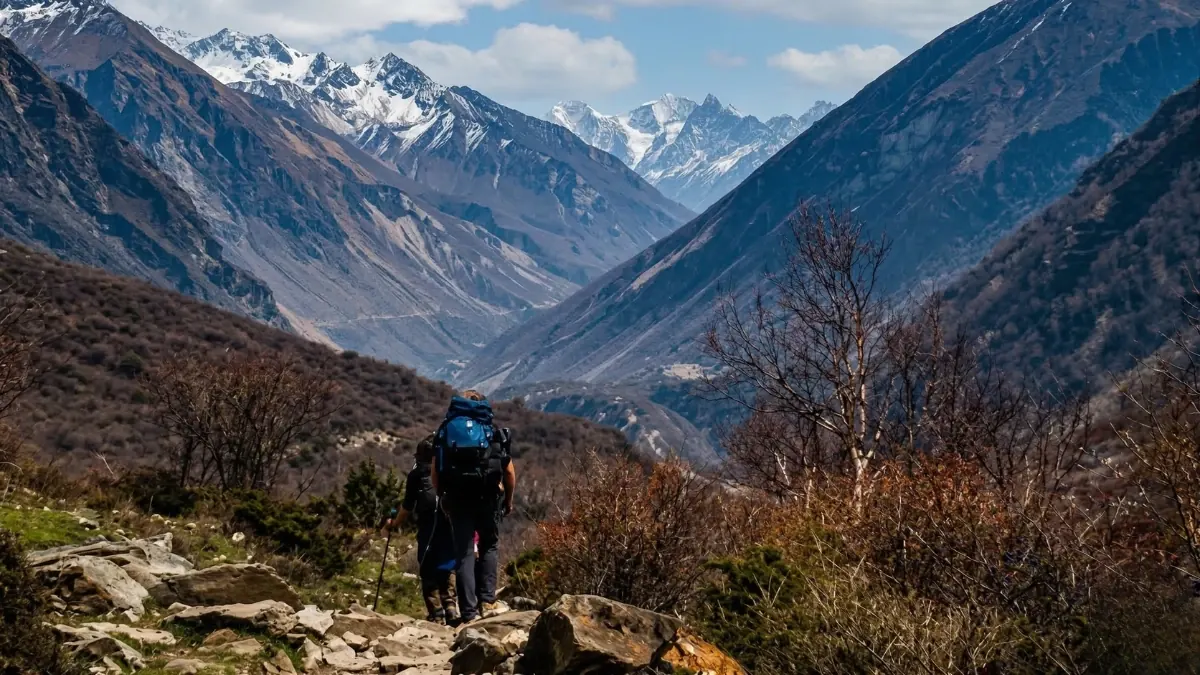
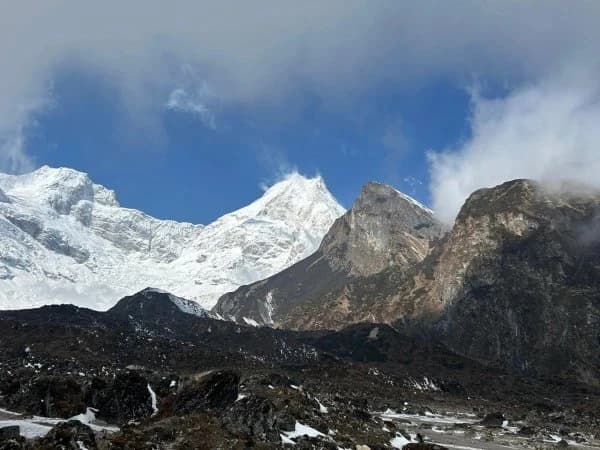
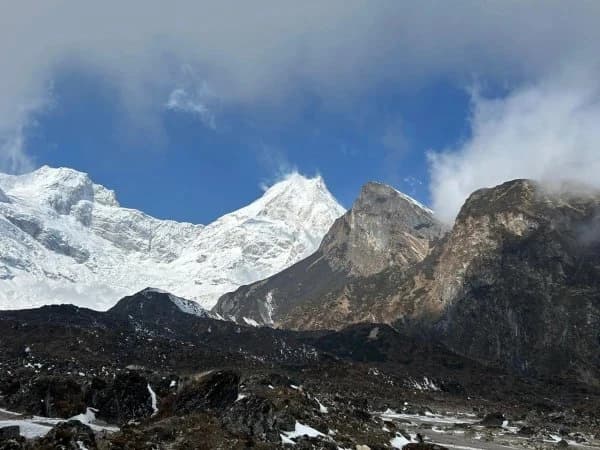
The landscape around Mu Gompa is wide and open, with rolling alpine terrain, glacial streams, and distant snow-covered peaks. Unlike the lower sections of the valley, forests are scarce here. Instead, the land is shaped by wind, altitude, and long winters. The open sky, thin air, and vast silence create an atmosphere that feels deeply contemplative.
What Is the History and Spiritual Significance of Mu Gompa?
Mu Gompa is believed to have been established more than a century ago and has long served as a major centre of Buddhist learning in the Tsum Valley. The valley itself is regarded as a sacred beyul, or hidden land, blessed by Guru Rinpoche (Padmasambhava), who is said to have travelled through the region while spreading Vajrayana Buddhism.
For generations, Mu Gompa has been a place where monks study scriptures, perform rituals, and live in quiet retreat. The monastery has also served as a spiritual destination for pilgrims from surrounding Himalayan regions. Its remote location has helped preserve ancient practices and teachings that remain largely unchanged.
Visitors to the monastery can see historic Buddhist writings, statues, thangkas, and prayer rooms that show how deeply devout the place is. The atmosphere is not ceremonial or grand but calm and sincere, shaped by daily routines rather than performance. Related: Gumba Lungdang: A Sacred Himalayan Retreat & Lesser-Known Spot of the Manaslu Region (3,540m).
What Is Life Like at Mu Gompa?
What Is Life Like at Mu Gompa? follows a simple and disciplined rhythm. Monks rise early for prayers, continue with study and daily chores, and maintain the monastery throughout the day. Silence and mindfulness are part of everyday life, and visitors quickly notice the absence of noise, urgency, or distraction.
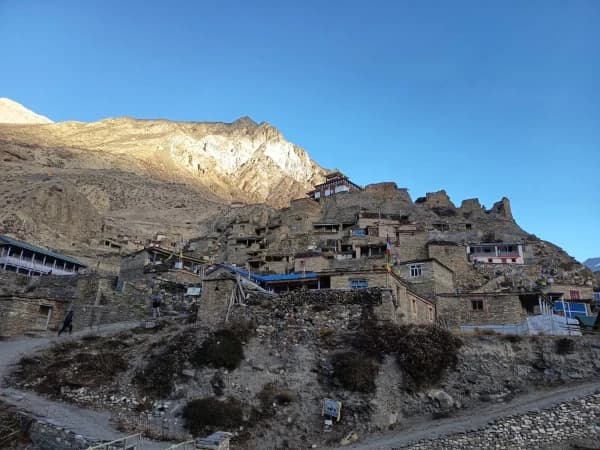
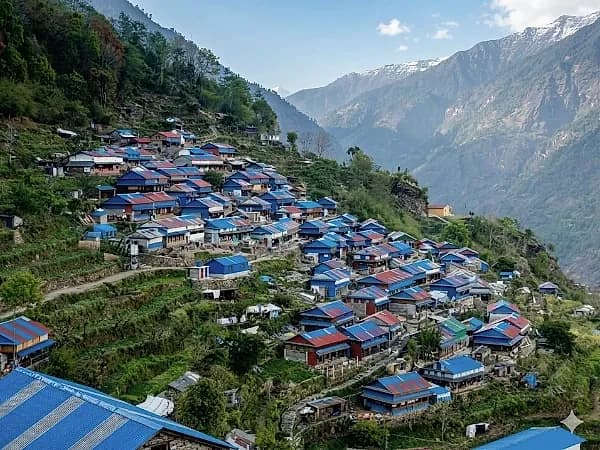
The monks depend on support from local villages such as Nile and Chhokangparo, as well as seasonal donations from pilgrims and trekkers. Food, fuel, and supplies must be carried up on foot or by pack animals, making life here physically demanding, especially during winter.
Despite the harsh conditions, the monks are known for their warmth and humility. Visitors are often welcomed with tea and allowed to observe daily activities with respect. For many trekkers, time spent at Mu Gompa becomes a moment of reflection rather than sightseeing.
Mu Gompa on the Tsum Valley Trek
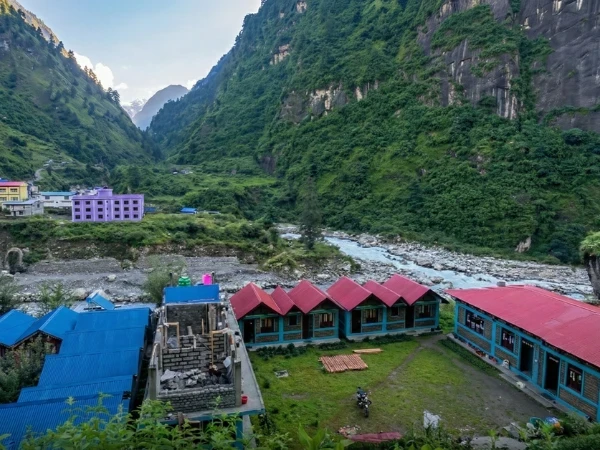
Mu Gompa is usually the final destination of the Tsum Valley Trek. Most itineraries include one or two nights near the monastery, either staying in basic lodge facilities or within monastery guest rooms when available.
The walk from Nile to Mu Gompa is gentle but meaningful. The trail follows the valley floor, crossing small streams and open grazing land. With every step, the sense of remoteness increases, and the surroundings become quieter and more expansive. Because of its altitude, spending time at Mu Gompa also serves as important acclimatisation for trekkers. Many choose to take short walks in the surrounding area, exploring nearby hills or simply resting and enjoying the peaceful environment. Related: Sermathang Trek: Gateway to Helambu’s Hidden Himalayan Charm.
Natural Surroundings and Landscape
The natural setting of Mu Gompa is stark yet deeply beautiful. The land is shaped by high-altitude conditions, with sparse vegetation, wide plains, and rocky slopes. During warmer months, yaks graze in nearby pastures, adding movement to the otherwise still landscape.
Glacial streams run through the valley, reflecting the changing light of the day. Early mornings and late afternoons are especially striking, as sunlight casts long shadows across the terrain and highlights the texture of the mountains.
The lack of human activity enhances the feeling of isolation. At night, the sky is clear and filled with stars, and the silence is broken only by wind or distant water. For many visitors, this environment creates a rare sense of inner calm.
Seasons and Weather
Weather at Mu Gompa is strongly influenced by its high altitude, and conditions can be demanding throughout the year.
Spring (March to May) is one of the better times to visit. Days gradually become warmer, though nights remain cold. Snow may still be present in shaded areas, but trails are generally accessible, and visibility is often excellent.
Summer and monsoon (June to August) bring moisture to lower elevations, but Mu Gompa receives less rainfall. However, clouds can obscure mountain views, and temperatures remain cool. The landscape becomes greener during this period, with better grazing conditions for livestock.
Autumn (September to November) is considered the best season to reach Mu Gompa. Clear skies, stable weather, and crisp air offer ideal trekking conditions. Days are cool and sunny, while nights are cold but manageable with proper gear.
Winter (December to February) is extremely harsh. Temperatures drop well below freezing, heavy snowfall is common, and access can become difficult. Many monks relocate to lower areas during the coldest months, and trekking requires strong winter experience and preparation.
What Do You Need to Know About Mu Gompa?
Mu Gompa lies within a restricted trekking area. Visitors must obtain the Tsum Valley Restricted Area Permit (US$40 per week in the September to November season, US$30 per week the rest of the year) and the Manaslu Conservation Area Permit, which supports the National Trust for Nature Conservation. Trekking with a licensed guide is mandatory and highly recommended due to the remoteness of the region.
Facilities are very limited. Electricity is usually solar-powered and may not be available at all times. Internet access is extremely rare. Visitors should carry warm clothing, a high-quality sleeping bag, personal medication, and essential supplies.
Respectful behaviour is important. Mu Gompa is an active religious site, not a tourist attraction. Visitors should dress modestly, ask permission before taking photos, and maintain silence inside prayer halls.
Why Mu Gompa Is Worth Visiting
Mu Gompa is not a place to rush through. Its value lies in stillness, reflection, and the quiet strength of its surroundings. It represents the spiritual heart of the Tsum Valley and offers a rare glimpse into a way of life centred on devotion rather than convenience.
For trekkers, reaching Mu Gompa feels as inward as it is physical. The combination of high-altitude landscape, deep-rooted spirituality, and human resilience leaves a lasting impression.
In a time when many trekking destinations are becoming increasingly busy, Mu Gompa remains untouched and sincere. It is a reminder that some of the most powerful travels come from silence, simplicity, and respect for traditions that have endured for centuries.
Related Treks & Guides
Mu Gompa is one of the most important Buddhist monasteries in the Himalaya, and almost nobody outside the Tsum Valley has heard of it. The nuns here practise a form of Tibetan Buddhism that has remained unchanged for centuries. The setting (perched above the valley with Ganesh Himal behind) is one of the most spiritual places I have ever visited.
Mu Gompa is the turnaround point on our Tsum Valley trek.
WhatsApp:+977 9810351300
Email:[email protected]
Written by Shreejan Simkhada, CEO of The Everest Holiday and third-generation Himalayan guide. TAAN Member #1586.
Mu Gompa is the upper Tsum Valley monastery stop. Our Tsum Valley Trek (16 Days) is private (your group only, no strangers), 2027 dates open, From USD $999. WhatsApp us for tailored 2027 dates and current departures.
Continue planning your trek
This is one stop on the Tsum Valley trail. For the full route, read our Manaslu and Tsum region guide. When you are ready for dates and prices, see the Tsum Valley Trek (16 days) or WhatsApp us directly. We reply personally.


 Chat with Shreejan