

The Tsum Valley and the Manaslu Circuit share the same mountain and the same restricted-area permit system, but they deliver completely different experiences. One is a high-altitude pass crossing with glaciers and moraines. The other is a cultural pilgrimage into a hidden Tibetan valley that was closed to outsiders until 2008. Choosing between them, or combining them, depends on whether you want to test your body or feed your soul.
How Do the Two Treks Compare?
| Factor | Tsum Valley | Manaslu Circuit |
|---|---|---|
| Duration | 12-16 days | 12-15 days |
| Maximum altitude | 4,200 m (Ganesh Himal Base Camp side trip, our 16-day trek); highest village Mu Gompa, 3,700 m | 5,160 m (Larkya La) |
| Difficulty | Moderate | Moderate-Hard |
| Daily trekkers | 2-10 | 30-60 |
| Restricted permit | USD 40/week September to November, USD 30/week December to August | USD 100/week September to November, USD 75/week December to August |
| Pass crossing | None | Larkya La (5,160 m) |
| Cultural depth | Exceptional | Very good |
| Teahouse quality | Basic-Good | Good |
| Package cost (budget) | from USD 999 (16 days) | from USD 799 (12 days) |
What Makes Tsum Valley Different from Every Other Trek in Nepal?
Tsum Valley is a beyul, a sacred hidden valley in Tibetan Buddhist tradition. The Tsumba people believe the valley was blessed by Milarepa, the eleventh-century Tibetan saint, and their reverence for life extends to a strict prohibition on killing any living creature within the valley. No hunting. No fishing. No slaughter. The wildlife knows this. Blue sheep graze close to villages. Birds do not flee when you approach.
The valley was closed to foreigners until 2008 and receives fewer than 2,000 trekkers per year. Most days you will see no other trekking groups at all. The monasteries at Mu Gompa and Rachen Gompa are active religious communities, not tourist attractions. Monks will invite you in for butter tea. The experience is closer to visiting a friend than visiting a monument.
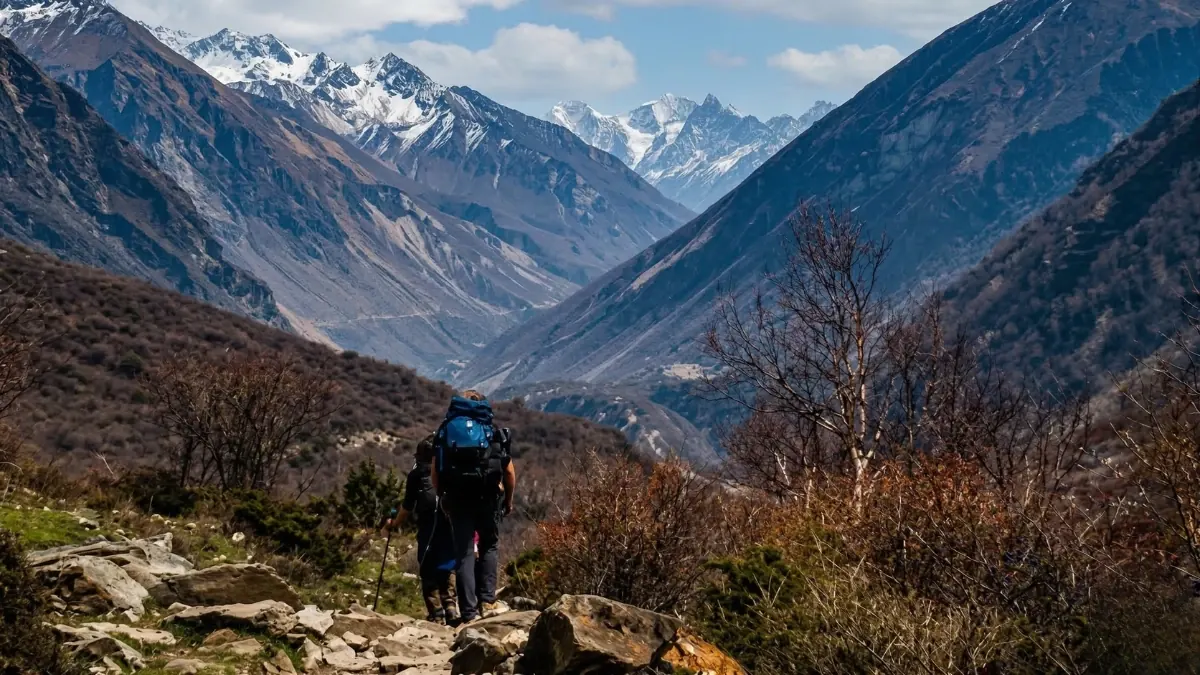
The villages stay at or below 3,700 metres, and the Ganesh Himal Base Camp side trip on our 16-day itinerary reaches 4,200 metres. Altitude sickness is unlikely if you acclimatise properly, and the physical demands are moderate. The trails follow the Shiar Khola river through progressively narrower valleys, passing prayer walls that are sometimes hundreds of metres long. The final village, Nile, sits at the edge of the Tibetan plateau with views of Ganesh Himal and Sringi Himal.
What Makes the Manaslu Circuit Special?
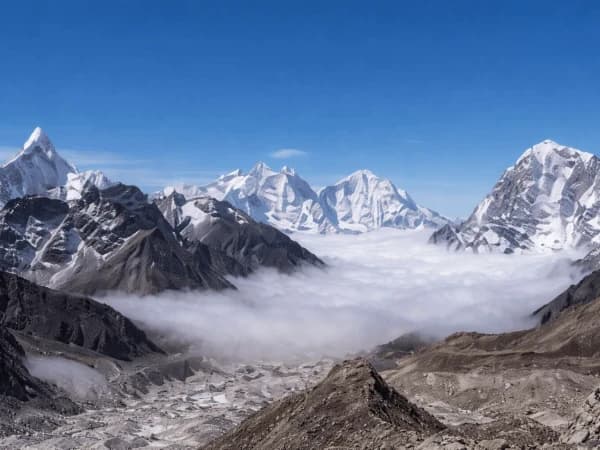
The Manaslu Circuit is Nepal's best high-altitude circuit trek. The Larkya La crossing at 5,160 metres is the physical and emotional centrepiece, a long day that starts in darkness and ends with views of Manaslu, Himlung, and the Annapurna range stretching to the horizon. It is the kind of day that trekkers remember for years.
The circuit follows the Budhi Gandaki river from subtropical lowlands at 600 metres through Tibetan Buddhist villages to the high glacial world of Samdo and Dharmasala before crossing the Larkya La and descending to Dharapani on the Annapurna Circuit route. The ecological and cultural transition over twelve to fifteen days is more dramatic than any other single trek in Nepal.
Manaslu is restricted but not isolated. The teahouses are good, the trails are well-maintained, and the permit system keeps numbers manageable without making the trek feel empty. On a typical October day, you might share a teahouse dining room with ten to twenty other trekkers, enough company for conversation but not enough to feel crowded.
Which Trek Is Harder?
The Manaslu Circuit is significantly harder. The Larkya La crossing involves eight to ten hours of walking at extreme altitude, often in snow and wind. The acclimatisation schedule matters. The approach from Samdo to Dharmasala (the pre-pass camp at 4,480 m) is demanding. And the descent from the pass is steep and rough on the knees.
Tsum Valley is a moderate trek that most reasonably fit people can complete without special preparation. The highest village, Mu Gompa, is at 3,700 metres, and the side trip to Ganesh Himal Base Camp at 4,200 metres is still far below the Larkya La. The daily walking hours are five to seven, on trails that are well-defined if occasionally narrow. The challenge is isolation, not altitude.
Can You Combine Both Treks?
Yes, and this is the best option if you have three weeks. The Tsum Valley branches off the Manaslu Circuit route at Lokpa, about four days into the trek. You detour into the valley, spend about a week exploring Tsum, return to the main route, and continue north to the Larkya La crossing.
The combined Manaslu Circuit with Tsum Valley Trek takes nineteen days on our itinerary. It gives you both the cultural depth of Tsum and the high-altitude drama of the Larkya La. The extra week is worth it if your schedule allows.
How Do the Permits Work?
Both treks require restricted-area permits, but the costs differ significantly. Tsum Valley costs USD 40 per week in autumn (USD 30 per week from December to August), one of the cheaper restricted permits in Nepal. Manaslu costs USD 100 per week during peak season (September to November) and USD 75 per week off-season.
Both require a registered guide. The minimum group of two was scrapped on 22 March 2026. Both require TIMS cards and Manaslu Conservation Area permits, and the Manaslu Circuit also needs an Annapurna Conservation Area permit because it exits through Dharapani. All permits are included in our trek packages.
Which Trek Should You Choose?
Choose Tsum Valley if you value cultural immersion over physical challenge, if you want the quietest trail in Nepal, if the 5,160-metre Larkya La concerns you, or if you are drawn to Tibetan Buddhist culture and want to experience it in a living community rather than a museum.
Choose Manaslu Circuit if you want a high-altitude pass crossing, if you have done Annapurna or EBC and want something wilder, if you want dramatic mountain scenery as the main event, or if you have two weeks rather than three.
When Is the Best Time for Each Trek?
Both treks share the same optimal seasons: October to November and March to May. The Manaslu Circuit is best in October when the Larkya La is clear of monsoon snow and the visibility is at its sharpest. The Tsum Valley is slightly more forgiving on timing because it has no high pass to cross, so late November can work when the Larkya La is becoming risky. We do not recommend December for the Manaslu Circuit.
Spring (March to May) brings warmer temperatures and rhododendron blooms in the lower valleys of both routes. The Larkya La can have residual snow in early March, so mid-March onwards is safer for the circuit.
Choose both if you have three weeks and want the most complete restricted-area experience in Nepal. The combination is extraordinary and almost nobody does it, which means you will have trails, monasteries, and mountain views that feel like they exist only for you.
WhatsApp:+977 9810351300
Email:[email protected]
Written by Shreejan Simkhada, CEO of The Everest Holiday and third-generation Himalayan guide. TAAN Member #1586.
Tsum or Manaslu? Combine both on our 19-day. Our Tsum Valley & Manaslu Circuit (19 Days) is private (your group only, no strangers), 2027 dates open, From USD $1499. WhatsApp us for tailored 2027 dates and current departures.
 Chat with Shreejan