
The trail past Chhokangparo continues north until the valley narrows, the fields thin, and you reach Nile, the last permanent village in the Tsum Valley. Beyond here is the Tibetan border and nothing else. Nile represents the final stage of human habitation before the landscape opens into high alpine wilderness and ancient monastic grounds. For trekkers walking through the sacred Tsum Valley, reaching Nile feels like stepping into a quieter, older world where nature, belief, and daily life remain closely connected.
Unlike busier trekking villages, Nile has retained its original character. The slow pace, wide open valley, and strong cultural identity make it a place where travellers pause, reflect, and prepare for the final approach to Mu Gompa or the higher valleys beyond.
Where Is Nile Village in the Tsum Valley?
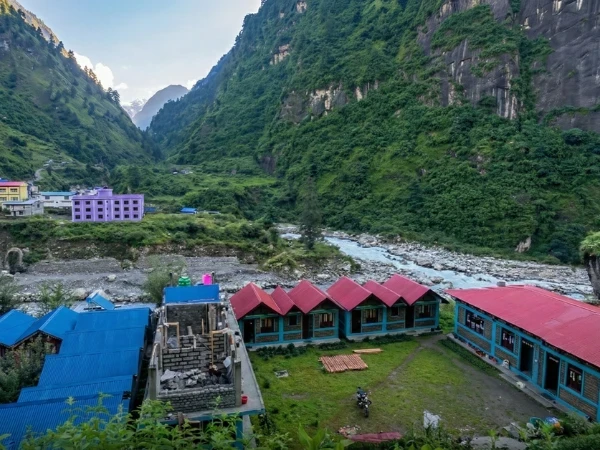
Nile village lies at an elevation of 3,361 metres above sea level in the upper Tsum Valley of Gorkha district. It is located on the western side of the Shiar Khola, across the river from Chhokangparo. A suspension bridge connects the two villages, making Nile easily accessible once trekkers reach the upper valley.
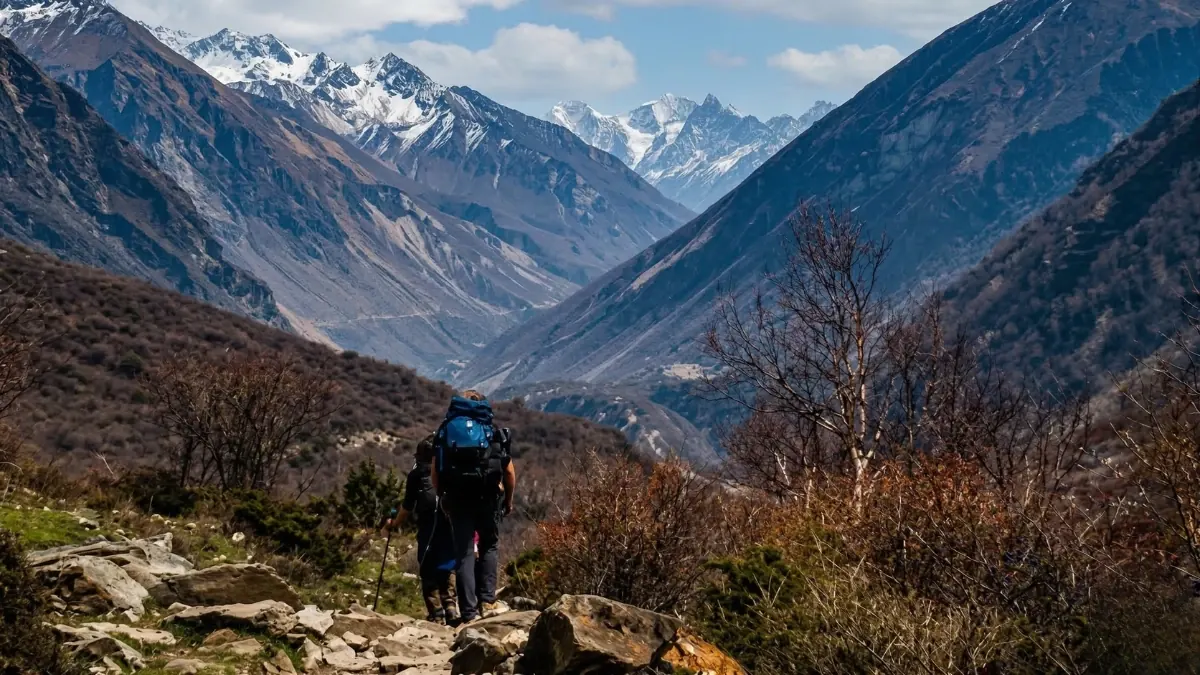
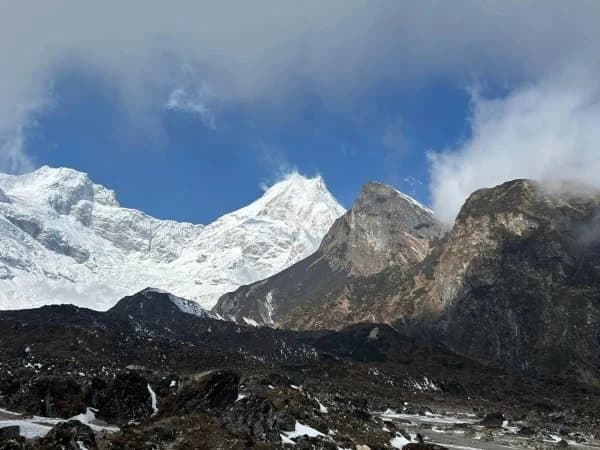
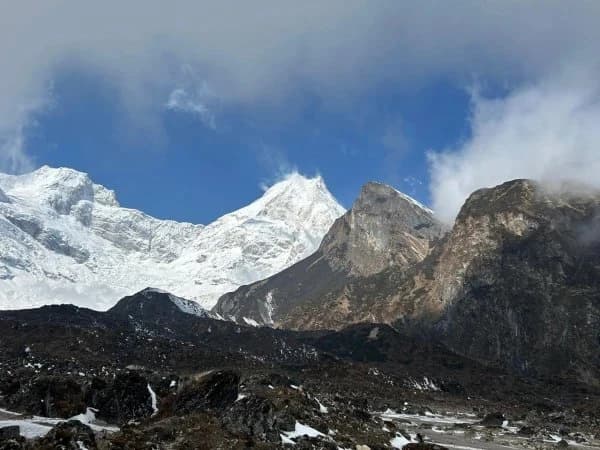
The setting of Nile is striking. The village sits in a broad, open valley surrounded by barren hills, glacial streams, and distant snow-covered peaks. Unlike the forested sections lower down, this area feels spacious and exposed, with wide skies and uninterrupted views. The thin air, strong sunlight, and cool winds give the landscape a distinctly high-altitude character.
Because of its position near the Tibetan border, Nile has historically been a gateway between cultures, trade routes, and religious paths that shaped the identity of the Tsum Valley. Related: Chhokangparo Village: The Cultural Heart of Nepal’s Sacred Tsum Valley.
What Is Cultural Life Like in Nile Village?
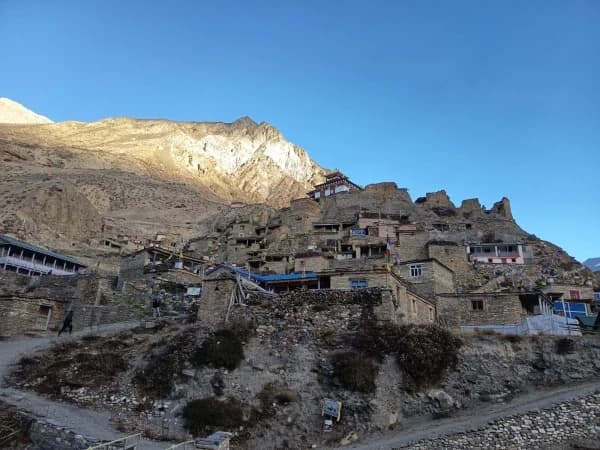
Life in Nile reflects centuries of Tibetan Buddhist influence. The people of the village are primarily of Tibetan descent, and many families maintain traditions, language, and customs passed down through generations. The architecture is simple and practical, with stone houses built close together to protect against cold winds and harsh winters.
Agriculture at this altitude is limited, but villagers cultivate hardy crops such as barley, potatoes, and buckwheat during the short growing season. Livestock, particularly yaks and dzopkyos, play an essential role in daily life, providing milk, wool, transport, and fuel in the form of dried dung.
Despite the challenges of living at high altitude, the people of Nile are known for their resilience and hospitality. Visitors are often welcomed into teahouses or family homes with warm tea and simple meals. Conversations may be quiet and unhurried, but they offer meaningful insight into a way of life shaped by isolation, faith, and the land itself. Related: Manaslu Conservation Area: Exploring Nepal’s Untouched Himalayan Region.
Why Is Nile Spiritually Important?
The entire Tsum Valley is regarded as a sacred beyul, or hidden valley, blessed by Guru Rinpoche (Padmasambhava). Nile, being one of the northernmost villages, holds particular spiritual importance. The village is a resting point for pilgrims and monks travelling to Mu Gompa, one of the most significant monasteries in the region.
Prayer flags stretch across rooftops and trails, mani walls line footpaths, and chortens stand at village entrances, reinforcing the spiritual atmosphere. Daily prayer, seasonal rituals, and monastery visits remain central to community life. The sense of peace in Nile is not accidental; it is the result of generations living with strong spiritual values and respect for nature.
Nile on the Tsum Valley Trek
Nile is typically the final overnight stop for trekkers before visiting Mu Gompa or exploring the uppermost sections of the Tsum Valley. Many itineraries include at least one night here, allowing trekkers to rest, acclimatise, and explore the surroundings.
Because of its altitude, Nile is an important place for adjusting to thinner air. The village offers gentle walking routes around the valley, making it ideal for light acclimatisation hikes. Trekkers often walk along the riverbanks, visit nearby monasteries, or simply enjoy the open landscape without pressure.
Accommodation in Nile is limited but comfortable. Teahouses are small and family-run, offering basic rooms, shared dining areas, and warm meals. Food options are simple but nourishing, often including dal bhat, potatoes, noodles, tsampa, soup, and bread. Evenings are quiet, with little noise beyond the wind and the sound of the river.
Natural Environment and Surroundings
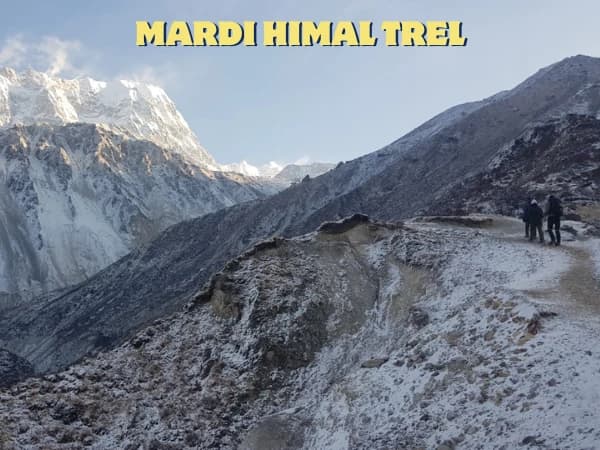
The natural environment around Nile is stark, beautiful, and deeply calming. The landscape transitions from cultivated fields near the village to rocky terrain and alpine meadows as one moves north. Snow-covered peaks rise in the distance, and glacial streams cut through the valley floor.
Wildlife is less commonly seen here due to the altitude, but the region is home to species adapted to harsh environments. Birdlife remains active, and during warmer months, herds of yaks can be seen grazing in nearby pastures.
The Shiar Khola flows steadily beside the village, its glacial waters reflecting the changing light throughout the day. Early mornings and late afternoons offer especially beautiful views, as sunlight paints the valley in soft gold and shadow.
Seasons and Weather in Nile
Weather in Nile is strongly influenced by altitude, and conditions can change quickly.
Spring (March to May) brings gradually warming temperatures and longer days. While nights remain cold, daytime trekking is comfortable, and visibility is often excellent. Snow may still be present in shaded areas, adding contrast to the landscape.
Summer and monsoon (June to August) bring moisture to the lower valleys, but Nile receives relatively less rainfall. Clouds and occasional rain may limit mountain views, but the valley becomes greener, and grazing lands are at their best.
Autumn (September to November) is the most popular season to visit Nile. Clear skies, stable weather, and crisp air provide ideal trekking conditions. Mountain views are at their sharpest, and days are cool but comfortable. Nights are cold, especially from October onward.
Winter (December to February) is harsh. Temperatures drop well below freezing, and snowfall is common. Some teahouses may close during the coldest months, and trekking requires proper winter preparation. However, for experienced trekkers, winter offers unmatched solitude and a powerful sense of Himalayan wilderness.
What Do You Need to Know About Nile Village?
Nile lies within a restricted area, and trekkers must obtain the Tsum Valley Restricted Area Permit along with the Manaslu Conservation Area Permit, run by the National Trust for Nature Conservation. A licensed guide is required, both for legal reasons and for safety in this remote environment.
Facilities are basic. Electricity is usually solar-powered and limited, and internet access is rare. Trekkers should carry warm clothing, a reliable sleeping bag, personal medication, and essential supplies.
Why Nile Is Worth Visiting
Nile is not a place of excitement or entertainment. Its value lies in its stillness, simplicity, and depth. It represents the edge of human settlement in the Tsum Valley, a place where life continues quietly against the backdrop of vast mountains and ancient beliefs.
For travellers who seek meaning rather than convenience, Nile offers a rare experience. Time slows down here, conversations become thoughtful, and the landscape encourages reflection. Whether visited as part of the Tsum Valley Trek or as a final stop before Mu Gompa, Nile leaves a lasting impression of humility, strength, and connection to the land.
In a world where many trekking routes are changing rapidly, Nile remains grounded in tradition. It is a reminder that some of the most memorable journeys lead not to famous landmarks, but to quiet villages where life continues much as it has for centuries.
Where to Stay in Nile Village
Lodge accommodation in Nile is included in every Tsum Valley trek package we run. Your guide books your room on arrival, so you do not need to contact lodges directly. Nile is the last permanent settlement in the sacred Tsum Valley, and the lodge here is a simple Tsumba family-run stop with twin rooms, traditional dal bhat, and a stove-warmed common room.
Related Treks & Guides
Nile is one of the most remote villages on the Tsum Valley trek. The stone houses, the ancient monastery, and the views of Ganesh Himal from the fields above the village: this is Nepal before the 21st century arrived. The restricted area permit keeps it this way, and walking here feels like stepping back in time.
Nile is on our Tsum Valley trek.
WhatsApp:+977 9810351300
Email:[email protected]
Written by Shreejan Simkhada, CEO of The Everest Holiday and third-generation Himalayan guide. TAAN Member #1586.
Nile is the upper Tsum Valley village. Our Tsum Valley Trek (16 Days) is private (your group only, no strangers), 2027 dates open, From USD $999. WhatsApp us for tailored 2027 dates and current departures.
Continue planning your trek
This is one stop on the Tsum Valley trail. For the full route, read our Manaslu and Tsum region guide. When you are ready for dates and prices, see the Tsum Valley Trek (16 days) or WhatsApp us directly. We reply personally.

 Chat with Shreejan