
Manaslu Circuit Trek After the September 2026 Flood: Closed 6 September, Reopened 8 September

Written by Shreejan Simkhada, CEO of The Everest Holiday and third-generation Himalayan guide. TAAN Member #1586.
Update 11 October 2026: a second flash flood on the Budhi Gandaki has cut the route again. We are not running Manaslu or Tsum departures until the route is rebuilt and confirmed safe. Read what happened on 11 October and what it means for your booking. If you would rather plan a different trek for 2027, here is our 12-day Everest Base Camp trek.
Last updated 27 September 2026. This is a live situation and I will update this page as the official position changes.
Update, 27 September 2026: three weeks on, two things are worth adding. First, the crossing at Namrung is still the community-built bypass and temporary wooden bridges described below, not a rebuilt steel bridge, so it stays something to verify before you depart rather than take for granted, and we check it before every Manaslu departure. On the formal side, I treat the district administration's original suspension and TAAN's reopening together with our own guides' word as the picture, and I recheck it for each group. Second, a fresh spell of monsoon rain has crossed the country: on 23 September the Department of Hydrology and Meteorology forecast heavy rain, thunder and strong wind for 25 to 27 September, Gandaki province included, and advised trekkers already high on a trail to descend and the public to avoid long road journeys over those three days; poor visibility also closed several domestic airports on 25 September. This is passing late-monsoon weather, not a new flood, but it is a reminder that the monsoon is not fully over. It normally withdraws around 2 October, yet in each of the last four years it has run into the second week of October, so early October is a genuine transition window this year. If you hold a Manaslu date, message me on WhatsApp and I will give you the current position for your exact dates. Last checked: 27 September 2026.
Update, 8 September 2026, evening: the route is passable again. The Trekking Agencies' Association of Nepal announced this evening that the Manaslu Circuit and Larke Pass trek has reopened. At the point in Chumnubri ward 4 where the Budhi Gandaki suspension bridge was washed away, the ward chair Pema Gyalpo Lama, the Manaslu Conservation Area Project and the people of Namrung have built an alternative trail and temporary wooden bridges, and the ward has told trekkers they can travel on that route. Two honest caveats. These are timber bridges and a rough bypass, not the steel suspension bridge, so expect slower going through that section and follow your guide's call at the crossing. And I have not yet seen the written notice from the District Administration Office in Gorkha withdrawing its 6 September suspension; I am checking that tomorrow and will confirm here. For our own trekkers this means the Manaslu departures later this month can run as planned, and I will write to each of you.
If you are booked on the Manaslu Circuit this autumn, or thinking about it, read this first. The route was closed by the district administration on 6 September after the flood, and on the evening of 8 September TAAN announced it is passable again on a locally built bypass. The full story is below, and I would rather tell you straight than have you fly across the world to a trail you cannot walk.
The short version
In the early hours of Sunday, a flash flood tore down the Budhi Gandaki and the Therang stream near Namrung, in Chumnubri Rural Municipality ward 4 of Gorkha district. It washed away the bridges on the Manaslu Circuit trail, including the main suspension bridge over the Budhi Gandaki, along with two small hydropower plants and homes in the village. The District Administration Office in Gorkha responded the same day with an urgent public notice suspending the Manaslu Circuit and the Larke Pass until further notice, and asking anyone preparing for the trek or already on the way not to travel until the next notice is published. Separately, the Manaslu Conservation Area Project, which issues the permits for the region, put out its own advisory the same day telling trekkers to postpone their trips until further notice. This is not one office being cautious; it is two separate authorities, the district administration and the conservation area project, both saying the same thing, and both asking people not to proceed until the situation on the ground has been properly assessed.
If you are planning the Manaslu Circuit trek this autumn, the rest of this page has the current route status. For the live position on your exact dates, message me on WhatsApp and I will reply the same day.

That is not a weather warning or a caution. It is a formal closure of the route by the local government authority, and the trail is physically severed where the bridges used to be.
What was closed, and what has reopened
The 6 September order covered the Manaslu Circuit and the Larke Pass crossing, and the lower Manaslu trail is shared with the Tsum Valley trek as far as Lokpa, where the Tsum trail turns off. The break was at Namrung, on the main artery of the Manaslu trek and above the Lokpa turn-off, where the Budhi Gandaki suspension bridge went. A Tsum-only trek does not pass it; the combined Tsum Valley and Manaslu Circuit trek does. As of 8 September that break has been bridged: the ward, the Manaslu Conservation Area Project and the people of Namrung have built an alternative trail with temporary wooden bridges, and the Trekking Agencies' Association of Nepal has announced the trek open again. A combined Tsum Valley and Manaslu Circuit trek crosses the same Namrung bypass, so it carries the same caveat: we check the crossing before every departure.
What happened, in a little more detail
Nepal has had a hard monsoon tail this year. The Rasuwa flood on 26 August, on the other side of the country along the Bhote Koshi and Trishuli, was the one that made the international news. This is a separate event in a separate valley. A sudden surge came down the Budhi Gandaki and the Therang in the dark, when nobody could see it coming, and by morning the bridges were gone. Local reports describe two bridges destroyed, two micro hydropower projects lost, and damage to homes in Namrung. Power and communication lines to the area went down and road access to the upper and lower parts of the valley was cut, and the hundreds of trekkers who were already high up towards the Larke Pass when it hit have been left struggling to get back out. As far as I have been able to confirm, there was no loss of foreign trekkers, and the immediate priority on the ground is the people who live there.


Photographs from the Manaslu region in the days after the flood, from our guides on the ground: a trekking lodge reduced to rubble, the Budhi Gandaki in full spate with its suspension bridge torn away, and the debris path cut through the valley below Namrung.
How it reopened, and the caveats
Two days after the flood, the people who live there had a bypass and timber bridges in place. I would not have predicted that on Sunday and I am glad to have been wrong. Three honest caveats before you pack. First, these are temporary wooden bridges and a rough trail cut around the washout, not the steel suspension bridge; expect slower going through that section and let your guide make the call at the crossing. Second, the reopening announcement came from TAAN and the ward, and I have not yet seen the written notice from the District Administration Office in Gorkha withdrawing its 6 September suspension. I am checking that and will put it here when I have it. Third, the monsoon is not finished, and a valley that flooded twice in a fortnight can flood again, so we watch the forecast before every departure and we will tell you if it changes.
If you are booked on the Manaslu Circuit this month
Your trek can go ahead. If you booked with us, I will confirm your departure with you personally before you fly, with the current position on the crossing. You do not need to do anything tonight.
If, having read the caveats, you would rather not cross on temporary bridges, that is a fair choice and you lose nothing. You can keep your Manaslu booking and move it later into the season, with your deposit exactly as it is, or you can switch to another trek on your same dates with your deposit carried straight across. For most people the natural swap is the Annapurna Circuit, which I come back to below.
Either way, message me and I will handle the change.
What is still open and running
This is the part that matters if you have been reading alarming headlines and wondering whether to cancel Nepal altogether. Most of the country is completely unaffected. The floods hit specific river valleys, not the whole Himalaya.
The Everest Base Camp trek and the wider Everest region are open and running normally. The Khumbu sits in a different watershed and was untouched by both the Rasuwa and the Manaslu floods.
The Annapurna Circuit sits on the western side of the country, in a separate river system from the valleys that flooded in August, and it runs up the Marsyangdi to the Thorong La at 5,416 metres and down the Kali Gandaki through Muktinath and Jomsom. Since I first wrote this, the late-September rain hit its access roads: as of 29 September the Besisahar to Chame road was washed out in places and the town of Chame itself was flooded on 27 September. As of 14 October 2026 the Besisahar–Chame road and the Beni–Jomsom road are repaired and open to vehicles again. I still check dates carefully before committing. For why a blocked road is usually not a closed trail, see is the Annapurna Circuit open?. The southern Annapurna trails are the cleaner option right now: the Annapurna Base Camp trek, Poon Hill and Mardi Himal are reported open and running.
So if your heart was set on Manaslu, the Annapurna Circuit is the closest thing to it, a high pass, a full circuit and remote country of a similar level. Just note the caveat above: its lower access roads and the town of Chame took damage in the late-September rain. The roads are repaired and open to vehicles again as of 14 October 2026, and we still check road and trail conditions 48 hours before every departure. Message me and I will tell you honestly when it is genuinely clear.
How we are handling our own trekkers
We have people arriving this month, and I wrote to each of them on Sunday rather than waiting for them to find the news themselves. Some had already moved to the Annapurna Circuit on their original dates, and those changes stand if they want them to. The rest can now go to Manaslu as planned, and I am writing to them again tonight. Nobody has lost a deposit over any of this, and nobody will. If a company kept selling Manaslu as open on Sunday, or is selling it now without mentioning that the bridges are temporary, that tells you something about the company.
One thing to check before you rebook anything
Whichever way you go, make sure your insurance still fits the trek. The Annapurna Circuit tops out at 5,416 metres, similar to Manaslu, so your policy needs to cover high-altitude trekking and helicopter evacuation up to 5,500 metres. A standard travel policy that stops at 3,000 or 4,000 metres will not do, and this is the single most common gap I see.
How to check the real status, and talk to a person
Trekking scams and rumours both travel fast when something like this happens, so do not take anyone's word for the status on trust, including mine. The authority that closed the route is the District Administration Office in Gorkha; the reopening on 8 September was announced by the Trekking Agencies' Association of Nepal and the Chumnubri ward, and the district office's own notice is the piece I am still waiting to see. We are a licensed Kathmandu operator, registered in 2016, TAAN member 1586, and we have people on the ground in the region.
If you are booked on Manaslu, or you are trying to decide what to do with dates you have already committed to, message me on WhatsApp and I will give you the current position honestly, and help you move to an open trek if that is the right call. I keep a wider trail-by-trail status page for the autumn as well, at which treks are open after the floods.
If you would like to walk in the Himalayas in 2027 instead, here is our 12-day Everest Base Camp trek with dates and prices.
Shreejan Simkhada is the CEO and co-founder of The Everest Holiday, a family-run trekking company in Kathmandu, and a third-generation Himalayan guide. TAAN Member #1586. Every booking helps fund our Nagarjun Learning Center.
Planning a trip to Nepal?
Drop us your details and tell us what you have in mind. We will put together a personalised plan and get back to you.
Not sure which Nepal trek is right for you?
Take our free 2-minute quiz and get personalised recommendations based on your fitness, experience, and travel style.
Find Your Perfect Trek →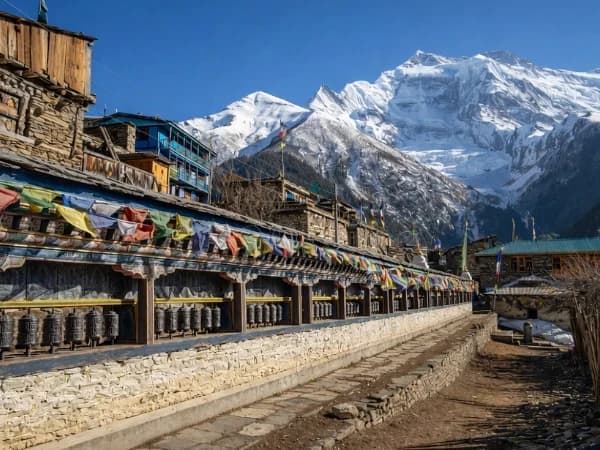
Pisang Peak Climbing in 14 Days: Cost, Difficulty and Who It Suits
Pisang Peak is a 6,091 m peak above Upper Pisang. How our 14-day climb runs, what summit day asks of you, what each tier costs and when another peak is the better choice.
Read More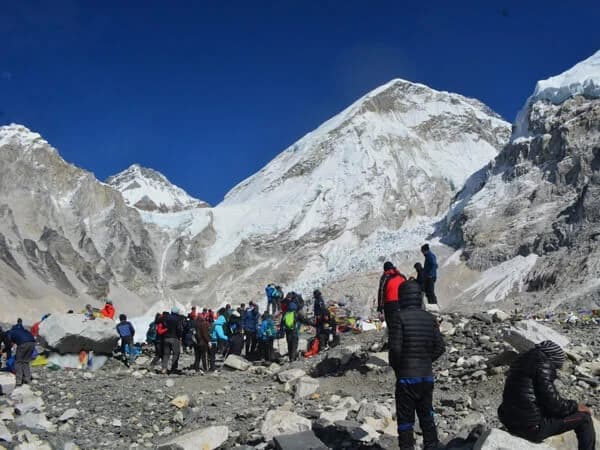
Everest Base Camp Trek for Seniors and Families in 14 Days: Slower Route, Cost and Who It Suits
Can older trekkers and families do Everest Base Camp? The 14-day route, what changes from the 12-day trek, the cost for every group size, and who it does not suit.
Read More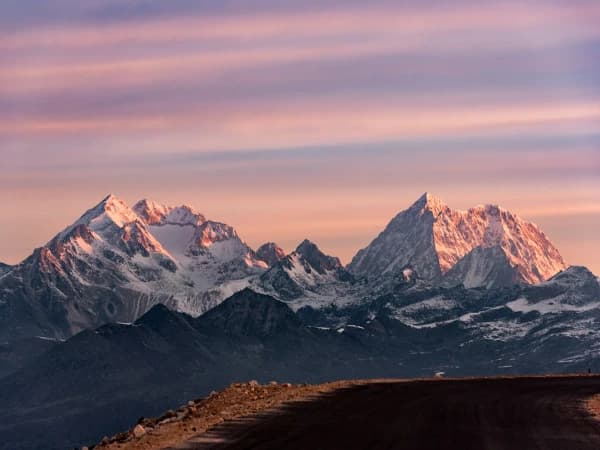
Which Nepal Trek Should You Do? The Best Choice for 5, 7, 10, 12 and 15 Days (2027)
Which Nepal trek should you do with 5, 7, 10, 12 or 15 days? A table of 22 treks with level, best months and 2027 prices, and which one I would choose.
Read More Chat with Shreejan