

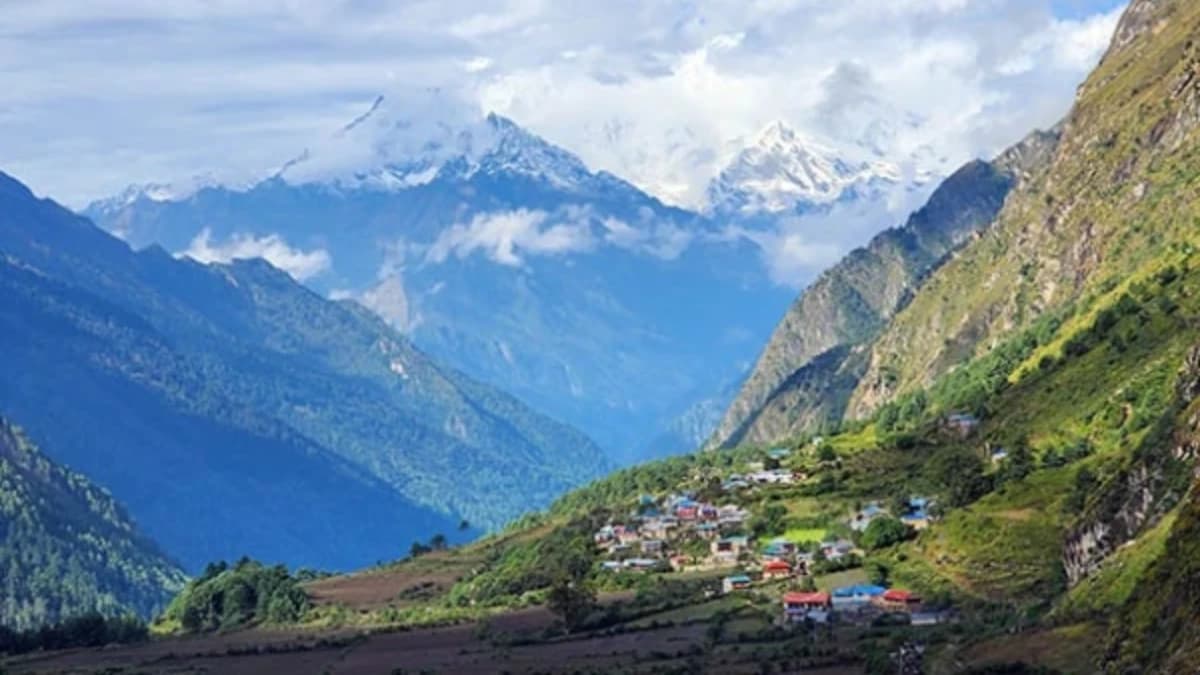
The first thing you notice about Chhokangparo is the quiet. After days of walking up the Shiar Khola valley with the river thundering below, the upper Tsum Valley opens into wide fields where the only sound is wind and prayer flags. This is the cultural heart of the Tsum Valley. Often described as the spiritual and social centre of the upper valley, Chhokangparo offers trekkers a rare opportunity to experience authentic Tibetan-influenced Himalayan life in a setting that feels untouched by time.
For travellers trekking deep into the Manaslu region, Chhokangparo is more than just a destination on the trail. It is a place where culture, history, religion, and nature come together in a way that few Himalayan villages still preserve.
Where Is Chhokangparo in the Tsum Valley?
Chhokangparo is located in the upper Tsum Valley of Gorkha district at an elevation of approximately 3,031 metres above sea level. The village sits on a broad plateau, offering open views in all directions, a contrast to the narrow gorges and forested trails that lead up to it.
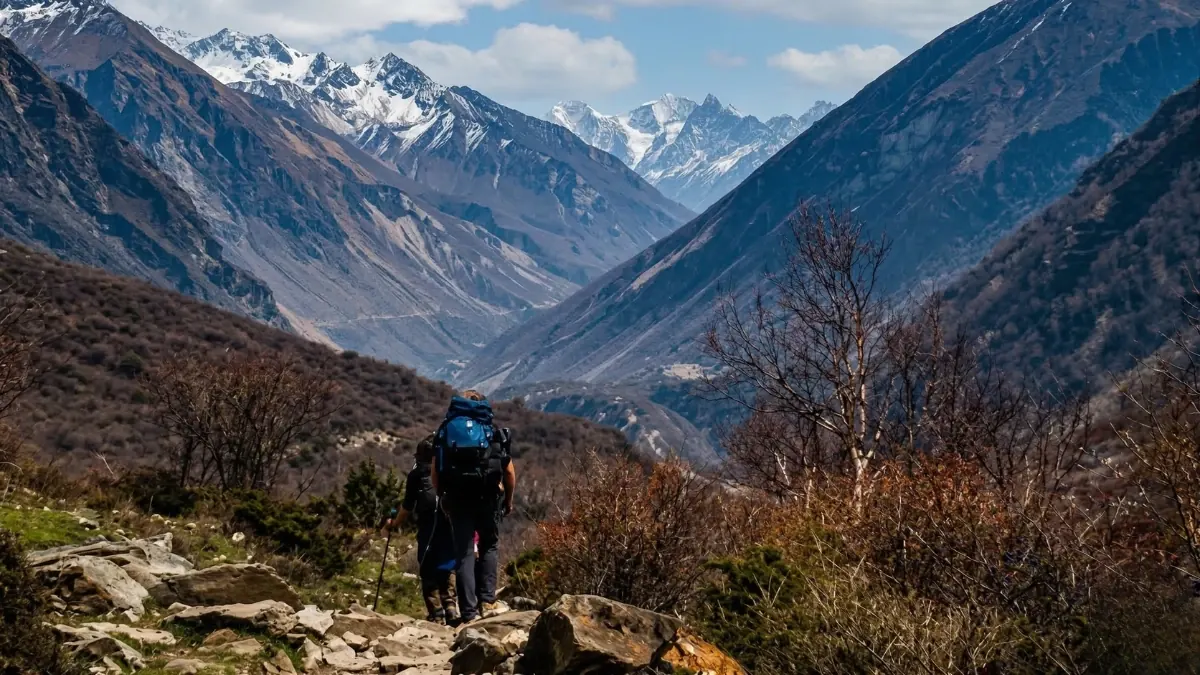
The settlement is actually made up of two closely connected villages, Chhokang and Paro, which together form what trekkers commonly refer to as Chhokangparo. This area marks a transition point in the Tsum Valley, where landscapes become more open, air thinner, and Tibetan cultural influence even stronger.
From Chhokangparo, the valley stretches north toward Nile and Mu Gompa, while to the south it descends toward Chumling and Lokpa. Its central location makes it a natural stopping point for acclimatisation and exploration.
Why Is Chhokangparo Culturally Important?
Chhokangparo holds deep cultural and spiritual significance within the Tsum Valley. The valley itself is regarded as a sacred beyul, or hidden land, believed to have been blessed by Guru Rinpoche (Padmasambhava) during his travels through the Himalayas. This belief has shaped local traditions for centuries, promoting values of compassion, harmony, and respect for all living beings.
The village is home to several ancient monasteries, including Rachen Gompa, one of the most important religious institutions in the region. Rachen Gompa is a nunnery that has played a key role in preserving Buddhist teachings, rituals, and education in Tsum Valley. The presence of monks and nuns adds a strong spiritual atmosphere to daily village life.
Prayer flags stretch across rooftops and trails, mani walls carved with sacred mantras line footpaths, and the sound of chanting can often be heard drifting through the valley. Religious festivals, seasonal ceremonies, and daily prayers remain central to the rhythm of life in Chhokangparo.
What Is Daily Life Like in Chhokangparo?
Life in Chhokangparo follows a slow and steady pace, shaped by altitude, climate, and tradition. The residents are primarily of Tibetan origin and speak a local dialect closely related to Tibetan, though Nepali is also understood.
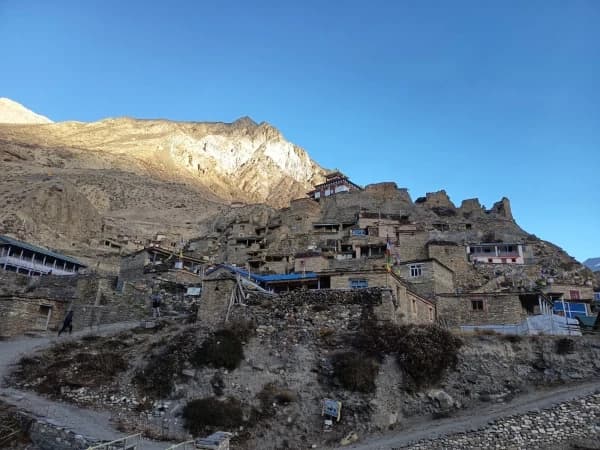
Stone houses with flat roofs are clustered together, designed to withstand harsh winters and strong winds. Families rely on a combination of farming, livestock herding, and limited trade. Crops such as barley, potatoes, buckwheat, and seasonal vegetables are grown in surrounding fields, while yaks and dzopkyos are used for transport and dairy products.
Hospitality is an important part of village culture. Visitors are often greeted warmly, offered tea, and welcomed into homes or teahouses with genuine kindness. Despite the increasing number of trekkers in recent years, Chhokangparo has managed to retain its traditional way of life without becoming commercialised.
Why Is Chhokangparo Culturally Important?
What Is Daily Life Like in Chhokangparo?
Chhokangparo on the Tsum Valley Trek
Chhokangparo is a key overnight stop on the Tsum Valley Trek and is often where trekkers spend an extra day for acclimatisation. Its elevation makes it ideal for adjusting to altitude before continuing further north toward Mu Gompa or crossing into higher terrain.
The village also is a base for short walks and cultural exploration. Trekkers can visit nearby monasteries, walk through open pastures, or hike to viewpoints that offer sweeping views of the surrounding mountains.
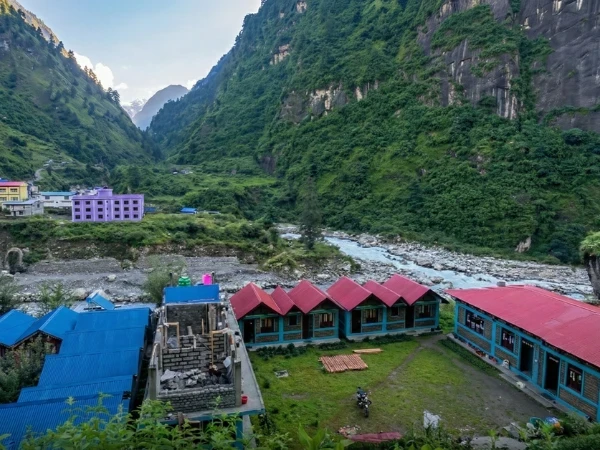
Accommodation in Chhokangparo is provided by small, family-run teahouses. Rooms are basic but clean, and meals are prepared using local ingredients. Common dishes include dal bhat, potatoes, noodles, tsampa, bread, and seasonal vegetables. Evenings are quiet and peaceful, often spent near a stove, listening to the wind move across the plateau outside.
Natural Landscape and Mountain Views
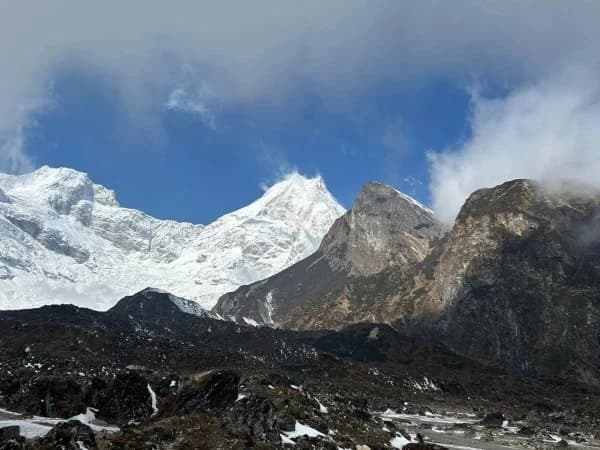
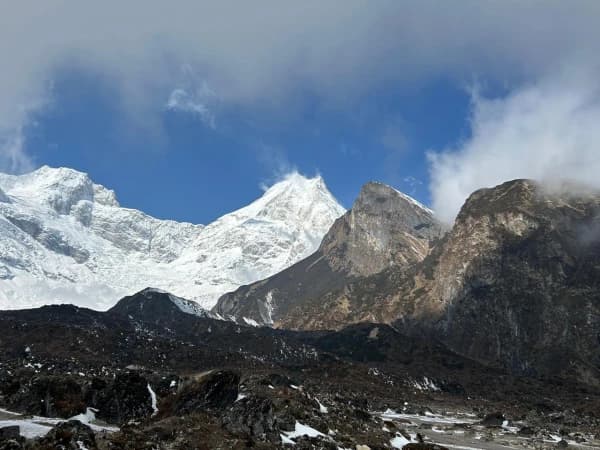
The natural setting of Chhokangparo is one of its greatest attractions. Unlike lower parts of the valley, the village sits in an open landscape with wide skies and distant mountain views. On clear days, trekkers can see Ganesh Himal, Shringi Himal, and other peaks rising sharply against the horizon.
The surrounding terrain is a mix of alpine meadows, rocky slopes, and glacial valleys. During warmer months, yaks graze in nearby fields, adding to the traditional Himalayan scenery. The lack of dense forest at this altitude creates expansive views, especially during sunrise and sunset.
Wildlife sightings are occasional but possible, particularly birds adapted to high-altitude environments. The quiet, open landscape contributes to a sense of isolation that many trekkers find deeply calming.
Seasons and Weather in Chhokangparo
Weather in Chhokangparo varies significantly by season, and planning the right time to visit is essential.
Spring (March to May) is one of the most pleasant seasons. Days are mild, skies are often clear, and the valley begins to show signs of new growth. While trees are fewer at this elevation, lower areas bloom with flowers, and mountain views are generally excellent.
Summer and monsoon (June to August) bring frequent rainfall to lower sections of the trek, though Chhokangparo itself receives less rain compared to lower valleys. Trails can still be muddy, and cloud cover may limit views. However, the landscape becomes greener, and the valley feels alive with flowing streams and fresh grass.
Autumn (September to November) is considered the best time to visit. After the monsoon, the air is clear, temperatures are stable, and mountain views are at their sharpest. Days are cool and sunny, while nights are cold but manageable. This is the peak trekking season in Tsum Valley.
Winter (December to February) is cold, especially at night, with temperatures dropping well below freezing. Snowfall is possible, but Chhokangparo often remains accessible. The village is very quiet during winter, offering solitude and a stark, beautiful Himalayan atmosphere for experienced trekkers.
What Do You Need to Know About Chhokangparo?
Chhokangparo lies within a restricted trekking area, and visitors must obtain the Tsum Valley Restricted Area Permit along with the Manaslu Conservation Area Permit, run by the National Trust for Nature Conservation. Trekking with a licensed guide is mandatory, which also helps travellers better understand the region’s culture, history, and customs.
Facilities are limited, so trekkers should carry warm clothing, a good sleeping bag, personal medication, and essential supplies. Electricity is usually solar-powered and available only at certain times. Internet access is minimal or unavailable, encouraging visitors to disconnect and fully engage with their surroundings.
Why Chhokangparo Is Worth Visiting
Chhokangparo stands out as one of the most meaningful villages in the Tsum Valley. Its open landscapes, strong spiritual traditions, and welcoming community create something that goes beyond physical trekking.
For travellers seeking authenticity, cultural depth, and a sense of peace rarely found on more popular routes, Chhokangparo offers something special. It is a place where ancient beliefs still guide daily life, where nature sets the pace, and where visitors are reminded that travel is not only about reaching destinations, but about understanding the people and places along the way.
Whether visited as part of a full Tsum Valley Trek or combined with the Manaslu Circuit, Chhokangparo leaves a lasting impression. Long after the journey ends, memories of its wide skies, quiet monasteries, and gentle village life continue to echo, making it one of Nepal’s true Himalayan treasures.
Where to Stay in Chhokangparo
Lodge accommodation in Chhokangparo is included in every Tsum Valley trek package we run. Your guide books your room on arrival, so you do not need to contact lodges directly. Chhokangparo is the cultural heart of the sacred Tsum Valley, and the lodges here are run by Tsumba families with twin rooms, traditional Tibetan-influenced meals, and a common room warmed by the high-valley sun.
Related Treks & Guides
- Manaslu Circuit Trek - 12 Days
- Tsum Valley and Manaslu Circuit Trek - 19 Days
- Tsum Valley Trek - 16 Days
- Mu Gompa Tsum Valley Guide
- Rachen Gompa Tsum Valley Guide
Chhokangparo is Tsum Valley at its most sacred. The nuns at the monastery, the mani walls along the approach, and the silence that settles over the valley every evening: this is one of the holiest places in Nepal and one of the least visited. The restricted area permit keeps it that way, and that is a good thing.
Chhokangparo is on our Tsum Valley trek.
WhatsApp:+977 9810351300
Email:[email protected]
Written by Shreejan Simkhada, CEO of The Everest Holiday and third-generation Himalayan guide. TAAN Member #1586.
Chhokangparo is the cultural Tsum Valley stop. Our Tsum Valley & Manaslu Circuit (19 Days) is private (your group only, no strangers), 2027 dates open, From USD $1499. WhatsApp us for tailored 2027 dates and current departures.
Continue planning your trek
This is one stop on the Tsum Valley trail. For the full route, read our Manaslu and Tsum region guide. When you are ready for dates and prices, see the Tsum Valley Trek (16 days) or WhatsApp us directly. We reply personally.
 Chat with Shreejan