

Last updated 5 September 2026. Package prices below are read from our booking system on that date and hold for 2027 departures; permit fees are from the Department of Immigration and Nepal Tourism Board tables.
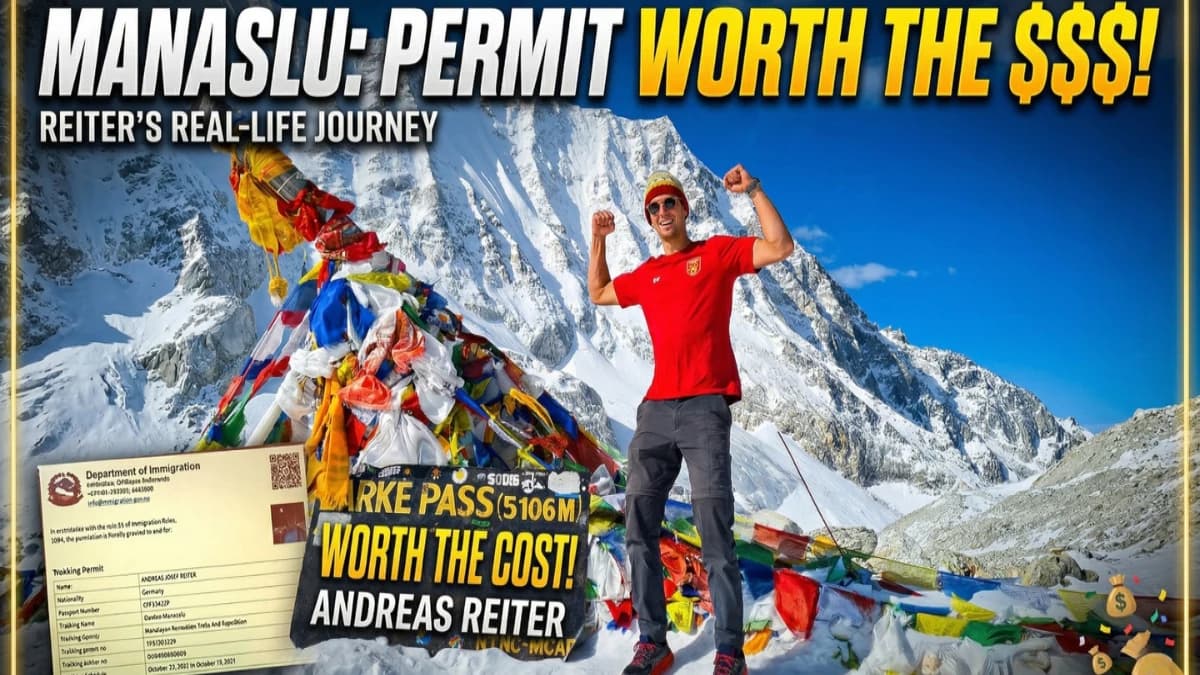
The Manaslu Circuit is more expensive than Annapurna and less expensive than Everest. The difference, the thing that makes the budget conversation interesting, is the restricted area permit. One hundred dollars per week in peak season. Seventy-five in the off-season. A fee that exists specifically to keep the trail quiet, the villages undisturbed, and the experience authentic.
Whether that fee is a cost or an investment depends entirely on what you value. If you want the cheapest possible Nepal trek, the Manaslu Circuit is not it. If you want a trek where the mountains feel like they belong to you alone, where the trail is not a highway but a path, where the teahouse owner remembers your name because you are one of three guests instead of thirty, then the permit fee is the bargain of a lifetime.
Manaslu Circuit Trek cost at a glance
- Package (12 days, all permits included): from budget $799, standard $1,599, luxury $2,099 per person
- Restricted-area permit: $100/week peak season (Sep–Nov), $75/week off-season. Already inside our package price
- Duration & best time: 12 days; March–May and September–November
| Tier | Price (per person) | What you get |
|---|---|---|
| Budget | $799 | Guide, all permits, transport, shared room; no porter, no meals |
| Standard | $1,599 | All meals, private room, one porter per two trekkers |
| Luxury | $2,099 | Dedicated porter, best rooms, all drinks, guide per two trekkers |
Prices per person, updated for 2027. Restricted-area and all other permits included.
How Much Does a Manaslu Circuit Trek Package Cost?
A fully guided twelve-day Manaslu Circuit trek through a registered Nepali company costs between 799 and 2,099 US dollars per person depending on the tier. Budget provides the essentials: guide, all three permits, ground transport and a shared teahouse room, with no porter and no meals. Standard adds all meals, a private room where the lodge has one, and one porter between two trekkers. Luxury adds a dedicated porter, the best room in each village, a guide for every two trekkers and all drinks except alcohol.
Prices drop with group size on every tier, and the price is the same whether you book privately or as a group; we never add strangers to your trek. Per person, from our booking system:
| Group size | Budget | Standard | Luxury |
|---|---|---|---|
| 1 to 4 people | 799 dollars | 1,599 dollars | 2,099 dollars |
| 5 to 8 people | 749 dollars | 1,549 dollars | 2,049 dollars |
| 9 to 12 people | 699 dollars | 1,499 dollars | 1,999 dollars |
| 13 to 20 people | 649 dollars | 1,449 dollars | 1,949 dollars |
What the tiers actually mean, because this is where most Manaslu quotes go wrong: Budget has no porter and no meals on the trail, you carry your own bag and pay for your own food, and you share a teahouse room. Standard adds all meals, a private twin room where the lodge has one, and one porter between two trekkers. Luxury adds a dedicated porter, the best room in the village, a guide for every two trekkers and all drinks except alcohol. Every tier includes all three permits, the guide, transport in and out, and a free down jacket and sleeping bag. Kathmandu hotels are not included on any tier.
How Much Do Manaslu Trek Permits Cost?
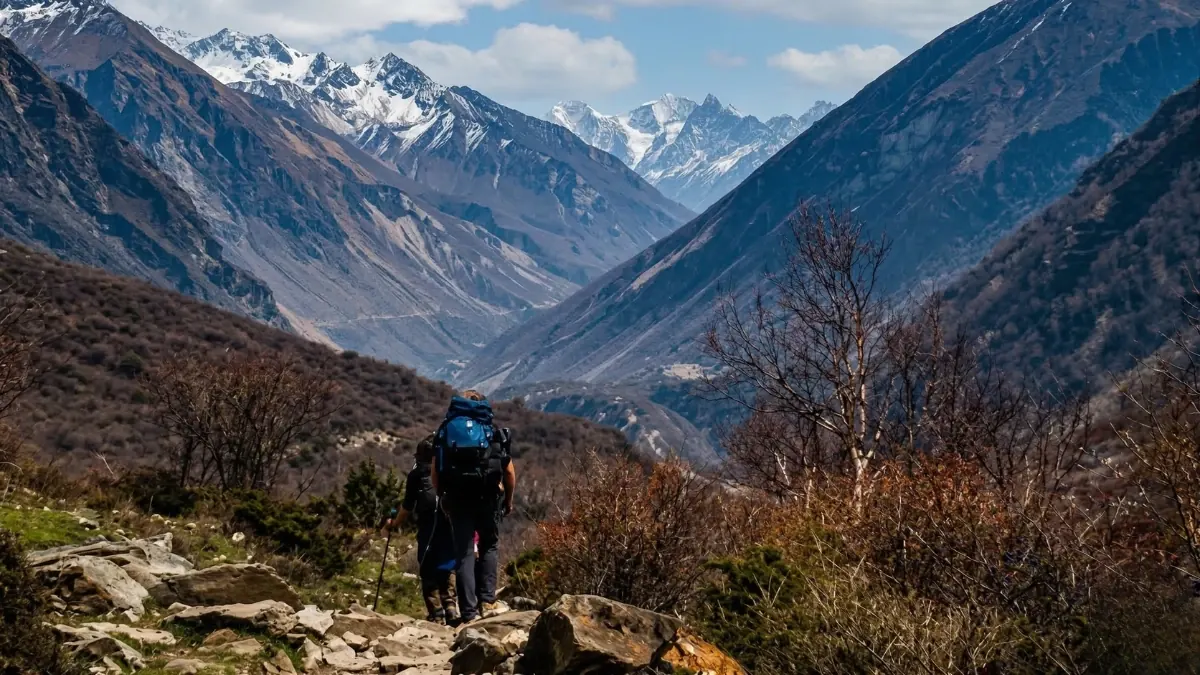
Manaslu requires three permits plus the TIMS card, more than any other standard trek in Nepal. All of them are inside our package price; the figures below are for comparing quotes.
Manaslu Conservation Area permit: 3,000 rupees, about 20 dollars. Annapurna Conservation Area permit, needed because the circuit exits through Dharapani: 3,000 rupees, about 20 dollars. TIMS card: 2,000 rupees, about 13 dollars. Restricted area permit: 100 dollars for the first week in September to November, then 15 dollars a day; 75 dollars a week and 10 dollars a day for the rest of the year. The days are counted from your itinerary, and on our 12-day route you are inside the restricted zone from Jagat to Dharapani, nine days, so the permit is 130 dollars in peak season or 95 dollars off-season.
Total permit cost: roughly 183 dollars in peak season, 148 off-season. That is far more than the Annapurna Circuit (about 33 dollars) or Everest Base Camp (about 36 dollars). The restricted area permit alone accounts for most of the difference.
What Is the Total Budget for the Manaslu Circuit?
From the United Kingdom, a complete Manaslu Circuit trip, flights, visa, insurance, trek package, permits, tips, and personal spending, costs roughly 2,400 to 2,600 dollars for Budget, where you pay for your own meals on the trail, and 3,100 to 3,400 for Standard. Those figures use the package prices above, a 650 to 700 dollar return flight, visa, insurance, three nights in Kathmandu, tips and trail extras.
From the United States, add two hundred to four hundred for higher airfares. From Australia, add one hundred to three hundred.
This places Manaslu just above the Annapurna Circuit (roughly 2,300 to 2,500 from the UK on Budget) and well below Everest Base Camp (3,600 to 4,300 from the UK, Lukla flights included). The trek is priced as what it is, a mid-range expedition that offers premium wildness.
Where Does Your Manaslu Trek Money Go?
The restricted area permit funds the Manaslu Conservation Area, trail maintenance, ranger salaries, waste management, and community development in villages that have no other significant income source. The fee is not extracted by a distant bureaucracy. It circulates in the valley where you trek.
The teahouse owners on the Manaslu Circuit charge slightly more per night than their Annapurna counterparts, not because they are greedy but because they serve fewer guests. A teahouse that hosts thirty trekkers a night on the Annapurna Circuit can charge less per head than a teahouse that hosts five trekkers a night on Manaslu. The economics of remoteness require higher individual contribution to remain viable.
Tips follow the same convention as other treks: fifteen to twenty dollars per day for the guide, ten to fifteen for the porter. Over twelve days: three hundred to four hundred and twenty dollars total.
Is Manaslu More Expensive Than the Annapurna Circuit?
Our Annapurna Circuit is 79 dollars cheaper than Manaslu on Budget (720 against 799) and 600 dollars cheaper on Standard (999 against 1,599). The difference comes from permits (about 150 dollars more for Manaslu), a longer drive in and out, and higher teahouse prices on a route that hosts far fewer guests.
What the extra money buys: a trail without roads. Teahouses without crowds. Villages without souvenir shops. And the knowledge that your permit fee directly maintains the wildness that makes the trek extraordinary. Whether that is worth the difference is a personal calculation. For most trekkers who have done both, the answer is immediate and emphatic.
How Can You Save Money on the Manaslu Circuit?
Trek in spring, March to May, when the restricted area permit drops from one hundred to seventy-five dollars per week and the weather is excellent. I do not recommend December for this trek: snow increases from December, the Larkya La becomes difficult to cross, and the pass can close. The saving is small but meaningful, and the spring months are the safer way to take it.
Go with a partner. Since 22 March 2026 there is no minimum group size, so you can book Manaslu as a solo traveller if you want to, with a licensed guide included, but a solo trekker carries the whole cost of the guide and the logistics rather than half of it. Arriving with your own partner halves that per-person overhead.
Book directly with a Nepal-based company rather than through an international operator. The international operator adds its margin on top of ours for the same guide and the same lodges, and on a higher-priced trek that margin is larger in absolute terms.
The Manaslu Circuit is not a budget trek. It is a value trek, the cost is higher, but the return on that cost in terms of experience, authenticity, and solitude is proportionally greater than anything cheaper can offer.
What Costs Are Not Included in Most Manaslu Packages?
International flights to Kathmandu are the biggest variable. From London, expect GBP 400 to 700 return depending on season and airline. From New York, USD 700 to 1,100. From Sydney, AUD 800 to 1,200. Booking three to four months ahead consistently delivers the best fares.
Nepal visa costs USD 50 for thirty days on arrival at Tribhuvan Airport. Bring a passport photo or pay an extra fee for the machine to take one. Travel insurance with helicopter evacuation cover costs USD 80 to 150 for a two-week trek policy. Do not skip this. A helicopter rescue from the Larkya La costs USD 3,000 to 5,000 without insurance.
Personal gear that most people already own: trekking boots, warm layers, a sleeping bag liner. If you do not have a down jacket or sleeping bag, we lend both free on every tier. A power bank is essential because charging on the Manaslu trail costs NPR 300 to 500 per charge and availability is unreliable above Samagaon.
Hot showers, when available, cost NPR 300 to 500. Wifi is NPR 200 to 400 per day and works poorly above 3,500 metres. Budget NPR 1,000 to 1,500 per day for these extras, which adds approximately USD 100 to 150 over the full trek.
Which Manaslu trek should you book?
The 12-day circuit on this page is the right first choice for most people. Three longer routes use the same guides, the same permit paperwork and the same three tiers:
- Manaslu Circuit, 12 days, from 799 US dollars. Machha Khola to Dharapani over the Larkya La, with the Samagaon acclimatisation day we refuse to cut.
- Tsum Valley and Manaslu Circuit, 19 days, from 1,499 US dollars. The circuit plus the closed Buddhist valley of Tsum, Milarepa’s cave included. Tsum carries its own restricted permit, 40 dollars a week in autumn.
- Tsum Valley, 16 days, from 999 US dollars. Tsum on its own, no pass crossing, for people who want the monasteries more than the Larkya La.
- Manaslu with Nar Phu, 21 days, from 1,438 US dollars. The circuit, then east over the Kang La into Nar and Phu. Two restricted areas in one trip, for fit trekkers with three weeks.
Before you decide, read how difficult the Manaslu Circuit really is, and our comparisons with Langtang and Kanchenjunga. For the season, we have written up Manaslu in autumn, spring and monsoon, and there is a packing list written for this trail rather than copied from Everest.
How Does Manaslu Compare to EBC and Annapurna on Cost?
| Item | Annapurna Circuit | Manaslu Circuit | Everest Base Camp |
|---|---|---|---|
| Trek package (budget) | from USD 720 | from USD 799 | from USD 1,399 |
| Permits | about USD 33 | USD 183 peak, 148 off-season | about USD 36 |
| Duration | 12-15 days | 12-15 days | 12-14 days |
| Daily extras | USD 10-15 | USD 10-20 | USD 10-20 |
| Crowds (peak season) | High | Very low | Very high |
| Road sections | Significant | Minimal | None (fly to Lukla) |
| Total from UK (budget) | USD 2,300-2,500 | USD 2,400-2,600 | USD 3,600-4,300 |
Manaslu sits in the middle on price but delivers something neither of the other two can: genuine wilderness. The Annapurna Circuit now shares long sections with a road. EBC has traffic jams at Gorak Shep in October. Manaslu has a permit fee and a guide requirement that keep numbers low, and on most days the trail feels like it belongs to you alone.
See the full cost breakdown on our Manaslu Circuit Trek page. All permits including the restricted-area permit are included in our packages.
The Manaslu restricted area permit costs $100/week in peak season and $75 in off-season. It is expensive compared to Annapurna's ACAP fee of about $20. But it is the reason the trail is quiet while the Annapurna Circuit is busy. You are paying for solitude, and solitude on the Manaslu Circuit is worth every dollar.
Permits are included in our Manaslu Circuit Trek package price.
Check us before you pay
Trekking scams in Nepal are real and in the news, so do not take my word for any of this. The Everest Holiday Pvt. Ltd. was registered in Kathmandu on 8 April 2016, company registration 147653/072/073, trekking licence 2090/072, Trekking Agencies’ Association of Nepal member 1586. A restricted-area permit can only be issued through a registered agency with a licensed guide on it, so on Manaslu this paperwork is not a formality, it is the permit. Every legitimate operator holds the same papers and will send them without being offended that you asked. Ask me for a call before you send a deposit; I am on WhatsApp around the clock. Our reviews are on TripAdvisor and Google under our own name; read the critical ones as well as the kind ones.
The questions I get asked most about the Manaslu cost
Can I trek Manaslu alone? Yes, since 22 March 2026. The Department of Immigration now issues restricted-area permits to a single trekker, provided a licensed guide and a registered agency are on the application. A solo trekker pays the one-to-four price and carries the whole guide cost rather than half of it.
Is the permit really included? Yes, all three: the Manaslu restricted-area permit, the Manaslu Conservation Area permit and the Annapurna Conservation Area permit for the exit through Dharapani, plus the TIMS card. We apply before you arrive on your visa submission number, so you do not lose a day in Kathmandu.
Why is the restricted permit charged per week? The government charges one week at 100 dollars in September to November, then 15 dollars for each extra day; 75 and 10 dollars for the rest of the year. The days are counted from your itinerary. On our 12-day route you are inside the restricted zone from Jagat to Dharapani, nine days, so the permit is 130 dollars in peak season and 95 dollars off-season.
Is the price the same for a private trek and a group? Yes. Every trek we run is private, your group only, and the discount comes from group size, not from sharing with strangers.
Are Kathmandu hotels included? No, on any tier. Tell us your budget and we will recommend and book one for you, or choose your own.
What gear is free? A down jacket and a sleeping bag rated to minus fifteen Celsius, on every tier, at no charge. A duffel bag is provided on Standard and Luxury. Bring your own broken-in boots and layers.
How much is the deposit and how do I pay? Ten per cent by card through Himalayan Bank’s secure gateway to confirm your dates; the balance is paid in Kathmandu before the trek. The deposit is non-refundable, but you can move your dates to any date within a year at no charge with seven days’ notice, which is the notice we need to re-issue a restricted-area permit.
Will the price change for 2027? No. The prices on this page hold for 2027 departures. If the government changes the permit fee, a confirmed booking keeps the price it was quoted.
If you want a quote for your own dates and group size rather than an article’s averages, write to me on WhatsApp and I will send the real numbers, including the unwelcome ones.
WhatsApp:+977 9810351300
Email:[email protected]
Written by Shreejan Simkhada, CEO of The Everest Holiday and third-generation Himalayan guide. TAAN Member #1586.
Manaslu Circuit in 2027
Our Manaslu prices hold for 2027 departures. The restricted-area permit is set by the government per week and per season, and it is the one line that can change without notice; on a confirmed booking the price you were quoted stands, and we update this page the week any change is announced. Since 22 March 2026 Manaslu no longer needs a minimum of two trekkers, so a solo traveller can hold the permit; message me early and we will arrange it.
Manaslu Circuit cost: restricted permit explained. Our Manaslu Circuit Trek (12 Days) is private (your group only, no strangers), 2027 dates open, From USD $799. WhatsApp us for tailored 2027 dates and current departures.
 Chat with Shreejan