

Forty thousand trekkers walk to Everest Base Camp every year, and in October the trail between Lukla and Namche can feel more like a queue than a trek. It is also, during peak season, one of the most crowded.
If the thought of sharing your Himalaya trip with hundreds of other trekkers bothers you, you have options. The right timing, the right route variation, or a combination of both can give you the Everest region with a fraction of the crowds. Here is how to do it.
When the Crowds Peak
Understanding the crowd calendar helps you plan around it:
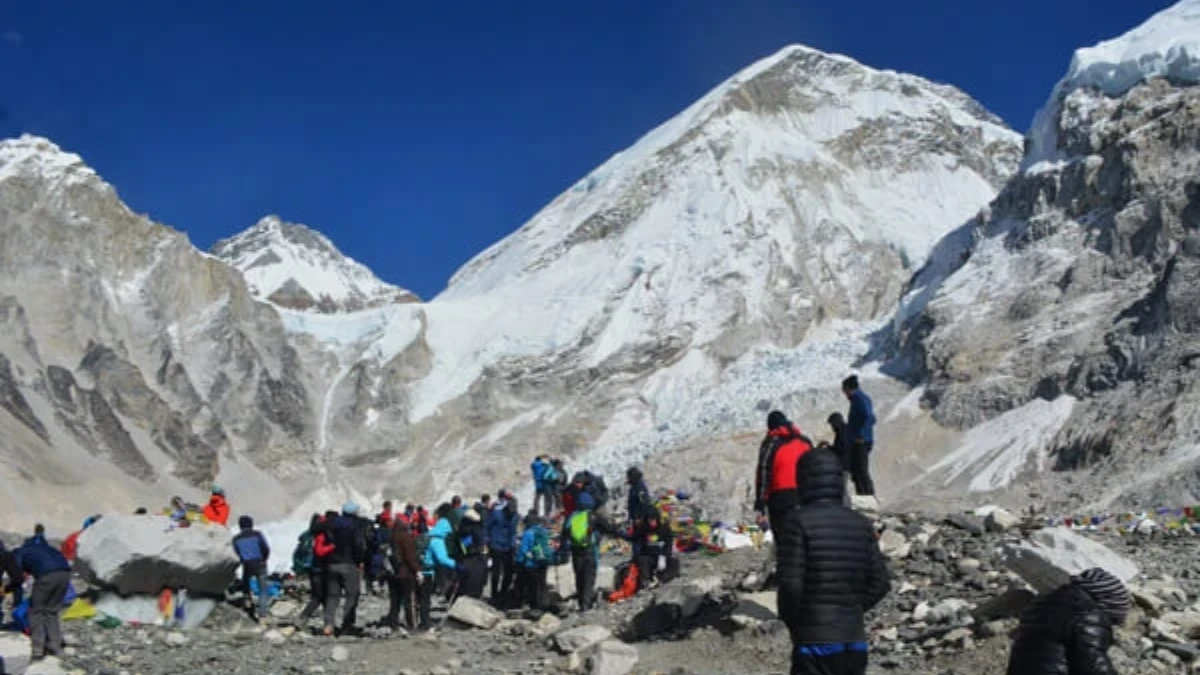
October: The busiest single month. Clear skies, stable weather, perfect temperatures. Sagarmatha National Park hosts over 10,000 trekkers. Teahouses fill up by early afternoon. The trail between Namche and Tengboche feels like a busy footpath rather than a wilderness trail. If you are trekking in October, accept the crowds or use the strategies below.
November (first half): Still very busy, essentially an extension of October's peak. The weather remains excellent but temperatures drop noticeably after mid-November.
April: The second peak season. Spring brings warmer temperatures, rhododendron blooms below 3,000 metres, and nearly as many trekkers as autumn. Slightly more cloud cover than October but generally stable.
March and May: Shoulder months. Noticeably fewer trekkers than October or April, with reasonable weather. March can be hazy at lower altitudes. May gets warmer and the pre-monsoon clouds build in the afternoons, but mornings are usually clear.
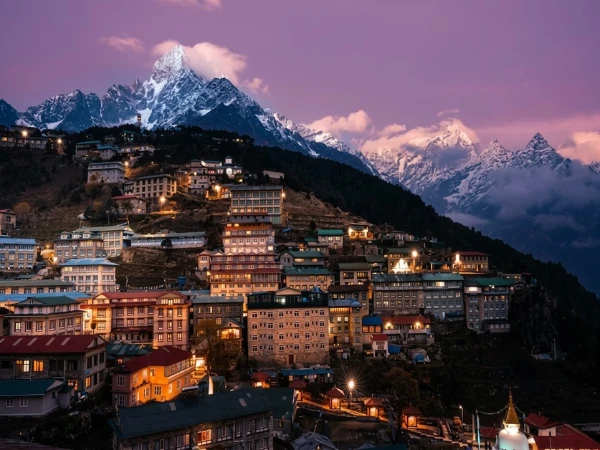
Which Months Have the Fewest Trekkers at EBC?
If avoiding crowds is your priority, these are your best windows:
Late November (after the 20th): This is the sweet spot that trekkers talk about. The October and early November crowds have gone home. The weather is still clear and stable. Temperatures are cold but manageable with proper gear (we provide down jackets free of charge). Teahouses are open and welcoming, and you will have the trail largely to yourself. The trade-off: shorter daylight hours and colder nights. Below minus 10 Celsius at Gorak Shep is normal.
Early December: Genuinely quiet. Most teahouses remain open through mid-December. The cold is real (minus 15 to minus 20 at base camp altitude) but if you have quality cold-weather gear, the trip is extraordinary. Perfectly clear skies, no haze, no crowds, and the mountain views are at their sharpest. This is not for first-timers, but experienced trekkers rate early December as the best EBC experience possible.
Early March: Spring is arriving but the trekking season has not yet ramped up. The trail is quiet, teahouses are reopening after the winter lull, and temperatures are rising. Some haze at lower altitudes is possible, but above Namche Bazaar the air is typically clear. By mid-March the crowds start returning.
September (second half): The monsoon is ending but many trekkers wait for October. Late September can deliver surprisingly good weather, especially above 4,000 metres where the rain shadow effect keeps conditions drier. The landscape is lush green from the monsoon rains, and you will share the trail with very few people. The risk: occasional rain and cloud at lower altitudes. Above Tengboche, conditions are usually good.
Which Everest Routes Have Fewer Crowds?
Even during peak season, you can avoid the worst crowds by choosing a route variation that leaves the main EBC corridor:
Gokyo Lakes Trek (10-12 days)
The Gokyo Lakes trek follows the same trail as EBC from Lukla to Namche, then branches west into the Gokyo Valley instead of continuing north to Tengboche. The valley holds six sacred turquoise glacial lakes, and the viewpoint from Gokyo Ri (5,357 metres) offers a panorama of four 8,000-metre peaks: Everest, Lhotse, Makalu, and Cho Oyu. Many experienced trekkers consider the Gokyo Ri sunrise better than Kala Patthar.
The Gokyo Valley sees a fraction of the EBC trail traffic. During peak October, you might encounter thirty to fifty trekkers in the entire valley compared to hundreds on the main EBC route. The teahouses are quieter, the atmosphere is more intimate, and the turquoise lakes against the grey glacier moraine are genuinely spectacular.
We offer a dedicated Gokyo Lakes trek package starting from 2,325 USD (Standard tier).
EBC via Gokyo and Cho La Pass (16-18 days)
This is the best of both worlds. You trek to Gokyo first (quieter), cross the Cho La Pass (5,420 metres) into the EBC valley, visit base camp and Kala Patthar, then descend the classic route. You get the Gokyo Lakes, the Cho La crossing (genuinely exciting and far less crowded than the main trail), and EBC itself.
The route is longer and more demanding than standard EBC, but it distributes your time between two valleys instead of concentrating it on the crowded main trail. The Cho La crossing day is one of the highlights of any Everest region trek. Our EBC Gokyo Cho La Pass package covers this complete route.
Three Passes Trek (17-20 days)
The ultimate Everest region experience for strong trekkers. You cross all three major passes of the Khumbu: Kongma La (5,535m), Cho La (5,420m), and Renjo La (5,360m), visiting EBC, Gokyo Lakes, and areas that 95 percent of Everest trekkers never see. Large sections of this route are genuinely remote, with no teahouses and wild camping in some areas.
The Three Passes trek sees very few people. Even in peak October, you will go entire days without seeing another trekking group on the pass crossings. This is the Everest region as it was before it became a trekking highway. It requires excellent fitness and previous high-altitude experience. Read our Everest region treks guide for a full comparison of all routes.
EBC by Road (15 days)
Our EBC by road package avoids the Lukla flight entirely, driving to Salleri or Phaplu and trekking from there. This adds three days to the approach but takes you through Nepal's hill country on a route that very few trekkers use. You join the main EBC trail at Phakding, but the first three days are on a quieter, more authentic path through Sherpa villages that the Lukla-flying majority skip entirely.
The road route also saves 300 to 500 USD on Lukla flights at current 2026 fuel-adjusted prices. Read our Lukla flight vs road comparison for the full breakdown.
How Can You Avoid Crowds on the EBC Trek?
Regardless of when or which route you choose, these strategies reduce the crowd impact:
- Start early each day. Most trekkers leave their teahouse between seven and eight in the morning. If you start at six or six thirty, you will walk for the first hour or two in relative solitude. The early morning light is also the best for mountain photography.
- Stay at less popular stops. The standard itinerary has everyone sleeping at the same villages: Phakding, Namche, Tengboche, Dingboche, Lobuche, Gorak Shep. If your guide adjusts the schedule to stop at smaller, less popular lodges between these main stops, you avoid the evening rush for rooms and dining tables. Experienced guides know these alternative stops.
- Trek counter-clockwise. Most trekkers go up the Dingboche side and come down the same way. Some itineraries go up via Gokyo, cross Cho La to EBC, and descend the standard route. This means you meet the uphill crowds going the opposite direction rather than being in the queue.
- Book a private trek. On a private trek, your guide adjusts the pace and schedule to your group. You do not follow a fixed itinerary designed around the most popular teahouse stops. All our EBC treks are private. No strangers are added to your group.
- Avoid the Lukla bottleneck. Lukla airport creates a human funnel. Every trekker starts and ends here (unless they take the road route). Days one and two out of Lukla are the most crowded sections of the entire trek. After Namche, the trail thins out as some trekkers branch to Gokyo and others take rest days.
Crowd Levels by Route: Quick Comparison
| Route | Peak Season Crowds | Shoulder Season | Winter |
|---|---|---|---|
| Standard EBC (Lukla) | Very heavy | Moderate | Light |
| EBC by Road | Moderate (first 3 days quiet) | Light | Very light |
| Gokyo Lakes | Light to moderate | Light | Very light |
| EBC + Gokyo via Cho La | Mixed (Gokyo quiet, EBC busy) | Light | Very light |
| Three Passes | Very light | Very light | Expert only |
What About Teahouse Availability?
The flip side of avoiding crowds is teahouse availability. During peak season, every teahouse is open and staffed. In late November, December, and early March, some smaller teahouses close for the winter. The main stops (Namche, Tengboche, Dingboche, Lobuche, Gorak Shep) remain open year-round, but the choice of rooms and food is more limited.
Your guide manages this. An experienced guide knows which teahouses stay open in shoulder and winter seasons and can call ahead to arrange rooms. This is one of the key reasons not to trek independently in the off-season. For more on what teahouses are actually like, read our teahouse guide.
Month-by-Month Crowd and Weather Guide
Here is a realistic assessment of what each month offers for the trekker who wants fewer people on the trail:
| Month | Crowd Level | Weather | Best For |
|---|---|---|---|
| January | Very quiet | Cold, clear, short days | Experienced cold-weather trekkers |
| February | Very quiet | Cold, increasing daylight | Winter trekkers who want longer days than Jan |
| March | Light to moderate | Warming, some haze below 3,000m | Early spring window before crowds arrive |
| April | Heavy | Warm, generally clear, some afternoon cloud | Those who accept crowds for good weather |
| May | Moderate | Warm, pre-monsoon cloud builds PM | Late spring trekkers, fewer people than April |
| June-Aug | Very quiet | Monsoon rain, poor visibility, leeches | Not recommended for EBC |
| September | Light | Monsoon ending, clearing skies, lush green | Risk-tolerant trekkers wanting post-monsoon freshness |
| October | Very heavy | Best weather of the year | Those who prioritise weather over solitude |
| November (early) | Heavy | Clear, cooling | Slightly less than October but still busy |
| November (late) | Light | Clear, cold nights | Best balance of quiet trails and good weather |
| December | Very quiet | Very cold, clear skies | Experienced trekkers with winter gear |
What Gear Do You Need for Off-Season Trekking?
Trekking in late November, December, or early March requires warmer gear than peak season. The essentials:
- Down jacket: We provide this free of charge. If you have your own rated to minus 15 Celsius, bring it.
- Four-season sleeping bag: Rated to minus 15 to minus 20 Celsius. If you do not own one, we help you buy one affordably in Kathmandu (50 to 100 USD for a quality bag from Thamel).
- Thermal base layers: Merino wool is ideal. Two sets minimum so one can dry while you wear the other.
- Insulated gloves and warm hat: Your extremities lose heat fastest at altitude. Budget gloves are not enough above 4,000 metres in winter.
- Hand and toe warmers: Disposable heat packs are lightweight and make cold mornings bearable. Buy a pack of ten in Kathmandu for 5 to 10 USD.
- Quality sunglasses: Winter sun on snow at 5,000 metres causes snow blindness quickly. Category 4 lenses with side shields are essential.
For a complete gear list, read our packing guide. For winter-specific advice, our winter trekking guide covers what to expect month by month.
Common Questions About EBC Crowd Levels
Is it worth trekking EBC in October despite the crowds?
Yes. The weather is the best of the year, the views are consistently clear, and the energy on the trail is infectious. The crowds are part of the trip in October. If you go in expecting company rather than solitude, you will enjoy it. If solitude matters more than perfect weather, choose late November or early March.
How cold is it in late November and December?
At Gorak Shep (5,164m), nighttime temperatures drop to minus 15 to minus 25 Celsius in late November and December. During the day, sunshine brings temperatures to around zero or slightly above. You need a four-season sleeping bag, quality down jacket (we provide one free), and warm base layers. The cold is manageable with the right gear.
Are the Lukla flights less crowded in off-season?
Yes. In October, Lukla flights are frequently overbooked and cancellations cascade into multi-day delays. In November, December, and March, flights are quieter and delays are less common (though weather cancellations still occur). The Lukla flight is unpredictable in any season.
Can I do the Gokyo trek and EBC in the same trip?
Yes. The EBC + Gokyo via Cho La Pass route covers both in sixteen to eighteen days. It is more demanding than standard EBC and requires crossing Cho La Pass (5,420m), but it gives you the best of both valleys. This is our most popular combined route.
Is the Three Passes trek safe for a first-timer?
No. The Three Passes trek involves three high-altitude pass crossings, some sections without teahouses, and requires previous trek itself above 5,000 metres. Do standard EBC or Gokyo first, then return for Three Passes. Read our Everest region guide for route difficulty comparisons.
Cost Difference: Peak vs Off-Season
Trekking in shoulder or off-season can save money beyond just the quieter experience:
- Lukla flights: Slightly cheaper in November and March as demand drops. Still 250 to 290 USD each way after the 2026 fuel increases, but easier to book and less likely to be overbooked. Our road route avoids this cost entirely.
- Teahouse rooms: In peak October, some teahouses charge premium rates for rooms. In late November and March, you have more choice and room prices are standard or sometimes negotiable.
- International flights: Flights to Kathmandu are cheapest in November and March. Expect to save 100 to 200 USD compared to October bookings.
- Package prices: Our trek package prices are the same year-round. We do not charge a peak-season premium.
The total trip saving for late November vs October can be 200 to 400 USD, mainly on international flights and Lukla availability. The real value, though, is the trip: a quieter trail, easier teahouse bookings, and the mountain all to yourself.
Why Trek EBC With Us?
We operate all Everest region routes: standard EBC, EBC by road, Gokyo Lakes, EBC + Gokyo via Cho La, and Three Passes. Every trek is private to your group. Your guide adjusts the itinerary to avoid the busiest stops and optimise your trip based on real-time trail conditions.
- Over 300 reviews, 4.9-star TripAdvisor rating, Travellers' Choice 2024
- Private treks only: no strangers added, flexible schedule
- Duffel bags and down jackets provided free
- TAAN member (#1586), government registered
- Every booking supports the Nagarjun Learning Center: education for 70 children
Want help choosing the right route and timing? WhatsApp us at +977 9810351300 with your preferred dates and crowd tolerance. I will recommend the route that gives you the Everest trip you are looking for.
View EBC trek packages | View Gokyo Lakes trek | View EBC + Gokyo via Cho La
Want fewer crowds on EBC? Book private with our 2026 windows. Our Everest Base Camp Trek (12 Days) is private (your group only, no strangers), 2026 dates open, From USD $1399. WhatsApp us for tailored 2026 dates and current departures.

 Chat with Shreejan