
Compare all 8 Everest region treks: EBC classic, road route, helicopter return, Gokyo, Three Passes, Jiri. Honest guide by a local expert.
Govt Regd. No.: 147653/072/073
Travel Agency Licence: 2838/072
Everest Region Treks: Every Route, Honestly Compared (2027 Guide)

If you want the shortest answer: pick the 7-day Everest View trek if you want to see Everest without sleeping above 4,000 metres, the 12-day Everest Base Camp trek if Base Camp on foot is the goal, the 10-day Gokyo Lakes trek if you want the Everest views with fewer people, and only add Cho La, Renjo La or Kongma La if you are fit and have already slept high. We run eleven routes in this part of the Khumbu, plus two climbs, and they are not interchangeable. This page puts them side by side using the prices and details on our package pages, then tells you who each one suits and who should leave it alone.
Written by Shreejan Simkhada, CEO of The Everest Holiday, from a family of three generations of family guides. TAAN Member #1586. Last updated 4 October 2026. Prices, days, grades and altitudes are from our live package pages, the permit rule is from the Nepal Tourism Board (NTB), and park facts are from NTB.
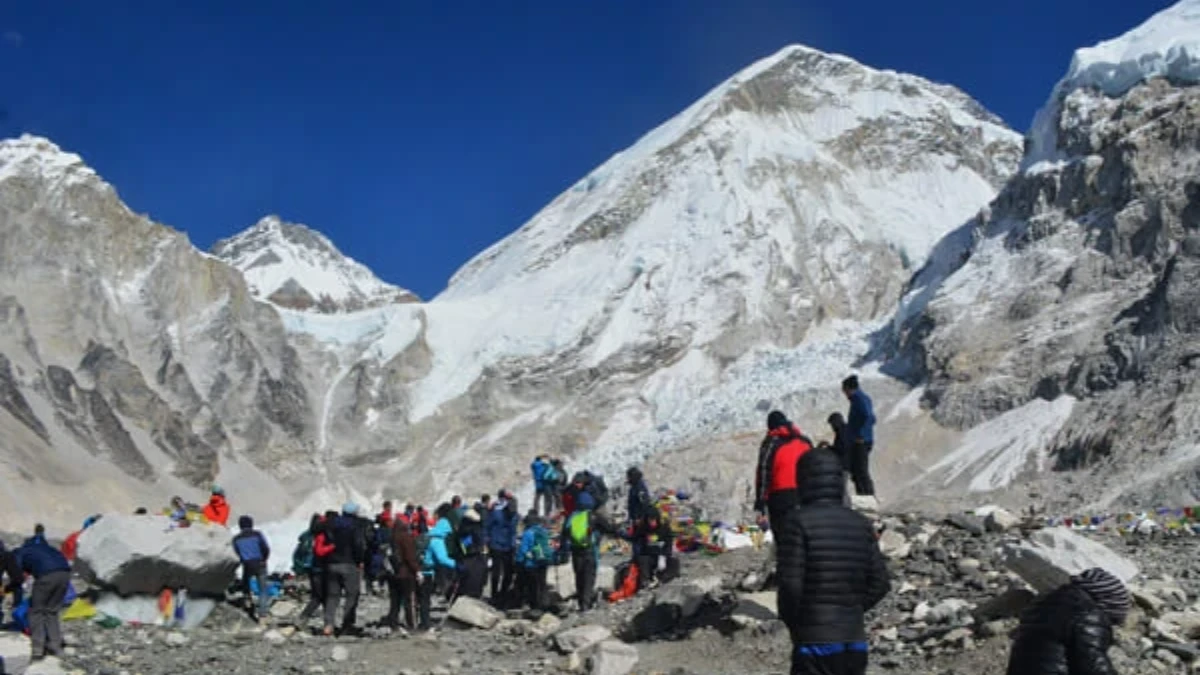
Which Everest region trek is right for you?
Ask yourself four questions in this order, because the first one removes most of the options.
How many days do you have, counting travel? A Lukla route needs at least seven days from Kathmandu to Kathmandu, and the Base Camp routes start at ten. How high have you slept before? If the answer is never above 3,000 metres, I would start with the Everest View trek or the 12-day Base Camp trek, not a pass crossing. Do you want a named place (Base Camp) or the best views? They are not the same trip. And how do you feel about the Lukla flight? There are two routes that avoid flying in, and I cover them below.
If you only read one line per route, it is this. The Everest View trek is for a short, low trip. The 12-day Everest Base Camp trek is the classic. The Gokyo Lakes trek is the quieter valley. The three 15-day treks and the 17-day Three Passes are for people who want more than Base Camp and can take the altitude. The road trip and the Jiri route are for people who want to see the hills before the mountains. The helicopter return is for a fixed flight home and a bigger budget.
What is the Everest region and how do you get there?
The Everest region is the Khumbu, in Solukhumbu district in eastern Nepal, on the border with Tibet. Most of the trekking happens inside Sagarmatha National Park, which was established on 19 July 1976 and inscribed as a UNESCO Natural World Heritage Site in 1979. The park covers 1,148 square kilometres and holds Everest (8,848 metres), Lhotse and Cho Oyu, plus the upper catchment of the Dudh Koshi river and the Gokyo Lakes. Makalu, which you can see from Gokyo Ri, is not inside the park; it belongs to the neighbouring Makalu Barun National Park.
Almost every route starts at Lukla, at 2,860 metres on our itineraries (some sources give the airport as 2,846 metres, so you will see both numbers). The flight is about 40 minutes from Kathmandu and about 20 minutes from Manthali (Ramechhap). In the busy windows, roughly 15 March to 15 May and 25 September to 30 November, the Lukla flights leave from Manthali, which means a pick-up between midnight and 2 am for the drive there. Our Manthali guide and domestic flights guide explain how that works, and Lukla flight or road compares the two ways in. Lukla's airstrip was built in 1964 under Edmund Hillary's supervision; before that, people walked in. Our own write-up of Lukla has the detail.
How do all the Everest region routes compare?
Here is every route we sell in the Khumbu, in order of length. Days, grades and altitudes come from our package page and its itinerary. Grade means the grade on our package page, not my opinion: Moderate, Strenuous, Very Strenuous or Technically Challenging. The Everest Base Camp trek is Strenuous on our grading, which for us means long, demanding days at high altitude and good fitness.
| Route | Days | Highest point on the itinerary | Grade | Who it suits |
|---|---|---|---|---|
| Everest View | 7 | About 3,880 m (Everest View Hotel hike); you sleep no higher than Tengboche, 3,860 m | Moderate | First Himalayan trek, families, older trekkers, anyone short of days |
| Ama Dablam Base Camp | 8 | 4,570 m | Moderate | A short trip to a mountain face, with fewer nights high than Base Camp |
| Gokyo Lakes | 10 | 5,357 m (Gokyo Ri); you sleep at Gokyo, 4,790 m | Strenuous | Views and lakes without the Base Camp crowds, no pass to cross |
| EBC with helicopter return | 10 | 5,545 m (Kala Patthar) | Strenuous | A fixed flight home, a bigger budget, and the fitness for a long day 9 |
| Everest Base Camp | 12 | 5,545 m (Kala Patthar); Base Camp is 5,364 m | Strenuous | First big Himalayan trek, the classic goal |
| EBC by road | 15 | 5,545 m | Strenuous | People who would rather drive in than fly, and have the days |
| EBC with Gokyo Ri | 15 | 5,545 m | Strenuous | Base Camp plus the Gokyo lakes, without a pass |
| EBC with Gokyo via Cho La | 15 | 5,545 m; Cho La is 5,420 m | Very Strenuous | Fit trekkers who have slept above 4,500 m before |
| Everest Two Passes | 15 | 5,545 m; Renjo La 5,360 m, Cho La 5,420 m | Very Strenuous | Fit trekkers who want two passes and Base Camp last |
| Everest Three Passes | 17 | 5,545 m; Kongma La 5,535 m, Cho La 5,420 m, Renjo La 5,360 m | Very Strenuous | Very fit, acclimatised trekkers with a spare day or two |
| Jiri to EBC | 18 | 5,545 m | Strenuous | People with time who want the hill country first |
Two climbs sit beside these. Our Mera Peak climb (14 days) and Island Peak climb (14 days) are graded Technically Challenging, they are not treks, and they are private departures. The USD 500 garbage fee is included on every tier. I say more in the climbs section below.
I do not repeat the day-by-day for the Base Camp trek here. Our guide to how many days Everest Base Camp takes covers the day counts, and the full day-by-day itinerary has the altitudes and walking times.
How much does each route cost?
These are the prices on our package pages, per person, for one traveller. Pricing is the same for a private trek or a group, and it falls by group size only, so a pair or a group of five pays less each. A solo traveller is welcome and pays the one-person price. Prices are in US dollars and held for 2027 departures.
| Route | Budget | Standard | Luxury |
|---|---|---|---|
| Everest View, 7 days | USD 2,180 | USD 2,545 | USD 5,095 |
| Ama Dablam Base Camp, 8 days | USD 1,179 | USD 2,585 | USD 4,390 |
| Gokyo Lakes, 10 days | USD 1,285 | USD 2,965 | USD 5,015 |
| EBC with helicopter return, 10 days | USD 4,499 | USD 4,999 | USD 6,499 |
| Everest Base Camp, 12 days | USD 1,399 | USD 2,499 | USD 4,999 |
| EBC by road, 15 days | USD 1,399 | USD 2,499 | USD 4,999 |
| EBC with Gokyo Ri, 15 days | USD 1,699 | USD 3,240 | USD 5,299 |
| EBC with Gokyo via Cho La, 15 days | USD 1,699 | USD 3,240 | USD 5,299 |
| Everest Two Passes, 15 days | USD 1,699 | USD 3,240 | USD 5,299 |
| Everest Three Passes, 17 days | USD 1,855 | USD 3,540 | USD 5,645 |
| Jiri to EBC, 18 days | USD 1,599 | USD 2,699 | USD 5,199 |
The tiers mean the same thing on every route. Budget has no porters (you carry your own bag), shared rooms and meals not included on the trek, with the fixed-wing Lukla flight. Standard has one porter for every two trekkers, private rooms and all meals. Luxury has a dedicated porter for each trekker, private deluxe ensuite rooms, all meals with fruit, nuts and unlimited soft drinks, and a round-trip helicopter to Lukla. Kathmandu hotels are not included in any trek tier, so we quote them separately. If you are travelling alone, Luxury still gets its own porter, Standard has no porter (your guide carries up to 10 kg of your bag instead), and on Everest Base Camp the guide joins you from Lukla, so there is no single supplement on Standard or Luxury. On Budget, a solo Everest Base Camp trekker pays US$2,275 instead of US$1,399. The solo detail is in our solo Everest Base Camp guide. For what the money buys at each level, read Standard vs Luxury, and for line-by-line costs read the Base Camp cost guide, Gokyo cost and Three Passes cost.
What does each route actually do?
Everest View, 7 days
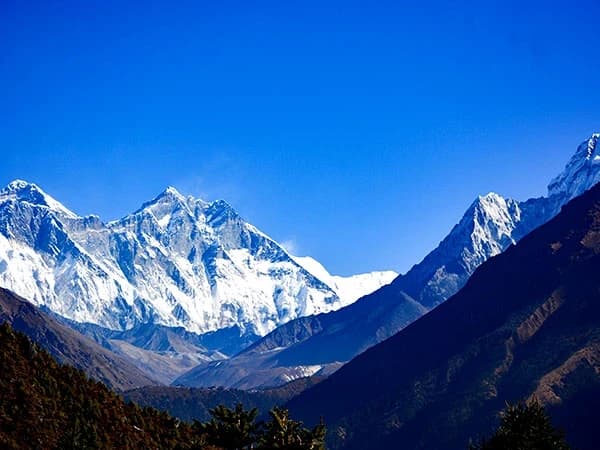
You fly to Lukla, walk to Phakding, then Namche Bazaar (3,440 m), spend a rest day with a hike up to the Everest View Hotel, sleep at Tengboche (3,860 m) and walk back to Lukla to fly out. It is the first third of the Base Camp trail, turned round. The Nepal Tourism Board lists it as its own trek in the Everest region. It suits anyone who wants the Khumbu on foot without a night above 4,000 metres. It is not Base Camp, and I would not sell it as that. Read the full Everest View guide and the Everest View Hotel.
Ama Dablam Base Camp, 8 days
The same first four days as the Everest View trek, then on to Pangboche (3,985 m) and up to Ama Dablam Base Camp at 4,570 metres, back to Namche and out to Lukla on day 8. It is the shortest trek here that takes you above 4,500 metres, so it works as a taster of high altitude. Our Ama Dablam Base Camp guide has the route and the cost.
Gokyo Lakes, 10 days
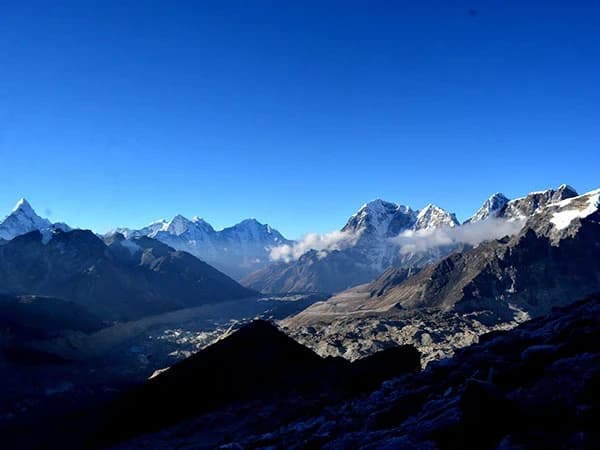
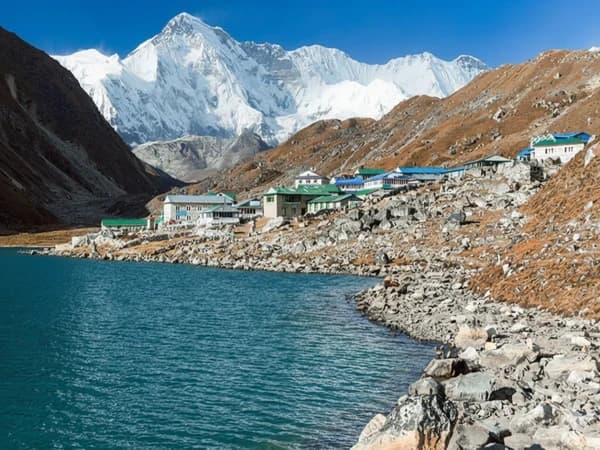
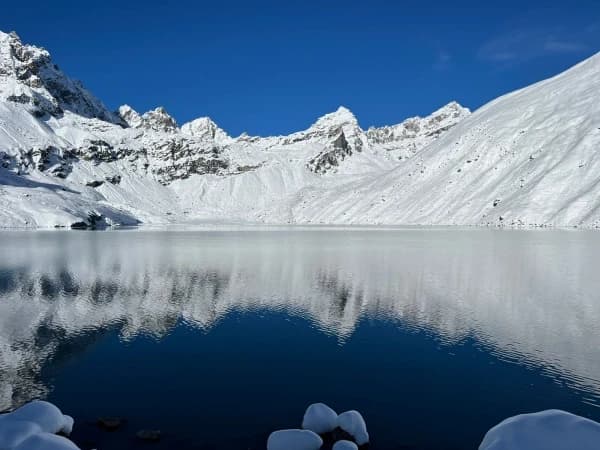
You follow the Base Camp trail to Namche, then turn north-west: Dole (4,110 m), Machhermo (4,470 m) and Gokyo (4,790 m), with Gokyo Ri (5,357 m) on day 7 on our itinerary. There is no pass and no technical ground. The difficulty is altitude and long days, which is why the trek is graded Strenuous, the same band as Base Camp. From Gokyo Ri you see Everest, Lhotse, Makalu and Cho Oyu together. Our Gokyo Lakes guide has the day-by-day, and the stops have their own pages: Dole, Machhermo and Gokyo village. Compare it with Base Camp in Everest Base Camp vs Gokyo Lakes.
Everest Base Camp with helicopter return, 10 days
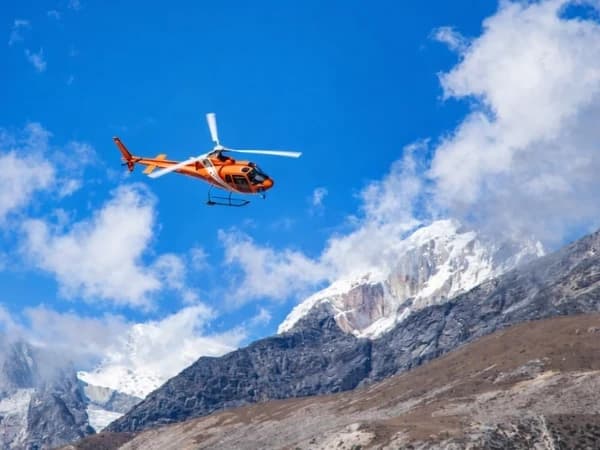
This is easy to misread, so here is what the package page says. You walk up exactly as on the 12-day trek, with one rest day fewer. Day 8 is Kala Patthar at sunrise and a descent to Pheriche, day 9 is a long walk from Pheriche to Lukla, and on day 10 the helicopter flies you from Lukla to Kathmandu. The helicopter replaces the fixed-wing flight home, not the walk down the valley. Older versions of this page said the helicopter flew you back from the trek to Lukla or Kathmandu, which was wrong. The honest numbers and trade-offs are in our helicopter-return guide, and helicopter and flight details are in our domestic flights guide.
Everest Base Camp, 12 days
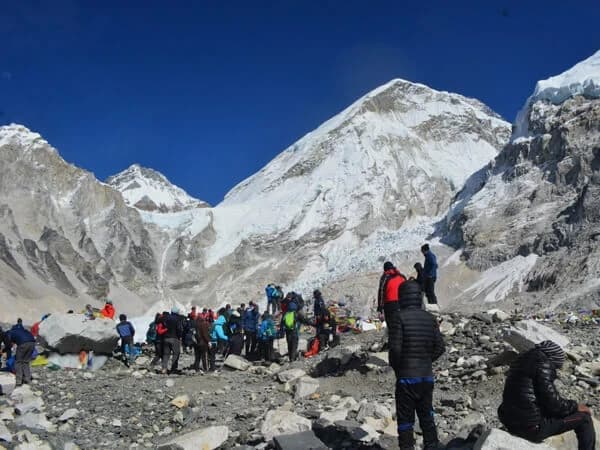
The classic. Lukla, Phakding, Namche Bazaar with a rest day, Tengboche (3,860 m), Dingboche (4,410 m) with a second rest day, Lobuche (4,940 m), then Everest Base Camp (5,364 m) via Gorak Shep, Kala Patthar at sunrise (5,545 m on our itineraries) and back down through Pangboche (3,985 m) and Namche to Lukla. Two things I tell everyone. Base Camp itself has no view of the summit, as our guide to seeing Everest from Base Camp explains; Kala Patthar does, which is why we climb it. Kala Patthar is listed at 5,545 to 5,550 m, with a GPS reading near 5,644 m on the same ridge, so you will see different numbers in different places. And the trek is Strenuous, not a walk: the hard days are the ones above Dingboche. Our difficulty guide, altitude profile and age guide go deeper. Village by village: Phakding, Namche, Tengboche, Pangboche, Dingboche, Lobuche, Gorak Shep and Kala Patthar.
EBC by road, 15 days
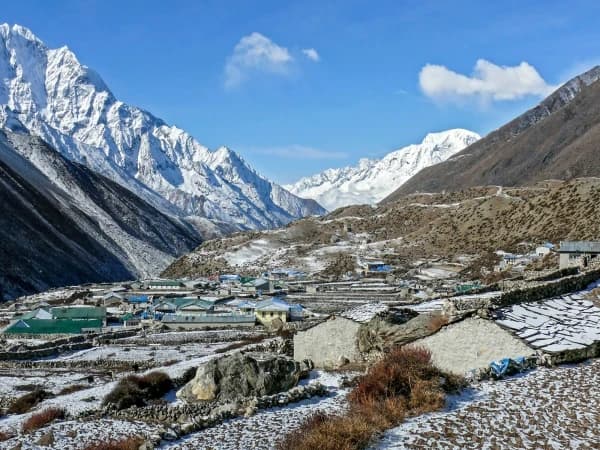
Same Base Camp, different way in. You drive from Kathmandu to Phaplu (Salleri) at 2,413 m on day 1, a drive our itinerary lists at 9 to 10 hours, take a jeep to Thamdanda on day 2 and walk on to Paiya, join the main trail at Phakding on day 3, and return the same way, with a 10 to 12 hour drive back to Kathmandu on day 15. There are no Lukla flights in either direction. The trade-off is two long days in a vehicle and three extra days against the 12-day trek. Who it suits: people who are uneasy about the Lukla flight, and people who want to see the hills. Read Lukla flight or road, Phaplu and Salleri and Paiya.
The three 15-day treks
We have three 15-day treks in the same mountains and they are easy to confuse. They share the same price on our package pages, USD 1,699, 3,240 and 5,299 for one person, but they do different things.
EBC with Gokyo Ri walks to Base Camp first, comes back down to Pheriche, then goes to Gokyo by Phortse and Machhermo, with Gokyo Ri at sunrise on day 12. It has no pass and is graded Strenuous. EBC with Gokyo via Cho La goes to Base Camp first, then crosses Cho La (5,420 m) east to west on day 10 to reach Gokyo, and is graded Very Strenuous. Everest Two Passes goes the other way round: Renjo La (5,360 m) on day 6, Gokyo, Cho La on day 9, and Base Camp last, which means you reach Base Camp having already crossed two passes. If you want to know exactly how the Cho La combination works, our 15-day combination guide goes day by day, and the Cho La pass guide has the crossing. On Cho La our guide says there is a glacier section and a loose descent of roughly 700 metres, so it is a bad fit for anyone uncomfortable on scree or ice.
Everest Three Passes, 17 days
The big circuit. You go up the Thame side to Lungden, cross Renjo La (5,360 m) on day 6, sleep at Gokyo, climb Gokyo Ri, cross Cho La (5,420 m) on day 9, reach Base Camp on day 11, climb Kala Patthar on day 12 and cross Kongma La (5,535 m) on day 13 to Chhukung, then walk out by Tengboche and Namche. The trek is graded Very Strenuous. Its highest point is Kala Patthar at 5,545 m, not a pass. We run it all year depending on the weather and decide every departure on the state of the passes, and the guide makes the call on the day; November and December are the months to read about first, in our snow and odds guide. For how much harder it is than Base Camp, read EBC vs Three Passes. The passes and stops have pages too: Renjo La, Lungden, Thangnak, Dzongla, Kongma La, Chhukung and Thame.
Jiri to EBC, 18 days
The old walk-in. Day 1 is a 9 to 10 hour drive from Kathmandu to Jiri (1,905 m). Then five walking days through the mid-hills, over the Lamjura La and the Khari La, to Phakding on day 6, and from Namche you follow the Base Camp route. The itinerary has a contingency day in Lukla before the flight home. So you skip the flight in but not the flight out: the last day is Lukla to Kathmandu. It is also not the cheapest way to Base Camp, as an older version of this page said. The Jiri trek is dearer than the 12-day trek at every tier. See Jiri vs Lukla and the Jiri route story, and the villages Bhandar and Junbesi.
Climbs and other options in the same region
Mera Peak (14 days, USD 4,835, 6,010 or 9,999 per person for one traveller by tier) and Island Peak (14 days, same prices) are climbs, with the Island Peak summit at 6,165 m on our itinerary and the Mera summit at 6,476 m on ours (the Nepal Mountaineering Association lists Mera at 6,470 m; I use our itinerary figure for the route and say where they differ). They need a different kind of preparation and a mountaineering royalty paid to the Nepal Mountaineering Association (NMA); royalties are not quoted here, so read the package page and the guides before you decide: Mera Peak, Island Peak, which to climb first and can a beginner climb Island Peak. If you want an Everest view without Lukla, the Pikey Peak trek (6 days, summit viewpoint at 4,065 m on the itinerary) is graded Moderate and reached by road; read the Pikey Peak guide. And if you do not want to trek at all, every way to see Everest without a trek covers the mountain flight and helicopter tours.
Which route should you choose, and which should you avoid?
Choose Everest View if you have seven days, have not trekked at altitude, or are travelling with children or older parents. Do not choose it if Base Camp is the whole point.
Choose Ama Dablam Base Camp if you want a short trip that still reaches 4,570 m. Do not choose it if you want to say you went to Everest Base Camp.
Choose the 12-day Everest Base Camp trek if it is your first big Himalayan trek and you want the famous goal with two rest days built in. Do not choose it if you have never done more than a day hike and have not trained; our training guide is the place to start. Do not expect solitude in October.
Choose Gokyo Lakes if you care more about the views and the lakes than the label, and want fewer people. Do not choose it if you want to stand at Base Camp, and do not mistake it for an easy trek: you sleep at 4,790 m.
Choose the helicopter return if your flight home is fixed and you are happy to pay for it. Do not choose it if you think the helicopter will take you down from Base Camp, or if you want the extra rest day. It still depends on the weather, as every Lukla flight does.
Choose the 15-day Cho La combination or the Two Passes if you have already slept above 4,500 m and walked well at that height, and are happy on steep scree. Do not choose them if you have bad knees or are uneasy on ice. Choose EBC with Gokyo Ri instead if you want both places without a pass.
Choose the Three Passes if you are very fit, have altitude experience and want the whole region. Do not choose it as your first Himalayan trek, and do not plan it for November or December without reading the snow guide above.
Choose the road trip if you do not want to fly in. Do not choose it if two long days in a vehicle will wreck the trip for you. Choose Jiri if you have 18 days and want the hill country; do not choose it if you want to avoid flying altogether, because you still fly out from Lukla.
If you are still undecided between Base Camp and another country's classic, Everest Base Camp or Annapurna Base Camp, Everest or the Annapurna Circuit and Langtang or Everest compare them head to head.
Gokyo or Base Camp, and how many days do you have?
Book Base Camp if the name matters to you, because Kala Patthar at sunrise puts Everest close in front of you. Book Gokyo if the view matters more than the sign. You get turquoise lakes, a long glacier and the view from Gokyo Ri, where Everest, Lhotse, Makalu and Cho Oyu stand together, and the trail is quieter. It is not an easy trek, because you sleep at 4,790 m. I compare the two in Everest Base Camp versus Gokyo Lakes, and the two viewpoints in Gokyo Ri versus Kala Patthar.
Your days decide the rest. With ten days you can do Gokyo, or Base Camp with a helicopter return. With twelve you can walk to Base Camp, or do Gokyo with Renjo La. With fifteen you can have Base Camp and Gokyo together, and seventeen is the Three Passes. With five to seven days, take an Everest View trek. I would not shorten Base Camp on foot below 12 days, because the rest days are what make it work. See the best trek for the days you have and the guide to Everest View in 5 or 7 days.
When is the best time to trek in the Everest region?
Every route that flies into Lukla shares the same seasons. The two best windows are October and March to April. October is the most reliable weather and the busiest trail. Spring is warmer, with rhododendrons in bloom and slightly hazier afternoons. For autumn skies with fewer people, aim for mid-November into early December, when nights are colder and lodges emptier. Avoid the monsoon from June to mid-September, and go in January and February only if cold and quiet are the point; some of the higher lodges shut then. The Three Passes runs all year depending on the weather, and snow on the passes is the issue in the colder months. The month-by-month detail is in our best-time guide, the weather guide, autumn, spring, winter and how to avoid the crowds.
What permits do Everest region treks need?
For the Khumbu routes, three payments apply: a TIMS card at NPR 2,000, the Khumbu local fee of NPR 3,000, and the Sagarmatha National Park entry of NPR 3,000, which is NPR 8,000 per person in total. The NTB lists the TIMS card at NPR 2,000 for foreigners and the Sagarmatha park entry at NPR 3,000 per person per entry. We take TIMS on every trek, and the permits are part of the package price. The Khumbu fee is paid in the Khumbu by your guide, and the TIMS card is arranged by us in Kathmandu. Permits need at least 48 hours in government working days, so do not leave the booking to the last week.
A licensed guide and agency-issued TIMS card are required on most trekking routes under the Nepal Tourism Board rule from 31 March 2023; the rule covers the Everest (Khumbu) region too, and we always trek with a licensed guide.
The NTB list of routes that fall under that rule names Everest Base Camp, Gokyo, Cho La, Renjo La, the Three Passes, Everest View and Mera Peak. On the Jiri and road routes, we know of no local fee on the hill sections beyond those three; if there is one, we will tell you before you pay. Mera and Island Peak also carry an NMA climbing royalty, which is not quoted on this page. The details for Base Camp are in our permits guide, and whether you could go without a guide is answered in this guide and this one.
How do you book, and what if your plans change?
If you need to change your dates, we offer free rescheduling with at least 72 hours' notice, to any date within one year. The 10% deposit itself is not refunded if you cancel. If we cannot run the trip, we refund what you paid less taxes, bank or card charges and any money already spent on permits or flights. You pay the rest in Kathmandu, in US dollars cash or by card; a card payment of the balance carries a 3.5% charge, and we cannot take Nepali rupees from foreign guests. Buy your travel insurance at home, with cover for high-altitude trekking and helicopter evacuation; our insurance guide explains what to look for. Extra porters are USD 25 a day plus 13% VAT and a 3.5% bank charge on top.
Tell me your dates, how many of you there are and how high you have slept before, and I will tell you which route I would book for you. No sales pitch, just a straight answer. We have over 300 reviews on TripAdvisor, Google and Trustpilot.
Sources: Nepal Tourism Board, TIMS card and park entry fees pages, read 4 October 2026.
WhatsApp: +977 9810351300
Email: [email protected]
Written by Shreejan Simkhada, CEO of The Everest Holiday, from a family of three generations of family guides. TAAN Member #1586.
Planning a trip to Nepal?
Drop us your details and tell us what you have in mind. We will put together a personalised plan and get back to you.
Not sure which Nepal trek is right for you?
Take our free 2-minute quiz and get personalised recommendations based on your fitness, experience, and travel style.
Find Your Perfect Trek →Need Help? Call Us+977 9810351300orChat with us on WhatsApp
Related Trek Packages
 US$1,399
15 DaysMax 20
(6 reviews)
Everest Base Camp Trek By Road Trip - 15 Days Itinerary and Cost
Starts From
ExploreUS$1,399
 US$1,599
18 DaysMax 20
(1 review)
Historical Jiri to Everest Base Camp Trek - 18 Days Itinerary & Cost
Starts From
ExploreUS$1,599
 US$1,565
7 DaysMax 20
Everest View Trek - 7 Days Itinerary & Costs
Starts From
ExploreUS$1,565
 US$1,855
17 DaysMax 20
Everest Three Passes Trek - 17 Days
Starts From
ExploreUS$1,855
Everest Base Camp with Gokyo Lakes Trek via Chola Pass - 15 Days
Starts From
ExploreUS$1,699
 US$1,699
15 DaysMax 20
Everest Base Camp with Gokyo Ri Trek - 15 Days
Starts From
ExploreUS$1,699
Latest Travel Blogs
Thamdanda and Surke: The Road Head for Everest Base Camp by Road
Thamdanda is the road head where our Everest Base Camp trek by road starts and ends on foot. How to get there from Phaplu and what the first walk to Paiya is like.
Read More
Poon Hill Trek Permits 2027: ACAP, TIMS, Cost and What You Need
Poon Hill needs two permits: ACAP at NPR 3,000 and a TIMS card at NPR 2,000. Who arranges them, where they are checked, SAARC rates and the 2027 trek prices.
Read More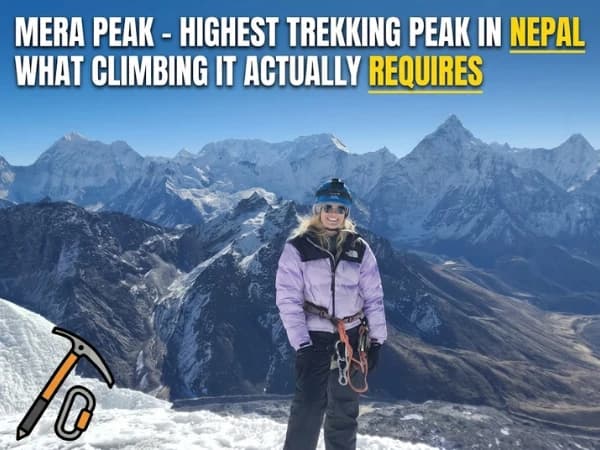
Mera Peak Climbing Itinerary 2027: 14 Days, Day by Day
Mera Peak in 14 days, night by night. The Hinku valley, a full rest day at Khare, Mera High Camp at 5,780 m, summit day, 2027 prices and the best months.
Read More Chat with Shreejan