
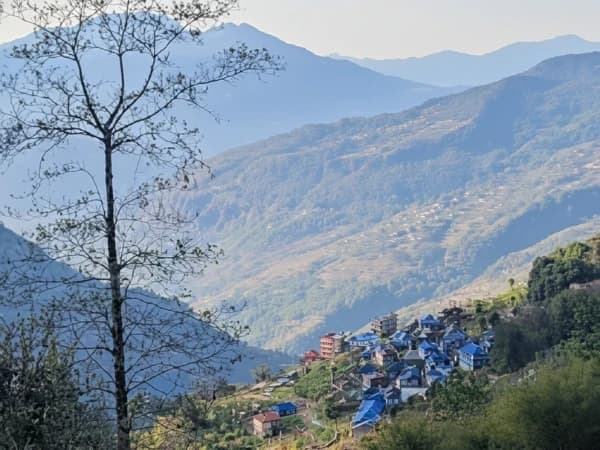
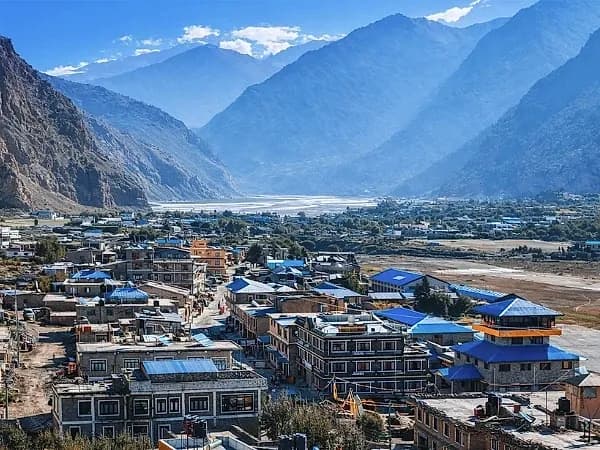
Update, 7 October 2026: The road up the Rasuwa and Trishuli valley to Syabrubesi has been closed since the 26 August flood, so Langtang is not accessible at present. The Beni to Jomsom road is closed for repairs, and reopening is expected in mid-October. The Besisahar to Chame road is under repair and should be ready in a few days (as at 6 October). The Everest region is open and unaffected by the floods, as at our 29 September update. We check 48 hours before departure; if the road is not open we move your dates free.
Planning a trekking holiday in Nepal? Start here, from the people who actually run the trek
Most "Nepal trekking holidays" you find online are sold by large agencies in London or New York who then hand your trip to a local Nepali company to operate. That local company is us.
The Everest Holiday is a family-run, Government-registered trekking operator based in Kathmandu, guiding the Himalaya since 2016 (TAAN member #1586, Travel Licence 2838/072). When you book a Nepal walking holiday directly with us, you deal with the team on the ground who arrange your permits, guides, lodges and safety, not a call centre two continents away. The practical result for you is simple: you talk to the people who run your trek, and one company is responsible for it from your first email to your last day on the trail.
This guide gives you the honest version of a Nepal trekking holiday in 2027: what the best treks actually cost, how to choose the right one, and how to book without overpaying.
Nepal travel guide 2027: the short version
If you are planning Nepal for 2027, these are the answers most people need first, with a link to the full guide for each. The best months are October to November and March to May (best time to visit Nepal, best time to trek). Most visitors need a 30-day visa at US$50 (Nepal e-visa and visa on arrival). Costs are in our Nepal trek cost breakdown and the Everest Base Camp cost guide. For the city stops, read the Kathmandu travel guide and the Pokhara guide.
How many days do you need in Nepal?
It depends on what you want to do. As a rough guide:
- 7 days: Kathmandu and a cultural loop with no trekking (7-day itinerary).
- 10 days: Kathmandu, a short Annapurna-region trek and Pokhara (10-day itinerary).
- 14 days: a short trek plus Kathmandu, Pokhara and a Chitwan safari (14-day itinerary), or the same length without trekking (14-day itinerary without trekking).
- 21 days: the full 12-day Everest Base Camp trek with Kathmandu, Pokhara and Chitwan around it (21-day itinerary).
How do I plan a trip to Nepal?
I would decide in this order. First choose your season, because it decides which treks are open and comfortable. Second, choose how many days you have, using the list above. Third, choose your region and trek from the table below. Fourth, choose your tier: Budget has no porter and meals are not included, Standard includes all meals and one porter for every two trekkers, and Luxury gives you your own porter, all meals with fruit and nuts, private deluxe rooms and, on Everest, the helicopter to Lukla and back. Fifth, check the permits (trekking permits guide), which we arrange for you. Sixth, book your flights and sort your visa. Last, buy insurance that covers trekking at altitude and helicopter evacuation, and use the pre-departure checklist before you fly. Kathmandu hotels are not included in any trek tier, so we quote them separately.
How much does a trekking holiday in Nepal cost in 2027?
We price honestly, so let us start with the model rather than a teaser number. Every package page shows the current price for Budget, Standard and Luxury, and each price covers your licensed guide, all trekking permits and fees, teahouse accommodation on the trail and your Kathmandu airport transfers, plus all meals on the Standard and Luxury tiers.
Those permit fees are set by the government, not by us, and you can check them yourself: the Department of National Parks and Wildlife Conservation publishes the national park and conservation area charges, and the Department of Immigration publishes the visa on arrival fee. We pass both through at cost and buy them on your behalf before you land, so nothing is added at a counter once you are here.
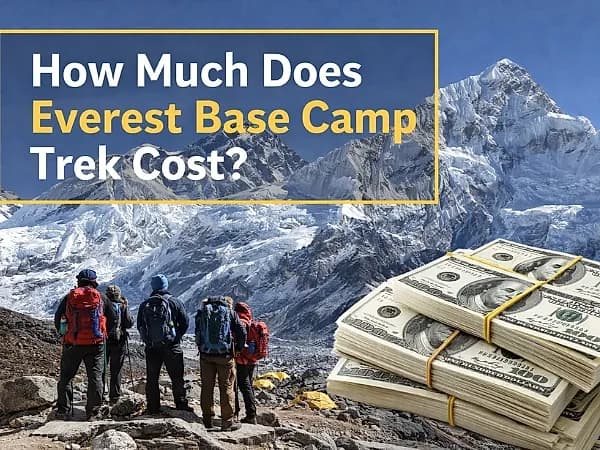
Here is a real, worked example. Our 12-day Everest Base Camp trek is priced at:
- Budget: from USD 1,399 per person (twin-share)
- Standard: from USD 2,499 per person
- Luxury: from USD 4,999 per person
Group discounts apply by party size (1–4, 5–8 and 9–12 people), and each package page shows the current figures. The tier you choose changes your lodges and comfort level, not the route or the care.
Every other trek follows the same transparent model. Rather than print a number here that might drift out of date, each package page shows its exact current price. See Annapurna Base Camp, Annapurna Circuit, Langtang Valley, Manaslu Circuit, Poon Hill / Ghorepani, Mardi Himal and Everest Three Passes.
A few honest notes on cost, because misleading pricing is the most common complaint we hear:
- What is genuinely extra. Your international flights, Nepal visa, travel insurance (essential, see below), the Lukla flight on Everest treks where applicable, tips, and personal spending (drinks, hot showers, Wi-Fi, charging on the trail).
- Beware the teaser price. Some sites advertise a very low headline figure, then quote far more once you enquire. We publish the real all-inclusive number up front, so you are never surprised by the final invoice.
For a fuller breakdown of what a Nepal trek really costs, see our Nepal trek budget guide for 2027.
Which Nepal trek is best for my experience level?
There is no single "best" trek. There is the best trek for you. Here is how we match people.
| Trek | Days | Max altitude | Difficulty | From (USD, budget) | Best for |
|---|---|---|---|---|---|
| Poon Hill / Ghorepani | 6 | 3,210 m | Easy | $499 | First trek, families, short time |
| Langtang Valley | 8 | 3,870 m | Easy–moderate | $365 | Best value, closest to Kathmandu |
| Mardi Himal | 7 | 4,200 m | Moderate | $454 | Quiet ridge, big views, short |
| Annapurna Base Camp | 9 | 4,130 m | Moderate | $499 | The classic all-rounder |
| Annapurna Circuit | 12 | 5,416 m (Thorong La) | Moderate–challenging | $1,175 | A high pass without the Everest crowds |
| Everest Base Camp | 12 | 5,545 m (Kala Patthar) | Challenging | $1,399 | The icon |
| Manaslu Circuit | 12 | 5,160 m (Larke La) | Challenging | $799 | Remote, restricted, few crowds |
| Everest Three Passes | 17 | 5,545 m | Strenuous | $1,649 | Experienced high-route trekkers |
Prices are our budget-tier starting points; standard and luxury tiers and current group discounts are on each package page. Max altitude is the highest sleeping or day point on our standard itinerary.
If it is your first Himalayan trek, or you are travelling with family or limited time, start with Poon Hill or Mardi Himal in the Annapurna region. Lower altitude, shorter days, stunning sunrise mountain views, and a gentle introduction to teahouse life.
If you want the classic Nepal experience without going to extreme altitude, the Annapurna Base Camp trek is the all-rounder: villages, rhododendron forest, and an amphitheatre of peaks at the end. The Langtang Valley trek is the best-value option and the closest major trek to Kathmandu, ideal if your holiday is shorter.
If the goal is Everest, the Everest Base Camp trek is the icon. Prefer to skip the Lukla flight? Our Everest Base Camp by Road option drives in via Salleri and is gentler on the budget and the nerves.
If you are an experienced trekker chasing something wilder, the Manaslu Circuit delivers a remote, restricted-area crossing with a fraction of the crowds, and the Everest Three Passes is one of the great high routes in the world.
Not sure? Tell us your dates, fitness and what you want from the trip, and we will recommend honestly, including telling you when a shorter or different trek would suit you better.
When is the best time to trek in Nepal in 2027?
Nepal has two prime trekking seasons:
- Autumn (late September to late November) is the most popular season. Clear skies, stable weather, the best mountain views of the year. Book early, as the good dates fill.
- Spring (March to May) is warmer, with rhododendron forests in bloom and excellent visibility, especially in March and April.
Winter (December to February) is quiet, cold and crisp, fine for lower treks like Poon Hill, Langtang and Annapurna Base Camp, with empty trails. Monsoon (June to August) is wet for most regions, but it is the ideal window for the rain-shadow treks of Upper Mustang and Dolpo, which stay dry.
Because Nepal trekking holidays are usually booked 4–12 months ahead, the best dates and the best guides go to those who plan early. If you are reading this for a 2026 autumn trek, now is the right time to talk.
Guided, supported and safe: what a trek with us actually includes
A walking holiday in Nepal is only as good as the people running it. With us you get:
- A licensed, English-speaking guide who knows the route, the weather, and the warning signs of altitude, and who is paid and insured fairly.
- Porter support on Standard (one porter for every two trekkers) and Luxury (your own porter), so you walk with a daypack, not your full kit. Budget has no porter and you carry your own bag.
- All permits and paperwork handled for you: TIMS card, national park and conservation-area fees, and restricted-area permits where needed.
- Teahouse accommodation on the trail: clean, warm, family-run lodges. Budget is shared rooms with meals not included; Standard and Luxury include all meals, with private rooms.
- Real safety cover. We monitor your acclimatisation daily, carry a first-aid kit and oximeter, and have a clear evacuation plan. We require every trekker to hold travel insurance that covers high-altitude trekking and emergency helicopter evacuation. This is not optional. It is the single most important thing you arrange before you fly.
Why book a Nepal trek with a local operator?
Here is what changes when you deal directly with the people who run the trek.
When you book through a reseller or a large international company, there are usually two businesses involved: the agency that sold you the trip, and the Nepali operator that runs it. I cannot tell you what any other company charges. What I can tell you is how it works when you deal with us.
Booking direct with us means:
- One company answers for your trek. The team that sells it is the team that runs it, so there is nobody in between if something changes on the trail.
- You speak to the people who run it. Questions about your route, diet, fitness or dates are answered by the team arranging it, not relayed through a sales desk.
- Your money stays in Nepal, supporting local guides, porters and lodge families directly.
- Secure payment. You can pay your deposit by card through our Himalayan Bank online payment gateway.
We are also proud that a share of what we earn funds the Nagarjun Learning Center, where 70 children in Saldum village receive free education. Your trek helps keep that classroom open.
How do I book a trekking holiday in Nepal?
- Tell us your plan: dates, group size, fitness, and which trek (or ask us to recommend one).
- We send a clear, all-inclusive quote: the real number, with nothing hidden.
- Secure your place with a deposit via our Himalayan Bank gateway; the balance can be settled closer to departure.
- We handle the rest: permits, guide, lodges and transfers, and we brief you fully before you walk.
Start your trek planning now: [email protected] · WhatsApp +977 9810351300 · theeverestholiday.com
Trekking to Nepal from your country?
Costs, flights, visa rules and the best season all look a little different depending on where you fly from. We have put together country guides with the details that matter before you book:
- Trekking Nepal from the USA: costs in USD, East- and West-Coast flight routes, and visa on arrival.
- Trekking Nepal from the UK: prices in pounds and flights from London, Manchester and Birmingham.
- Trekking Nepal from Australia: AUD costs, flights via Asia, and the best season for Australian trekkers.
- Trekking Nepal from Canada: costs in Canadian dollars and flights from Toronto, Vancouver and Calgary.
- Trekking Nepal from India: INR pricing, no visa required, and direct flights or the overland route.
Frequently asked questions
Do I need to be very fit to trek in Nepal?
No. Many of our trekkers are first-timers. If you can walk 5–6 hours a day at a steady pace with rest days built in, treks like Poon Hill, Langtang and Annapurna Base Camp are well within reach. We match the trek to your fitness.
Are Nepal walking holidays suitable for beginners and families?
Yes. Poon Hill, Mardi Himal and Langtang are excellent first treks, and we run private family departures with a relaxed pace.
What is included in the price?
Your licensed guide, all trekking permits and fees, teahouse accommodation, Kathmandu airport transfers and, on Standard and Luxury, all meals on the trail. Budget does not include meals. International flights, visa, insurance, the Lukla flight (where applicable), tips and personal spending are extra.
Is travel insurance compulsory?
Yes. You must hold insurance covering high-altitude trekking and emergency helicopter evacuation. We will not run a trek for anyone without it. It is for your own protection.
How far ahead should I book?
For autumn (Sept–Nov) and spring (Mar–May), book 4–12 months ahead to secure dates and the best guides. We can sometimes arrange shorter-notice treks in quieter periods.
Why book direct with a local company?
Because you deal with the team who actually run the trek. Questions about your route, diet, fitness or dates are answered by the people arranging it, not relayed through a sales desk. We cannot speak for what other companies charge, so every price we quote is on the package page.
 Chat with Shreejan