Why Are British Trekkers Booking Direct with a Nepali Family Company
If you're a UK trekker looking at Everest Base Camp, Annapurna, or Langtang, you've probably seen prices from operators like KE Adventure, The Mountain Company, or Intrepid Travel. They'll quote you £1,800–£2,500 for Everest Base Camp. Here's what they won't tell you: those companies subcontract to Nepali operators like us. Same trails, same lodges, same guides. The only difference is their markup.
Trekking Nepal from the UK: at a glance
If you only want the Everest Base Camp numbers in pounds, read our Everest Base Camp trek cost from the UK guide, which lists every 2027 cost line by line.
- Cost: Everest Base Camp from USD $1,399 (about £1,080), Annapurna Base Camp from $725 (about £560) per person, booked direct, versus £2,000–3,500 with UK operators.
- Visa: UK passport holders get a visa on arrival in Kathmandu (15 days $30 / 30 days $50).
- Flights: London Heathrow to Kathmandu via Doha, Delhi or Istanbul (about 12–15 hrs); also from Manchester and Birmingham via the Gulf.
- Best time: October–November and March–May (your autumn and spring align with Nepal’s best season).
Book directly with The Everest Holiday and you get a better experience with no agency margin on top, because we are the source, not the middleman.
Price Comparison: UK Operator vs Booking Direct
| Trek | UK operator, group departure (£) | The Everest Holiday: Budget / Standard / Luxury |
|---|---|---|
| Everest Base Camp 12 Days | £1,800–£2,500 | USD 1,399 (~£1,080) / USD 2,499 (~£1,930) / USD 4,999 (~£3,850) |
| Annapurna Base Camp 9 Days | £1,500–£2,200 | USD 725 (~£560) / USD 1,310 (~£1,010) / USD 2,095 (~£1,620); solo USD 1,250 (~£970) / USD 1,725 (~£1,330) / USD 3,465 (~£2,670) |
| Poon Hill 6 Days | £900–£1,400 | USD 499 (~£390) / USD 749 (~£580) / USD 1,235 (~£960) |
| Langtang Valley 8 Days | £1,200–£1,800 | USD 490 (~£390) / USD 1,050 (~£810) / USD 1,800 (~£1,390) |
| Manaslu Circuit 12 Days | £2,000–£3,000 | USD 1,005 (~£780) / USD 1,599 (~£1,230) / USD 2,099 (~£1,620) |
All our prices are set in US dollars. The pound figures above are indicative only. They were converted at the Nepal Rastra Bank rate on 27 July 2026 and will move with the exchange rate. Your booking is confirmed and charged in US dollars, so that is the price that applies. The UK operator prices are for their standard group departures, which are not the same product as our Luxury tier.
That's not a typo. UK operators add 40–60% to the price and call it "peace of mind." But the peace of mind is identical when you book with us: TAAN-registered guides, the same teahouses, the same trails, the same Himalayas. What changes is who gets your money.
All our prices include permits, licensed guide, porter, accommodation, meals (on Standard and Luxury tiers), and ground transport from Kathmandu. We offer three tiers (Budget, Standard, and Luxury) so you choose exactly how you want to trek.
Why The Everest Holiday Is Different
- No UK agency margin: same trails, same lodges, better value. See the table above.
- Secure bank payment: We take payment through Himalayan Bank Limited (Nepal's most trusted commercial bank, est. 1993). We are registered with OCR (147653/072/073), a TAAN member (#1586) and hold Tourism Licence 2838/072. Plans change? We reschedule free to any date within a year with 72 hours' notice. The deposit itself is not refunded if you cancel. If we cannot run your trip, we refund what you paid less taxes, bank and card charges and any money already spent on permits or flights.
- European representative: Shradha Simkhada, based in Finland, is available for European enquiries. You're not dealing with a faceless call centre.
- Family company: Our family has three generations of guiding in the Himalayas, and our grandfather Hari Lal Simkhada supported Himalayan expeditions. This isn't a startup. It's a family legacy.
- Over 300 reviews on TripAdvisor (4.9★), Google (4.9★) and Trustpilot (4.7★). Check them yourself.
- TAAN Member #1586: Government-registered, Tourism Licence 2838/072. Fully legal, fully accountable.
Are there direct flights from the UK to Kathmandu?
There are no direct flights from the UK to Kathmandu. Every route requires at least one connection. The good news: the Middle Eastern hubs make it comfortable, and prices are reasonable if you book ahead.
From London Heathrow (LHR)
| Airline | Route | Total Flight Time | Return Cost (Approx.) |
|---|---|---|---|
| Qatar Airways | LHR → Doha → Kathmandu | 11–13 hours | £500–£750 |
| Emirates | LHR → Dubai → Kathmandu | 12–14 hours | £550–£800 |
| Air India | LHR → Delhi → Kathmandu | 12–15 hours | £450–£650 |
| Turkish Airlines | LHR → Istanbul → Kathmandu | 13–15 hours | £480–£700 |
From Manchester (MAN) and Birmingham (BHX)
Manchester and Birmingham have fewer direct Middle Eastern connections, but Qatar Airways flies Manchester–Doha daily. For other airlines, you'll typically connect via London or a European hub. Add £50–£100 to the London prices as a rough guide.
Flight Booking Tips for UK Trekkers
- Book 3–5 months ahead for the best fares. October flights sell fast because it's peak trekking season.
- Cheapest months to fly: June and January, when return fares from London drop to around £450–£550.
- Most expensive: October (peak season), when prices climb to £700–£800.
- Luggage: Most Middle Eastern carriers include 30kg checked baggage, which is enough for trekking gear.
- Layover tip: Qatar Airways and Emirates offer lounge access from £25–£35. A hot shower and a proper meal before the Kathmandu leg makes a big difference.
- Google Flights price tracking works well for these routes. Set an alert and wait for a dip.
Do UK passport holders need a visa for Nepal?
British citizens get a visa on arrival at Tribhuvan International Airport in Kathmandu. No advance application needed. Just turn up with the right documents.
Visa Fees
| Duration | Fee (USD) | Approx. GBP |
|---|---|---|
| 15 days | $30 | ~£25 |
| 30 days | $50 | ~£40 |
| 90 days | $125 | ~£100 |
For most trekkers, the 30-day visa at £40 is the right choice. It gives you time to trek, recover in Kathmandu, and maybe visit Pokhara or Chitwan National Park. The 15-day visa is tight for anything longer than Poon Hill once you factor in travel days.
What You'll Need
- Passport with at least 6 months' validity from your entry date
- At least 2 blank pages
- One passport-sized photo (bring a spare)
- Cash in USD for the visa fee (GBP not accepted at the counter)
Pro tip: Fill in your visa application online at immigration.gov.np before you fly. You'll skip the long queue at the airport and head straight to the payment counter. It takes five minutes and saves you thirty.
For the full visa process, read our Nepal Visa on Arrival 2026 Guide.
When is the best time to trek in Nepal?
October–November: Peak Season (Best Weather)
This is when Nepal is at its finest. Clear skies, stable temperatures, the best mountain views you'll get all year. Post-monsoon air is washed clean, and you can see from Dhaulagiri to Kangchenjunga on a good morning. The downside: it's the busiest season, and flights from the UK are at their priciest. Book everything early: flights, trek, accommodation in Kathmandu.
School holiday note: October half-term falls right in the middle of peak trekking season. If you're a teacher or parent, this is your window. A 12-day Everest Base Camp trek fits neatly into the half-term break plus a week's leave. February half-term also works for lower-altitude treks like Poon Hill, when winter starts easing but crowds haven't arrived.
March–May: Spring (Rhododendrons and Fewer Crowds)
Spring brings blooming rhododendrons on the Annapurna and Langtang trails: entire hillsides turn red, pink, and white. It's slightly warmer than autumn, and the trails are quieter. Flights from the UK are cheaper too, with £500–£650 return fares common. Easter holidays work well for shorter treks like Poon Hill or Mardi Himal. Late May gets hazy as pre-monsoon clouds build, so March and April are the sweet spot.
December–February: Winter (Cold but Quiet)
Cold at altitude but crystal clear. Lower elevation treks like Poon Hill and the Langtang Valley are perfectly doable. EBC is possible but properly cold: expect -15°C to -20°C at night above 4,000m. You'll want a sleeping bag rated to -20°C and serious down layers. The upside is off-peak flights from £450, fewer trekkers on the trail, and a completely different atmosphere. Teahouse owners have more time for you. Christmas and New Year in Kathmandu is surprisingly good fun.
June–September: Monsoon (Avoid)
Rain, leeches, landslides, poor visibility. Not the time. Trails become slippery, flights get cancelled, and mountain views disappear behind cloud for days. The exception: Upper Mustang and Dolpo sit in a rain shadow and can be trekked during monsoon, but these are specialist treks requiring restricted area permits and higher budgets.
Planning Around UK Annual Leave
Most British trekkers have 25–28 days of annual leave. Here's how the maths works: a 12-day Everest Base Camp trek requires about 16 days door-to-door from the UK (including travel days and a buffer day in Kathmandu). A 6-day Poon Hill trek takes about 10 days total. If you're combining the trek with time in Kathmandu, Pokhara, or Chitwan National Park, allow 18–21 days. It's worth it.
Which Nepal treks are most popular with British trekkers?
Everest Base Camp Trek: 12 Days
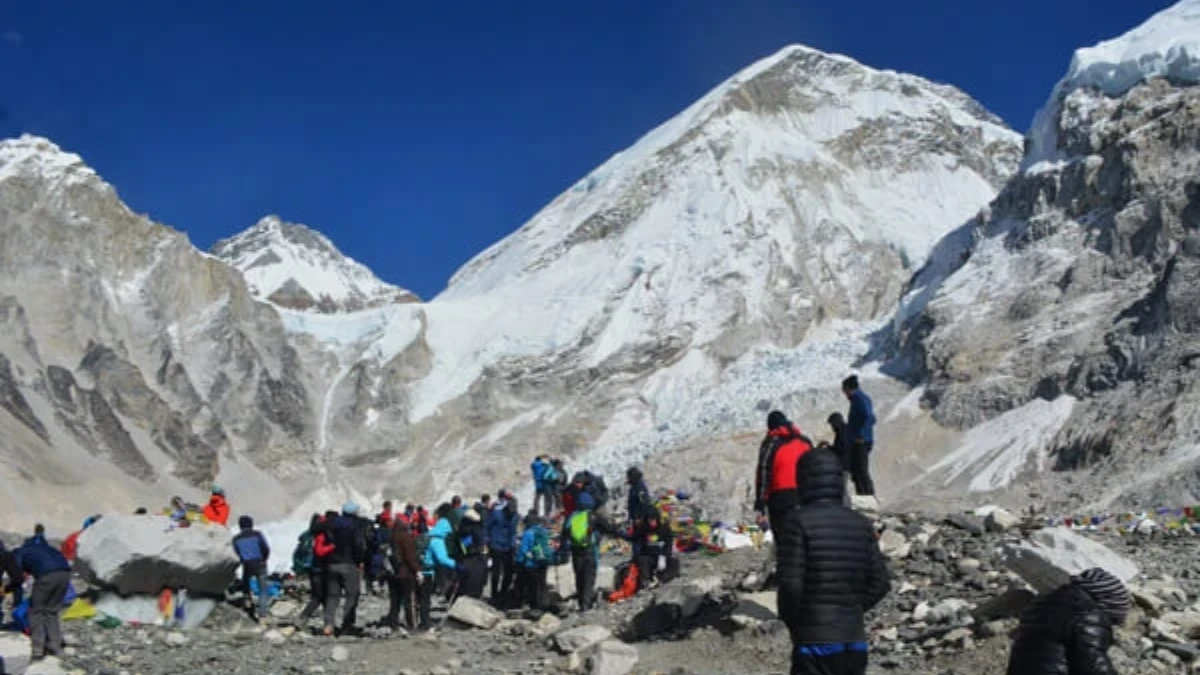
The one everyone's heard of. Stand at 5,364m in the shadow of Everest. Cross suspension bridges, walk through Sherpa villages, watch sunrise from Kala Patthar. Three tiers: Budget £1,099 | Standard £1,999 | Luxury £3,999 per person. Permits, guide and ground transport in all tiers. Porter: none on Budget (you carry your own pack), one per two trekkers on Standard, one per trekker on Luxury. Meals included on Standard and Luxury (Budget excludes meals).
View full itinerary and book →
Annapurna Base Camp Trek: 9 Days
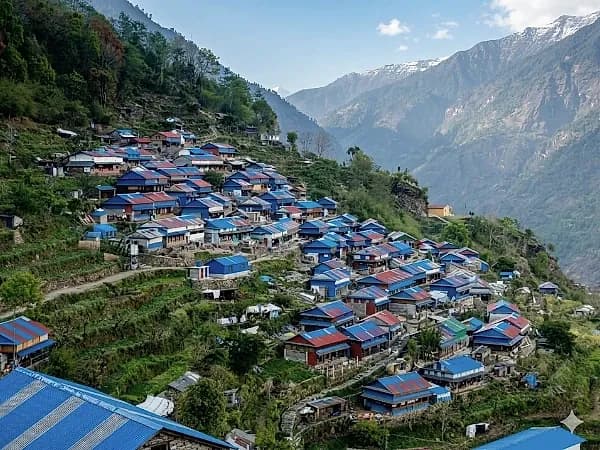
Walk through rice terraces, rhododendron forests, and natural hot springs to the Annapurna Sanctuary, a natural amphitheatre ringed by 8,000m peaks. Budget £599 | Standard £1,049 | Luxury £1,699 per person (solo £999, £1,399 and £2,749).
View full itinerary and book →
Poon Hill Trek: 6 Days
The perfect first Himalayan trek. Short, manageable, and the sunrise over Annapurna and Dhaulagiri from 3,210m is hard to beat. Budget £399 | Standard £599 | Luxury £879 per person. Fits into a week off work.
Langtang Valley Trek: 8 Days
The closest major trek to Kathmandu. Tamang culture, yak cheese factories, and views of Langtang Lirung (7,227m). Fewer trekkers than Everest or Annapurna. From £289 (Budget) to £799 (Luxury) per person.
Manaslu Circuit Trek: 12 Days
The quieter alternative to the Annapurna Circuit. Cross the Larkya La Pass at 5,160m with restricted-area permits keeping crowds low. From £649 (Budget) to £1,699 (Luxury) per person.
Gokyo Lakes Trek: 10 Days
Turquoise glacial lakes at 4,700–5,000m with views of four 8,000m peaks from Gokyo Ri. A serious alternative to the classic EBC route. From £1,019 (Budget) to £3,499 (Luxury) per person.
What travel insurance do I need for trekking in Nepal?
This is not optional. Travel insurance with specific trekking cover is mandatory for all our treks. We require confirmation of your policy before departure. Standard holiday insurance from your bank or credit card will not cover you at altitude.
What Your Policy Must Cover
- Helicopter rescue and evacuation up to the highest point of your trek: 6,000 m for Everest Base Camp, 5,500 m for the Annapurna Circuit, 4,500 m for Annapurna Base Camp and Mardi Himal, and 3,500 m for Poon Hill (this is the critical one; helicopter rescue in Nepal costs £3,000–£5,000)
- Medical treatment and hospitalisation in Nepal and during repatriation
- Trip cancellation and curtailment
- Personal liability and baggage
- Check that the policy specifically covers trekking to your maximum altitude (5,364m for EBC, 5,416m for Gokyo Ri)
Recommended UK Insurance Providers
- World Nomads: Popular with trekkers worldwide. Easy to buy online, covers high altitude. From about £60 for 3 weeks.
- BMC (British Mountaineering Council): If you're a BMC member, their travel insurance is excellent value and specifically designed for trekking and climbing. From about £50.
- Campbell Irvine: Specialist mountaineering insurance. Good for higher-risk treks and peak climbing.
- Dogtag: Another specialist outdoor insurer with good altitude cover.
Cost: Expect to pay £50–£120 for 2–4 weeks, depending on your age, the maximum altitude, and the level of cover. It's a small price for the security of knowing a helicopter will come if you need one.
FCDO Travel Advice
The Foreign, Commonwealth & Development Office (FCDO) advises against all but essential travel to certain border areas of Nepal. The main trekking regions (Everest, Annapurna, Langtang, Manaslu) are not affected by these advisories. Check the latest at gov.uk/foreign-travel-advice/nepal before you travel. Your insurance policy must not exclude FCDO-advised areas. Most standard policies do, so check the fine print.
What British Trekkers Actually Worry About
After guiding hundreds of British trekkers, we know the questions that come up again and again. Here's the honest version.
Toilets
Kathmandu hotels have Western toilets. On the trail, expect squat toilets at teahouses. They're clean enough but basic. Bring your own toilet paper because it's not always provided. There are no toilets between villages, so you'll get comfortable with the great outdoors.
Food and Hygiene
Dal bhat (rice, lentils, vegetables) is the staple. It's freshly cooked, filling, and safe. You'll eat it twice a day and (surprisingly) never get bored of it. Teahouses also serve pasta, noodles, momos (dumplings), soups, and pancakes. Avoid salads and uncooked vegetables above 3,000m. Stick to cooked food and you'll be fine. Kathmandu has excellent restaurants, so you won't go hungry.
Drinking Water
Don't drink tap water anywhere in Nepal. On the trail, use water purification tablets (chlorine dioxide or iodine) or a SteriPEN UV purifier. Bottled water creates plastic waste and costs more the higher you go. Bring a good water bottle and purification method from the UK.
Medical Care
Kathmandu has the CIWEC Hospital Travel Medicine Centre, which is internationally recognised and used by embassies and aid organisations. On the trail, the nearest medical facility might be hours away, which is exactly why our guides carry first aid kits and pulse oximeters, and why insurance with helicopter evacuation is mandatory.
Altitude Sickness
This is the biggest real risk on any high-altitude trek. It can affect anyone regardless of fitness or experience. Our guides are trained in altitude sickness recognition and prevention. They carry pulse oximeters and check your blood oxygen levels twice daily above 3,000m. We build acclimatisation days into every itinerary at Namche Bazaar and Dingboche. If serious symptoms appear, we descend immediately: no argument, no delay.
Tipping
Tipping is customary and appreciated. The general guideline for British trekkers:
- Guide: £8–£12 per day
- Porter: £4–£6 per day
Tips are shared at the end of the trek. It's entirely voluntary but your guide and porter work incredibly hard for you.
Weather and What to Pack
British trekkers are used to bad weather, which is actually an advantage because you already own waterproofs. Daytime temperatures on the trail range from 15°C (lower elevations) to -5°C (above 4,000m). Night-time at EBC can drop to -15°C or colder. Layers are everything. A good down jacket, thermal base layers, waterproof shell, and a sleeping bag rated to -15°C will cover most situations. We send a full packing list after booking.
Connectivity
Wi-Fi is available at most teahouses (often for a small charge of 300–500 NPR per session). On most of our treks a SIM card is arranged for you on arrival and included in the price. If you are travelling independently, buy buy an NCell SIM card at Kathmandu airport for about £5. It gives you data coverage on much of the Everest and Annapurna trails up to around 4,000m. Don't expect fast speeds. Plan to be offline for parts of each day. Most British trekkers tell us this was actually one of the best parts of the experience.
Power and Charging
Nepal uses Type C and Type D plug sockets (the same as most of continental Europe and India). Bring a universal travel adaptor from the UK. On the trail, most teahouses offer charging for phones and cameras, usually 300–500 NPR per device. A small portable power bank (10,000–20,000 mAh) is worth its weight. Literally.
Getting Around Kathmandu
Kathmandu traffic is chaotic by British standards. Taxis don't use metres, so agree on a fare before you get in. A ride from Thamel to the airport costs about 700–1,000 NPR (roughly £4–£6). Ride-hailing apps like inDrive and Pathao work well and give you a fixed price. Walking around Thamel and Durbar Square is the best way to explore the city. We include all airport transfers and ground transport to the trailhead in our packages, so you won't need to sort any of this yourself.
About The Everest Holiday
We're a Himalayan family company. Our family has three generations of guiding in the Himalayas, and our grandfather Hari Lal Simkhada arranged logistics for Himalayan expeditions. Our father Ganesh Prasad Simkhada has held senior positions at the Nepal Tourism Board and Nepal Mountaineering Association. Today, Shreejan Simkhada and Shamjhana Basukala run The Everest Holiday with 80+ guides and staff.
- TAAN Member #1586 (Nepal's official trekking agency association)
- Tourism Licence 2838/072 (Government of Nepal)
- Over 300 reviews on TripAdvisor (4.9★), Google (4.9★) and Trustpilot (4.7★)
- Selected by Nepal Tourism Board to represent Nepal at MATKA 2026 Helsinki
- Secure online payment through Himalayan Bank Limited: a 10 percent deposit by card confirms your trek and the balance is paid in Kathmandu.
Shradha Simkhada: Our European Representative
If you'd prefer to speak with someone in a European time zone, Shradha Simkhada is based in Finland and handles enquiries from UK and European trekkers. She can answer questions about itineraries, help you choose the right trek, and guide you through the booking process. It's one of the things that sets us apart from other Nepal-based companies: you have someone accessible in your part of the world.
Our charity, the Nagarjun Learning Center
A portion of every booking supports the Nagarjun Learning Center, founded by our family. We provide free education and hot meals to 70 children across 7 learning centres in rural Nepal, free medical care to 600+ people, and empowerment programmes for 275+ women. The centre is verified and listed on the UN Partner Portal.
Your trek doesn't just change your life. It changes theirs.
Frequently Asked Questions: UK Trekkers
Do I need a guide to trek in Nepal?
A licensed guide is required in most trekking areas under the Nepal Tourism Board rule from April 2023, and the listed restricted routes such as Manaslu, Tsum, Upper Mustang and Nar Phu also need an agency-issued TIMS card. The rule covers the Everest (Khumbu) region too, and we always trek with a licensed guide. Our guides are government-licensed, trained in wilderness first aid, and carry pulse oximeters. Many hold degrees in mountaineering or tourism. They're not just legally required. They genuinely make the trek better.
Can I trek solo?
Solo trekkers are very welcome. "Solo" in Nepal means it's just you, your guide, and your porter. No group to join. All our treks are private departures. You choose the date, the pace, and the tier. Minimum 1 person, maximum 20.
How fit do I need to be?
You should be comfortable walking 5–7 hours a day over hilly terrain. You don't need to be a marathon runner, but you do need a reasonable base level of fitness. Start training 8–12 weeks before your trek with regular hiking, stair climbing, and cardio. If you can walk up Snowdon without stopping, you'll manage Poon Hill. EBC and Manaslu require more preparation. We send training advice after booking.
What's included in the price?
All trekking permits (TIMS card, national park entry, restricted area permits where applicable), government-licensed English-speaking guide, porter (1 porter per 2 trekkers), accommodation throughout the trek, meals on Standard and Luxury tiers, ground transport from Kathmandu to the trailhead and back, and airport transfers. International flights, Nepal visa, travel insurance, and personal spending are not included.
Do you accept GBP payment?
No, we do not take pounds. Our Himalayan Bank Limited payment gateway accepts Visa and Mastercard for the deposit, and your bank converts automatically. The balance is paid in Kathmandu in US dollars or euros, in cash or by card (card payments carry a 3.5% bank charge).
How do I get from Kathmandu airport to my hotel?
We pick you up. Airport transfer is included in every package. Our team will be waiting at arrivals with a sign bearing your name. They'll drive you to your hotel in Thamel (about 20–30 minutes depending on traffic). Kathmandu airport is small and manageable, so don't worry about navigating it.
Is Nepal safe for British trekkers?
Yes. Nepal is a safe destination for British travellers. The FCDO advises against travel to certain border areas, but the main trekking regions (Everest, Annapurna, Langtang, Manaslu) are not affected. Crime against tourists on trekking trails is extremely rare. The biggest risk is altitude sickness, which is why we build acclimatisation days into every itinerary and monitor your health daily.
Can I extend my visa in Nepal?
Yes. Visa extensions are available at the Department of Immigration in Kathmandu (near Thamel) or Pokhara. The fee is $2 per day for extensions beyond your original visa duration. Bring your passport, a photo, and cash in USD. The process usually takes a few hours.
What vaccinations do I need?
There are no mandatory vaccinations for Nepal, but the NHS recommends: Hepatitis A, Typhoid, and ensuring your routine vaccinations (MMR, diphtheria, tetanus, polio) are up to date. Rabies and Japanese Encephalitis are recommended for longer stays or rural travel. Consult your GP or a travel clinic 6–8 weeks before departure. Malaria is not a risk on trekking routes above 1,500m.
How much spending money should I bring?
On the trail: £10–£20 per day covers hot drinks, snacks, Wi-Fi, charging devices, and the occasional hot shower. In Kathmandu, budget £20–£40 per day for meals, taxis, and shopping. Tips for your guide and porter (see tipping section above) should be budgeted separately. Carry Nepali Rupees (exchange at the airport or in Thamel). ATMs are available in Kathmandu and Namche Bazaar, but not beyond.
How do I book a Nepal trek from the UK?
Booking is straightforward. Choose your trek, pick your tier (Budget, Standard, or Luxury), and pay a 10% deposit through our secure Himalayan Bank payment gateway. That's it. Your place is confirmed. The balance is paid when you arrive in Kathmandu. If your plans change we move your trek to any date within a year, free, with 72 hours' notice. The deposit itself is not refunded if you cancel.
In case you're not sure which trek is right for you, just get in touch. We'll ask a few questions about your fitness, interests, and time available, and put together a free custom itinerary within 24 hours. No obligation, no pressure. We've helped hundreds of British trekkers find the right route, and we're happy to do the same for you.
WhatsApp:+977 9810351300 (Shreejan responds within 30 minutes during Nepal business hours)
Email:[email protected]
European enquiries: Contact Shradha Simkhada via our website or WhatsApp
Website:theeverestholiday.com
Further Reading
- Nepal Trekking Holiday from the UK: detailed guide
- Nepal Trekking Budget 2026: Real Costs Breakdown
- Nepal Visa on Arrival 2026 Guide
- How Much Does Everest Base Camp Trek Cost in 2027?
- Local Company vs Intrepid/G Adventures: Honest Comparison
Three generations. One family. Your Himalayas.
If you want a one-stop overview before booking, our UK trekkers' country guide consolidates everything from Heathrow/Manchester flight routes to the BCG vaccination question UK travellers ask most.
Travelling from the UK? Our Everest Base Camp Trek (12 Days) is private (your group only, no strangers), 2027 dates open, From USD $1399. WhatsApp us for tailored 2027 dates and current departures.


 Chat with Shreejan