Should you book a Nepal trek with a local company or Intrepid/G Adventures? A local CEO compares pricing, safety, guides, and flexibility with real numbers.
Govt Regd. No.: 147653/072/073
Travel Agency Licence: 2838/072
Booking a Nepal Trek: Local Company vs Intrepid or G Adventures, an Honest Comparison (2027)

Booking a Nepal Trek: Local Company vs Intrepid or G Adventures, An Honest Comparison (2027)
This is the question we get asked more than any other: "Should I book with a local Nepal company or go with a big international brand like Intrepid Travel or G Adventures?"
I'm biased, I run a local company. My name is Shreejan Simkhada, I'm the CEO of The Everest Holiday, and my family has been involved in Himalayan expeditions and guiding across three generations. But I'm going to give you the honest answer, including the things a local company does worse. Because if you can't trust a company to be honest about its own weaknesses, you definitely can't trust it with your safety at 5,000 metres.
Local Nepal companies cost 40-60% less than international operators like Intrepid or G Adventures for identical routes. You get the same trails, same teahouses, same permits, but with guides who grew up in these mountains. The trade-off is less hand-holding with international logistics, but the trek itself is often better.
Want the identical Everest Base Camp route for 40–60% less? Book direct with us.
- Cost: From USD $1,399 budget / $2,785 standard / $4,999 luxury per person, versus roughly USD $2,000–3,500 with Intrepid or G Adventures for the same trail, teahouses and licensed guides.
- Duration & best time: 12 days, private departures on any date, March–May or September–November. 10% deposit only.
I've spent months reading every Intrepid and G Adventures Nepal trek listing, studying their itineraries day by day, comparing their inclusions to ours, and reading hundreds of their TripAdvisor and Trustpilot reviews. What follows is what I genuinely believe to be the most honest comparison you'll find anywhere online.
What Do International Companies Like Intrepid Do Better?
Let me start with what the big brands get right, because they do get several things right.
Why Do Trekkers Feel More Confident Booking With Big Companies?
Intrepid Travel is an Australian company with over 30 years of history. G Adventures is Canadian, founded in 1990. Both are large, well-capitalised businesses with offices in multiple countries. They won't disappear overnight. Your money is protected by consumer protection laws in Australia, Canada, the UK, and the EU. If something goes seriously wrong, if the company goes bankrupt, if a trip is cancelled, if there's a safety incident, you have clear legal recourse through your home country's consumer protection framework.
That matters. It genuinely matters. When you're spending two or three thousand dollars on a trip to a country you've never visited, the peace of mind that comes from booking with a household name is worth something. I'd be lying if I said otherwise.
Do International Companies Have Better Booking Experiences?
Their websites are beautiful. Online booking with instant confirmation. Automated pre-trip emails that drip-feed you packing lists, visa information, and weather forecasts at exactly the right intervals. A mobile app where you can see your itinerary, connect with other travellers on your trip, and message your trip coordinator. Everything feels professional, polished, and modern.
Most local Nepal companies, including us, honestly, can't match that level of digital sophistication. Our website is good and getting better, but we don't have a mobile app. We don't have automated email sequences timed to the day. What we have is WhatsApp and a human being who actually knows your name. Different approach, different strengths.
Multi-Country Trip Combinations
If you're doing Nepal as part of a larger Asia trip, international companies offer multi-country itineraries that are genuinely convenient. Nepal, India, Bhutan, Tibet, one booking, one company, one point of contact. You don't have to coordinate between three different operators in three different countries with three different currencies and three different communication styles.
For solo travellers doing a six-month Asia trip, this is a real advantage. Booking each country separately with local operators requires more research, more communication, and more organisational effort. Some people enjoy that. Others don't want the hassle.
English-Language Customer Service
Call centres in your timezone. Phone support during business hours. Email responses that follow a corporate template and arrive within 24 hours. No WhatsApp messages at midnight Nepal time, no voice notes, no confusion about time differences or communication styles.
For travellers who've never been to Asia before, who are nervous about the whole thing, having a customer service team that speaks native English and operates in familiar business hours is genuinely reassuring. I understand that completely.
What do local companies do better than Intrepid or G Adventures?
Now for our side of the argument, and this is where it gets interesting.
Price, Significantly
The same 12-day Everest Base Camp trek costs USD 2,000-3,500 with Intrepid or G Adventures. With a quality local company like ours, it's USD 1,399-2,499 for the same route, same teahouses, often better guide-to-trekker ratios. The difference isn't because we cut corners. It's because international companies add 40-60% markup for their brand, their Melbourne or Toronto office rent, their marketing departments, their shareholder returns, and their layers of management.
Think about it this way. When you pay Intrepid USD 2,800 for an EBC trek, roughly USD 1,100-1,400 of that goes to the local operator in Nepal who actually runs the trek. The rest goes to Intrepid's overheads and profit margin. When you book direct with a quality local company, you're paying a fair price for the actual service, and the local company earns more per trek than they would as a subcontractor, which means they can afford better guides, better equipment, and better service.
I'll break down the exact numbers later here, but the price difference is not small. On a trek for two people the gap is not small. We are the operator rather than a reseller, so there is no agency margin sitting between you and the guide, and what you pay goes into the trek itself. I am not going to put a figure on somebody else's pricing, because their costs are theirs and not mine to publish. Compare the two quotes yourself and ask each company which of them actually employs the guide. To check any company properly, use best trekking company in Nepal 2027: how to compare and check, and for the trade-offs of who to buy from, read book direct, through an agency or on a marketplace.
Guide Quality
This might surprise you. International companies subcontract to local operators anyway. Intrepid doesn't have its own guides in Nepal. Neither does G Adventures. They partner with local trekking companies who provide the guides, the porters, the permits, the transport, and the teahouse bookings. The guide you trek with is employed by a Nepali company, not by Intrepid or G Adventures.
When you book direct with a reputable local operator, you're cutting out the middleman. And because the local company isn't giving away 40-60% of the revenue to an international brand, they can pay their guides better. Better pay attracts more experienced guides. More experienced guides give you a better trek.
Our senior guides have 10-15 years of time on the trails. They've completed the Everest Base Camp route dozens of times. They know every teahouse owner by name. They know which lodges have the best food, which rooms face the mountains, which shortcuts to take when weather closes in. That local knowledge doesn't come from a training manual in Melbourne, it comes from a lifetime in the Himalayas.
Flexibility
Want to add an extra acclimatisation day because you're not feeling great at Namche? With a local company, your guide calls me and it's done. We rearrange the teahouse bookings, adjust the schedule, and you rest. No forms, no approval processes, no "I'll have to check with headquarters."
Want to swap the planned teahouse for a different one because a fellow trekker recommended it? Done. Want to add a side trip to Gokyo Lakes because you're feeling strong and the weather's perfect? We can make that happen, often within hours.
With an international company, changes to the itinerary typically require approval from the trip coordinator, who may be in a different timezone. "Not part of the itinerary" is a phrase you'll hear a lot. Additional days usually mean additional fees calculated at head-office rates, not local rates.
On the trail, flexibility isn't a luxury, it's a safety feature. The mountain doesn't care about your itinerary. Weather changes, bodies react differently to altitude, trails get blocked by landslides. A local company that can adapt in real time keeps you safer than a rigid international schedule.
Personal Service
When you book with us, the person who designed your itinerary is the person who answers your WhatsApp at 11pm when you're panicking about packing. That's me, Shreejan. I've walked every route we sell. I know what it feels like to be breathless at Kala Patthar. I know the exact point on the trail where you first see Everest, and I know what it does to you emotionally when you do.
At Intrepid, you'll speak to a customer service representative who may never have been to Nepal. They're reading from a product page. They can tell you the itinerary and the inclusions, but they can't tell you what it actually feels like to cross the suspension bridge at Jorsalle, or how cold it really gets at Gorak Shep in November, or which teahouse in Tengboche has the best apple pie.
Personal service also means accountability. If something goes wrong on your trek, you're not filing a complaint with a customer service department. You're telling me directly. My family's reputation is on the line with every single trek we run. That's a different kind of motivation than a quarterly performance review.
Community Impact
Your money stays in Nepal. Our guides, porters, teahouse owners, cooks, drivers, and local suppliers benefit directly. When you book with us, the economic impact ripples through communities that depend on trekking tourism for their livelihoods.
With international companies, 40-60% of your payment goes to offices in Melbourne, Toronto, or London. It pays for marketing campaigns, executive salaries, and shareholder dividends. The local operator, the company actually doing the work, gets the remainder.
We also direct a portion of every booking to the Nagarjun Learning Center, our family's charity providing free education and hot meals to 70 children in remote Dhading district. When you trek with us, you're not just visiting Nepal. You're investing in it.
What About Safety?
This is the real question, and the answer might not be what you expect.
Safety on a Nepal trek depends almost entirely on your guide, not the brand name on your booking confirmation. A licensed guide with a pulse oximeter, altitude sickness training, and deep local knowledge will keep you safe whether they work for Intrepid or for a family company in Kathmandu.
Here's something most people don't realise: Nepal's trekking safety standards are set by the government and TAAN (Trekking Agencies' Association of Nepal), not by international tour operators. Every licensed trekking company in Nepal, local or international, must meet the same regulatory standards. The guide certifications are the same. The permit requirements are the same. The insurance requirements are the same.
What actually determines your safety on the trail comes down to specific, verifiable factors. Does the company carry a pulse oximeter and check your oxygen saturation daily above 3,500 metres? Are acclimatisation days built into the itinerary as standard, not as optional add-ons? Does the guide have wilderness first aid training? Is there a clear emergency evacuation protocol with helicopter coordination? Does the company require you to have travel insurance with helicopter evacuation cover before departure?
We do all five. So does Intrepid. So does G Adventures. The safety standards are equivalent. The difference is we charge you less for the same level of care.
Where safety actually varies is in the individual guide's trek and judgement. A guide who has done the EBC route 50 times will read the weather better, spot altitude sickness symptoms earlier, and make better decisions under pressure than a guide who has done it five times. That's experience, not branding. And because local companies can afford to pay their best guides well, rather than sharing revenue with an international headquarters, they often retain their most experienced people longer.
What are the risks of booking a local Nepal trek company?
I promised honesty, so here it is. There are real risks to booking with a local Nepal company, and you need to understand them.
Not All Local Companies Are Equal
There are over 2,000 registered trekking agencies in Nepal. Some are excellent. Some are terrible. Some exist only on paper, a registration number, a phone number, and not much else. The quality range is enormous, and unlike booking with Intrepid where you know roughly what you're getting, booking with a random local company is genuinely risky if you haven't done your research.
I've seen local companies cut costs by hiring unlicensed guides, skipping acclimatisation days to shorten treks, overloading porters beyond safe limits, and failing to carry basic safety equipment. These companies exist because there's always a tourist looking for the cheapest possible price who doesn't ask the right questions.
How to Verify a Local Company Is Legitimate
-
Check their government registration number, every legitimate company has one. Ours is 147653/072/073.
-
Verify TAAN membership, this is the industry association that sets standards. Our membership number is 1586, and you can verify it at taan.org.np.
-
Read TripAdvisor reviews, not just the star rating, but the actual stories. Look for specific details about the guide, the itinerary, and how problems were handled.
-
Look for recent reviews from the last 6-12 months. A company that was great in 2019 may have changed ownership or lost its best guides since then.
-
Ask to speak with the guide before booking. Any company confident in its guides will let you do this.
-
Check whether they have a physical office in Kathmandu. Google Street View can help verify this.
-
Ask about their emergency evacuation protocol. A good company will explain it clearly and confidently, not vaguely.
Booking Protection Is Weaker
If a local Nepali company goes bankrupt, your options for recovery are limited. There's no equivalent of UK ATOL protection or Australian consumer guarantees. With Intrepid, you have consumer protection laws on your side. With a Nepal company, you have a contract governed by Nepali law, which is harder to enforce from abroad.
Our mitigation: we only require a 10% deposit, and we process payments through Himalayan Bank Limited, Nepal's most established commercial bank. Your remaining balance isn't due until you arrive in Kathmandu. If anything about the company or the booking makes you uncomfortable before that point, you've risked very little.
Communication Can Be Harder
Time zones matter. Nepal is UTC+5:45, which means when it's 9am in London, it's 2:45pm in Kathmandu. When it's 9am in New York, it's 7:45pm in Kathmandu. If you send an email at 4pm your time, you might not get a reply until the next day.
WhatsApp has largely solved this problem, most local companies, including us, respond within hours regardless of timezone. But if you prefer phone calls during your business hours with someone who speaks native English, a local company may not match that expectation.
Do Intrepid and G Adventures subcontract treks to local companies?
This is the part that most international companies don't advertise, and most travellers don't know about. It's not a secret, exactly, but it's not prominently displayed on their booking pages either.
When you book a Nepal trek with Intrepid Travel or G Adventures, they don't operate the trek themselves. They don't employ the guides. They don't own the vehicles. They don't have a trekking operations office in Kathmandu with equipment, medical supplies, and a team of porters on standby. What they have is a partnership agreement with a local Nepali trekking company, a "ground operator" or "local partner", who does all of that.
Here's how it works in practice. You pay Intrepid, say, USD 2,800 for a 12-day EBC trek. Intrepid takes their cut, which covers their brand marketing, website, customer service team, office costs, insurance, and profit margin. They then pay the local Nepali operator a contracted rate to actually run the trek. That local operator provides the guide, the porters, the permits, the transport, and coordinates all the teahouse bookings.
The guide who walks with you every day, who monitors your health at altitude, who makes the critical decision about whether to continue or descend, that guide works for the local company, not for Intrepid. The porter who carries your bag, the driver who picks you up from the airport, the person who arranged your Sagarmatha National Park permit, they all work for the local operator.
This isn't inherently bad. It's how the adventure travel industry works globally. International companies are essentially travel distributors, they handle the marketing, the booking, and the customer relationship, while local operators handle the actual operations. The model exists because it would be enormously expensive for Intrepid to set up their own trekking infrastructure in every country they operate in.
But it does mean three things you should know:
-
The quality of your trek depends on the local operator, not the international brand. Intrepid's reputation is only as good as the company they've partnered with in Nepal. If their local partner is excellent, your trek will be excellent. If their local partner cuts corners, your trek will suffer, regardless of the Intrepid logo on your booking confirmation.
-
You're paying a significant premium for the international brand's involvement. The local operator receives only a portion of what you paid. The rest is brand markup. You could potentially get the same trek, or better, for considerably less by finding a quality local operator directly.
-
Communication issues get layered. If you have a specific request or concern, it goes from you to Intrepid's customer service, then from Intrepid to the local operator, then from the local operator to the guide. That's a game of telephone with three parties in different timezones. When you book direct with a local company, you're talking to the person who will actually make it happen.
I want to be clear: I'm not saying international companies' local partners are bad. Many of them are very good, they have to be, to win and keep these contracts. But you're paying a premium for a brand layer that doesn't actually touch your trek time on the ground.
Real Price Comparison: Everest Base Camp Trek
Let's put real numbers side by side. I've taken the publicly listed prices from Intrepid Travel and G Adventures for their standard Everest Base Camp treks, and compared them with our equivalent at The Everest Holiday. All prices are in USD and accurate as of early 2026.
| Intrepid Travel EBC | G Adventures EBC | The Everest Holiday EBC | |
|---|---|---|---|
| Duration | 12-15 days | 12-14 days | 12 days |
| Listed Price | USD 2,500-3,500 | USD 2,000-3,000 | USD 1,399-2,499 |
| Guide | Local guide (subcontracted) | Local guide (subcontracted) | Our own licensed guide |
| Porter | Included (1 per 2 trekkers) | Included (1 per 2 trekkers) | Included (1 per 2 trekkers) |
| Accommodation | Teahouse (twin-share) | Teahouse (twin-share) | Teahouse (twin-share) |
| Meals on Trek | Most meals included | Most meals included | All meals included |
| Permits | Included | Included | Included |
| Airport Transfers | Arrival transfer only | Arrival transfer only | Both arrival and departure |
| Group Size | Up to 12-16 | Up to 12-16 | 1-20 (most groups 4-10) |
| Deposit Required | Full payment or large deposit | Full payment or large deposit | 10% deposit only |
| Kathmandu Hotel | 1-2 nights included | 1-2 nights included | Included (arrival and return) |
| Internal Flight (Lukla) | Included (most itineraries) | Included (most itineraries) | Included, or take the road route at the same price |
| Welcome/Farewell Dinner | Sometimes | Sometimes | Both included |
The core trip is effectively identical. You walk the same trail. You sleep in the same teahouses. You stand at the same base camp. You're guided by a licensed Nepali guide. The difference is the price, and where that money goes.
For a couple booking an EBC trek together, the price difference between a large international operator and a Nepali one is substantial. I am not going to publish a figure for somebody else's pricing, because their costs are theirs, and they move with season and departure. Ask both for a quote on the same dates and compare them yourself. What I can tell you is where our side of it goes: into the guide, the porter, the permits and the teahouses, with no reseller margin sitting on top of any of it.
For a more detailed cost breakdown including hidden expenses, read our complete EBC cost guide for 2027.
What do TripAdvisor reviews really tell you about trek companies?
Reviews are the great equaliser. They're how a family company in Kathmandu can compete with a billion-dollar brand, by letting our actual trekkers speak for us. But reading reviews for local companies requires a slightly different approach than reading reviews for international ones.
What to Look For in Local Company Reviews
Specific guide names. When reviewers mention their guide by name and describe specific things the guide did, "Ram noticed I was breathing heavily at Dingboche and insisted we take an extra rest stop", that's a genuine review. When reviews are vague, "great trip, would recommend", they tell you less.
How problems were handled. Every trek has challenges. Weather turns bad, someone gets sick, a flight gets cancelled. The best reviews aren't the ones that say "everything was perfect", they're the ones that say "my flight was cancelled and Shreejan rebooked me within an hour" or "I had altitude sickness symptoms and the guide immediately arranged for us to descend." Problems are inevitable. What matters is the response.
Review recency. A company with 200 five-star reviews from 2018-2020 and nothing since should raise questions. Has the team changed? Did the founder sell the company? Are they still actively operating? Look for consistent recent reviews, at least several from the past six months.
Review detail and length. Real reviews tend to be detailed. They mention specific places, specific meals, specific moments. Fake reviews tend to be short, generic, and use suspiciously similar language. If five reviews all say "amazing journey, highly recommend, best company in Nepal" with no specific details, be cautious.
What to Look For in International Company Reviews
Who gets praised, the brand or the guide? When Intrepid reviews say "our guide Pemba was incredible," that's actually a review of the local operator's guide, not of Intrepid's service. When they say "the booking process was smooth and the pre-trip information was excellent," that's a genuine Intrepid review. Understanding which parts of the trip belong to the brand and which belong to the local operator helps you make a more informed comparison.
Complaints about rigidity. International company reviews often mention frustration with inflexible itineraries, inability to make changes on the ground, and the gap between what customer service promised and what actually happened. These complaints are rare in local company reviews because the person answering your questions is the same person managing your trek.
The Review Numbers Game
Intrepid and G Adventures have thousands of reviews across all their global trips. That's impressive, but it includes their Peru trips, their Vietnam trips, their Iceland trips. What matters is their Nepal-specific reviews. Filter for Nepal, and the numbers become more comparable to a well-established local company.
The 10% Deposit Model
Most international companies require either full payment at booking or a substantial deposit, often 20-30% for treks departing within six months, and full payment for treks departing within 60 days. Some require full payment regardless of departure date.
We require 10%. For our 12-day EBC trek starting at USD 1,399, that's a deposit of USD 140. Your remaining balance isn't due until you arrive in Kathmandu, in US dollars or euros, in cash or by card (card payments carry a 3.5% bank charge).
Here's why this matters more than you might think:
It reduces your risk. The biggest concern with booking a local company is "what if something goes wrong and I lose my money?" With a 10% deposit, the maximum you have at risk before your trip is confirmed and approaching is a fraction of the total cost. Compare that to paying USD 2,800 in full to an international company months in advance.
It gives you time to build trust. After you pay your deposit, you'll interact with us for weeks or months before your trip. You'll exchange WhatsApp messages, ask questions, refine your itinerary. By the time your balance is due, you'll have a clear sense of whether we're the real deal. If at any point during those months something feels off, you've risked USD 107, not USD 2,800.
It shows we're confident in our service. A company that demands full payment upfront is protecting itself against cancellations. A company that asks for 10% is saying: "We're confident you'll be so happy with our communication and planning that you'll gladly pay the rest." That's a company betting on its own quality.
The payment is secure. Your deposit goes through Himalayan Bank Limited, Nepal's most trusted commercial bank, established in 1993. This isn't a PayPal transfer to a personal account or a Western Union wire to an unknown recipient. It's a bank-processed transaction with a proper receipt and confirmation. We're one of the only Nepal trekking companies with a direct bank payment gateway, most local companies rely on wire transfers or PayPal, which offer less protection for the customer.
When is an international company the right choice for trekking?
I said this would be honest, so here are the situations where I'd genuinely recommend booking with Intrepid or G Adventures over a local company, including ours.
If it's your first time travelling outside of Europe, North America, or Australasia. If Nepal is your first feel of a developing country, the cultural adjustment alone can be overwhelming. Adding the complexity of coordinating with a local company via WhatsApp, different communication styles, different concepts of time and confirmation, potential language barriers, might be more than you want to manage. An international company provides a familiar communication framework that can make the whole thing less daunting.
If you want a multi-country trip with minimal planning. If Nepal is one stop on a three-month Asia itinerary and you want to book the whole thing through one company, international operators genuinely do this better. Coordinating local operators in Nepal, India, and Bhutan separately is doable, but it's more work.
If you're booking a large group with complex requirements. Corporate retreats, charity challenge groups, or family reunions with 20+ people and varied fitness levels benefit from the project-management infrastructure that international companies have. They're used to managing complex group logistics across multiple timezones. Many local companies can handle this too, but the international brands have more experience with the administrative side of large group travel.
If you're deeply risk-averse about money. If the thought of sending a deposit to a company in Nepal causes you genuine anxiety, even with bank-processed payments, verified registration, and hundreds of reviews, then the additional cost of booking international is effectively the price of your peace of mind. There's no shame in that. Peace of mind has real value, and only you can decide what it's worth to you.
If you want a guaranteed departure date with strangers. International companies run fixed-departure group trips that fill reliably because of their marketing reach. If you're a solo traveller who wants to join a group on a specific date, international companies often have more guaranteed departures. Local companies may require minimum group sizes or flexible dates. We run private departures on any date, but if you want to join an existing group of strangers, international companies have more options.
If any of those describe you, book with Intrepid or G Adventures. You'll have a wonderful trek. The Himalayas don't discriminate based on who booked your trip.
What questions should I ask a trek company before booking?
Whether you book local or international, these ten questions will help you separate the good companies from the mediocre ones. Any reputable operator, local or international, will answer all of these clearly and without hesitation.
-
1. What is your government registration number and TAAN membership number? Every licensed Nepal trekking company has both. If they hesitate or can't provide them, walk away. Ours: Registration 147653/072/073, TAAN #1586.
-
2. Are your guides government-licensed, and how many years of experience does my specific guide have? Don't accept "our guides are experienced", ask for the specific person's name and background. A good company will happily tell you.
-
3. What safety equipment does the guide carry? At minimum: pulse oximeter, first aid kit, and a communication device that works above 4,000 metres. If they don't carry a pulse oximeter, that's a red flag.
-
4. Are acclimatisation days built into the itinerary, or are they optional add-ons? Any reputable EBC itinerary includes at least two mandatory acclimatisation days. If they're listed as "optional" or "available for an extra fee," the company is prioritising schedule over safety.
-
5. What is your emergency evacuation protocol? They should be able to describe the process clearly: how they assess the situation, how they coordinate helicopter evacuation, which hospital they evacuate to, and how they communicate with your insurance company. Vague answers like "we'll handle it" are not acceptable.
-
6. Do you require travel insurance with helicopter evacuation cover? Any company that doesn't require this is not serious about safety. We require proof of insurance before departure, no exceptions.
-
7. What exactly is included in the price, and what isn't? Get the full list in writing. The most common areas where inclusions vary: meals in Kathmandu, airport transfers, Lukla flight, drinking water on the trail, and tips for guides and porters.
-
8. What is your maximum group size? Smaller groups generally mean a better trek and more attention from the guide. Ask what the typical group size actually is, not just the maximum.
-
9. What is your cancellation and refund policy? Get this in writing before you pay anything. Understand what happens if you cancel, what happens if they cancel, and what happens if external events (weather, political disruption, pandemic) force a cancellation.
-
10. Can I speak with a previous customer or read unfiltered reviews? Any company proud of its service will point you to their TripAdvisor page, offer to connect you with a past trekker, or both. If they can't provide references, ask yourself why.
Our Story, Why This Matters to Us
I'll keep this brief, because this article is about helping you make the right decision, not about selling you on us. But context matters.
My grandfather, Hari Lal Simkhada, arranged logistics and supported Himalayan expeditions and travellers in Nepal. He was among the early people helping international visitors see the Himalayas, back when there were no teahouses, no trails, and no trekking agencies. All documentation of his work was lost when our family's ancestral home near Saldum village was destroyed in the 2015 earthquake.
My father, Ganesh Prasad Simkhada, has held senior positions in Nepal's tourism and mountaineering institutions, including the Nepal Tourism Board and the Nepal Mountaineering Association. He spent his career building the infrastructure that makes Nepal trekking possible today.
I co-founded The Everest Holiday in 2016 with my wife, Shamjhana. We're the third generation. For us, this isn't a start-up or a side project. It's our family's legacy, and we treat every trekker as a guest in our home.
In 2019, Shamjhana and I founded the Nagarjun Learning Center, a charity providing free education, hot meals, and healthcare to 70 children in remote Dhading district. The centre is verified and listed on the UN Partner Portal. A portion of every trek booking goes directly to this work. You can read more about it on our charity page.
When I argue for booking with local companies, I'm not just arguing for our business. I'm arguing for an industry model where the money travellers spend in Nepal actually stays in Nepal. Where the guides and porters who do the hard work earn fair wages. Where trekking tourism funds education and healthcare in the communities it passes through. That's the industry I want to build. That's why this comparison matters to me.
Should I book a local company or Intrepid or G Adventures?
Book international if you value booking confidence, familiar customer service systems, and don't mind paying 40-60% more for the same trek with the same teahouses and often the same subcontracted guides.
Book local if you want better value, more flexibility, a personal relationship with the person responsible for your safety, and the knowledge that your money stays in the community you're visiting.
Either way, you'll have genuinely worth doing. The Himalayas don't care who booked your trek.
But do your research. Ask the ten questions above. Read the reviews carefully. Verify the registration numbers. And if the price seems too good to be true, from any company, local or international, it probably is.
Want to Compare Specific Prices?
WhatsApp Shreejan at +977 9810351300 with the Intrepid or G Adventures trip you're considering, and we'll send you our equivalent with a side-by-side cost breakdown. No pressure, no sales pitch, just numbers.
Or start planning your trek here and we'll be in touch within 30 minutes during Nepal business hours.
Local trekking company vs. the big brands? Our Everest Base Camp Trek (12 Days) is private (your group only, no strangers), 2027 dates open, From USD $1399. WhatsApp us for tailored 2027 dates and current departures.
For the fuller picture of what booking direct with a local operator gets you, our Nepal Trekking Holidays 2027 guide sets out every route and its honest cost.
Planning a trip to Nepal?
Drop us your details and tell us what you have in mind. We will put together a personalised plan and get back to you.
Not sure which Nepal trek is right for you?
Take our free 2-minute quiz and get personalised recommendations based on your fitness, experience, and travel style.
Find Your Perfect Trek →Need Help? Call Us+977 9810351300orChat with us on WhatsApp
Latest Travel Blogs

Kathmandu Yoga Tour in 2 Days: How It Runs and What It Costs (2027)
Two days of asana, breathwork, meditation and yoga philosophy in Kathmandu with a certified instructor: how it runs, what each tier includes and 2027 prices.
Read More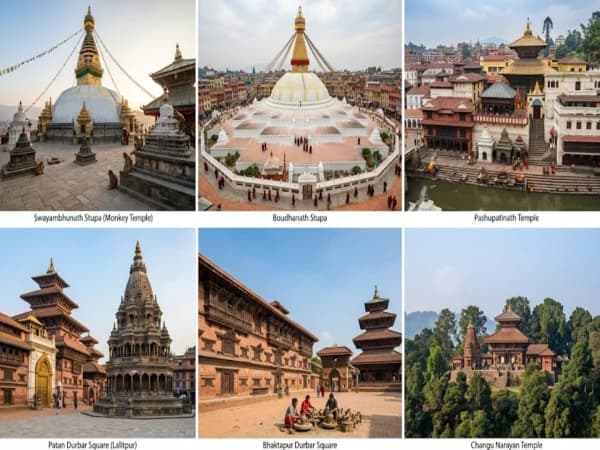
Swayambhunath and Kathmandu Durbar Square in One Day: How the Tour Runs and What It Costs (2027)
Swayambhunath in the morning, Kathmandu Durbar Square after lunch: how our private day tour runs, what each tier includes, the best months and 2027 prices.
Read More
Kakani: The Hill Above Kathmandu with Ganesh Himal and Langtang Views
Kakani is a cool hill village at about 2,030 m on the north-west rim of the Kathmandu Valley, with Ganesh Himal and Langtang views. Here is what it is like and how to visit.
Read More Chat with Shreejan