

Why Australian Trekkers Are Booking Direct with a Nepali Family Company
If you're an Aussie trekker looking at Everest Base Camp, Annapurna, or Langtang, you've probably browsed Intrepid Travel or G Adventures. Both are Australian companies. Both charge A$4,500 to A$7,000 for treks that cost a fraction of that on the ground. Here's the thing they don't advertise: they subcontract to Nepali companies like us. You're paying a middleman with a Melbourne office.
Trekking Nepal from Australia: at a glance
If you only want the Everest Base Camp numbers in Australian dollars, read our Everest Base Camp trek cost from Australia guide, which lists every 2027 cost line by line.
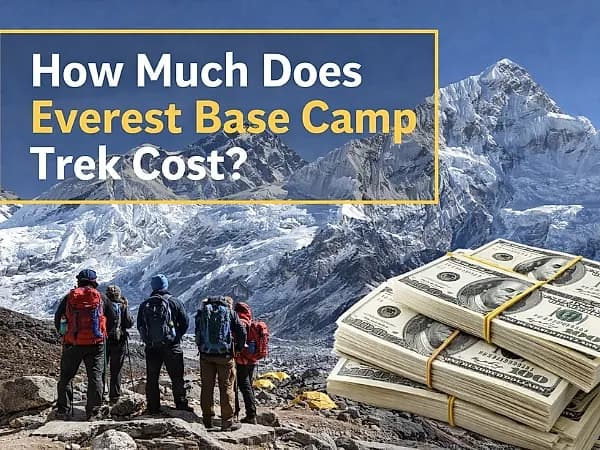
- Cost: Everest Base Camp from USD $1,399 (about A$2,150), Annapurna Base Camp from $725 (about A$1,110) per person, booked direct, versus A$4,000+ with Australian operators.
- Visa: Australian passport holders get a visa on arrival (15 days $30 / 30 days $50).
- Flights: Sydney, Melbourne, Brisbane and Perth to Kathmandu via Singapore, Bangkok, Kuala Lumpur or Guangzhou (about 15–18 hrs).
- Best time: September–November and March–May; your winter (June–August) is Nepal’s monsoon, so your spring is the sweet spot.
How Much Can Australians Save by Booking Direct? Today and you get the same trails, the same lodges and our own guides with no agency margin on top, because we're the ones actually running the trek.
Price Comparison: Australian Operator vs Booking Direct
| Trek | Australian operator, group departure | The Everest Holiday: Budget / Standard / Luxury |
|---|---|---|
| Everest Base Camp 12 Days | A$4,500–A$7,000 | USD 1,399 (~A$2,060) / USD 2,499 (~A$3,670) / USD 4,999 (~A$7,340) |
| Annapurna Base Camp 9 Days | A$3,500–A$5,500 | USD 725 (~A$1,070) / USD 1,310 (~A$1,930) / USD 2,095 (~A$3,080); solo USD 1,250 (~A$1,840) / USD 1,725 (~A$2,540) / USD 3,465 (~A$5,090) |
| Poon Hill 6 Days | A$2,000–A$3,500 | USD 499 (~A$740) / USD 749 (~A$1,100) / USD 1,235 (~A$1,810) |
| Langtang Valley 8 Days | A$3,000–A$4,500 | USD 490 (~A$720) / USD 1,050 (~A$1,550) / USD 1,800 (~A$2,650) |
| Manaslu Circuit 12 Days | A$4,500–A$6,500 | USD 1,005 (~A$1,480) / USD 1,599 (~A$2,350) / USD 2,099 (~A$3,080) |
All our prices are set in US dollars. The AUD figures above are indicative only. They were converted at the Nepal Rastra Bank rate on 27 July 2026 and will move with the exchange rate. Your booking is confirmed and charged in US dollars, so that is the price that applies. The Australian operator prices are for their standard group departures, which are not the same product as our Luxury tier, where the Kathmandu–Lukla helicopter is included both ways.
All our prices include permits, guide, porter, accommodation, meals (Standard and Luxury tiers), and ground transport from Kathmandu. We offer three tiers: Budget, Standard, and Luxury, so you choose exactly how you want to trek.
The Everest Holiday Advantage for Australian Trekkers
- No international agency margin: same trails, same lodges, better guides. The only difference is the invoice.
- AUD pricing throughout: no guessing exchange rates. All prices on this page are in Australian dollars.
- Nepal is incredibly affordable for Australians: 1 AUD = approximately 105 NPR. A full meal on the trail costs A$5-8. A beer in Kathmandu costs A$3.
- Secure online payment through Himalayan Bank Limited: a 10 percent deposit by card confirms your trek and the balance is paid in Kathmandu.
- Family company with three generations of guiding in the Himalayas: not a faceless corporation. You'll deal directly with Shreejan, our CEO, from your first message to your last day on the trail.
- Over 300 reviews on TripAdvisor (4.9 stars), Google (4.9 stars) and Trustpilot (4.7 stars).
Flights from Australia to Kathmandu
There are no direct flights from Australia to Nepal, but the connections are straightforward. Most routes go through Southeast Asia with a single stop.
Flight Routes by City
| From | Airlines | Route | Total Flight Time | Cost (Return) |
|---|---|---|---|---|
| Sydney (SYD) | Singapore Airlines, Malaysia Airlines, Thai Airways | Via Singapore, KL, or Bangkok | 15–17 hours | A$900–A$1,500 |
| Melbourne (MEL) | Singapore Airlines, Malaysia Airlines, Thai Airways | Via Singapore, KL, or Bangkok | 15–18 hours | A$900–A$1,500 |
| Perth (PER) | Malaysia Airlines, AirAsia X | Via Kuala Lumpur | 13–15 hours | A$800–A$1,300 |
| Brisbane (BNE) | Singapore Airlines, Thai Airways | Via Singapore or Bangkok | 15–18 hours | A$950–A$1,500 |
Budget option: Scoot (via Singapore) or AirAsia X (via Kuala Lumpur) regularly offer return fares from A$600-900 if you book 2-3 months ahead. Set up Google Flights price alerts and watch for sales.
Pro tip: Perth to Kathmandu via KL is the shortest and often cheapest route from Australia. If you're flexible on departure city, it's worth checking Perth fares even if you live on the east coast: a domestic connection can still save you hundreds.
Best booking time: Book February-March for the autumn trekking season (September-November). Book May-June for the spring season (March-May). Flights in September and October are priciest because that's peak trekking season.
Visa for Australian Passport Holders
Australian citizens need a tourist visa for Nepal, but the process is dead simple. You can get it on arrival at Kathmandu's Tribhuvan International Airport: no advance application needed.
Visa Fees
| Duration | Fee (USD) | Approximate (AUD) |
|---|---|---|
| 15 days | USD 30 | ~A$45 |
| 30 days | USD 50 | ~A$75 |
| 90 days | USD 125 | ~A$190 |
For most trekkers, the 30-day visa is the right choice. It gives you plenty of time for your trek plus a few days in Kathmandu and Pokhara.
What You Need
- Australian passport with at least 6 months validity from your entry date
- Two blank pages in your passport
- One recent passport-size photo (you can also get photos taken at the airport)
- Cash in USD for the visa fee (ATMs are available in the airport arrivals hall, but cash is faster)
Skip the queue: Apply for your e-visa at immigration.gov.np before you fly. Fill in the form, upload your photo, and you'll breeze through immigration while others are stuck filling in paper forms at the counter.
DFAT Travel Advisory
The Australian Government's Smartraveller advisory for Nepal is "Exercise a high degree of caution." This applies to the country generally and is not specific to trekking regions. The main trekking areas. Everest, Annapurna, Langtang, Manaslu, are well-established tourist routes with excellent safety records. Thousands of Australians trek Nepal every year without incident. Register your trip on the Smartraveller website before you go.
Best Months to Trek from Australia
Here's the good news: the best trekking months in Nepal line up nicely with Australian schedules.
- September–November (Australian spring): The best trekking weather. Clear skies after the monsoon, stable temperatures, clear mountain views. This is peak season: book early, especially for Everest Base Camp and Manaslu.
- March–May (end of Australian summer): Spring in Nepal. Warmer temperatures, rhododendrons in bloom across the Annapurna region, and fewer trekkers than autumn. Great for Annapurna Base Camp and Poon Hill.
- December–February: Cold at altitude but sharp, clean skies. Perfect for lower-elevation treks like Poon Hill and Mardi Himal. Fewer crowds and off-season pricing.
- June–August (monsoon): Avoid for most treks. Exceptions: Upper Mustang and Dolpo sit in a rain shadow and are trekable year-round.
School Holiday Timing
Australian school holidays work well for Nepal trekking:
- September-October school holidays: falls right in peak trekking season. Perfect for a family trek or a trip with your mates.
- December-January summer holidays: cold at high altitude but ideal for shorter, lower treks. Poon Hill (6 days) or Mardi Himal (7 days) fit perfectly into a 2-week holiday.
- Easter break (March-April): spring trekking season. Warmer days, wildflowers everywhere.
Southern hemisphere advantage: When it's getting cold in Australia (June-August), it's monsoon in Nepal: so there's never a conflict between wanting warm weather at home and good trekking weather in Nepal. The seasons work in your favour.
Our Most Popular Treks for Australian Trekkers
Everest Base Camp Trek: 12 Days
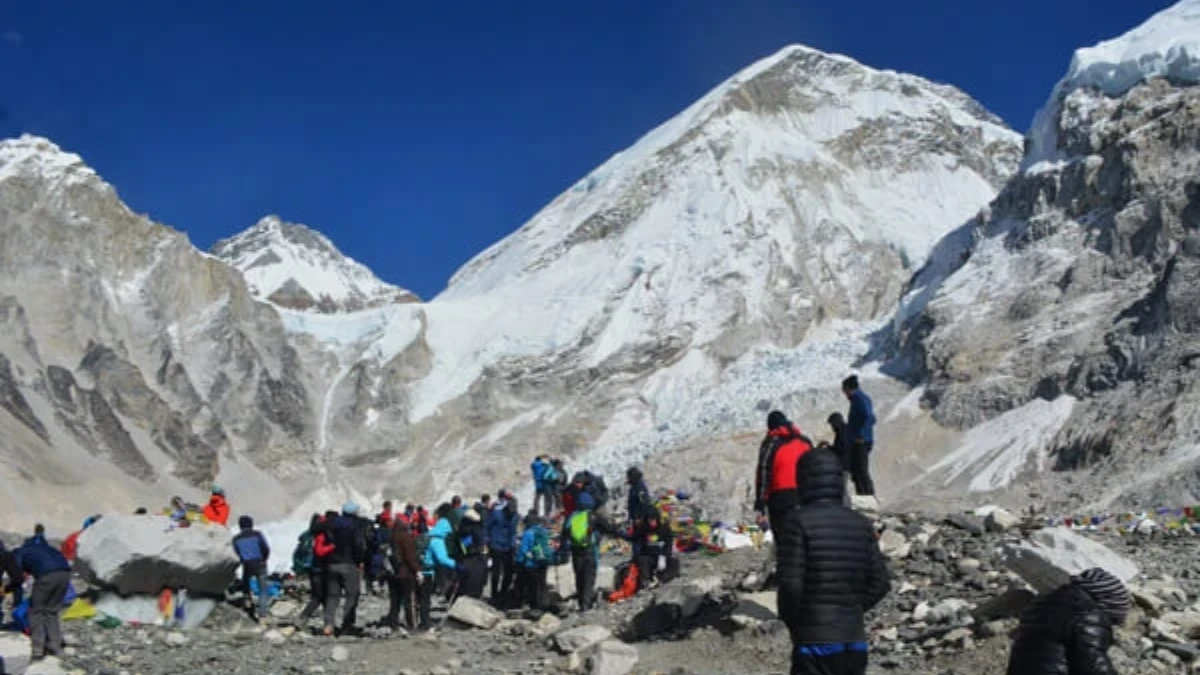
The one everyone wants to do. Stand at 5,364m in the shadow of the world's tallest mountain. Fly into Lukla, trek through Sherpa villages, cross suspension bridges, and watch sunrise from Kala Patthar (5,545m) with Everest filling the sky. Twelve days that'll change how you see the world.
Budget A$2,199 | Standard A$3,899 | Luxury A$7,749 per person. Permits, guide and ground transport in all tiers. Porter: none on Budget (you carry your own pack), one per two trekkers on Standard, one per trekker on Luxury. Meals included on Standard and Luxury (Budget excludes meals).
View full itinerary and book →
Annapurna Base Camp Trek: 9 Days
Walk through rice paddies, bamboo forests, and natural hot springs to the amphitheatre of Annapurna (8,091m). The final approach to base camp, surrounded by towering peaks on every side, is one of the most spectacular sights in the Himalayas. More accessible than Everest and just as rewarding.
Budget A$1,149 | Standard A$2,049 | Luxury A$3,299 per person (solo A$1,949, A$2,699 and A$5,399).
View full itinerary and book →
Poon Hill Trek: 6 Days
The perfect first Himalayan trek. A 3,210m sunrise viewpoint with panoramic views of Annapurna, Dhaulagiri, and Machhapuchhre (Fishtail). Five days is enough for a taste of Nepal that'll have you planning your next trip before you've even left. Ideal if you've only got a week or two of leave.
Budget A$799 | Standard A$1,199 | Luxury A$1,749 per person.
Langtang Valley Trek: 8 Days
The closest major trek to Kathmandu and one of the least crowded. Tamang culture, yak cheese factories, and views of Langtang Lirung (7,227m). The valley was devastated by a landslide in the 2015 earthquake and has been rebuilt with extraordinary community spirit. Trekking here directly supports that recovery.
From A$579 (Budget) to A$1,549 (Luxury) per person.
Manaslu Circuit Trek: 12 Days
The quieter alternative to the Annapurna Circuit. Cross the Larkya La Pass at 5,160m in a restricted area that limits trekker numbers. If you want big mountain scenery without the crowds, Manaslu is the answer. Requires a special permit: we handle everything.
From A$1,249 (Budget) to A$3,299 (Luxury) per person.
Mardi Himal Trek: 7 Days
Nepal's newest trekking trail and a lesser-known spot. Quiet ridgeline walking with close-up views of Machhapuchhre (Fishtail) that you won't get from any other trek. Only opened in 2012, so the trails are uncrowded and the teahouses are small and friendly. Six days is all you need.
From A$729 (Budget) to A$1,749 (Luxury) per person.
Australian Camp: Named After Aussie Trekkers
Here's a piece of Nepal trivia most Australians don't know: there's a place in the Annapurna region literally called Australian Camp.
In the 1970s, a group of Australian trekkers set up camp on a hilltop near Pokhara with panoramic views of the Annapurna range, Machhapuchhre, and Dhaulagiri. The spot was so good that locals started calling it "Australian Camp," and the name stuck.
Today it's a popular short trek: just a 2-3 hour walk from Kande (a 45-minute drive from Pokhara). You can do it as a day trip or overnight in a teahouse at the top. The sunrise over the Annapurna range from Australian Camp is one of the most accessible mountain views in Nepal.
If you're spending time in Pokhara before or after your main trek, Australian Camp is a must. It's basically an Aussie tradition at this point.
Travel Insurance for Australian Trekkers
This is non-negotiable. Medicare does not cover you overseas: not even partially. If you get altitude sickness at 4,500m and need a helicopter, that's A$5,000-A$8,000 out of your own pocket without insurance.
What Your Policy Must Cover
- Helicopter evacuation and rescue up to the highest point of your trek: 6,000 m for Everest Base Camp, 5,500 m for the Annapurna Circuit, 4,500 m for Annapurna Base Camp and Mardi Himal, and 3,500 m for Poon Hill (some policies exclude high-altitude activities)
- Medical treatment and hospital expenses in Nepal and during transit
- Trip cancellation and interruption
- Trekking as a covered activity (not all standard travel policies include trekking: check the fine print)
- Coverage to the maximum altitude of your trek (5,364m for EBC, 5,160m for Manaslu)
Recommended Providers
- World Nomads: an Australian company, popular with trekkers, covers high-altitude activities. Easy to buy and extend online. Approximately A$100-200 for 2-4 weeks.
- Cover-More: another Australian provider with good trekking cover. Check their "adventure activities" add-on.
- Allianz Travel Insurance: solid international coverage. Make sure trekking up to 6,000m is included.
We require proof of insurance before your trek begins. This isn't bureaucracy: it's because we've seen what happens when an uninsured trekker needs evacuation. Don't risk it.
How Much Does a Nepal Trek Really Cost from Australia?
Let's break down the full trip cost so there are no surprises. These are realistic estimates for an Australian trekker doing a 12-day Everest Base Camp trek on our Standard tier.
| Expense | Approximate Cost (AUD) |
|---|---|
| Return flights (Sydney/Melbourne) | A$900–A$1,500 |
| Nepal visa (30 days) | A$75 |
| Travel insurance (2-3 weeks) | A$100–A$200 |
| EBC Trek Standard tier (all inclusive) | A$1,600 |
| Spending money on trail (12 days) | A$150–A$250 |
| Kathmandu hotels + food (2-3 extra days) | A$100–A$200 |
| Guide and porter tips | A$200–A$300 |
| Gear (if renting in Kathmandu) | A$50–A$150 |
| Total trip cost | A$3,175–A$4,275 |
Compare that to A$5,500-7,000+ with an Australian operator (which doesn't include your flights either). You're looking at genuine savings of A$2,000-3,000 for the same experience.
Nepal is one of the most affordable trekking destinations on the planet for Australians. A plate of dal bhat on the trail costs A$5-8. A cup of tea is A$1-2. A night in a teahouse is included in our Standard and Luxury tiers, but if you're on Budget, it's A$5-10 per night. Your spending money on the trail goes towards snacks, extra drinks, hot showers (A$3-5), and phone charging (A$2-3).
What Australian Trekkers Should Know
Time Zone
Nepal is UTC+5:45. That's 4 hours and 15 minutes behind AEST (Sydney/Melbourne time) and 2 hours and 15 minutes behind AWST (Perth time). Much less jet lag than going to Europe or the Americas. Most trekkers adjust within a day.
Altitude
Australia's highest point. Mount Kosciuszko, is 2,228m. Everest Base Camp is 5,364m. That's more than double. If you've never been above 3,000m, take acclimatisation seriously. Our itineraries include rest days at Namche Bazaar and Dingboche specifically for this. Our guides carry pulse oximeters and monitor your oxygen levels twice daily above 3,000m.
Sun Protection
You already know about sun protection. But high-altitude UV is on another level. At 5,000m the UV radiation is roughly 40% stronger than at sea level. Bring SPF 50+, apply it frequently, and wear sunglasses with UV protection. Snow blindness is a real risk above 4,000m.
Food
The staple is dal bhat: rice, lentils, vegetables, and pickle. You'll eat it twice a day and you'll grow to love it. Unlimited refills at most teahouses. Momos (Nepali dumplings) are everywhere. Egg dishes, noodles, Tibetan bread, and pancakes round out the menu. Vegetarian options are plentiful. If you're familiar with Indian or Thai food, the flavours won't be a shock. Avoid salads and uncooked food above 3,000m.
Tipping
Tipping is customary and appreciated. A good guide for trekking:
- Guide: A$12-18 per day
- Porter: A$6-9 per day
These are guidelines, not rules. Tip based on your experience.
Power and Connectivity
Nepal uses Type C and Type D power plugs, similar to most of Asia. Bring a universal adapter. On most of our treks a SIM card is arranged for you on arrival and included in the price. If you are travelling independently, buy buy an NCell SIM card at Kathmandu airport (about A$8 with a data pack) for phone and data coverage on most of the trail up to Namche Bazaar. Wi-Fi is available at most teahouses for a small fee (A$2-4 per session). Don't expect Netflix speeds, but you'll be able to send photos home.
Water
Don't drink tap water anywhere in Nepal. On the trail, use purification tablets (Aquatabs or similar, available at any pharmacy in Kathmandu) or a SteriPEN. Avoid buying bottled water above base towns: the plastic waste on mountain trails is already a problem. Many lodges sell boiled water for a few dollars.
About The Everest Holiday
We're a Himalayan family company. Our family has three generations of guiding in the Himalayas, and our grandfather Hari Lal Simkhada arranged logistics for Himalayan expeditions. Our father Ganesh Prasad Simkhada has held senior positions at the Nepal Tourism Board and Nepal Mountaineering Association. Today, Shreejan Simkhada and Shamjhana Basukala run The Everest Holiday with 80+ guides and staff.
We've guided trekkers from Sydney, Melbourne, Perth, Brisbane, Adelaide, and everywhere in between. Australians make up one of our biggest trekker groups: you'll find plenty of Aussie reviews on our TripAdvisor and Google pages.
- TAAN Member #1586: Nepal's official trekking agency association
- Tourism Licence 2838/072: Government of Nepal
- Over 300 reviews on TripAdvisor (4.9 stars), Google (4.9 stars) and Trustpilot (4.7 stars)
- Selected by Nepal Tourism Board to represent Nepal at MATKA 2026 Helsinki
- Secure online payment through Himalayan Bank Limited: a 10 percent deposit by card confirms your trek and the balance is paid in Kathmandu.
All Our Treks Are Private
You don't join a group of strangers. It's just you, your guide, and your porter. Solo trekkers, couples, families, mate groups: everyone gets a private experience. Minimum 1 person, maximum 20. You set the dates, you set the pace.
Our charity, the Nagarjun Learning Center
A portion of every booking supports the Nagarjun Learning Center, founded by our family. We provide free education and hot meals to 70 children across 7 learning centres in rural Nepal, free medical care to 600+ people, and empowerment programmes for 275+ women. The centre is verified and listed on the UN Partner Portal.
Your trek doesn't just change your life: it changes theirs.
Frequently Asked Questions: Australian Trekkers
Is Nepal safe for Australians?
Yes. Nepal is one of the safest destinations in Asia for tourists. The DFAT Smartraveller advisory says "exercise a high degree of caution," which is the same level as Indonesia and India: countries millions of Australians visit every year. The main trekking regions are well-established tourist routes. Crime against trekkers is extremely rare. Thousands of Australians trek Nepal annually.
Do I need a guide to trek in Nepal?
A licensed guide is required in most trekking areas under the Nepal Tourism Board rule from April 2023, and the listed restricted routes such as Manaslu, Tsum, Upper Mustang and Nar Phu also need an agency-issued TIMS card. The rule covers the Everest (Khumbu) region too, and we always trek with a licensed guide. Our guides are Nepal government trained and licensed, carry first aid kits and pulse oximeters, and several hold Bachelor's degrees in Mountaineering. They're not just legally required: they make the trek better.
What's the cheapest flight route from Australia?
Perth to Kathmandu via Kuala Lumpur on AirAsia X or Malaysia Airlines is usually the cheapest (A$600-900 return). From the east coast, Scoot via Singapore is the budget pick (A$700-1,000 return). Set up Google Flights alerts and book when the price drops. Two to three months before departure is the sweet spot.
Do I need vaccinations?
No vaccinations are legally required for entry to Nepal from Australia. However, your GP or a travel health clinic will likely recommend: Hepatitis A and B, Typhoid, and a Tetanus booster if you're not up to date. Some recommend Japanese Encephalitis if you're spending time in the Terai lowlands. Book a travel health appointment at least 6 weeks before your trip.
Can I bring my own gear or hire in Kathmandu?
Both work. Kathmandu's Thamel district has hundreds of gear shops selling and renting everything: down jackets, sleeping bags, trekking poles, boots. Quality varies, so inspect before buying. If you already own good gear, bring it. If you'd rather travel light, you can kit yourself out in Kathmandu for A$50-150 in rental fees. We can recommend trusted shops.
What about school holidays: can I bring my kids?
Absolutely. The September-October school holidays fall right in peak trekking season. Poon Hill (6 days, max altitude 3,210m) and Mardi Himal (7 days, max altitude 4,500m) are suitable for fit teenagers. We've guided families with kids as young as 12 on Poon Hill. We'll adjust the pace and daily walking hours to suit your family. Let us know the ages and fitness levels of everyone in your group when you enquire.
Is there an Australian Camp in Nepal?
Yes! It's a hilltop viewpoint near Pokhara named after Australian trekkers who camped there in the 1970s. Panoramic views of Annapurna, Machhapuchhre, and Dhaulagiri. You can reach it in a 2-3 hour walk from Kande and it makes a perfect acclimatisation hike or rest-day trip. Read our full guide here.
How do I handle altitude coming from sea level?
Most of Australia sits below 500m. That means your body has no altitude adaptation, and you need to respect the acclimatisation process. Our itineraries include dedicated rest days at Namche Bazaar (3,440m) and Dingboche (4,410m) for this reason. Walk slowly, drink 3-4 litres of water daily, and listen to your guide. Our guides check your oxygen saturation twice a day above 3,000m. If symptoms appear, we descend immediately: no negotiation.
How fit do I need to be?
You should be able to walk 5-7 hours daily on hilly terrain. Start training 8-12 weeks before your trek: regular bushwalks, stair climbing (find a multi-storey car park and go up and down for an hour), and general cardio. No mountaineering skills required for standard treks. If you can handle a solid day hike in the Blue Mountains or the Overland Track, you'll manage Nepal.
What's included in the price?
All permits (TIMS, national park, conservation area, restricted area where applicable), licensed guide, porter (1 porter per 2 trekkers), accommodation throughout, meals (Standard and Luxury tiers), ground transportation from Kathmandu, and airport transfers. International flights, visa, insurance, and personal expenses are not included. Our Budget tier includes everything except meals: you buy your own dal bhat on the trail (A$5-8 per meal).
How to Book: 10% Deposit, No Fuss
Choose your trek, pick your tier (Budget, Standard, or Luxury), and pay a 10% deposit online through our secure Himalayan Bank Limited payment gateway. The remaining balance is due before your trek starts. That's it.
When you click Pay, you'll be briefly redirected to HBL's secure payment page. This is required by Nepal's central bank for all international card payments and is designed to protect both you and us. You're returned to our site after payment with your full booking confirmation.
The balance is paid in Kathmandu in US dollars or euros, in cash or by card (card payments carry a 3.5% bank charge). Contact us on WhatsApp for details.
Cancellation policy:
Plan Your Nepal Trek Today
Whether it's your first big adventure or your twentieth, we'll make it personal, safe, and honest. Every detail is your choice: dates, pace, tier, route. No group departures, no cookie-cutter itineraries.
WhatsApp:+977 9810351300 (Shreejan responds within 30 minutes during Nepal business hours)
Email:[email protected]
Website:theeverestholiday.com
Free custom itinerary in 24 hours. No deposit until you're ready. No pressure, no hard sell: just straight answers from a family that's been doing this for three generations.
Three generations. One family. Your Himalayas.
Further Reading
- detailed guide to Australian Camp
- Nepal Trekking Budget 2027: Real Costs Breakdown
- Local Company vs Intrepid / G Adventures: Honest Comparison
- Nepal Visa on Arrival 2026: detailed guide
- How Much Does Everest Base Camp Trek Cost in 2027?
For a broader look at Nepal options from Australia, our Australia trekkers' country guide covers Sydney/Melbourne/Perth flight routings and the kit gaps Aussie trekkers most often arrive with.
Travelling from Australia? Our Everest Base Camp Trek (12 Days) is private (your group only, no strangers), 2027 dates open, From USD $1399. WhatsApp us for tailored 2027 dates and current departures.
 Chat with Shreejan