

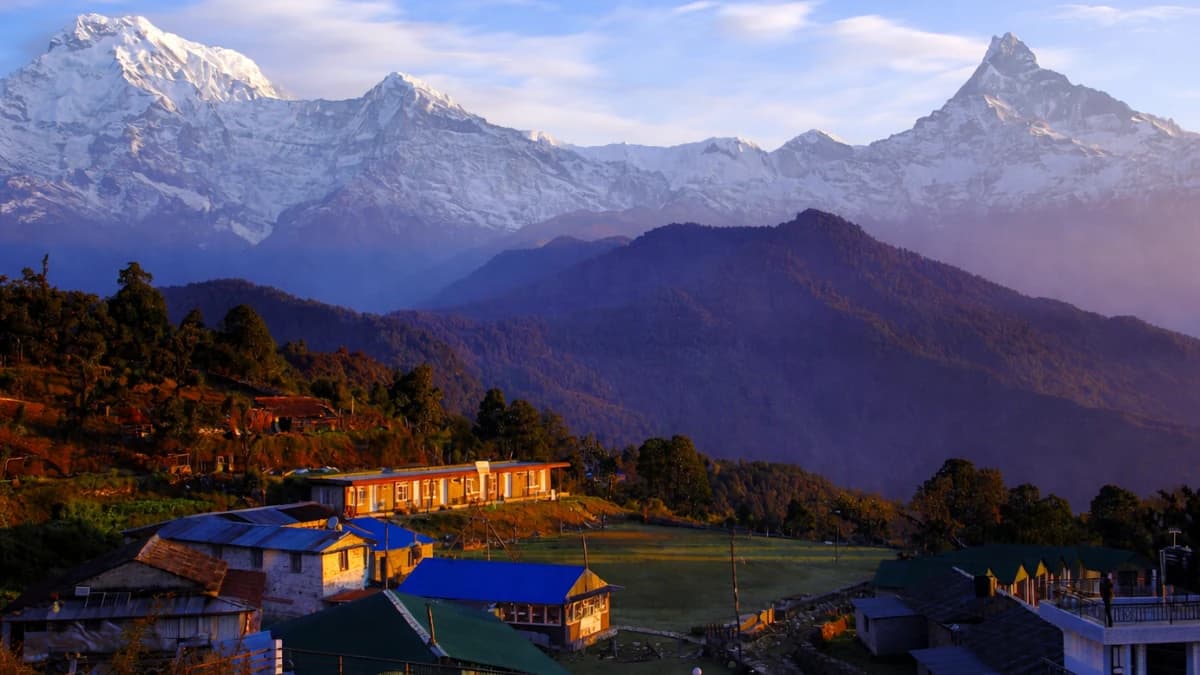
Short answer: Australian Camp, also called Australian Base Camp or Thulo Kharka (2,060 m), is a ridge above Pokhara with a wide view of the Annapurna range, reached by a few hours of easy walking with no altitude problems. It is ideal for a sunrise and a first taste of trekking. Do it on our 2-day Australian Camp trek from Pokhara.
Above Pokhara lies a ridge where the mountains cease their elusiveness. They simply appear, arrayed across the northern sky like a gathering of ancient kings, and they ask nothing from you in return. No weeks of walking. There are no high passes to traverse. There is no altitude sickness to endure. Just a few hours of steady climbing through forests and farmland, and suddenly you stand before the Annapurna range as if you have earned a private audience. Australian Base Camp (called Australian Camp by some, Thulo Kharka by those who have always lived here) sits on that ridge like a secret waiting to be shared. It is not a base camp for climbers heading to the high peaks. It is a base camp for dreamers, for photographers, for anyone who wants to wake before dawn and watch the sun set fire to the highest mountains on earth.
Where Is Australian Base Camp Near Pokhara?
Australian Base Camp occupies a broad ridge in the Kaski District, roughly 2,060 metres above the Pokhara valley. The land here rolls in gentle swells, covered in forests of oak and rhododendron, dotted with clearings where local families have grazed animals for generations.
The view to the north is extraordinary. The Annapurna massif rises in a wall of ice and stone: Annapurna II, Annapurna III, Annapurna IV, Gangapurna, and the unmistakable peak of Machhapuchhre, the Fishtail Mountain, its twin summits cutting the sky like a blade. Dhaulagiri lurks further west, visible on clear days, reminding you that this corner of Nepal holds more 8,000-metre peaks than anywhere else on earth.
To the south, the land falls away toward Pokhara, the city's lights visible at night, its lake catching the morning sun. Between here and there, hills roll in endless waves, each one holding villages and forests and stories you will never know.
The ridge itself runs roughly east to west, offering multiple viewpoints and camping spots. Australian Base Camp sits at the eastern end, the most popular destination, but the entire ridge rewards exploration. Different angles reveal different peaks, different moods of light, and different arrangements of the same magnificent cast.
The Name's Mystery
Why Australian Base Camp? The name puzzles everyone who hears it. No Australians established it. No expeditions to the high peaks launch from here. The name is a mystery wrapped in local lore.
Some say Australian trekkers camped here so often in the 1970s that the name stuck. Others claim an Australian development project built something in the area, though no one remembers what. The most convincing stories suggest that early Australian visitors, finding themselves here without a name for the place, simply gave it their own.
Whatever the origin, the name has become permanent. Locals still call it Thulo Kharka, the big pasture, when speaking among themselves. But for maps, for guides, for the growing number of visitors who find their way here, it is Australian Base Camp. The Australian name for a Nepali ridge is a reflection of the fact that mountains belong to everyone who loves them.
Accessibility
Australian Base Camp exists for people who want mountains without mountains of effort. It is the most accessible high viewpoint in the Annapurna region.
-
The Short Ascent: The most common approach begins at Phedi, a village just north of Pokhara reachable by taxi or local bus in under an hour. From Phedi, a stone staircase climbs through the forest for approximately two to three hours. The path is clear, well-maintained, and steep enough to feel like exercise without feeling like punishment.
-
The Longer Approach: For those wanting more walking, the trail from Dhampus offers an alternative. Dhampus itself sits on a lower ridge, a beautiful village of stone houses and traditional culture. From there, the trail climbs through the forest to the Australian Base Camp in another two to three hours.
-
The Descent Options: You can return the way you came or continue east to Landruk, dropping into the Modi Khola valley for a longer loop. Or you can simply stay, watch the sunset, sleep, watch the sunrise, and descend the next morning. The flexibility is part of the appeal.
-
The No-Walk Option: For those unable or unwilling to walk, jeeps now reach Australian Base Camp via a rough road from Pokhara. The ride takes about two hours and delivers you to the same views with considerably less effort. Purists may scoff, but the mountains do not judge how you arrive.
What Facilities Are at Australian Base Camp?
Australian Base Camp has learned to welcome visitors without losing itself. The facilities remain simple, sufficient, and authentic.
-
Accommodation: Several family-run lodges cluster at the ridge top. These are simple structures of stone and wood, with rooms that hold beds, blankets, and little else. Bathrooms are shared. Hot water appears in buckets when the sun has warmed the solar panels. The blankets are thick, the walls are thin, and the sleep is deep.
-
Dining and Food: Each lodge has a dining room warmed by a wood stove, serving the standard trekking fare, dal bhat, noodle soup, Tibetan bread, fried rice, and endless cups of tea. The food is simple, honest, and exactly what you need after climbing a hill.
-
What You Will Find: Running water, solar electricity, basic toilets, and the most important facility of all, an eastern-facing ridge where you can stand before dawn and watch the mountains catch fire.
-
What You Will Not Find: ATMs, nightlife, reliable phone signals, or any of the distractions that pull you away from the reason you came. Australian Base Camp exists for the mountains, and everything else is secondary.
Major Attractions
The attractions of Australian Base Camp are few in number and infinite in depth.
-
The Sunrise: This is the reason everyone comes. Before dawn, you stumble out of your lodge and walk the few minutes to the eastern edge of the ridge. The sky begins to lighten behind you, but your eyes face north, toward the peaks. First light touches Machhapuchhre's twin summits, painting them gold. Then Annapurna II catches fire, then Annapurna III, then the whole range ignites in sequence. The show lasts perhaps twenty minutes, but it fuels memories for a lifetime.
-
The Sunset: The opposite end of the day offers its own magic. The peaks soften in the fading light, turning pink, then purple, then silhouette. The cooling air carries the smell of wood smoke from lodge chimneys. Somewhere below, night settles over the Pokhara valley. The stars begin to appear, first one, then a handful, then a universe.
-
The Daytime Views: Between sunrise and sunset, the peaks remain visible, changing with the moving light. You can spend hours just sitting, watching clouds form and dissolve, watching shadows creep across glaciers, and watching the mountains simply exist.
-
The Forests: The trails around Australian Base Camp wind through forests of rhododendron, oak, and magnolia. In spring, the rhododendrons bloom in explosions of red and pink. In autumn, the oaks turn gold. In every season, the forest offers shade and silence and the company of birds.
-
Dhampus Village: Below the ridge, Dhampus perches on its own hill, a village of traditional stone houses, narrow alleys, and sweeping views. Walking through Dhampus feels like walking through a painting, whitewashed walls, carved windows, and mountains looming beyond every roofline.
-
The Stars at Night: With minimal light pollution, the night sky above Australian Base Camp reveals itself in overwhelming detail. The Milky Way arches overhead, bright enough to cast faint shadows. Shooting stars appear every few minutes on clear nights. The universe feels close enough to touch.
Major Activities to Do
At Australian Base Camp, doing and being blend together. The activities are simple and deeply satisfying.
-
Wake for Sunrise: Set your alarm for 5:00 AM. Wrap yourself in every blanket you have. Walk to the viewpoint. Watch. This single experience justifies the entire journey.
-
Walk the Ridge: Follow the trail east and west along the ridge. Every few hundred metres offers a different perspective, a different arrangement of peaks, and a different angle of light. The walking is easy, the rewards constant.
-
Visit Dhampus: Spend an afternoon wandering the stone alleys of Dhampus. Watch women weaving, children playing, and old men turning prayer wheels. Stop for tea at a village shop. Let the rhythm of the place settle into you.
-
Explore the Forests: Take a trail into the rhododendron forest, even without a destination. The paths are clear, the air is sweet, and the silence is profound. You may see monkeys, deer, or simply the play of light through leaves.
-
Read and Rest: Bring a book. Bring a journal. Bring nothing but your own thoughts. The lodges offer benches facing the mountains, perfect for simply sitting. Let the peaks hold your attention while your mind wanders.
-
Photograph Everything: The light changes constantly. The peaks reveal new moods with every hour. Photographers find themselves shooting the same mountains again and again, chasing something they can never quite capture.
-
Eat by the Stove: As evening falls, gather in the lodge dining room. The stove glows warm. Other travellers share stories of where they have been and where they are going. Tea arrives without asking. This simple ritual, repeated in lodges across Nepal, feels like coming home.
What Is Australian Base Camp Popular For?
Australian Base Camp holds a specific and beloved place in the geography of Nepali travel. It is famous for being the "Sunrise Viewpoint You Can Reach in a Day", the place where impossible mountain views become accessible to anyone with a few hours and a little determination.
Among photographers, it is renowned for offering the most dramatic sunrise shots with the least effort. The peaks array themselves perfectly, the light behaves predictably, and the foreground forests frame everything beautifully. More great mountain photographs have been taken from this ridge than from places ten times harder to reach.
For local travellers from Pokhara, it is a weekend escape, a place to breathe clean air and remember that mountains still exist above the valley smog. For international visitors with limited time, it is a gateway experience, a taste of what longer treks offer, compressed into a single overnight stay.
But perhaps most significantly, Australian Base Camp is valued as a place where mountains and accessibility meet. It proves that you do not need to be young, fit, wealthy, or experienced to stand before the Himalaya and feel their power. The mountains welcome everyone here, and everyone leaves changed.
Where Can You Stay Near Australian Base Camp?
Staying at Australian Base Camp means sleeping on the ridge itself, with peaks visible from your lodge door.
-
Family-Run Lodges: Several lodges operate along the ridge, each run by local families who have lived here for generations. The accommodation is simple, rooms with beds and blankets, shared bathrooms, and dining areas warmed by wood stoves.
-
The Lodge Experience: You arrive, you choose a room, you eat in the communal dining room, you wake before dawn and walk to the viewpoint, you return for breakfast, and you leave. The rhythm is simple, the hospitality genuine, and the memories lasting.
-
Food and Meals: The lodges serve standard trekking fare, dal bhat, noodle soups, fried rice, Tibetan bread, and endless tea. The ingredients are limited, the preparation simple, and the satisfaction profound. Meals happen when you are hungry, not according to schedules.
-
What to Expect: No attached bathrooms. No hot showers on demand. No Wi-Fi. No phone signal. What you get instead is warmth, literal and figurative, and the knowledge that you are sleeping somewhere most people never reach.
-
The Atmosphere: By evening, travellers gather in lodge dining rooms, sharing stories and silence in equal measure. The stove glows. The wind moves through the trees outside. For a few hours, you belong to a community of people who came here for the same reason, to stand before the mountains and feel small in the best possible way.
When Is the Best Time to Visit Australian Base Camp?
The seasons at Australian Base Camp determine the quality of your experience.
-
Autumn (September to November): The perfect season. The monsoon has cleared the air, leaving visibility so sharp that the mountains seem close enough to touch. Days are warm, nights are cool, and the skies are reliably clear. This is when most visitors come, and for good reason.
-
Spring (March to May): The rhododendrons bloom, painting the forests red and pink. The weather remains stable, the views clear, and the temperatures pleasant. Spring offers everything autumn offers, with the added gift of flowers.
-
Winter (December to February): The cold is real. Days may reach 10 degrees, but nights plunge well below freezing. The views are often spectacular, winter air holds no haze, but the chill penetrates everything. Fewer visitors come, offering solitude to those willing to bundle up.
-
Monsoon (June to August): Rain arrives almost daily, often in dramatic afternoon downpours. The views are frequently obscured, and leeches lurk on forest trails. But the landscape is intensely green, the lodges are empty, and those who come experience a different kind of beauty, lush, secret, and utterly their own.
Weather and Climate
Australian Base Camp exists in a climatic zone that offers four distinct seasons.
-
The Day-Night Swing: Without urban heat to moderate them, temperatures swing dramatically between day and night. A warm autumn afternoon can plunge into a freezing evening within hours. Pack layers. Use them all.
-
The Morning Clarity: Mornings are almost always clearer than afternoons. The sunrise views you came for are reliably visible, even when clouds build later in the day. Plan your schedule around this pattern.
-
The Dryness: At 2,060 metres, the air holds less moisture than in Pokhara below. You will see the difference in the light's sharpness, the views' clarity, and your lips cracking by day two.
-
The Light: The combination of elevation, latitude, and clear air creates light that photographers dream about. The golden hours last longer here. The colours saturate more deeply. The shadows hold more mystery.
Hotel & Contacts
|
Hotel |
Context |
|
Angel’s Haven Guest House & Restaurant |
+977 9846743395 |
|
Sunrise Tent Resort & Restaurant |
+977 9856021860 / 9846777833 |
|
Green View Lodge & Restaurant (Pothana, near Australian Camp) |
+977 9846382917 / 9846624012 |
Related Treks & Guides
Australian Base Camp is the easiest viewpoint hike in Nepal. Two hours from Pokhara, with a licensed guide included, and you wake up to Annapurna South, Machhapuchhre, and Hiunchuli filling your window. I send every visitor to Pokhara here. Not Sarangkot, not World Peace Pagoda. Here. The sunrise is better and the crowds are smaller. The Annapurna Conservation Area permit (NPR 3,000 for foreign visitors) and a TIMS card (NPR 2,000) are still needed, and we arrange both.
We also run Australian Camp as a short trip of its own, Australian Camp Trek, 2 days from Pokhara: you walk up via Dhampus, sleep in a lodge at Australian Camp, watch the sunrise and walk down to your vehicle. A licensed guide, the Annapurna Conservation Area permit, a TIMS card and the vehicle from Pokhara to Phedi and back are listed in every tier. For two to four travellers the price is US$240 (Budget), US$355 (Standard) or US$555 (Luxury) per person; one traveller pays US$370, US$460 or US$880. Budget has no porter and does not include meals; Standard and Luxury include meals on the trek. Australian Camp is also part of our Ghorepani Poon Hill Trek (6 days).
WhatsApp:+977 9810351300
Email:[email protected]
Written by Shreejan Simkhada, CEO of The Everest Holiday, from three generations of family guides. TAAN Member #1586.
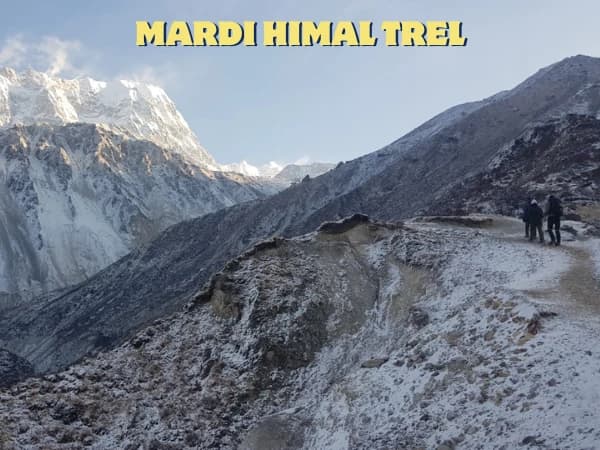
Australian Camp is the first rise on the way up the Mardi Himal ridge, which climbs on through the forest camps to Mardi High Camp and Mardi Himal Base Camp.
Australian Camp is on day 1 of Poon Hill. Our Ghorepani Poon Hill Trek (6 Days) is private (your group only, no strangers), 2027 dates open, From USD $499. WhatsApp us for tailored 2027 dates and current departures.

 Chat with Shreejan