
Why Are American Trekkers Booking Direct with a Nepali Family Company
If you're an American trekker researching Everest Base Camp, Annapurna, or Langtang, you've probably seen prices from REI Adventures, Wildland Trekking, or National Geographic Expeditions. Those companies charge $3,500 to $5,500 for a trek that actually costs a fraction of that on the ground in Nepal. Here's the part they don't advertise: they subcontract to Nepali companies like us. You're paying for their marketing budget, not a better trek.
Trekking Nepal from the USA: at a glance
If you only want the Everest Base Camp numbers in US dollars, read our Everest Base Camp trek cost from the USA guide, which lists every 2027 cost line by line.
- Cost: Everest Base Camp from $1,399, Annapurna Base Camp from $725 per person, booked direct, versus $4,000+ with US and Western operators for the same trek.
- Visa: US passport holders get a visa on arrival (15 days $30 / 30 days $50 / 90 days $125); bring a passport photo and USD cash.
- Flights: no direct service; from the East Coast (JFK, Newark) via Doha, Istanbul or Delhi, from the West Coast (LAX, SFO) via Doha, Seoul or Guangzhou (about 18–22 hrs).
- Best time: October–November and March–May.
Book directly with The Everest Holiday and you get the same trails, the same lodges and often better guides with no agency margin on top, because we are the company actually running your trek.
Price Comparison: US Adventure Company vs Booking Direct
| Trek | US company, group departure | The Everest Holiday: Budget / Standard / Luxury |
|---|---|---|
| Everest Base Camp 12 Days | $3,500-$5,500 | $1,399 / $2,785 / $4,999 |
| Annapurna Base Camp 9 Days | $2,800-$4,500 | $725 / $1,310 / $2,095 ($1,250 / $1,725 / $3,465 solo) |
| Poon Hill 6 Days | $1,500-$2,500 | $499 / $749 / $1,235 |
| Langtang Valley 8 Days | $2,200-$3,800 | $490 / $1,050 / $1,800 |
| Manaslu Circuit 12 Days | $3,800-$5,800 | $1,005 / $1,599 / $2,099 |
All our prices are set in US dollars, so the price you see is the price you are charged. The US company prices are for their standard group departures, which are not the same product as our Luxury tier.
That's not a typo. American adventure operators add 100-200% markup. They book the same teahouses, use the same trails, and hire the same local guides. The only difference is who sends you the invoice.
The Everest Holiday Advantage for American Trekkers
- No US agency margin: Same trek, same quality, and you deal with the company that runs it.
- Secure online payment through Himalayan Bank Limited: a 10 percent deposit by card confirms your trek and the balance is paid in Kathmandu.
- All prices in USD: No currency conversion guessing. What you see is what you pay.
- Over 300 reviews on TripAdvisor (4.9 stars), Google (4.9 stars) and Trustpilot (4.7 stars). Americans are review-driven, and our track record speaks for itself.
- 24/7 WhatsApp support: Nepal is 10 hours 45 minutes ahead of Eastern Time. Shreejan responds within 30 minutes during Nepal business hours, and we monitor messages around the clock during trek season.
- TAAN Member #1586: Government-registered and fully licensed. Not a freelance operation.
Flights from the USA to Kathmandu
There are no direct flights from the United States to Nepal. Every route requires at least one connection. The good news: several excellent airlines serve this route, and flight prices have become more competitive in recent years.
From the East Coast
| Departure | Airlines | Route | Total Travel Time | Cost (Return) |
|---|---|---|---|---|
| New York (JFK) | Qatar Airways | Via Doha (DOH) | 18-20 hours | $900-$1,400 |
| New York (JFK) | Turkish Airlines | Via Istanbul (IST) | 19-22 hours | $850-$1,300 |
| New York (JFK) | Emirates | Via Dubai (DXB) | 20-22 hours | $950-$1,400 |
| Newark (EWR) | United + connection | Via Delhi or Istanbul | 20-24 hours | $900-$1,400 |
From the West Coast
| Departure | Airlines | Route | Total Travel Time | Cost (Return) |
|---|---|---|---|---|
| Los Angeles (LAX) | Korean Air | Via Seoul (ICN) | 20-22 hours | $850-$1,300 |
| Los Angeles (LAX) | Singapore Airlines | Via Singapore (SIN) | 22-24 hours | $900-$1,400 |
| San Francisco (SFO) | Cathay Pacific | Via Hong Kong (HKG) | 20-23 hours | $850-$1,300 |
| San Francisco (SFO) | Korean Air | Via Seoul (ICN) | 19-22 hours | $800-$1,200 |
From Chicago and Other Hubs
| Departure | Airlines | Route | Total Travel Time | Cost (Return) |
|---|---|---|---|---|
| Chicago (ORD) | Turkish Airlines | Via Istanbul (IST) | 19-22 hours | $850-$1,300 |
| Chicago (ORD) | Qatar Airways | Via Doha (DOH) | 20-23 hours | $900-$1,400 |
| Dallas (DFW) | Qatar Airways | Via Doha (DOH) | 20-23 hours | $900-$1,400 |
| Washington (IAD) | Turkish Airlines | Via Istanbul (IST) | 19-22 hours | $850-$1,300 |
Pro tips for American travellers:
- Set up Google Flights price alerts 4-6 months before your trek. Fall flights (September-October) are the most expensive because that's peak trekking season.
- Turkish Airlines and Qatar Airways consistently offer the best value on this route.
- If you have airline miles, Doha and Istanbul connections are sweet spots for award bookings on oneworld and Star Alliance.
- Consider arriving a day early in your connection city. A night in Istanbul or Doha breaks up the journey and costs less than you'd think.
Visa for US Passport Holders
American citizens get a visa on arrival at Kathmandu's Tribhuvan International Airport. No advance application needed, though applying online saves time in the queue.
Visa Fees
| Duration | Fee (USD) | Best For |
|---|---|---|
| 15 days | $30 | Short treks (Poon Hill, Mardi Himal) |
| 30 days | $50 | Most treks (EBC, ABC, Langtang) |
| 90 days | $125 | Extended trips, multiple treks, or volunteering |
What You Need
- US passport valid for at least 6 months beyond your entry date
- Two blank passport pages
- One passport-size photo (though the airport has a photo booth if you forget)
- Cash in USD for the visa fee (exact change speeds things up)
Save time: Fill in your visa application online at immigration.gov.np before you fly. Print the confirmation. At the airport, skip the form-filling queue and go straight to the payment counter.
US Embassy in Kathmandu
The US Embassy is located in Maharajgunj, Kathmandu. Emergency contact: +977 1-423-4000. Register your trip at step.state.gov (Smart Traveler Enrollment Program) before departure. This is free and keeps the embassy can contact you in an emergency.
State Department Travel Advisory
Nepal is currently rated Level 2: Exercise Increased Caution. The advisory relates primarily to the potential for political demonstrations in urban areas. All major trekking regions. Everest, Annapurna, Langtang, Manaslu, are safe and receive hundreds of thousands of international trekkers every year. Nepal has no history of terrorism targeting tourists, and violent crime against foreigners on trekking trails is virtually unheard of.
Best Months to Trek from the USA
October-November: Peak Season (Best Weather)
Clear skies, stable temperatures, the best mountain visibility of the year. This is when experienced trekkers go. Book your trek and flights by July for the best availability. Expect trails to be busy, especially on the EBC route. Temperatures at base camp: daytime highs around 0 to 5 degrees Celsius, overnight lows down to minus 10 to minus 15.
March-May: Spring Season (Rhododendrons and Fewer Crowds)
Warmer than autumn, with rhododendrons blooming across the Annapurna region in March and April. Slightly hazier mountain views than autumn, but quieter trails and more flexible availability. Great for the Annapurna and Langtang regions.
December-February: Off-Season (Cold but Clear at Lower Elevations)
Good for budget-conscious trekkers. Lower-altitude treks like Poon Hill and Mardi Himal are comfortable. High-altitude treks (EBC, Manaslu) are cold and require proper gear, but the trails are empty and the skies are often crystal clear. Flight prices drop significantly.
June-September: Monsoon (Avoid for Most Treks)
Heavy rain, leeches, landslide risk, and poor visibility. The exceptions are Upper Mustang and Dolpo, which sit in the rain shadow and remain dry. If you can only travel in summer, ask us about these two regions.
Planning Around American PTO
Let's be honest: most Americans don't get the kind of holiday time Europeans take for granted. The good news is you don't need a month off to trek in Nepal.
- 1 week of PTO (7-9 days total with weekends): Poon Hill (6 days) or Mardi Himal (7 days). Fly out Thursday evening, trek, fly home the following Sunday.
- 2 weeks of PTO (14-16 days total): Everest Base Camp (12 days), Annapurna Base Camp (9 days), or Langtang (8 days) with a few days in Kathmandu.
- Thanksgiving week: Perfect timing. November is prime trekking season. Take the Monday through Wednesday before and the Friday after: that's 9 days.
- Christmas/New Year: Cold at altitude but trails are quiet. Works well for Poon Hill or Mardi Himal. Take a few days either side of the holiday and you've got a solid trek window.
- Spring break (March): If you're in education or have flexibility in March, spring season is excellent.
Our Most Popular Treks for American Trekkers
Everest Base Camp Trek: 12 Days
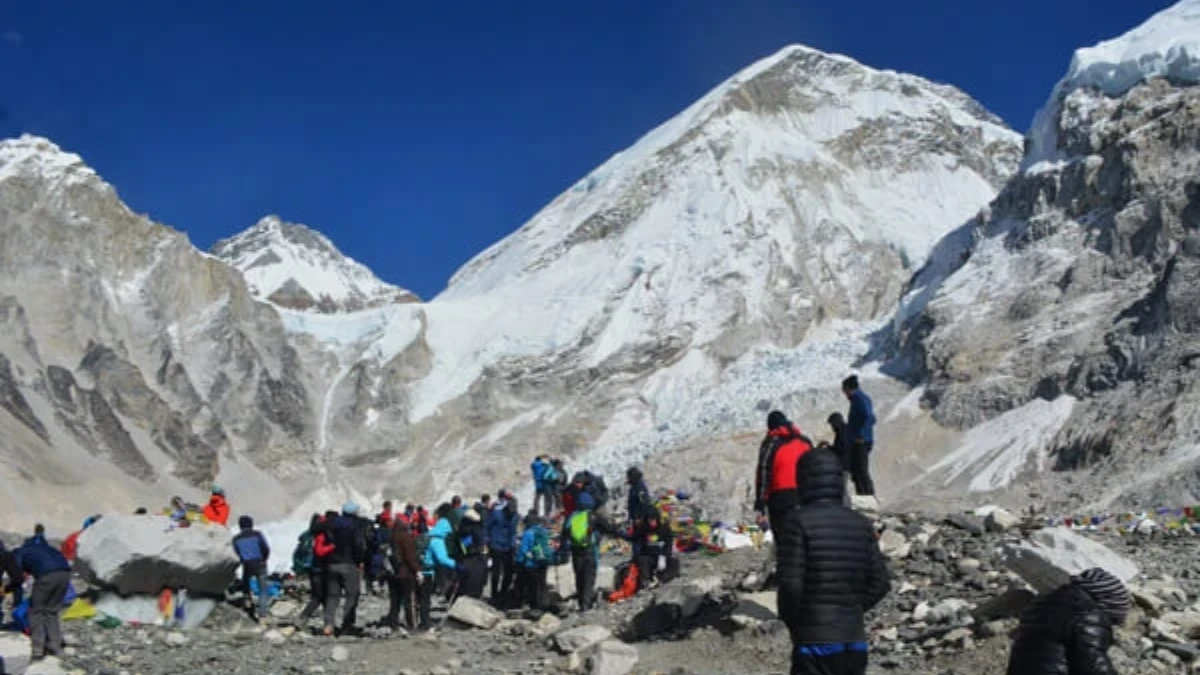
The trek that needs no introduction. Stand at 5,364m in the shadow of the world's tallest mountain. Fly into Lukla, trek through Sherpa villages, cross suspension bridges, and watch sunrise from Kala Patthar (5,545m). This is the one most Americans come to Nepal for.
- Duration: 12 days
- Difficulty: Moderate to Challenging
- Maximum altitude: 5,545m (Kala Patthar)
- Budget: $1,399 per person
- Standard: $2,785 per person
- Luxury: $4,999 per person
View full itinerary and book your EBC trek
Annapurna Base Camp Trek: 9 Days
Walk through rice terraces, bamboo forests, and rhododendron groves to the natural amphitheatre at the foot of Annapurna I (8,091m). Warmer and more culturally rich than the Everest region. Hot springs at Jhinu Danda on the way back.
- Duration: 10 days
- Difficulty: Moderate
- Maximum altitude: 4,130m (Annapurna Base Camp)
- Budget: $725 per person ($1,250 solo)
- Standard: $1,310 per person ($1,725 solo)
- Luxury: $2,095 per person ($3,465 solo)
View full itinerary and book your ABC trek
Poon Hill Trek: 6 Days
The perfect trek for Americans with limited time off. Five days, easy to moderate difficulty, and one of the most photographed sunrises in the Himalayas. From the top of Poon Hill (3,210m) you'll see Dhaulagiri, Annapurna South, Machhapuchhre (Fishtail), and a panorama stretching across 300 kilometres of Himalayan peaks.
- Duration: 5 days
- Difficulty: Easy to Moderate
- Maximum altitude: 3,210m (Poon Hill)
- Budget: $499 per person
- Standard: $749 per person
- Luxury: $1,235 per person
View full itinerary and book your Poon Hill trek
Langtang Valley Trek: 8 Days
The closest major trek to Kathmandu and one of the most underrated. Tamang villages, yak pastures, cheese factories, and views of Langtang Lirung (7,227m). Fewer tourists than Everest or Annapurna, which is part of its charm.
- Duration: 8 days
- Difficulty: Moderate
- Maximum altitude: 4,984m (Kyanjin Ri)
- Budget: $365 per person
- Standard: $650 per person
- Luxury: $1,000 per person
View full itinerary and book your Langtang trek
Manaslu Circuit Trek: 12 Days
Often called "the next Annapurna Circuit": before the crowds found it. Cross the Larkya La Pass at 5,160m with views of Manaslu (8,163m), the world's eighth tallest mountain. This is a restricted-area trek requiring a special permit, which we handle entirely.
- Duration: 12 days
- Difficulty: Challenging
- Maximum altitude: 5,160m (Larkya La Pass)
- Budget: $1,005 per person
- Standard: $1,599 per person
- Luxury: $2,099 per person
View full itinerary and book your Manaslu trek
Mardi Himal Trek: 7 Days
Nepal's newest official trekking trail and a lesser-known spot. Quiet ridgeline walking through forests and high pastures with close-up views of Machhapuchhre (Fishtail) and Annapurna South. Perfect for trekkers who want something off the beaten path without the difficulty of a high pass.
- Duration: 6 days
- Difficulty: Easy to Moderate
- Maximum altitude: 4,500m (Mardi Himal Base Camp)
- Budget: $454 per person
- Standard: $849 per person
- Luxury: $1,111 per person
View full itinerary and book your Mardi Himal trek
Travel Insurance for American Trekkers
This section is important, so please read it carefully.
Your US health insurance does not cover you in Nepal. This includes employer-sponsored plans, ACA marketplace plans, and private insurance. Medicare and Medicaid have zero international coverage. Even if your plan has some international provisions, it almost certainly excludes helicopter evacuation from altitude, which is the one thing you genuinely need.
What Your Nepal Trekking Insurance Must Cover
- Helicopter evacuation up to the highest point of your trek: 6,000 m for Everest Base Camp, 5,500 m for the Annapurna Circuit, 4,500 m for Annapurna Base Camp and Mardi Himal, and 3,500 m for Poon Hill: This is non-negotiable. If you develop serious altitude sickness at 5,000m, the only way out is a helicopter. This costs $3,000-$5,000 without insurance.
- Medical evacuation to your home country: A medical flight from Nepal to the US costs $50,000-$100,000. Insurance covers this.
- Trip cancellation and interruption: Flights, deposits, non-refundable costs.
- Emergency medical treatment: Hospital care in Kathmandu (CIWEC Clinic is internationally recognised but not cheap for uninsured patients).
Recommended Insurance for US Trekkers
| Provider | Why Americans Choose Them | Approximate Cost (2-3 weeks) |
|---|---|---|
| World Nomads | Easy online purchase, covers trekking to 6,000m, well-known among backpackers | $80-$150 |
| Global Rescue | Specialises in adventure travel and high-altitude evacuation. Used by National Geographic explorers. | $120-$200 |
| IMG Global (International Medical Group) | US-based, strong medical evacuation coverage, covers pre-existing conditions on some plans | $100-$180 |
| Ripcord Rescue Travel Insurance | Includes rescue and evacuation coordination as standard | $100-$170 |
We require proof of travel insurance with helicopter evacuation cover before your trek begins. This isn't a formality. It's a safety requirement that protects you if something goes wrong at altitude.
What American Trekkers Should Know
Altitude Is Real, Even If You're Fit
Denver sits at 5,280 feet (1,609m). Everest Base Camp is 17,598 feet (5,364m). The summit of Colorado's highest fourteener, Mount Elbert, is 14,440 feet (4,401m). If you've hiked fourteeners, that's helpful, but EBC is a full 3,000 feet higher and you'll be sleeping at altitude for days, not just summiting and descending.
Fitness helps your body cope, but altitude sickness can hit anyone regardless of fitness level. Our guides carry pulse oximeters and check your oxygen saturation twice daily above 3,000m. We build acclimatisation days into every itinerary. If symptoms appear, we descend immediately.
Food on the Trail
Teahouse food in Nepal is simple, filling, and surprisingly good. Dal bhat (rice, lentils, vegetables, pickle) is the staple and you'll eat it twice a day. Most trekkers grow to love it. You'll also find noodle soups, fried rice, momos (Nepali dumplings), Tibetan bread, and omelettes. Vegetarian options are everywhere. There's no Starbucks above Namche Bazaar, but you can get decent coffee at most lodges on the lower trails.
Avoid salads and uncooked food above 3,000m. Stick to cooked, hot meals. Drink plenty of fluids.
Connectivity
On most of our treks a SIM card is arranged for you on arrival and included in the price. If you are travelling independently, buy buy an NCell SIM card at Kathmandu airport for about $5. It comes with a data pack that works on most of the trail up to Namche Bazaar and Dingboche on the Everest route. Your US carrier's international plan will either not work or cost a fortune. Wi-Fi is available at most teahouses for $1-$3 per session. It's slow: don't expect to stream Netflix. Download your entertainment before you leave Kathmandu.
Tipping
Americans tend to tip generously, and your guides and porters genuinely appreciate it. These are not high-paying jobs.
- Guide: $10-$15 per day
- Porter: $5-$8 per day
Tips are given at the end of the trek, usually in an envelope. Nepali Rupees or USD are both fine.
Power and Plugs
Nepal uses Type C and Type D plugs (the same round-pin plugs used across much of Asia and Europe). Bring a universal adapter. On the trail, charging is available at most teahouses for $1-$3 per device. Bring a portable power bank as a backup.
Water
Do not drink tap water anywhere in Nepal. On the trail, use purification tablets (such as Aquamira or Potable Aqua), a SteriPEN, or a Sawyer filter. Buying bottled water on the trail creates plastic waste and gets expensive at altitude ($3-$5 per litre above 4,000m). Purification is cheaper and better for the environment.
Vaccinations
The CDC recommends the following for Nepal travel: Hepatitis A, Hepatitis B, Typhoid, Tetanus-Diphtheria-Pertussis (Tdap), and Rabies (optional but recommended if you'll be around dogs). Visit your doctor or a travel health clinic at least 4-6 weeks before departure. Yellow Fever vaccination is required only if arriving from a Yellow Fever-endemic country.
Currency
Nepal uses Nepali Rupees (NPR). As of 2026, $1 USD gets you approximately 133-136 NPR. ATMs are available in Kathmandu and Pokhara. Carry enough cash for the trail: there are no ATMs above Namche Bazaar on the Everest route or beyond Chame on the Annapurna route. Credit cards are accepted at some hotels in Kathmandu and Pokhara but nowhere on the trail.
About The Everest Holiday
We are a Himalayan family company. Our family has three generations of guiding in the Himalayas, and our grandfather Hari Lal Simkhada arranged logistics for Himalayan expeditions. Our father Ganesh Prasad Simkhada has held senior positions at the Nepal Tourism Board and Nepal Mountaineering Association. Today, Shreejan Simkhada and Shamjhana Basukala run The Everest Holiday with 80+ guides and staff.
We're not a faceless booking platform. When you enquire, Shreejan personally responds. When you trek, our guides, many of whom have been with us for years, know every trail, every teahouse owner, every shortcut, and every sunset viewpoint. This is what "book direct" actually means.
- TAAN Member #1586: Nepal's official trekking agency association
- Tourism Licence 2838/072: Government of Nepal
- Over 300 reviews on TripAdvisor (4.9 stars), Google (4.9 stars) and Trustpilot (4.7 stars)
- Selected by Nepal Tourism Board to represent Nepal at MATKA 2026 Helsinki
- Secure online payment through Himalayan Bank Limited: a 10 percent deposit by card confirms your trek and the balance is paid in Kathmandu.
Our charity, the Nagarjun Learning Center
A portion of every booking supports the Nagarjun Learning Center, founded by our family. We provide free education and hot meals to 70 children across 7 learning centres in rural Nepal, free medical care to 600+ people, and empowerment programmes for 275+ women. The centre is verified and listed on the UN Partner Portal.
When you book with us, your trek doesn't just change your life. It changes theirs.
Frequently Asked Questions: American Trekkers
Is Nepal safe for Americans?
Yes. Nepal is one of the safest countries in Asia for tourists. The State Department rates it Level 2 (Exercise Increased Caution), which is the same rating as the UK, France, and Germany. Major trekking regions have no security concerns. Violent crime against tourists on trails is virtually non-existent. Nepalis are famously welcoming: you'll hear "Namaste" a hundred times a day and mean it every time.
Do I need a guide to trek in Nepal?
A licensed guide is required in most trekking areas under the Nepal Tourism Board rule from April 2023, and the listed restricted routes such as Manaslu, Tsum, Upper Mustang and Nar Phu also need an agency-issued TIMS card. The rule covers the Everest (Khumbu) region too, and we always trek with a licensed guide. Our guides are Nepal government trained and licensed, and several hold Bachelor's degrees in Mountaineering. They're also trained in wilderness first aid and altitude sickness recognition.
How many days of PTO do I need?
It depends on the trek. Poon Hill needs just 6 days on the ground (8-10 days total with travel). EBC needs 12 days on the ground (14-16 days total). For most Americans, 2 weeks of PTO covers an EBC or ABC trek comfortably. If you only have a week, Poon Hill or Mardi Himal are excellent choices. See the PTO planning section above for specific strategies around Thanksgiving, Christmas, and long weekends.
Can I use credit cards on the trail?
No. There are no card readers in teahouses. Carry Nepali Rupees in cash for anything on the trail: extra snacks, drinks, hot showers, Wi-Fi, and device charging. Budget roughly $15-$25 per day for personal spending. Withdraw cash in Kathmandu before your trek.
What vaccinations do I need?
The CDC recommends Hepatitis A, Hepatitis B, Typhoid, and Tdap for Nepal. Rabies is optional but recommended. Visit a travel health clinic 4-6 weeks before your trip. Malaria prophylaxis is not needed for trekking regions (they're too high for mosquitoes), but may be recommended if you're spending time in the Terai lowlands.
Is there cell service on the trail?
Partial. An NCell SIM ($5 at Kathmandu airport) provides data service in most lower-altitude areas and intermittently higher up. You'll have signal in Namche Bazaar and Dingboche on the Everest route, but not reliably above that. Wi-Fi at teahouses costs $1-$3 per session and is slow. For emergencies, our guides carry satellite communication devices on all treks above 4,000m.
How do I handle altitude sickness?
Our approach: go slow, hydrate, and listen to your body. We build acclimatisation days into every itinerary above 3,500m. Our guides check your pulse oxygen levels twice daily with a pulse oximeter. Mild symptoms (headache, fatigue) are normal. If serious symptoms develop, confusion, severe headache, loss of coordination, difficulty breathing at rest, we descend immediately. We don't debate, we don't wait until morning. We go down. That's the protocol, and it's saved lives.
What's the tipping etiquette?
Guide: $10-$15 per day. Porter: $5-$8 per day. Give tips at the end of the trek in an envelope. USD or Nepali Rupees both work. Your guide and porter will have been with you for every step of the journey: the tip is personal, not obligatory, but deeply appreciated. These are physically demanding jobs in extreme conditions.
What's included in the price?
All permits (TIMS, national park, conservation area, restricted area if applicable), licensed guide, porter (1 porter per 2 trekkers), accommodation throughout, meals (Standard and Luxury tiers), ground transportation from Kathmandu, and airport transfers. International flights, visa, insurance, and personal expenses are not included. Budget tier includes accommodation and ground transport but meals are at your own expense.
How do I book and what's the deposit?
Choose your trek, pick your tier (Budget, Standard, or Luxury), and pay a 10% deposit online through our secure Himalayan Bank Limited payment gateway. The remaining balance is due before your trek starts. Or simply WhatsApp Shreejan directly at +977 9810351300 and we'll plan everything together. No automated forms, no chatbots: you're talking to the person who runs the company.
What American Trekkers Say About Us
Don't take our word for it. We have over 300 reviews on TripAdvisor, Google and Trustpilot from trekkers across 30 countries. Our TripAdvisor rating is 4.9 out of 5 stars. Read the reviews yourself:
Helpful Resources for Your Trip
- How Much Does Everest Base Camp Trek Cost in 2027? detailed guide
- Nepal Trekking Budget 2027: Real Costs Breakdown
- Nepal Visa on Arrival 2026: detailed guide
- Nepal Trek: Local Company vs Intrepid/G Adventures: Honest Comparison
- Nepal Trekking for Beginners: How to Plan Your First Himalayan Trek
Plan Your Nepal Trek Today
Whether it's your first Himalayan trek or your fifth, we'll build it around your schedule, your budget, and your fitness level. Every detail is your choice: dates, pace, tier, route. No group departures, no rigid itineraries. Just you, your guide, and the mountains.
WhatsApp:+977 9810351300 (Shreejan responds within 30 minutes during Nepal business hours)
Email:[email protected]
Website:theeverestholiday.com
Free custom itinerary in 24 hours. No obligation. No hard sell. Just honest advice from a family that's been doing this for three generations.
Three generations. One family. Your Himalayas.
For US travellers planning their first Nepal trek, our USA trekkers' country guide covers everything from visa application timing to gear shopping in USD, and which credit cards actually work in Kathmandu.
Travelling from the USA? Our Everest Base Camp Trek (12 Days) is private (your group only, no strangers), 2027 dates open, From USD $1399. WhatsApp us for tailored 2027 dates and current departures.
For the full route-by-route picture, see our Nepal Trekking Holidays 2027 guide, with costs and seasons for every trail.
 Chat with Shreejan