
Is it cheaper for Indians to book Nepal treks directly?
If you're an Indian trekker looking at Everest Base Camp, Annapurna, or Langtang, you have probably been quoted anywhere from ₹85,000 to ₹1,50,000. Many trips sold from India are run on the ground by a Nepali operator. We are that operator, so booking with us puts you one step closer to the mountain.
Trekking Nepal from India at a glance
- Cost: Everest Base Camp from USD $1,399, Annapurna Base Camp from $725 per person, booked direct with us, with no Western-agency markup.
- Visa: Indian passport holders need no visa for Nepal, just a valid passport or voter ID.
- Getting there: direct flights from Delhi, Mumbai, Kolkata, Bengaluru and Varanasi to Kathmandu (1.5–2.5 hrs), or overland by road via the open border.
- Best time: October–November and March–May (post-Diwali autumn is ideal).
Book directly with The Everest Holiday and you are dealing with the company that actually runs the trek. We hold the permits, employ the guides and book the lodges ourselves, so there is no agency margin stacked on top.
Price Comparison: Indian Operator vs Booking Direct
| Trek | Indian Operator (₹) | The Everest Holiday - Budget / Standard / Luxury (₹) | What You Get |
|---|---|---|---|
| Everest Base Camp 12 Days | ₹95,000–₹1,50,000 | ₹1,34,000 / ₹2,39,000 / ₹4,79,000 | Permits, licensed guide and lodging included |
| Annapurna Base Camp 9 Days | ₹65,000–₹1,10,000 | ₹69,400 / ₹1,25,000 / ₹2,01,000 (solo ₹1,20,000 / ₹1,65,000 / ₹3,32,000) | Permits, licensed guide and lodging included |
| Poon Hill 6 Days | ₹35,000–₹55,000 | ₹47,800 / ₹71,700 / ₹1,06,000 | Permits, licensed guide and lodging included |
| Langtang Valley 8 Days | ₹32,000–₹55,000 | ₹34,900 / ₹62,200 / ₹95,700 | Permits, licensed guide and lodging included |
| Manaslu Circuit 12 Days | ₹1,10,000–₹1,60,000 | ₹76,500 / ₹1,53,000 / ₹2,01,000 | Permits, licensed guide and lodging included |
Indian operators may quote less. Before you compare, ask any operator exactly what is included, what is not, and who actually runs the trek on the ground. Every price here is shown live on our website.
Every price includes permits, a licensed guide, accommodation on the trail and ground transport from Kathmandu. Porters start at the Standard tier, and meals on the trail are included on Standard and Luxury. Kathmandu hotels are quoted separately on every tier. We offer three tiers, Budget, Standard and Luxury, so you choose exactly how you want to trek.
The Everest Holiday Advantage for Indian Trekkers
- No visa needed: Indian citizens enter Nepal freely. Just carry your passport or Voter ID.
- Pay in USD or EUR: Indian clients pay the deposit online by card and the balance in US dollars or euros.
- Direct flights from 5 Indian cities: Delhi, Mumbai, Kolkata, Varanasi, and Bengaluru all fly direct to Kathmandu.
- Land border crossing: Drive to Nepal via Sunauli/Bhairahawa, Raxaul/Birgunj, Kakarbhitta, or Nepalgunj. No passport needed at the border for Indians.
- Hindi and Nepali are mutually understood: No language barrier. Our guides speak Nepali (and most speak Hindi too).
- Secure online payment through Himalayan Bank Limited: a 10 percent deposit by card confirms your trek and the balance is paid in Kathmandu.
How do you get to Kathmandu from India?
By Air (Fastest)
| From | Airlines | Flight Time | Cost (Return) |
|---|---|---|---|
| Delhi (DEL) | IndiGo, Air India | 1 hr 40 min | ₹8,000–₹18,000 |
| Mumbai (BOM) | IndiGo, Air India | 2 hr 45 min | ₹12,000–₹22,000 |
| Kolkata (CCU) | IndiGo, Buddha Air | 1 hr 35 min | ₹7,000–₹15,000 |
| Varanasi (VNS) | Buddha Air | 50 min | ₹6,000–₹12,000 |
| Bengaluru (BLR) | IndiGo (via Delhi) | 4–5 hrs | ₹14,000–₹25,000 |
Pro tip: Book 2–3 months ahead. Varanasi to Kathmandu is the cheapest and shortest route. Delhi is the most frequent with 3–4 daily flights.
By Land (Budget-Friendly)
| Border Crossing | Indian Side | Nepal Side | Best For |
|---|---|---|---|
| Sunauli/Bhairahawa | Gorakhpur (UP) | Bhairahawa → Pokhara/KTM | Travellers from UP, Bihar. Bus to Pokhara (6 hrs) |
| Raxaul/Birgunj | Raxaul (Bihar) | Birgunj → Kathmandu | Most popular. Night bus to KTM (8 hrs) |
| Kakarbhitta | Siliguri/NJP (WB) | Kakarbhitta → Bhadrapur Airport | Travellers from NE India, West Bengal |
| Nepalgunj | Rupaidiha (UP) | Nepalgunj → KTM by air | Western Nepal treks (Rara, Dolpo) |
Documents needed at the border: Indian passport OR Voter ID card. No visa required. Carry 2 passport-size photos for the TIMS card registration in Kathmandu. Related: Nepal Trekking Cost for Indian Citizens: SAARC Rates and INR Budget 2027.
When is the best time to trek in Nepal from India?
- October–November (post-Dussehra/Diwali): Best weather. Clear skies, stable temperatures. Peak season: book early. Perfect for EBC and Annapurna.
- March–May (Holi onwards): Spring. Rhododendrons blooming. Slightly warmer. Great for Langtang and Poon Hill.
- December–February: Cold but clear at lower elevations. Fewer crowds. Good for Poon Hill, Ghorepani, Mardi Himal. Not recommended for EBC or Manaslu unless experienced.
- June–September (Monsoon): Avoid for most treks. Exception: Upper Mustang and Dolpo (rain shadow areas).
Holiday timing for Indian professionals: Combine Dussehra/Diwali holidays (October) with a few days of leave for a 10–14 day trek. Republic Day (January) long weekend works for short treks like Poon Hill.
Which Nepal treks are most popular with Indian trekkers?
Everest Base Camp Trek, 12 Days
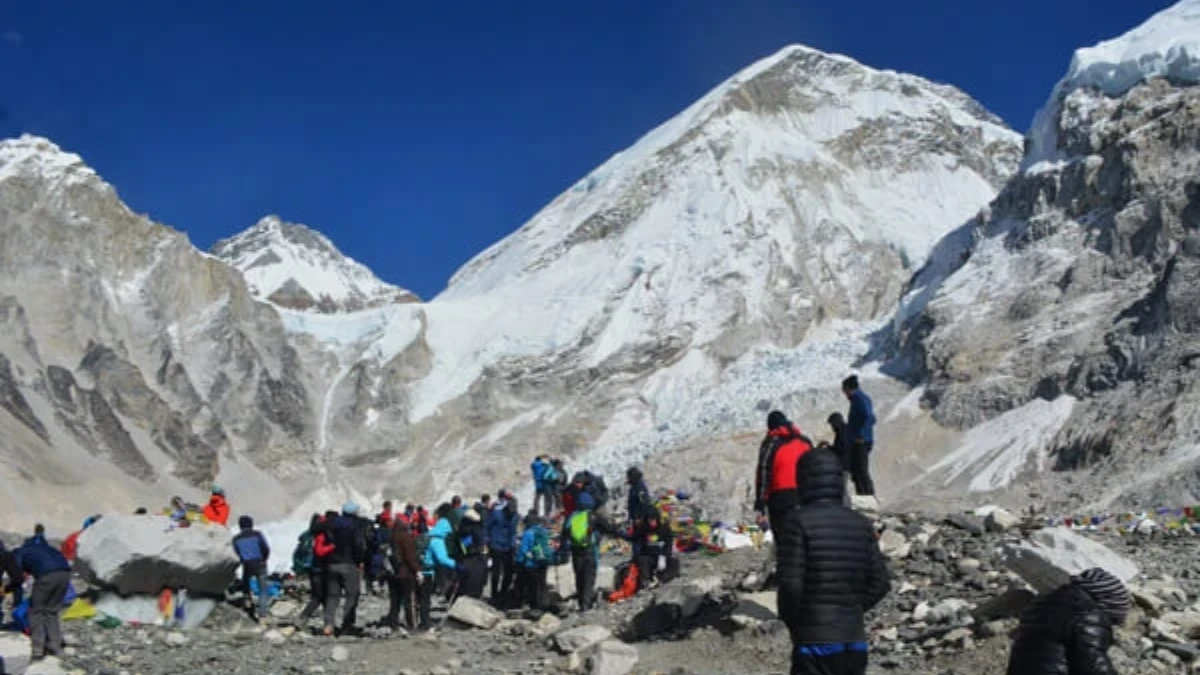
The dream trek. Stand at 5,364m in the shadow of the world's tallest mountain. Three tiers: Budget ₹1,17,500 | Standard ₹2,10,000 | Luxury ₹4,20,000 per person. Permits, guide and ground transport in all tiers. Porter: none on Budget (you carry your own pack), one per two trekkers on Standard, one per trekker on Luxury. Meals included on Standard and Luxury (Budget excludes meals).
View full itinerary and book →
Annapurna Base Camp Trek, 9 Days
Walk through rice paddies, rhododendron forests, and hot springs to the amphitheatre of Annapurna (8,091m). Budget ₹61,000 | Standard ₹1,10,000 | Luxury ₹1,76,000 per person (solo ₹1,05,000, ₹1,45,000 and ₹2,91,000).
View full itinerary and book →
Poon Hill Trek, 6 Days
The perfect first Himalayan trek. Sunrise over Annapurna and Dhaulagiri from 3,210m. Budget ₹42,000 | Standard ₹63,000 | Luxury ₹93,000 per person.
Langtang Valley Trek, 8 Days
Closest major trek to Kathmandu. Tamang culture, cheese factories, and views of Langtang Lirung (7,227m). From ₹34,900 (Budget) to ₹95,700 (Luxury) per person.
Manaslu Circuit Trek, 12 Days
The quieter alternative to Annapurna Circuit. Cross the Larkya La Pass at 5,160m. Restricted area: special permit required. From ₹76,500 (Budget) to ₹2,01,000 (Luxury) per person.
Mardi Himal Trek, 7 Days
Nepal's newest trekking trail. Quiet ridgeline walking with close-up Machhapuchhre (Fishtail) views. From ₹47,800 (Budget) to ₹1,34,000 (Luxury) per person.
What do Indian trekkers need to know before trekking in Nepal?
Permits
All trekking permits are included in our package price. You need: TIMS card (Trekkers' Information Management System) + National Park/Conservation Area entry permit. For restricted areas (Manaslu, Upper Mustang, Dolpo), a special restricted area permit is required: we handle everything.
Currency
Nepal uses Nepali Rupees (NPR). Exchange rate: approximately ₹1 INR = 1.6 NPR. Indian currency up to ₹100 denomination notes are accepted widely in Nepal. ATMs in Kathmandu and Pokhara accept Indian debit cards. Carry cash for the trail: no ATMs above Namche Bazaar (Everest) or Chame (Annapurna).
Mobile and Internet
On most of our treks a SIM card is arranged for you on arrival and included in the price. If you are travelling independently, buy buy an NCell or Ncell SIM at Kathmandu airport (₹500 NPR with data pack). Works on most of the trail up to Namche/Dingboche. Jio and Airtel do NOT work in Nepal. Wi-Fi available at most teahouses (₹200–500 NPR per session).
Food
Dal bhat, rice, lentils, vegetables, pickle, is the staple on the trail. Unlimited refills at most teahouses. Indian trekkers feel at home with the food. Vegetarian options everywhere. Egg dishes, noodles, momos (like Indian momos but better, we think), and Tibetan bread also available. Avoid salads and uncooked food above 3,000m.
Altitude Sickness
This is the biggest risk for all trekkers, including fit Indians. Delhi is 216m above sea level. Everest Base Camp is 5,364m. Your body needs time to adjust. Our guides carry pulse oximeters and monitor your oxygen levels daily. We build acclimatisation days into every itinerary. If symptoms appear, we descend immediately: no argument, no delay.
Insurance
Travel insurance with helicopter evacuation cover is mandatory for all trekkers. Indian companies offering coverage: ICICI Lombard, HDFC Ergo, Bajaj Allianz (check for "adventure sports" add-on and helicopter rescue up to the highest point of your trek: 6,000 m for Everest Base Camp, 5,500 m for the Annapurna Circuit, 4,500 m for Annapurna Base Camp and Mardi Himal, and 3,500 m for Poon Hill). Cost: approximately ₹2,000–₹5,000 for 2–3 weeks. We require confirmation before departure.
About The Everest Holiday
We are a Himalayan family company. Our family has three generations of guiding in the Himalayas, and our grandfather Hari Lal Simkhada arranged logistics for Himalayan expeditions. Our father Ganesh Prasad Simkhada has held senior positions at the Nepal Tourism Board and Nepal Mountaineering Association. Today, Shreejan Simkhada and Shamjhana Basukala run The Everest Holiday with 80+ guides and staff.
- TAAN Member #1586: Nepal's official trekking agency association
- Tourism Licence 2838/072: Government of Nepal
- Over 300 reviews on TripAdvisor (4.9★), Google (4.9★) and Trustpilot (4.7★)
- Selected by Nepal Tourism Board to represent Nepal at MATKA 2026 Helsinki
Our charity, the Nagarjun Learning Center
A portion of every booking supports the Nagarjun Learning Center, founded by our family. We provide free education and hot meals to 70 children across 7 learning centres in rural Nepal, free medical care to 600+ people, and empowerment programmes for 275+ women. The centre is verified and listed on the UN Partner Portal.
Your trek doesn't just change your life: it changes theirs.
Frequently asked questions for Indian trekkers
Do Indian citizens need a visa for Nepal?
No. Indian citizens do not need a visa to enter Nepal. You can enter with your Indian passport or Voter ID card. There is no entry fee. You can stay as long as you like.
Do I need a guide to trek in Nepal?
A licensed guide is required in most trekking areas under the Nepal Tourism Board rule from April 2023, and the listed restricted routes such as Manaslu, Tsum, Upper Mustang and Nar Phu also need an agency-issued TIMS card. The rule covers the Everest (Khumbu) region too, and we always trek with a licensed guide. Our guides are Nepal government trained and licensed, and several hold Bachelor's degrees in Mountaineering.
Can I pay in Indian Rupees?
No, we cannot take rupees. You pay the deposit online by card through our Himalayan Bank payment gateway, which processes international cards securely. The balance is paid in Kathmandu in US dollars or euros, in cash or by card (card payments carry a 3.5% bank charge).
Is Nepal safe for Indian trekkers?
Absolutely. Nepal and India share a deep cultural bond. Hindi is widely understood. The food is familiar. Indian trekkers consistently tell us they feel more at home in Nepal than in any other country. Crime against tourists is extremely rare on trekking trails.
How fit do I need to be?
You should be able to walk 5–7 hours daily on hilly terrain. Start training 8–12 weeks before your trek with regular hiking, stair climbing, and cardio. No mountaineering skills are needed for standard treks. We have treks for every fitness level: Poon Hill (easy) to Manaslu (challenging).
Can I trek solo or do I need a group?
All our treks are private. You don't join a group: it's just you, your guide, and your porter. Solo trekkers, couples, families, and friend groups all welcome. Minimum 1 person, maximum 20.
What if I get altitude sickness?
Our guides are trained in altitude sickness prevention and carry pulse oximeters. We monitor your oxygen levels twice daily above 3,000m. If serious symptoms appear, we descend immediately and coordinate helicopter evacuation if needed. Travel insurance with helicopter cover is mandatory.
What's included in the price?
All permits (TIMS, national park, conservation area, restricted area if applicable), licensed guide, porter (1 porter per 2 trekkers), accommodation throughout, meals (Standard and Luxury tiers), ground transportation from Kathmandu, and airport transfers. International flights, visa, insurance, and personal expenses are not included.
How do I book?
Choose your trek, pick your tier (Budget/Standard/Luxury), and pay a 10% deposit online through our secure Himalayan Bank payment gateway. The remaining balance is due before your trek starts. Or simply WhatsApp Shreejan directly: we'll plan everything together.
Plan Your Nepal Trek Today
Whether it's your first Himalayan trek or your tenth, we'll make it personal, safe, and yours. Every detail is your choice: dates, pace, tier, route.
WhatsApp:+977 9810351300 (Shreejan responds within 30 minutes during Nepal business hours)
Email:[email protected]
Website:theeverestholiday.com
Three generations. One family. Your Himalayas.
Travelling from India? No visa, just book and go. Our Everest Base Camp Trek (12 Days) is private (your group only, no strangers), 2027 dates open, From USD $1399. WhatsApp us for tailored 2027 dates and current departures.
 Chat with Shreejan