
Annapurna Base Camp Permits: ACAP and TIMS Explained

Last updated 5 October 2026.
You need two permits for Annapurna Base Camp. The ACAP entry permit costs NPR 3,000 and the TIMS card costs NPR 2,000 for a foreign passport holder. That is NPR 5,000 in total, about USD 32 at roughly NPR 154 to the dollar in early October 2026, a rate that moves. Both permits are included in all three of our tiers, Budget, Standard and Luxury, so you do not pay them separately on the trail. We are The Everest Holiday, a family company registered on 8 April 2016. We arrange the permits for you before you start walking. Read on for the fees, the rules, the check-posts and what we need from you.
Which permits do you need for the Annapurna Base Camp trek?
You need two documents. The first is the Annapurna Conservation Area Project entry permit, called ACAP. The second is the Trekkers Information Management System card, called TIMS. You must carry both with you throughout the trek. You will show them when asked at check posts along the route.
Is one permit enough? No. ACAP is the conservation area entry. TIMS is your trek registration and safety record. They do different jobs. You need both before you enter the conservation area.
For a foreign passport holder the maths is simple. ACAP is NPR 3,000. TIMS is NPR 2,000. The total is NPR 5,000. That total covers one entry for one person. Our price for our Annapurna Base Camp trek already includes both fees and all government taxes and official expenses. You do not pay extra on the trail.
If you hold a SAARC passport the fees are lower, and the rates are in the table below. If you plan to read more widely, our complete permits guide sets ABC in the context of the whole country. For the route itself, our ABC trek guide walks through the days in plain terms.
What is the ACAP permit and how much is it?
ACAP stands for Annapurna Conservation Area Project. It is run by the National Trust for Nature Conservation. The permit is your entry ticket to the conservation area. The Trust says it receives no regular government funding for ACAP but has been granted the right to collect entry fees from trekkers, and that the revenue is invested back into the region, its resources and its community.
The fee depends on your passport. The table below shows the current rates. Tax is included in the foreigner and SAARC figures. Entry is single entry only. Each permit is for one person. It is non-transferable and non-refundable. You must carry it throughout the trip and show it when asked.
| Passport | ACAP fee | Notes |
|---|---|---|
| Foreign nationals | NPR 3,000 | Single entry, tax included |
| SAARC nationals | NPR 1,000 | Single entry, tax included |
| Nepali nationals | NPR 100 | Single entry |
| Children below 10 | Free | No permit needed |
There are two practical rules that catch people out. First, if your permit is issued at a check-post on the route instead of in advance, you pay double the fee. We arrange permits before you start walking, so that does not arise. Second, for people buying it themselves, online payment adds a 2.9 per cent gateway charge and counter payment carries none. Our price already includes the fee whichever way it is paid.
Drones are prohibited in the conservation area unless the concerned authorities have approved them.
What is the TIMS card and why does it matter?
TIMS stands for Trekkers Information Management System. It is a joint system of the Nepal Tourism Board and the Trekking Agencies Association of Nepal. It started on 1 January 2008. Its purpose is simple and serious, so that a trekker can be located after an accident or natural disaster. It is a safety record, not a souvenir.
"A licensed guide and agency-issued TIMS card are required on most trekking routes under the Nepal Tourism Board rule from 31 March 2023; the rule covers the Everest (Khumbu) region too, and we always trek with a licensed guide."
Under the revised provision effective 31 March 2023, listed routes need a licensed trekking guide and a trekking agency issued TIMS card. The Board list names Poon Hill to ABC Trek under the Annapurna Region among others. Annapurna Base Camp sits squarely inside that rule. You trek with a licensed guide and an agency-issued TIMS card. That is what we provide on every departure.
The process works like this. We fill in a registration form with details of trekkers, guides and route. The payment is made online. An eCard with a QR code is then generated for each trekker. You do not need to understand the software. You need to know that your name, route and guide are recorded in the official system before you walk. If anything goes wrong, that record helps the response.
The TIMS fee is NPR 2,000 for other nationalities and NPR 1,000 for SAARC nationals. Our price includes it. There is no separate TIMS queue for you. If you want the full history and detail, we have a dedicated post on the TIMS card and what changed in the rules. For how the wider rule affects solo travel and other areas, see our note on the 2026 permit rule changes.
Do you need a guide for Annapurna Base Camp?
Yes. The Nepal Tourism Board position is clear for listed routes. You need a licensed trekking guide and an agency issued TIMS card. Annapurna Base Camp is on that list through the Poon Hill to ABC entry. Trekkers must contact a government registered trekking agency. That is how the TIMS card is issued. You cannot generate an agency card on your own.
We go further than the minimum. A licensed guide walks with you on every trek and every tour we run, on every route.
Our tiers differ on porters, not on guiding. Budget has a licensed guide but no porter. You carry your own bag, rooms are shared, trek meals are not included and transport is local. Standard tier has a licensed guide and one porter for every two trekkers, with 20 kg per porter. Rooms are private. All trek meals are included. Luxury tier has a licensed guide and one dedicated porter per trekker. Rooms are private deluxe with attached bathroom where available. All meals are included plus fruit and nuts and unlimited soft drinks. A solo Standard trekker has no porter and the guide carries up to 10 kg.
If you are weighing fitness and pace, our post on how difficult ABC is gives an honest picture. If you are weighing where you sleep and what you eat, our post on teahouses and food explains the nights in order. In both cases, you walk with a licensed guide from our team.
Can you buy the permits yourself?
Partly. For ACAP, the National Trust for Nature Conservation runs an online permit system and an entry permit counter. Individuals can pay online or at the counter with a passport or valid ID. That part is open to you. For TIMS, the position is different. The Nepal Tourism Board says only registered trekking agencies buy TIMS cards. Trekkers must contact a government registered trekking agency. You cannot issue your own agency TIMS card.
In practice a do-it-yourself approach leaves you half done. You might secure ACAP, but you still need an agency for TIMS, and a licensed guide for this route under the current provision. When you book with us, we arrange both permits together, in your name, for your dates.
What is included in our price, and what is not?
All three tiers include the ACAP fee, the TIMS card fee and all government taxes and official expenses. There is no extra permit bill on the trail. The price we quote is the trek price with permits inside.
The table below shows our per person price for 9 days by tier. Kathmandu hotels are not included in any trek tier. We quote them separately so you can choose the standard you like. International flights, Nepal visa, insurance and tips are also not included.
| Tier | Price per person | Permits |
|---|---|---|
| Budget | USD 725 (USD 1,250 solo) | ACAP and TIMS included |
| Standard | USD 1,310 (USD 1,725 solo) | ACAP and TIMS included |
| Luxury | USD 2,095 (USD 3,465 solo) | ACAP and TIMS included |
Group size is 1 to 20, and solo travel is also possible. Tell us your dates and we will match the tier to your needs.
Nepal visa fees on arrival are USD 30 for 15 days, USD 50 for 30 days and USD 125 for 90 days. For the step by step visa process, see our e visa guide. For the full cost picture beyond permits, our ABC cost breakdown sets out what is inside each tier and what sits outside.
On money, our terms are plain. If your plans change, you can reschedule at no extra charge with at least 72 hours notice to any date within one year. The deposit is 10 per cent, and it is not refunded if you cancel. If we cannot run the trip, we refund what was paid less taxes, bank or card charges and money already spent. The balance is paid on arrival in Kathmandu in USD or EUR, cash or by card. Card carries a 3.5 per cent charge. Cash in Kathmandu carries no charge. We do not take Nepali rupees from foreign clients. For insurance, buy it at home before you travel. ABC needs helicopter rescue and evacuation cover to 4,500 metres. Our insurance guide explains the cover to look for.
What do we need from you, and how early?
We need your passport details: full name, passport number, nationality and date of birth exactly as printed, ideally a clear photo of the details page, and your entry date so we can set the permit dates. Check each letter before you send it, because the TIMS form records trekkers, guides and route and a permit should match your passport.
Our rule is that permits need at least 48 hours in government working days. Send your details early and do not leave it to the night before. We do not promise same-day permits.
This matters most around Dashain and Tihar, when government offices close. If you arrive in the festival window, send details a week or more ahead if you can. We will confirm when your ACAP and TIMS are issued.
What happens at the check-posts?
NTNC asks you to register at the check-posts along the route, and to carry the permit for the whole trip and show it when asked. The reason it gives is that the records let it monitor the flow of tourists and increase your chances of rescue in an emergency. It is the same logic as TIMS: a record of who is in the area and on which route. Your guide handles the registration with you, so you do not fill forms alone.
Do the same permits cover other Annapurna treks?
Yes, for the main Annapurna treks. Annapurna Circuit, Annapurna Base Camp, Poon Hill and Mardi Himal all use the same combination. ACAP plus TIMS. NPR 5,000 in total for a foreign passport holder.
| Trek | Permits needed | Total foreign fee |
|---|---|---|
| Annapurna Circuit | ACAP plus TIMS | NPR 5,000 |
| Annapurna Base Camp | ACAP plus TIMS | NPR 5,000 |
| Poon Hill | ACAP plus TIMS | NPR 5,000 |
| Mardi Himal | ACAP plus TIMS | NPR 5,000 |
Nar Phu and Upper Mustang are different. They need restricted area permits on top of the standard permits. If you plan to combine ABC with Nar Phu or Mustang, tell us at the start and we will set out the extra permits and the extra cost before you commit.
For route ideas, our Mardi Himal guide pairs well with ABC for a second short trek. For Poon Hill costs, see our Poon Hill cost note. For the restricted areas, read our restricted area permits post.
Common questions in short
- What if I enter the area twice? Each entry needs its own ACAP, as entry is single entry only.
- Are permit fees refundable? No, ACAP is non-refundable and non-transferable.
- Do children need permits? Children below 10 need no permit and pay nothing.
- What do SAARC passport holders pay? SAARC nationals pay NPR 1,000 for ACAP and NPR 1,000 for TIMS.
- Can I pay the trek balance in rupees? No, foreign clients pay the balance in USD or EUR, while card carries a 3.5 per cent charge and cash carries none.
- Do I need insurance for ABC? Yes, buy helicopter rescue and evacuation cover to 4,500 metres at home before you travel.
- Is the guide included in Budget? Yes, every tier has a licensed guide, while Budget has no porter.
Official sources
Fees, rules and dates in this guide were checked against the official pages on 5 October 2026: the Nepal Tourism Board park entry fees page (ntb.gov.np/plan-your-trip/before-you-come/park-entry-fees), the Nepal Tourism Board TIMS page (ntb.gov.np/en/plan-your-trip/before-you-come/tims-card), and the National Trust for Nature Conservation ACAP page and online permit system (epermit.ntnc.org.np). Trek prices and inclusions are those of our 9 day Annapurna Base Camp trek.
If you are ready, look again at our Annapurna Base Camp trek and send us your passport details early. We will arrange your ACAP and TIMS and walk you through each check with a licensed guide. For wider planning, see our complete permits guide and the ABC cost breakdown.
Written by Shreejan Simkhada, CEO of The Everest Holiday, from a family of three generations of family guides. TAAN Member #1586. WhatsApp +977 9810351300.
Planning a trip to Nepal?
Drop us your details and tell us what you have in mind. We will put together a personalised plan and get back to you.
Not sure which Nepal trek is right for you?
Take our free 2-minute quiz and get personalised recommendations based on your fitness, experience, and travel style.
Find Your Perfect Trek →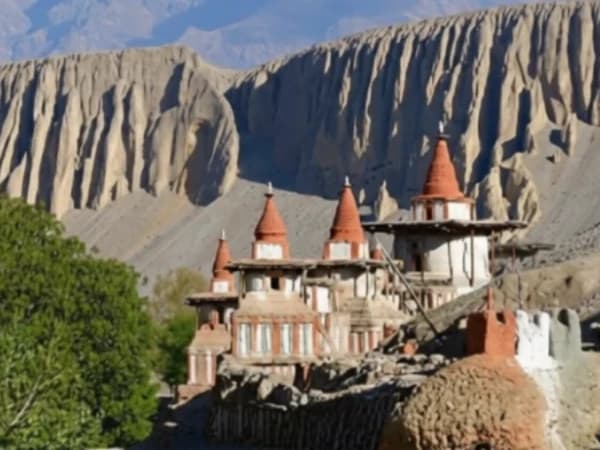
Upper Mustang Itinerary: 10, 12 or 14 Days? What Each Extra Day Adds for 2027
Our live 10-day Upper Mustang itinerary day by day, plus suggested 12 and 14 day outlines, with the USD 50 a day permit worked out for each length.
Read More
Nepal Weather Month by Month for 2027: Kathmandu, Pokhara and Namche
Average highs, lows and rainfall for Kathmandu, Pokhara and Namche Bazaar, the normal monsoon dates, and which of our treks suit each month in 2027.
Read More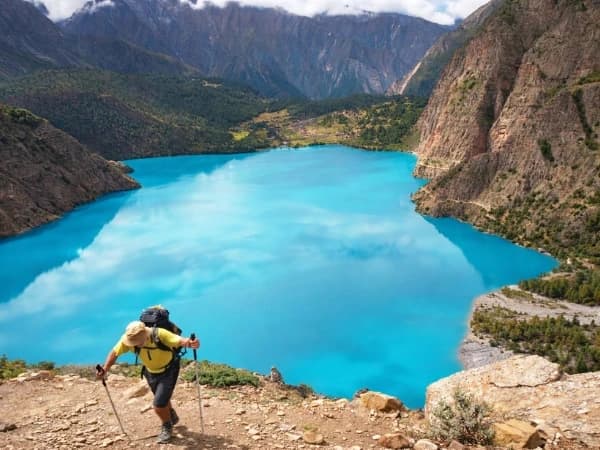
Dunai Village Guide: Height, What Is There and the Trail North for 2027
Dunai is the district town of Dolpa where the Lower Dolpo walk starts. Its height, what is there, the 7 km walk from Juphal, the trail north, best months and 2027 prices.
Read More Chat with Shreejan