
Mardi Himal Trek: The Complete Guide to Itinerary, Cost, Permits and Difficulty

Last updated 2 October 2026. Prices, hours and altitudes come from our live package page for the 7-day trek. Where a fact comes from somewhere else I name the source in the text or in the notes at the end.
The short answer: the Mardi Himal trek is a 7-day private walk from Pokhara up a forested ridge to Mardi Himal Base Camp at about 4,500 m, with Machhapuchhre (the Fishtail, 6,993 m) filling the view. It is moderate in effort, short on logistics and quieter than the other Annapurna treks. With us it costs from US$454 per person on Budget, US$849 on Standard and US$1,111 on Luxury for a single traveller, and the price falls with group size. Permits are included. The best months are October to November and March to May.
The trade-offs are real. The climb is steep and fast for a trek this short, the lodges are basic, and the view is easy to lose to cloud by late morning. This guide covers the route day by day, what each tier gets you, the permits, how hard it really is, when to go, where you sleep and how to reach Pokhara. If you already want to book, the page is our Mardi Himal Base Camp trek, 7 days.
What is the Mardi Himal trek?
It is a ridge trek in the Annapurna Conservation Area, north of Pokhara. The Mardi Himal trekking route was opened in 2012, with lodges and teahouses up to about 3,550 m and a further climb to "Base Camp" at 4,500 m. Mardi Himal itself is a 5,587 m peak below the much bigger Machapuchare, first climbed in 1961. The "Base Camp" is a high viewpoint, not an expedition camp.
What makes it different from the valley treks is the ridge. You spend most of days three and four on an open crest with the Annapurna range on one side and the Fishtail close ahead. Machhapuchhre has never been climbed to the summit: the only confirmed attempt, a British team in 1957, stopped short of the top, and no climbing permits have been issued since. Mardi Himal Base Camp is about as close as a trekker is allowed to get.
I rate it the best short trek out of Pokhara for people who want mountains without crowds. I would not call it easy, and the next sections say why.
What is the day-by-day itinerary?
This is the itinerary on our live package page, with altitudes and times as listed there. Meals shown are the ones included on Standard and Luxury. On Budget, meals on the trek are not included (see the cost section).
| Day | Route | Sleep | Altitude | Time | Meals |
|---|---|---|---|---|---|
| 1 | Drive Kathmandu to Pokhara | Hotel in Pokhara | 820 m | 7 to 8 hours | Breakfast in Pokhara only |
| 2 | Drive to Kande, trek to Forest Camp | Teahouse at Forest Camp | 2,520 m | 4 to 5 hours | Breakfast, lunch, dinner |
| 3 | Forest Camp to High Camp | Teahouse at High Camp | 3,580 m | 5 to 6 hours | Breakfast, lunch, dinner |
| 4 | High Camp to Mardi Himal Base Camp (4,500 m) and back to High Camp | Teahouse at High Camp | 3,580 m | Not listed on the page | Breakfast, lunch, dinner |
| 5 | High Camp down to Siding | Teahouse in Siding | 1,885 m | 6 to 7 hours | Breakfast, lunch, dinner |
| 6 | Drive Siding to Pokhara | Hotel in Pokhara | 820 m | 3 to 4 hours | Breakfast, lunch, dinner |
| 7 | Drive Pokhara to Kathmandu | None | 1,400 m | 7 to 8 hours | None |
Day 4 has no walking time on our page. Our own mountain blog on the base camp puts the climb from High Camp at three to four hours each way along the ridge, started before dawn so you are on top before the cloud builds. It is the longest, hardest and best day, so plan for a full day with rests.
Two points worth knowing before you book. First, the route goes up from the Pokhara side and comes down to Siding on the east side of the ridge, so you do not retrace your steps. Second, our page lists Forest Camp, not Australian Camp, as the first night. Other operators and some of our older posts split the first day differently, and teahouse stops can vary with the lodges that are open. Your guide confirms the exact stops for your dates.
How much does the Mardi Himal trek cost?
These are the prices on our live package page, per person, for the 7-day trek, including the Kathmandu to Pokhara transport shown in the itinerary. Pricing is the same for a private trek or a group, and it falls by group size only.
| Group size | Budget | Standard | Luxury |
|---|---|---|---|
| 1 to 4 | US$454 | US$849 | US$1,111 |
| 5 to 8 | US$404 | US$799 | US$1,061 |
| 9 to 12 | US$354 | US$749 | US$1,011 |
| 13 to 20 | US$304 | US$699 | US$999 |
The treks run from 1 to 20 people, so a solo traveller is welcome. What changes with the tier:
| Budget | Standard | Luxury | |
|---|---|---|---|
| Porter | None. You carry your own bag. | One porter for every two trekkers | One dedicated porter per trekker |
| Meals on the trek | Not included. You pay at the teahouses. | All meals | All meals |
| Rooms | Shared teahouse rooms | Private rooms | Private deluxe rooms, ensuite where available |
| Kathmandu to Pokhara | Local transport (tourist bus) | Private vehicle | Private luxury vehicle |
On a solo booking, Luxury still gets its own porter. Standard does not: porters are shared one for two, so a single Standard trekker has no porter and the guide carries up to 10 kg of the bag. Budget never has a porter. If you want one on Budget, an extra porter costs US$25 a day, plus 13 per cent VAT and 3.5 per cent bank charge on top.
The price includes the airport pick-up and drop, the transport above, the Pokhara hotel with breakfast, an English-speaking licensed guide, the Annapurna Conservation Area permit and the TIMS card, all government taxes and a first-aid kit with an oximeter. It does not include Kathmandu hotels (quoted separately), your international flight, the visa, tips, bottled and alcoholic drinks, hot showers and charging, or your insurance. Our package page suggests budgeting about US$20 a day for personal extras on the trek.
Booking works like this. A 10 per cent deposit holds your dates and the balance is paid in Kathmandu. Card payment of the balance carries a 3.5 per cent charge; cash in Kathmandu does not. We take US dollars or card, not Nepali rupees, from foreign clients. If you need to move, you can reschedule free, with at least 72 hours' notice, to any date within one year. The deposit itself is not refunded if you cancel. If we cannot run the trip, we refund what you paid less taxes, bank and card charges and any money already spent on permits or flights.
What permits do you need for Mardi Himal?
Two: the Annapurna Conservation Area Permit and the TIMS card. According to the Nepal Tourism Board fee list, the ACAP is NPR 3,000 for foreign visitors (NPR 1,000 for SAARC nationals) and the TIMS card is NPR 2,000 (NPR 1,000 for SAARC). Both are included in our price, and we arrange them in Kathmandu, so you do not queue for them.
A word on the guide. In March 2023 Nepal introduced a rule that foreign trekkers may not walk alone in places such as Mardi Himal and must be accompanied by a licensed guide, and as of May 2024 the rule was not being actively enforced. I would not rely on enforcement either way. On a steep ridge with cloud, weak mobile signal and basic lodges, having a licensed guide is simply safer, and every trek we run includes one.
How hard is the Mardi Himal trek?
We grade it three out of five: moderate, fine for fit first-timers. Two numbers explain the effort, and both come straight from our itinerary.
| Leg | Altitude change | Time on our page |
|---|---|---|
| Day 2: Kande to Forest Camp | Up to 2,520 m | 4 to 5 hours |
| Day 3: Forest Camp to High Camp | Up 1,060 m (2,520 to 3,580 m) | 5 to 6 hours |
| Day 4: High Camp to Base Camp and back | Up 920 m (3,580 to 4,500 m), then back down | Full day, not listed |
| Day 5: High Camp to Siding | Down 1,695 m (3,580 to 1,885 m) | 6 to 7 hours |
The differences are calculated from the altitudes on the package page. Two things follow.
The climb is quick. The cautious rule for sleeping height is gaining no more than about 300 m a day. Our itinerary sleeps you at 2,520 m on day 2 and 3,580 m on day 3, a gain of 1,060 m in a night. Most fit people are fine at 3,580 m, and High Camp is lower than anywhere you sleep on an Everest trek. But it is not a gentle profile, which is why the guide checks your oxygen with an oximeter and why you must tell us honestly how you feel. If you have struggled at height before, say so before you book and we will talk through a slower schedule.
The descent is the hidden cost. Coming down 1,695 m on day 5 is hard on knees and quads. Walking poles help.
No climbing skills are needed. The ridge has drops either side but the path is a walking path. I would say Mardi is not suitable for you if you have a heart or lung condition that you have not cleared with a doctor, if heights on exposed ridges frighten you, or if you cannot walk five to six hours a day with a day pack. For a comparison with other short treks, see Poon Hill vs Mardi Himal and ABC vs Mardi Himal.
When is the best time to trek Mardi Himal?
October and November for the clearest, most stable skies, and March to May for warmer days and rhododendron colour in the lower forest. Both are good. The monsoon (June to September) brings cloud, rain and leeches in the forest, and December onwards can leave snow on the upper ridge and close some lodges. That is the view from our guides and from our own blogs on Mardi; there is no weather station on the ridge, so I can't give you ridge temperatures from a source.
What I can give you is the weather in Pokhara, the city where the trek starts and ends, from the World Meteorological Organization and Nepal's Department of Hydrology and Meteorology (1991 to 2020 averages). Pokhara is at 827 m, so the ridge is much colder, but the rain pattern is the same.
| Month | High / low (C) | Rain (mm) | Rain days (1 mm or more) | Sun hours a day |
|---|---|---|---|---|
| January | 19.9 / 7.1 | 21.6 | 2.4 | 6.6 |
| February | 22.7 / 9.7 | 35.1 | 3.8 | 7.3 |
| March | 27.1 / 13.1 | 63.7 | 6.4 | 7.4 |
| April | 30.0 / 16.1 | 141.7 | 10.5 | 7.3 |
| May | 30.4 / 18.7 | 354.7 | 18.3 | 5.4 |
| June | 30.8 / 21.2 | 648.2 | 22.2 | 3.7 |
| July | 30.4 / 22.4 | 941.0 | 25.6 | 3.4 |
| August | 30.5 / 22.3 | 839.4 | 24.3 | 3.1 |
| September | 29.9 / 21.1 | 635.0 | 19.4 | 4.4 |
| October | 27.9 / 17.2 | 159.2 | 8.0 | 6.1 |
| November | 24.4 / 12.3 | 17.2 | 1.3 | 7.4 |
| December | 21.0 / 8.3 | 11.5 | 1.0 | 7.1 |
Pokhara gets 3,868 mm a year. The numbers say what the guides say: November is nearly dry, October is drying out, April is the start of the build-up and May tips into the rains, with 354.7 mm and 18.3 rain days in Pokhara even though the days are warm.
Practical advice. Start early every morning, because the clouds tend to build up the valley by late morning. Allow a spare day in Pokhara at the end if your flight home is fixed. And check the current position before you go: as of 29 September 2026, the southern Annapurna trails including Mardi Himal were reported open and walking a normal season, while the late-September rain damaged roads further west. I keep that status on my floods and landslides travel update, and the earlier Kimrong Khola scare is covered in this note. The Mardi route does not touch Nayapul, Birethanti or the Kimrong Khola.
Where do you sleep and eat on the Mardi Himal trek?
In small teahouse lodges. There are three main stops: Forest Camp with seven or eight teahouses, then Low Camp and High Camp, with High Camp having the most guesthouses. Our own guides describe them as simple, seasonal and basic: rooms with plain beds, a warm dining hall, dal bhat and the usual trekking menu. Base Camp itself has no lodge and is a day walk from High Camp.
It gets cold at High Camp once the sun drops. Bring a warm layer and a head torch. Hot showers, charging and wifi cost extra and cost more the higher you go. In the busy months the best lodges fill, which is one reason to book a guided trek with rooms held in advance. Bring the cash you need for extras from Pokhara or Kathmandu, because there are few exchange options once you are on the trail (our package page gives the same advice). For more on the two stops that matter most, see our guides to Mardi High Camp and Mardi Himal Base Camp.
How do you get to Pokhara and the trailhead?
Our package starts and ends with road transport. Day 1 is a 7 to 8 hour drive from Kathmandu to Pokhara (6 to 8 hours is the range given in the package text), by tourist bus on Budget and by private vehicle on Standard and Luxury. Day 2 is a drive from Pokhara to Kande, where the walking begins. Day 6 is a 3 to 4 hour drive from Siding back to Pokhara, and day 7 is a 7 to 8 hour drive to Kathmandu.
If the drive does not appeal, you can fly Kathmandu to Pokhara. Our flight guide gives about 25 minutes and about US$124 one way for a foreign visitor, and flights can be arranged for an extra fee. The flight replaces a 7 to 8 hour drive each way, but it adds baggage limits and weather delay risk. Details are in Nepal domestic flights for trekkers.
What should you pack?
You carry a small day pack with water, camera, sunscreen and a warm jacket; the rest goes in a duffel of at least 60 litres. On Standard and Luxury a porter carries it. On Budget, you carry everything yourself, so pack light. The lodges are cold at night above 3,000 m, so bring a warm sleeping bag liner, a down jacket, warm gloves and a hat, plus a rain shell and good boots with grip for the steep, muddy forest sections. Walking poles are worth having for the 1,695 m descent.
Insurance is not optional. Our package says travel insurance is mandatory and must cover medical costs and emergency helicopter rescue up to 4,500 m. Buy it in your home country before you travel, and give us a copy before the trek.
Short on time, or not up for the walk? Our Mardi Himal helicopter day tour from Pokhara includes a landing of up to about 30 minutes, weather permitting, in a single morning.
Is Mardi Himal better than Annapurna Base Camp or Poon Hill?
It depends on what you want. Poon Hill is six days, rises to 3,210 m, and is the easier, busier walk with better teahouses. Annapurna Base Camp is longer (our package is 9 days) and walks into a closed amphitheatre of peaks. Mardi is the high ridge with sustained views, a higher top at 4,500 m and simpler lodges. If you have a week and want fewer people, I would pick Mardi. If you want comfort and a gentle gradient, pick Poon Hill. Compare the three side by side on the Poon Hill vs Mardi Himal and ABC vs Mardi Himal pages, or see our Annapurna Base Camp trek and Poon Hill trek pages.
Why does a ridge walk feel different from a valley trek?
Most Nepal treks follow valleys, so you walk beside a river and look up at the mountains. Mardi follows a ridge. Once you are above the forest you walk along the crest with the land dropping away on both sides, level with the peaks and not beneath them. On a clear morning, when cloud fills the valleys below and the peaks stand above it, it feels closer to flying than walking. That is also why photographers like it: the Fishtail fills the frame, and the morning light rewards every lens.
If you have time for both, do Mardi first and Annapurna Base Camp second. Mardi gives you the ridge, and Annapurna Base Camp then gives you the amphitheatre. The contrast makes both better.
Who should not choose Mardi Himal?
Skip it if you want comfortable lodges, hot showers and a long menu every night. Skip it if you have only clear skies in mind and cannot spare a day if cloud sits on the ridge. Skip it if your knees dislike long steep descents. And do not book it if you cannot tell us honestly about any altitude problems in the past, since the climb to High Camp is fast. In those cases, Poon Hill is the better short trek.
How do you book?
Tell me your dates and group size on WhatsApp, +977 9810351300, or email [email protected]. Our Mardi treks run as private treks by default, so you walk with your own group only. I will confirm the stops, the current trail status and a price for your tier. The page to start from is the Mardi Himal Base Camp trek, 7 days.
Sources: Nepal Tourism Board (permit and TIMS fees); WMO and Nepal Department of Hydrology and Meteorology, 1991 to 2020 (Pokhara climate). Trail status is as at 29 September 2026.
About The Everest Holiday
We are a family company in Kathmandu, three generations of Himalayan guides, registered in 2016 and a member of the Trekking Agencies' Association of Nepal, number 1586. When you book with us you deal with the family, not a call centre.
Every booking helps fund our Nagarjun Learning Center. We fully run the centre at Saldum, where 70 children learn with a teacher I pay for personally.
Written by Shreejan Simkhada, CEO of The Everest Holiday and third-generation Himalayan guide. TAAN Member #1586.
Planning a trip to Nepal?
Drop us your details and tell us what you have in mind. We will put together a personalised plan and get back to you.
Not sure which Nepal trek is right for you?
Take our free 2-minute quiz and get personalised recommendations based on your fitness, experience, and travel style.
Find Your Perfect Trek →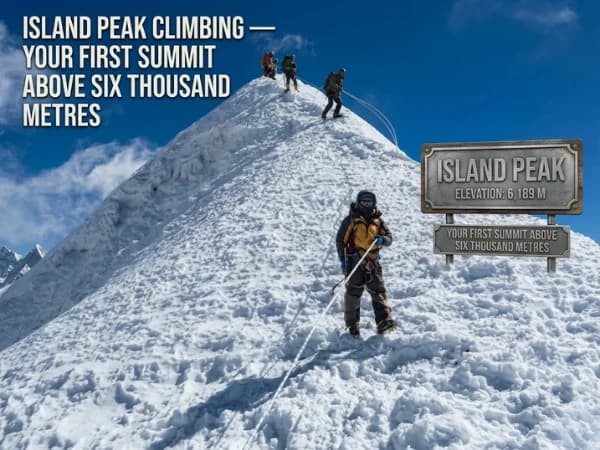
Island Peak Itinerary and Summit Day 2027: 14 Days, Base Camp to the Top
The 14-day Island Peak itinerary day by day, what summit day is like from base camp, where sources disagree on heights, best months and 2027 prices.
Read More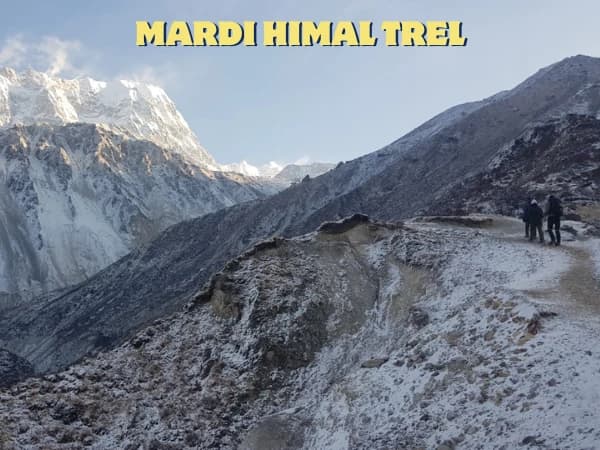
How Difficult Is the Mardi Himal Trek? An Honest Day-by-Day Rating for 2027
An honest day-by-day rating of the Mardi Himal trek: the steep climb to High Camp, the 4,500 m push to Base Camp, altitude risk, who finds it hard and 2027 prices.
Read More
Manaslu Circuit Reopened: What Changed After the 2026 Floods and How to Plan 2027
The Manaslu Circuit over the Larke Pass is open again with extreme caution. What changed in the lower valley after the two 2026 floods, 2027 prices and permits, and how I would plan.
Read More Chat with Shreejan