
ABC takes 9 days, Mardi takes 7. Both reach above 4,000m with Annapurna views. A local guide compares cost, difficulty, crowds, and which suits you best.
Govt Regd. No.: 147653/072/073
Travel Agency Licence: 2838/072
ABC vs Mardi Himal: Which Annapurna Trek Is Right for You?

ABC vs Mardi Himal: Which Annapurna Trek Is Right for You?
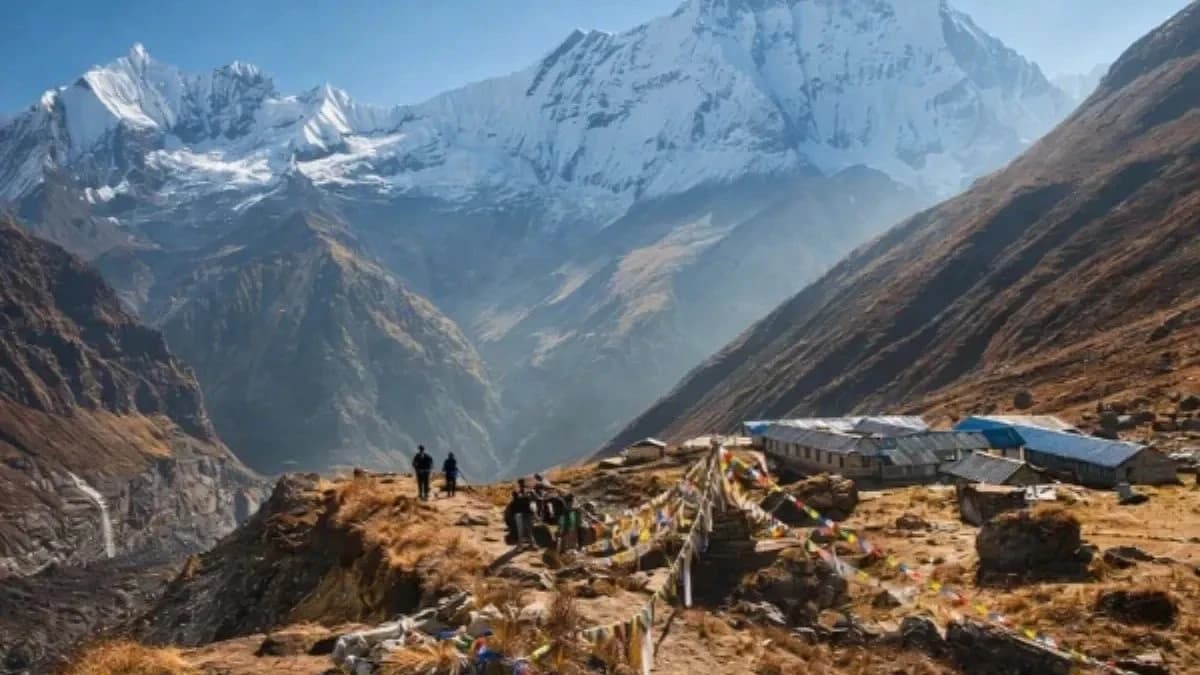
My grandfather guided trekkers to Annapurna Base Camp before Mardi Himal even had a trail. Back then, ABC was the only game in town if you wanted to stand beneath the south face of Annapurna I and feel genuinely small. Now Mardi Himal offers a shorter, quieter route to a viewpoint that, on a clear morning, rivals anything ABC delivers.
I know both treks well. Machhapuchhre from ABC can bring first-time trekkers to tears, and Mardi's high camp ridge can leave seasoned hikers lost for words. They're different feels. Not better or worse. Different. This guide breaks down exactly what each trek offers so you can choose with confidence.
ABC vs Mardi Himal, which is better at a glance?
| Feature | Annapurna Base Camp (ABC) | Mardi Himal |
|---|---|---|
| Duration | 9-11 days | 5-7 days |
| Maximum altitude | 4,130m (ABC) | 4,500m (Mardi Himal Base Camp) |
| Difficulty | Moderate | Moderate |
| Best months | March-May, October-November | March-May, October-November |
| Teahouse availability | Excellent, well-established route | Basic, newer lodges, fewer options |
| Permits required | ACAP + TIMS | ACAP + TIMS |
| Daily trekkers (peak season) | 200-400 | 40-80 |
| Cost (guided trek) | $800-$1,200 | $600-$900 |
| Views of Annapurna I | Dramatic south face, close range | Panoramic, slightly more distant |
| Physical terrain | Stone steps, gradual valley approach | Steep ridge walk, exposed sections |
What is the Annapurna Base Camp trek like?
The Annapurna Base Camp trek follows a classic route into the Annapurna Sanctuary. You walk through rice paddies, bamboo forests, and rhododendron groves before the valley narrows and the mountains close in around you. By the time you reach base camp, you're standing in a natural amphitheatre surrounded by Annapurna I (8,091m), Machhapuchhre (6,993m), Hiunchuli, and Annapurna South.
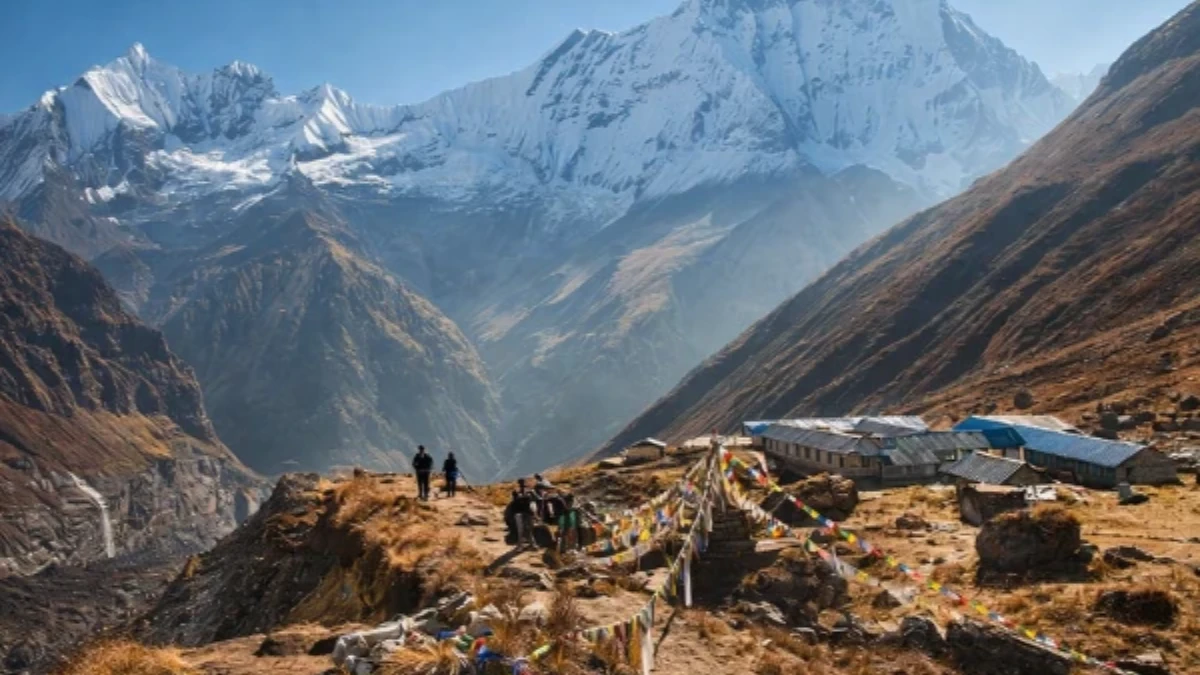
The trail is well-maintained. Stone steps, thousands of them, connect villages like Ghorepani, Chhomrong, and Deurali. Teahouses serve dal bhat, hot showers cost 200-400 rupees, and you'll find charging points at most stops. It's comfortable trekking by Himalayan standards.
What Makes ABC Special
Nothing prepares you for the sanctuary. The approach through Modi Khola valley creates a gradual reveal. You see pieces of the mountains for days, glimpses through trees and between ridgelines. Then on the final morning, you walk into a flat glacial basin and the entire amphitheatre opens up. Annapurna I's south face, one of the most dangerous walls in mountaineering, towers 4,000 metres above you.
Our guides always tell trekkers to arrive at base camp in the afternoon, then wake before dawn for sunrise. The light hitting Annapurna South first, then sweeping across the entire amphitheatre, is a moment worth every stone step on the trail.
ABC Drawbacks: Being Honest
The trail gets crowded. During peak October, you might share the path with 300 or more trekkers daily. Teahouses fill up and you'll occasionally arrive at a lodge to find no beds available, especially in Chhomrong and Deurali. Book ahead or carry a sleeping bag as backup.
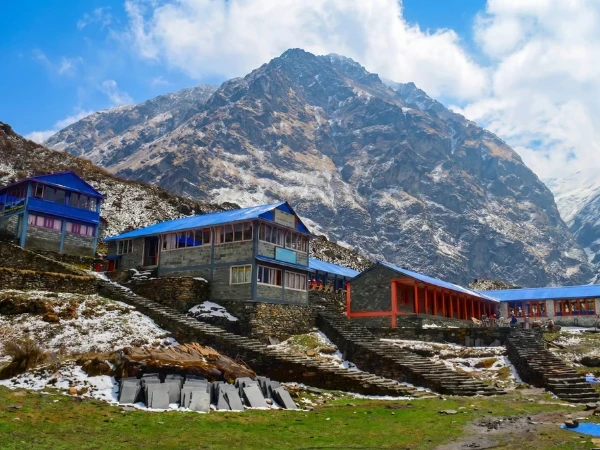
The stone steps are relentless. Your knees will feel it, particularly on the descent through Chhomrong's 3,000+ steps. Trekking poles aren't optional here; they're essential. And while the sanctuary itself is spectacular, some sections of the lower trail through Sinuwa and Bamboo feel like walking through a tunnel of vegetation with limited views.
If you're combining it with Ghorepani Poon Hill, the total duration extends to 12-14 days. That's a significant time commitment for travellers on a tight schedule. Related: Chhomrong: The Last Big Village Before the Annapurna Sanctuary.
What is the Mardi Himal trek like?
The Mardi Himal trek is Nepal's best-kept open secret, though it's getting less secret every year. The trail follows a steep ridgeline on the eastern side of the Mardi Khola valley, climbing through forest to emerge above the treeline at around 3,500m. From there, you walk along an exposed grassy ridge with views that expand with every step.
It's shorter than ABC: most itineraries run 5-7 days from Pokhara and back. But don't mistake shorter for easier. The daily altitude gains are steeper and the trail above high camp is exposed enough that our guides check weather carefully before pushing to the viewpoint.
What Makes Mardi Special
The ridge walk. Full stop. Once you clear the forest line, you're walking a narrow spine with the Mardi Khola valley dropping away on one side and the full Annapurna range spread before you on the other. Machhapuchhre is so close it feels like you could touch it. The Annapurna massif stretches from Annapurna I all the way to Annapurna IV.
Give yourself time to sit on the ridge at high camp. It is easy to lose two hours there, because you will not want to look away from the mountains.
Mardi also offers genuine solitude. You'll see other trekkers but nothing like the queues on the ABC trail. Our groups sometimes have the high camp viewpoint entirely to themselves at sunrise.
Mardi Drawbacks: Being Honest
The teahouses above forest camp are basic. Some are little more than tin-roofed shelters with foam mattresses. Hot water is unreliable, charging facilities are limited, and menu options narrow to dal bhat and noodle soup. If you want hot showers and varied menus, ABC is the better choice.
The trail markings above high camp are poor. In fog or snow, the route becomes genuinely confusing. It is easy to lose the trail above 4,200m, and trekkers who go independently sometimes turn back. A guide isn't just recommended here, it's borderline necessary for safety.
Wind exposure on the ridge can be brutal. Sustained winds can make the viewpoint unsafe, and when they do, the guide's call to turn back is final. A guest on our January 2019 Annapurna Base Camp trek wrote on TripAdvisor: "At one point we had to turn back down the mountain and for that I was glad to have his expertise." (Dave, TripAdvisor, February 2019.) It is worth knowing.
How do ABC and Mardi Himal itineraries compare daily?
ABC: A Gradual Build
ABC is like a slow-burn film. Days one through three take you through lowland villages and rhododendron forests. The views build gradually. By day four or five, you're in the Modi Khola gorge and the mountains start closing in. The climax at base camp comes after days of anticipation.
Most trekkers pair ABC with Poon Hill, and honestly, I encourage this. The Ghorepani Poon Hill route gives you the panoramic sunrise experience while ABC gives you the intimate amphitheatre. Together, they cover both perspectives of the Annapurna region.
Mardi: Quick and Intense
Mardi is a thriller. You gain altitude fast, from Kande (1,770m) to Low Camp (2,990m) on day one, then High Camp (3,580m) on day two. By day three, you're at the viewpoint above 4,500m. The views arrive suddenly and overwhelmingly.
The descent is equally fast. Most groups drop from High Camp to Siding in a single day. Your knees take more punishment per day than on ABC because the terrain is steeper, even though the total trek is shorter.
Which Trek for Which Trekker?
Choose ABC If...
- You have 9-14 days available and want the full Himalaya trip
- You prefer well-established teahouses with good facilities
- Standing in the Annapurna Sanctuary amphitheatre is on your dream list
- You want to combine with Poon Hill for a full trip
- You're comfortable with crowded trails and don't mind sharing the trip
- It's your first major trek and you want a reliable, well-supported route
Choose Mardi If...
- You have only 5-7 days for a trek
- Solitude matters more to you than comfort
- You're physically fit and comfortable with steep daily gains
- You love ridge walks and exposed terrain
- You've already done the popular treks and want something different
- Budget is a primary concern . Mardi costs 20-30% less than ABC
How fit must you be for ABC vs Mardi Himal?
Both treks are graded moderate, but they challenge your body differently. ABC maxes out at 4,130m with gradual acclimatisation over multiple days. The altitude is manageable for most healthy adults who've done some hill training beforehand.
Mardi reaches 4,500m with less acclimatisation time. You gain roughly 800m on the steepest day. The way we put it to clients: ABC is hard on the legs, Mardi is hard on the lungs. If you're worried about altitude, ABC's gentler approach gives your body more time to adjust.
For either trek, I recommend at least 4-6 weeks of cardio preparation. Stair climbing, hill walking with a weighted pack, and some basic strength work. Neither requires mountaineering skills or technical equipment.
If you're looking for something gentler before tackling either of these, the Everest View Trek or a Ghorepani Yoga Trek can build your confidence at moderate altitude.
How much do ABC and Mardi Himal treks cost?
Budget matters. Here's a realistic comparison for a guided trek from Pokhara.
ABC (9 days)
- Guide and porter: $400-$600
- Permits (ACAP + TIMS): $50
- Accommodation: $5-$10/night
- Food: $20-$30/day
- Transport to/from trailhead: $30-$50
- Total estimate: $800-$1,200
Mardi (5-7 days)
- Guide and porter: $300-$450
- Permits (ACAP + TIMS): $50
- Accommodation: $3-$8/night
- Food: $15-$25/day
- Transport to/from trailhead: $20-$30
- Total estimate: $600-$900
The difference comes mainly from fewer trekking days and simpler accommodation on Mardi. Both treks start and end in Pokhara, so transport costs are similar. With a reputable agency, both fall comfortably within budget for most travellers.
When is the best time for ABC vs Mardi Himal?
Both treks share the same optimal seasons: October-November for clear skies and stable weather, March-May for rhododendron blooms and warming temperatures. But seasonal conditions affect each trek differently.
In monsoon season (June-September), ABC's stone steps become dangerously slippery and leeches are everywhere below 3,000m. Mardi's ridge trail, being higher and more exposed, actually dries faster after rain but cloud cover often blocks the views entirely.
Winter (December-February) is possible on both routes but with important caveats. ABC's approach through the gorge gets cold and receives less sunlight. Mardi's ridge is exposed to bitter winds and snow can obscure the trail above high camp. Our team only recommends winter Mardi to seed trekkers.
For an alternative autumn time in the Annapurna region, consider the Annapurna Circuit or the more ambitious Annapurna Circuit with Tilicho Lake.
Which trek has more culture, ABC or Mardi Himal?
ABC wins on cultural immersion. The trail passes through Gurung villages like Ghandruk and Chhomrong where you can visit monasteries, watch traditional dances, and eat authentic Gurung cuisine. The teahouse owners in these villages have been hosting trekkers for decades. Many speak excellent English and love sharing stories about their mountains.
Mardi's cultural stops are limited. You pass through Lwang, a Gurung village known for its homestay programme, at the start. After that, the trail moves quickly into wilderness. If cultural exchange is important to your trek itself, ABC delivers more of it. Related: Sinuwa: The Peaceful Gateway to the Annapurna Sanctuary (2,360m).
Can You Do Both?
Yes, and some of our most satisfied clients have done exactly this. A 14-16 day itinerary combining ABC and Mardi gives you the amphitheatre trek and the ridge walk. You'd typically do Mardi first (shorter, faster acclimatisation) and then ABC. The cost for a combined trek runs $1,400-$1,800.
Alternatively, if you're spending three weeks in Nepal, pair one of these Annapurna treks with something in a completely different region. The Langtang Valley Trek combines beautifully with Mardi, different scenery, different culture, and you can do both within 14 days.
For trekkers wanting to compare entirely different regions, the Everest Base Camp trek and the Manaslu Circuit offer longer, more remote alternatives to the Annapurna region entirely.
Which Trek Do Guides Prefer?
It depends on the guide, and that is the honest answer. Guides who love the moment the amphitheatre opens up in front of you choose ABC. Guides who prefer a ridge walk, with fresh snow and morning light turning everything gold, choose Mardi. Mardi is beautiful but basic, while ABC gives you a first reveal of the sanctuary that you cannot get from a ridgeline.
For those inspired to explore even further from the Annapurna region, the Upper Mustang Trek offers a completely different landscape, desert terrain, ancient Buddhist kingdoms, and one of Nepal's most restricted areas.
Frequently Asked Questions
Can a beginner do the Mardi Himal trek?
Yes, with preparation. Mardi is technically straightforward but physically demanding due to steep daily gains. If you can comfortably hike 6-8 hours uphill with a daypack, you'll manage. We recommend at least 4 weeks of hill training beforehand. The Short Trek to Namche Bazaar is a good warm-up if you're nervous about altitude.
Is ABC worth it if I only have 7 days?
Seven days is tight for ABC. It's doable if you take a jeep to Chhomrong and skip the Poon Hill addition, but you'll be rushed and won't acclimatise properly. If you only have 7 days, Mardi is the better choice. Save ABC for when you have 10 days or more.
Which trek has better mountain views?
They offer different types of views. ABC gives you a close-range, real taste of the place surrounded by peaks on all sides. Mardi gives you a wide panoramic view from an open ridgeline. Neither is objectively better. People who prefer intimate, enclosed landscapes tend to favour ABC. Those who love sweeping panoramas lean toward Mardi.
Do I need a guide for either trek?
Since April 2023, the Nepal Tourism Board rule has required foreign trekkers in the Annapurna area to hire a licensed guide. Beyond the requirement, a guide is genuinely valuable on both routes. ABC's well-marked trail is theoretically easy to follow, but our guides handle logistics, secure teahouse beds, and manage altitude concerns. On Mardi, a guide is practically essential above high camp where the trail disappears in poor visibility.
Can I do either trek in December or January?
Both are possible in winter but conditions are harsher. ABC's lower sections remain accessible and the sanctuary under fresh snow is extraordinary. Mardi's ridge gets bitterly cold with wind chill dropping to -15°C at high camp. Expect shorter daylight hours, fewer open teahouses, and the need for proper cold-weather gear. We run winter treks on both routes but advise clients to have some prior trek itself.
Should you choose ABC or Mardi Himal trek?
If this is your first time in Nepal and you have the time, go to ABC. It's a classic for a reason. The Annapurna Sanctuary is one of the most beautiful places on earth and the well-developed trail infrastructure means you can focus on the trip rather than logistics.
If you've been to Nepal before, or you're short on time, or you simply prefer solitude over comfort, Mardi Himal will reward you with views that rival any trek in the country. It's becoming more popular every year, so the window of relative quiet is narrowing.
And if you still can't decide? Call us. We run both routes and we'll match you to the right one based on your fitness, timeline, and what makes your heart beat faster.
Ready to Trek?
Whether you choose ABC, Mardi, or both, our team will handle every detail, permits, guides, porters, accommodation, and transport from Pokhara. We've been running these treks for three generations.
Get in touch:
- WhatsApp: +977 9810351300
- Email: [email protected]
- Browse our ABC Trek and Mardi Himal Trek packages
Mardi Himal's lower altitudes and rolling ridgelines also make it popular with trail runners visiting Nepal.
Written by Shreejan Simkhada, third-generation Himalayan guide and founder of The Everest Holiday. Licensed by the Trekking Agencies' Association of Nepal (TAAN #1586). Born and raised in Nepal, still happiest above 4,000 metres.
ABC or Mardi? ABC is the deeper experience. Our Annapurna Base Camp Trek (9 Days) is private (your group only, no strangers), 2027 dates open, From USD $725. WhatsApp us for tailored 2027 dates and current departures.
Planning a trip to Nepal?
Drop us your details and tell us what you have in mind. We will put together a personalised plan and get back to you.
Not sure which Nepal trek is right for you?
Take our free 2-minute quiz and get personalised recommendations based on your fitness, experience, and travel style.
Find Your Perfect Trek →Need Help? Call Us+977 9810351300orChat with us on WhatsApp
Latest Travel Blogs
Christmas and New Year Treks from Pokhara 2026/27: 3 to 5 Days
<p>Short treks from Pokhara for Christmas and New Year 2026/27: Panchase 3 days, Poon Hill 4 days and Mardi Himal 5 days. Weather, snow, what is open, and prices by group size.</p>
Read More
Thamdanda and Surke: The Road Head for Everest Base Camp by Road
Thamdanda is the road head where our Everest Base Camp trek by road starts and ends on foot. How to get there from Phaplu and what the first walk to Paiya is like.
Read MorePoon Hill Trek Permits 2027: ACAP, TIMS, Cost and What You Need
Poon Hill needs two permits: ACAP at NPR 3,000 and a TIMS card at NPR 2,000. Who arranges them, where they are checked, SAARC rates and the 2027 trek prices.
Read More Chat with Shreejan