Nepal trail running guide. Everest Marathon, Annapurna 100, best routes, altitude training, fastpacking. The complete guide for runners heading to the Himalayas.
Govt Regd. No.: 147653/072/073
Travel Agency Licence: 2838/072
Trail Running in Nepal: Races, Routes and Why the Himalayas Are Calling Runners

Trail Running in Nepal: The Complete Guide to Running in the Himalayas
By Shreejan Simkhada | April 2026 | 13 min read
In November 2024, Ryan Sandes and Ryno Griesel completed the Great Himalayan Trail across Nepal in 25 days, 4 hours, and 25 minutes. They ran 1,504 kilometres through the highest mountain range on Earth, crossing passes above 5,000 metres, navigating monsoon-damaged trails, sleeping three to four hours a night in whatever shelter they could find.
When the news broke, my phone didn't stop buzzing for a week. Trail runners from everywhere wanted to know the same thing: can we run those trails too?
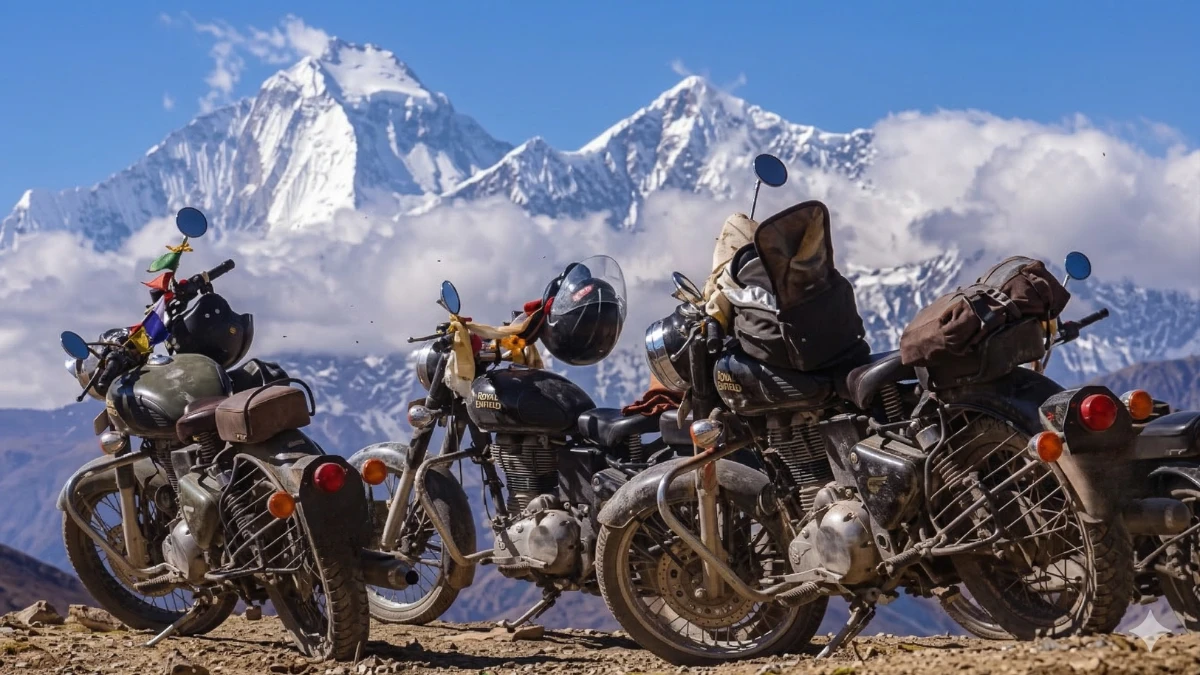
The answer is yes. You don't need to be Ryan Sandes. You don't need to run 60km a day. Nepal's trekking trails are increasingly being used by trail runners who want something beyond European alpine routes and American desert ultras. They want altitude. They want remoteness. They want trails where you might not see another runner all day but you'll pass a yak caravan, a Buddhist monastery, and a village where nobody has heard of Strava.
This guide covers everything: the races, the routes, the logistics, and the honest reality of running at altitude in a country where the trails were built for walking and the mountains don't care how fast you are.
Why Nepal Is Becoming a Trail Running Destination
Three things are converging.
First, the trails already exist. Nepal has thousands of kilometres of maintained trekking paths connecting villages, crossing high passes, and winding through valleys that would take decades to develop from scratch. The infrastructure (teahouses, lodges, established permit systems) is all there. Trail runners don't need wilderness permits, campsites, or support vehicles. They need the same things trekkers need, just less of it and faster.
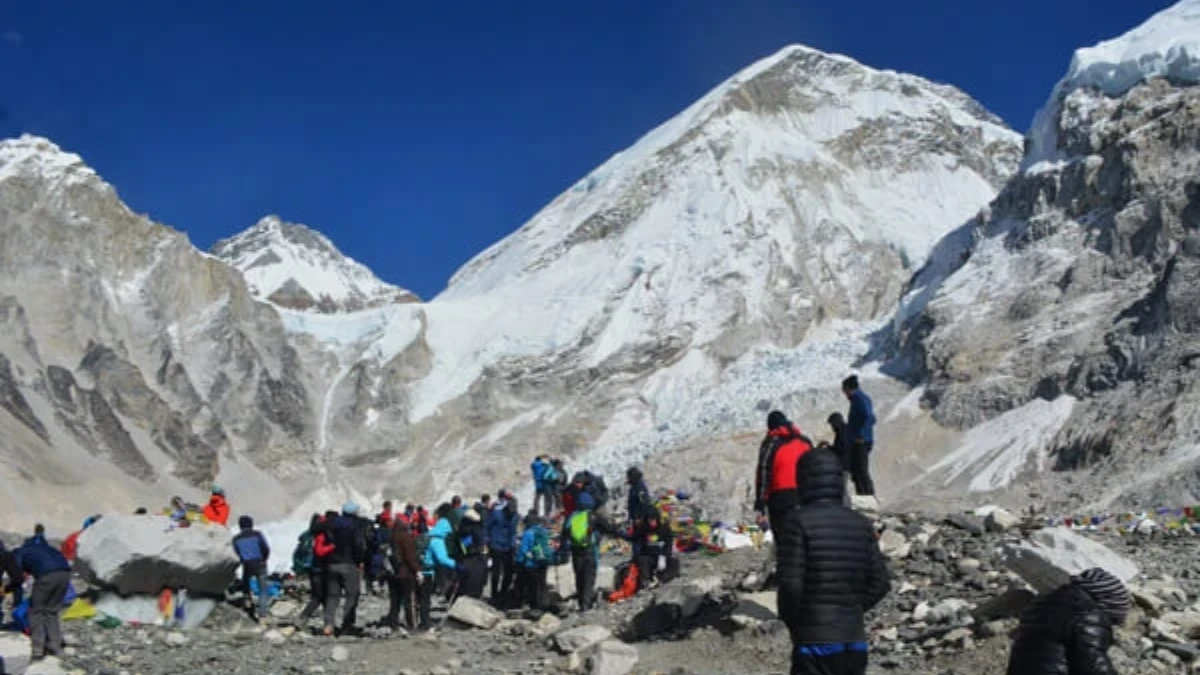
Second, altitude training has become mainstream. Runners have figured out that training and racing at 3,000-5,000 metres isn't just a novelty: it's a genuine performance tool. Kenya and Ethiopia have their high-altitude training camps. Nepal offers something different: high-altitude trails with massive vertical gain, technical terrain, and views that make you forget you're suffering.
Third, the global trail running community is hungry for new terrain. UTMB, Western States, Hardrock, the iconic races have multi-year wait lists. Runners are looking for experiences that feel like the early days of the sport, when routes were uncharted and entry lists weren't decided by lottery. Nepal still has that feeling.
What are the major trail running races in Nepal?
Everest Marathon
Distance: 42.2km
Start: Gorak Shep (5,164m)
Finish: Namche Bazaar (3,440m)
When: Late May
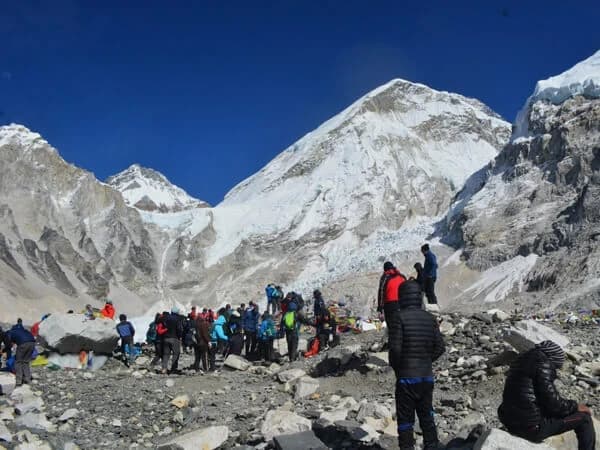
What to expect: The world's highest marathon. Mostly downhill (1,724m of descent), but don't let that fool you: running at 5,000m feels like sprinting through treacle. The first 10km above 4,500m is genuinely brutal. The rest is one of the most scenic marathons on Earth, descending through the Khumbu valley with Everest, Ama Dablam, and Lhotse overhead.
You need to arrive 2-3 weeks early for acclimatisation, essentially completing the EBC trek before the race. The entry fee includes the trek, making it a trekking holiday that happens to end with a marathon.
Annapurna 100
Distances: 100km, 55km, 25km
Location: Annapurna foothills, Pokhara region
When: March
What to expect: The most accessible trail race in Nepal. Lower altitude (1,000-3,500m range), well-marked course, and a growing field that attracts both international runners and a strong Nepali contingent. The 100km route includes approximately 5,000m of cumulative elevation gain through villages, forests, and ridge lines with views of the Annapurna massif.
Manaslu Trail Race
Distance: ~220km over 7 stages
Location: Manaslu Circuit
When: November
What to expect: A multi-stage ultramarathon following the Manaslu Circuit trek route. Crosses Larkya La pass at 5,160m. This is for experienced mountain runners only. The combination of altitude, technical terrain, cold, and multi-day racing makes it one of the hardest trail races in Asia.
Mustang Trail Race
Distance: ~200km over multiple stages
Location: Upper Mustang
When: Varies
What to expect: Runs through the ancient kingdom of Lo, arid, wind-sculpted terrain that looks more like Mars than Nepal. Lower technical difficulty than Manaslu but relentless exposure and altitude (3,500-4,200m). Still relatively unknown internationally.
Other Races Worth Knowing
- Kathmandu Trail Race Series: Shorter races (15-30km) on the valley rim trails around Kathmandu. Good introduction to Nepali trail running without the altitude commitment.
- Pokhara Ultra: Trail race around the lakes and foothills near Pokhara. Scenic, accessible, growing.
- Dhaulagiri Ultra: Newer race in the Dhaulagiri region. Hard. Very hard.
What are the best trail running routes in Nepal?
You don't need a race to run in Nepal. Many of our trekking routes work brilliantly as self-supported running routes, using the same teahouse infrastructure that trekkers use.
The Poon Hill Loop (4-5 days trekking → 2-3 days running)
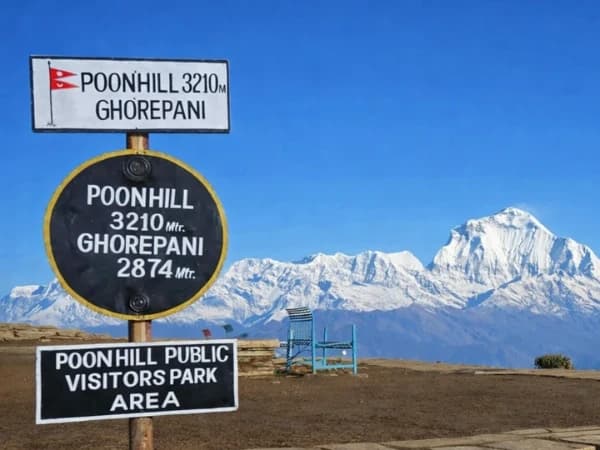
The Ghorepani Poon Hill trek is a classic 4-5 day trek that strong trail runners can complete in 2-3 days. Altitude stays below 3,200m, so acclimatisation isn't a major concern. The stone-stepped trails through rhododendron forests are technical enough to be interesting without being dangerous. Poon Hill sunrise is worth the early alarm at any speed.
Distance: ~55-65km round trip
Elevation gain: ~3,000m cumulative
Max altitude: 3,210m (Poon Hill)
Running suitability: Excellent. Well-maintained trails, moderate altitude, teahouses every 1-2 hours.
Everest Base Camp (12 days trekking → 6-8 days running)
The EBC route can be compressed by fast-moving runners, but altitude is the limiting factor, not fitness. You cannot safely accelerate the acclimatisation schedule above Namche. Even elite runners need rest days at 3,440m and 4,410m. The fastest safe schedule is about 6-7 days up and 2 days down.
Distance: ~130km round trip
Elevation gain: ~6,000m cumulative
Max altitude: 5,364m (EBC)
Running suitability: Moderate. Excellent trails, but altitude demands respect. Don't try to rush above 3,500m.
Annapurna Circuit (15-18 days trekking → 8-10 days running)
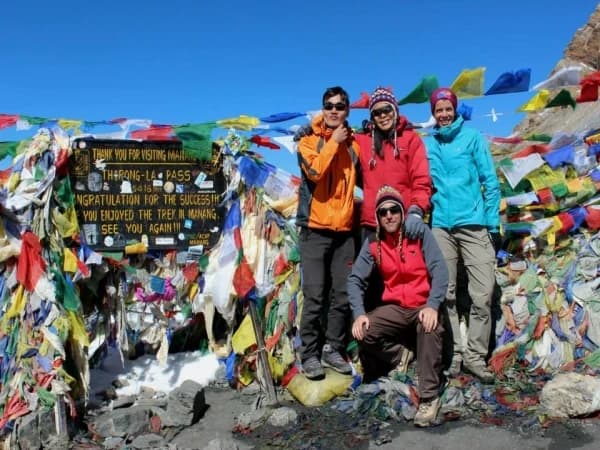
The full Annapurna Circuit offers extraordinary variety for runners: river valleys, alpine meadows, the Thorong La pass at 5,416m, then a dramatic descent into the arid Muktinath valley. The lower sections (below 3,000m) are very runnable. The higher sections require walking. Nobody runs over Thorong La.
Distance: ~160-200km (depending on start/end points)
Elevation gain: ~8,000m+ cumulative
Max altitude: 5,416m (Thorong La)
Running suitability: Variable. Lower sections are excellent running terrain. Above 4,000m, it's power-hiking at best.
The Great Himalayan Trail
The complete GHT traverse is the ultimate Nepal trail running challenge: 1,500+ km across the entire country. This is what Sandes and Griesel ran. It's not a casual undertaking. It requires months of planning, full expedition logistics, and elite-level fitness and mountain adventure. But it exists, and it's there for those who want it.
How is trail running different from trekking in Nepal?
If you're a trail runner considering Nepal for the first time, here's what's different from what you're used to.
The Trails
Nepali trails aren't groomed singletrack. They're village-to-village paths built over centuries for foot traffic, mule trains, and yak caravans. Expect uneven stone steps (thousands of them), narrow paths with exposure, river crossings on suspension bridges, and surfaces that change from hard-packed dirt to loose rock to mud within a single kilometre.
Some sections are technical. Loose scree, steep descents on worn stone, narrow ledges. Running shoes with good grip and ankle support matter more here than pace.
The Altitude
This is the big one. If you've only run at sea level or moderate elevation, Nepal's altitude will humble you completely.
Above 3,500m, your VO2 max drops roughly 3% per 300m of additional elevation. At 5,000m, you're operating at about 50-55% of your sea-level aerobic capacity. Your easy jog pace at home becomes your maximum effort pace at altitude. Heart rates spike. Recovery slows. Sleep quality plummets.
No amount of fitness compensates for inadequate acclimatisation. I've seen elite ultramarathoners, people who win 100-mile races, reduced to walking pace at 4,500m because they tried to maintain their sea-level schedule. The mountains are democratic that way.
The Support
There are no aid stations on Nepal's trails (outside of organised races). No course markings. No sweep vehicles. But there are teahouses every 1-3 hours on major routes, serving hot food, tea, and offering beds. This is Nepal's genius: a ready-made support network for self-sufficient runners who can navigate, carry essentials, and pace themselves.
Do I need a running guide or trekking guide in Nepal?
We provide both, and the difference matters.
A trekking guide sets a walking pace, manages group dynamics, and prioritises safety and comfort. They'll stop for tea breaks, adjust the schedule for slower group members, and generally move at 3-4km/h.
A running guide moves at your pace. They know the trails, carry emergency equipment, handle permits and logistics, and can make real-time decisions about route variations. They need to be fit enough to keep up with you, which limits the pool of available guides considerably.
We have several guides who are active trail runners themselves. If you're planning a running trip, tell us when you enquire. We'll match you with someone who won't slow you down, and who can push you if you want that.
Solo running on well-known trails (Poon Hill, EBC to Namche) is possible but comes with risks: navigation errors, injury in remote areas, altitude sickness without someone experienced to recognise the signs. My honest recommendation: hire a guide for your first Nepal run, go solo once you know the terrain. Every trip we run includes a licensed guide.
What is fastpacking and how does it work in Nepal?
Fastpacking, ultralight trekking at running pace, is the sweet spot for many runners visiting Nepal. You're not racing. You're not walking. You're covering trekking routes in roughly half the normal time, carrying a minimal pack (5-8kg), and using teahouses for food and shelter instead of carrying camping gear.
A typical fastpacking setup for Nepal:
- Trail running shoes (not boots, you want agility and speed)
- Running vest pack (15-20 litres) instead of a trekking backpack
- Lightweight down jacket and rain shell
- One change of clothes
- Water purification (Steripen or tablets)
- Basic first aid kit
- Phone, charger, headlamp
- Cash for teahouses
That's it. No tent, no stove, no sleeping bag (teahouses provide blankets, though a lightweight liner adds comfort). You move fast during the day and recover properly at night with hot food and a real bed.
Fastpacking the Poon Hill circuit in 2 days, the Annapurna Base Camp route in 5 days, or the EBC route in 7-8 days is achievable for fit runners with basic mountain adventure.
How do you train at altitude in Nepal?
Some runners come to Nepal specifically for altitude training blocks, spending 2-4 weeks living and training at 1,300-2,800m to boost red blood cell production before a big race back home.
Kathmandu sits at 1,350m. Not high enough for dramatic physiological changes, but a useful moderate-altitude base. The valley rim trails climb to 2,000-2,700m and offer excellent training terrain within an hour of the city.
Nagarkot (2,175m), Shivapuri National Park (up to 2,732m), and the Champadevi ridge (2,285m) are all accessible from Kathmandu for altitude training runs. Pokhara at 827m is too low for altitude benefit but has superb trails in the surrounding hills.
For serious altitude exposure, consider a 2-week trekking/running stint at 3,500-4,500m followed by 2 weeks of training in Kathmandu. The "live high, train low" principle works well here, though obviously inverted from how most people do it in the Alps.
What should you eat while trail running in Nepal?
Trail running nutrition in Nepal is different from Western ultras. You won't find gel stations. You won't find energy drinks at teahouses. But you'll find dal bhat.
Dal bhat (rice, lentil soup, vegetables, pickles) is the greatest endurance fuel on Earth. I'll argue this point with anyone. It's carb-heavy, nutritionally complete, easy to digest, and available at every teahouse. Nepali porters and guides eat it twice a day and carry 30kg loads over 5,000m passes. The energy density is extraordinary.
For running between teahouses (1-3 hours apart on major routes), carry:
- Water (1-2 litres, refill at teahouses)
- Snickers bars or similar (widely available in Kathmandu; buy before the trek, selection shrinks dramatically at altitude)
- Dried fruit and nuts (available in Thamel shops)
- Electrolyte tablets (bring from home; hard to find good ones in Nepal)
At teahouses, eat big. Dal bhat for lunch. Dal bhat for dinner. Chapati and eggs for breakfast. Tea constantly. You're burning 4,000-6,000 calories a day at altitude on technical terrain. Eat accordingly.
What permits do you need for trail running in Nepal?
Trail runners need the same permits as trekkers:
- TIMS card: Trekkers' Information Management System. Required for most trekking regions.
- National park/conservation area entry fees: Sagarmatha National Park (EBC): NPR 3,000. Annapurna Conservation Area: NPR 3,000. Manaslu: NPR 10,000 (restricted area).
- Restricted area permits: Upper Mustang, Manaslu, and a few other regions require special permits that must be arranged through a registered trekking agency like us.
There is no separate "trail running permit." You use trekking permits. The authorities don't distinguish between walking and running.
One important logistical note: if you're running a route in significantly less time than a standard trekking itinerary, your permit dates still need to cover your actual travel dates. Plan this carefully with your agency.
Is trail running in Nepal safe?
Altitude sickness doesn't care about your marathon PB. Acute Mountain Sickness (AMS), High Altitude Pulmonary Oedema (HAPE), and High Altitude Cerebral Oedema (HACE) affect fit and unfit people equally. Moving faster does not mean you acclimatise faster. It often means you acclimatise worse. Respect the altitude protocols even if you feel strong.
Rescue is slow. If you're injured on a remote section of trail, helicopter evacuation might take hours or even a full day in bad weather. There are no mountain rescue teams on standby along trekking routes. Carry a satellite communicator (Garmin inReach or similar). Make sure your insurance covers helicopter evacuation up to the highest point of your trek: 6,000 m for Everest Base Camp, 5,500 m for the Annapurna Circuit, 4,500 m for Annapurna Base Camp and Mardi Himal, and 3,500 m for Poon Hill. Many standard policies don't.
The trails are shared. You'll encounter trekkers, porters carrying heavy loads, mule trains, and yak caravans. They have right of way. Always. A porter carrying 40kg on a narrow trail doesn't need a runner brushing past at speed. Be respectful. Slow down. Say "namaste." This isn't a race course (unless it literally is).
Weather changes fast. Clear morning, whiteout by noon. This happens regularly above 4,000m, especially in spring. Carry layers, know the route, and have a plan B. Running into a snowstorm at 5,000m in shorts and a singlet is not survivable.
How do I start trail running in Nepal?
If trail running in Nepal interests you, here's my suggestion for a first trip:
- Start with Poon Hill. It's short (2-3 days running), below 3,200m, well-serviced, and gives you a taste of Nepali trail running without the altitude risk. If you love it, and you will, come back for EBC or Manaslu.
- Come in October or November. Best weather, clearest trails, most teahouses open.
- Hire a running guide. At least for the first trip. Let someone who knows the terrain, the culture, and the altitude risks keep you safe while you focus on the running.
- Contact us early. Running-specific itineraries need customisation: pace, daily distance targets, teahouse bookings timed for faster travel. We can build something that fits your speed and goals.
The Himalayas were here long before trail running existed. They'll be here long after. But right now, this moment, Nepal's trails are being discovered by a new kind of mountain athlete, and there's still room to feel like a pioneer.
Come find out what that feels like.
Planning a trail running trip to Nepal?
WhatsApp: +977 9810351300
Email: [email protected]
About the Author: Shreejan Simkhada is the CEO of The Everest Holiday and a third-generation Himalayan guide. A lifetime member of TAAN (Trekking Agencies' Association of Nepal, Member #1586), he has spent his career on the trails this guide describes, mostly at walking pace, occasionally at a jog, and once at a full sprint when a teahouse dog took exception to his running shoes. He operates trekking and adventure tours across Nepal and is always happy to talk about routes, whether you plan to walk them, run them, or somewhere in between.
Trail running EBC is the next-level challenge. Our Everest Base Camp Trek (12 Days) is private (your group only, no strangers), 2027 dates open, From USD $1399. WhatsApp us for tailored 2027 dates and current departures.
Planning a trip to Nepal?
Drop us your details and tell us what you have in mind. We will put together a personalised plan and get back to you.
Not sure which Nepal trek is right for you?
Take our free 2-minute quiz and get personalised recommendations based on your fitness, experience, and travel style.
Find Your Perfect Trek →Need Help? Call Us+977 9810351300orChat with us on WhatsApp
Related Trek Packages
(24 reviews)
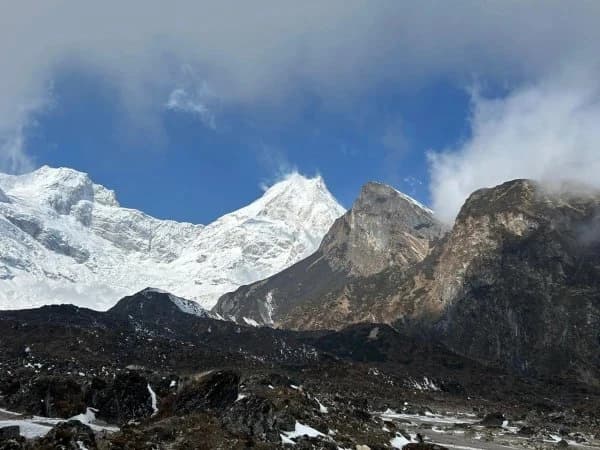
Manaslu Circuit Trek - 12 Days | Remote Larkya La Pass Expedition
Starts From
ExploreUS$799
Latest Travel Blogs
Christmas and New Year Treks from Pokhara 2026/27: 3 to 5 Days
<p>Short treks from Pokhara for Christmas and New Year 2026/27: Panchase 3 days, Poon Hill 4 days and Mardi Himal 5 days. Weather, snow, what is open, and prices by group size.</p>
Read More
Thamdanda and Surke: The Road Head for Everest Base Camp by Road
Thamdanda is the road head where our Everest Base Camp trek by road starts and ends on foot. How to get there from Phaplu and what the first walk to Paiya is like.
Read MorePoon Hill Trek Permits 2027: ACAP, TIMS, Cost and What You Need
Poon Hill needs two permits: ACAP at NPR 3,000 and a TIMS card at NPR 2,000. Who arranges them, where they are checked, SAARC rates and the 2027 trek prices.
Read More Chat with Shreejan