
Nepal's Trekking Permit Rules Changed: Solo Trekkers and the New Upper Mustang Fee Explained
Written by Shreejan Simkhada, CEO of The Everest Holiday and third-generation Himalayan guide. TAAN Member #1586.
Last updated: 2 July 2026, Kathmandu. Two of the biggest changes to Nepal's trekking permit system in decades happened within four months of each other, and most of the internet has not caught up. If you have read that Upper Mustang costs "USD 500 for 10 days", or that solo trekkers cannot get a restricted-area permit, you are reading stale information. Both rules are gone.
I am Shreejan Simkhada, founder of The Everest Holiday. We arrange restricted-area permits at the Department of Immigration in Kathmandu for our trekkers, so we deal with these rules first-hand rather than repeating what other websites say. This post sets out exactly what changed, when, what it costs now, and what did not change at all.
If you are planning a restricted-area trek and want a straight answer on your specific dates and permit cost, message us on WhatsApp and we will work it out with you the same day.
What changed in Nepal's trekking permit rules?
Two separate reforms. First, on 22 December 2025 (7 Paush 2082 in the Nepali calendar), the government gazetted a new Upper Mustang permit fee: the old flat USD 500 for 10 days was abolished and replaced with USD 50 per person per day, charged only for the days you actually spend inside the restricted zone. Second, on 22 March 2026 (8 Chaitra 2082), the Department of Immigration scrapped the minimum-two-trekkers rule for restricted-area permits across all of Nepal's restricted districts. Solo trekkers can now be issued a Restricted Area Permit (RAP) in their own name.
Neither change touches the guide requirement. A licensed guide arranged through a registered Nepali trekking agency remains mandatory in every restricted area. What changed is the maths and the paperwork, not who has to walk beside you.
Two smaller points in the same notice get missed. The department now caps a restricted-area permit at seven trekkers per licensed guide, so a group of eight or more needs a second guide named on the permit. And the application can be filed on your visa application submission ID rather than an issued visa number, which means we can lodge it before you land. I have the notice itself, dated 8 Chaitra 2082 and signed by the department's director, and our agency login on the Immigration Department's online permit portal now reads "minimum 1 trekker" on the application form. This is not hearsay. Related: Can You Trek Manaslu Solo in 2027? The Permit Rule That Changed, and What It Really Costs.
Can I trek Nepal's restricted areas solo now?
Yes. Since 22 March 2026, a single foreign trekker can obtain a Restricted Area Permit without finding a second trekker to share the application. Before this, the rules required a minimum of two foreigners on any RAP, which forced solo travellers to hunt for strangers on forums, pay for a "ghost" second permit through the grey market, or give up on Manaslu and Upper Mustang altogether. That is over.
The Department of Immigration's notice, issued on 8 Chaitra 2082 and signed by its director and spokesperson Tikaram Dhakal, applies across the restricted districts along the northern border, covering roughly fifteen restricted trekking zones. Two smaller administrative changes came with it: permits can now be applied for using a visa application submission ID rather than requiring the visa number itself, which makes advance planning easier, and one licensed guide may now accompany up to seven trekkers on a single permit group.
To be precise about what "solo" means here: you can be the only client. You cannot be alone. Guideless trekking in restricted areas remains illegal, and the permit is still processed only through a registered agency. In practice, a solo traveller books with an agency such as ours, we file the RAP application at the Department of Immigration with your passport, visa and insurance details, and the permit is issued in your name alone, usually within one working day in Kathmandu. Related: Kanchenjunga Is Now a Teahouse Trek: What Changed and How to Plan It.
How much does the Upper Mustang permit cost now?
USD 50 per person per day, counted only for the days you spend inside the restricted zone north of the Kagbeni checkpoint, plus the Annapurna Conservation Area Permit (ACAP) at NPR 3,000. The flat USD 500-for-10-days fee that operated since the region opened in 1992 was abolished by a Cabinet decision announced in November 2025, reported by the Kathmandu Post on 20 November, and gazetted into force on 22 December 2025 through an amendment to Schedule 12 of the Immigration Regulations.
The practical effect depends entirely on how long you stay. Short visits become dramatically cheaper: a 5-day jeep tour that used to carry a USD 500 permit now costs USD 250. A quick 3-day visit for the Tiji Festival costs around USD 150 instead of USD 500. A classic 10-day trek inside the zone costs the same USD 500 as before. Only trips longer than 10 days inside the restricted area now cost more than they used to, and very few itineraries stay that long.
The daily rate applies to everyone entering the zone by any means: trekkers, jeep passengers, motorbike riders, mountain bikers and helicopter visitors all pay the same USD 50 per day. We have a full cost breakdown, day-count tables and budget guidance in our Upper Mustang trek cost guide for 2027, and you can see the itinerary itself on our Upper Mustang trek package page.
Which treks does the solo rule change affect?
All of Nepal's restricted-area treks. The ones most travellers ask us about are the Manaslu Circuit, Tsum Valley, Nar Phu, Upper Mustang, Kanchenjunga and Dolpo. Each of these previously refused solo applicants; each now issues solo RAPs, always with the licensed-guide-plus-agency condition attached.
Here are the restricted-area permit fees as they stand in July 2026, as published by Nepal's Department of Immigration:
| Restricted area | RAP fee (2026) | Conservation permit(s) | Solo permit? |
|---|---|---|---|
| Upper Mustang | USD 50/person/day (was USD 500 flat for 10 days until Dec 2025) | ACAP NPR 3,000 | Yes, since 22 Mar 2026 |
| Manaslu Circuit | Sep–Nov: USD 100 first 7 days + USD 15/day after. Dec–Aug: USD 75 + USD 10/day | MCAP NPR 3,000 + ACAP NPR 3,000 (circuit exits via Annapurna) | Yes, since 22 Mar 2026 |
| Tsum Valley (add-on to Manaslu) | Sep–Nov: USD 40/week. Dec–Aug: USD 30/week | Covered by Manaslu MCAP | Yes, since 22 Mar 2026 |
| Nar Phu Valley | Sep–Nov: USD 100/week. Dec–Aug: USD 75/week | ACAP NPR 3,000 | Yes, since 22 Mar 2026 |
| Kanchenjunga | USD 20/person/week | KCAP NPR 2,000 | Yes, since 22 Mar 2026 |
| Lower Dolpo | USD 20/person/week | Shey Phoksundo NP fee applies | Yes, since 22 Mar 2026 |
| Upper Dolpo | USD 500 first 10 days + USD 50/day after (unchanged; the Dec 2025 reform covered Upper Mustang only) | Shey Phoksundo NP fee applies | Yes, since 22 Mar 2026 |
One thing to know on all of these: the restricted-area permit does not replace the TIMS card. We also arrange a TIMS card for every trekker, restricted areas included, for the safety of our guests and staff.
What has NOT changed?
The guide requirement. In restricted areas, a licensed guide employed through a registered agency has been mandatory for decades and remains so; the March 2026 notice changed the minimum group size, nothing else. On normal (non-restricted) routes the separate Nepal Tourism Board rule from April 2023 still stands in most areas, including the Annapurna Circuit: foreign trekkers must hire a licensed guide there too. The Everest (Khumbu) region does not enforce it locally, but we always trek with a licensed guide. Anyone telling you that Nepal has reopened to fully independent, guideless trekking is wrong on both counts.
Also unchanged: conservation-area permits (ACAP, MCAP, KCAP) and their fees, as listed by the Nepal Tourism Board; the requirement that RAP applications go through a registered agency rather than being lodged by the trekker personally; the checkpoints where permits are inspected (Kagbeni for Upper Mustang, Jagat and Philim for Manaslu); and, as far as any official source shows, the Upper Dolpo fee, which was not part of the December 2025 gazette. Insurance covering helicopter evacuation is checked as part of restricted-area processing, so carry proof of a policy that covers trekking up to 6,000 m for treks above about 4,500 m such as Manaslu, or up to 5,000 m for lower treks like Upper Mustang.
What do the new rules cost in practice? Worked examples
Numbers make the changes clearer than announcements do. Here are four real cases we quote regularly, using autumn-season rates:
- 5-day Upper Mustang jeep tour: 5 days × USD 50 = USD 250 in RAP fees, plus ACAP NPR 3,000 (about USD 22). Under the old rule this trip carried the full USD 500 permit, so you now save USD 250 per person.
- 3-day Tiji Festival visit to Lo Manthang: roughly USD 150 in RAP fees instead of USD 500. The festival just became far more affordable for short-stay visitors.
- 12-day Manaslu Circuit in autumn: the restricted section (Jagat to the far side of Larkya La) fits inside the first permit week on our itinerary, so the RAP is USD 100, plus MCAP and ACAP at NPR 3,000 each. Total permits: roughly USD 160 per person. Trek between December and August and the RAP drops to USD 75.
- Three-week Kanchenjunga circuit: 3 weeks × USD 20 = USD 60, plus KCAP NPR 2,000 (about USD 15). Around USD 75 all-in makes Kanchenjunga the cheapest restricted-area permit per day in Nepal, which surprises almost everyone who assumed "restricted" meant "expensive".
All of these are permit costs only. Guide, transport, accommodation and food come on top, which is where a package price does the work of bundling everything into one figure. Our 12-day Manaslu Circuit trek includes the RAP, both conservation permits, a licensed guide and all trek logistics from USD 799.
What should solo travellers actually do now?
You have two workable options, and both are simpler than they were a year ago. The first is to join one of our small-group fixed departures: you get your own solo RAP under the new rule, and you split the guide and jeep costs with the group, which typically saves 30 to 50 per cent against travelling alone. The second is a private departure with your own licensed guide on your own dates, which costs more but gives you full control of the pace and itinerary.
What you no longer need to do is loiter on forums looking for a stranger to share a permit application with, or pay an agency for a phantom second trekker. Both workarounds were common right up to March 2026, and both are now pointless. If you are a solo traveller weighing up Manaslu against Upper Mustang, or wondering whether your dates fall in the cheaper permit season, send us a WhatsApp message. We answer from Kathmandu with current, first-hand information, not recycled blog copy.
Is anything about these rules still uncertain?
A little, and it is worth being honest about it. The Upper Mustang fee change is beyond doubt: it was a Cabinet decision reported by the Kathmandu Post and gazetted on 22 December 2025. The solo-trekker change is equally real in practice, and it is consistently reported by numerous Nepali operators with the same date, notice number details and signing official; however, the Department of Immigration has not published an English-language version of the notice on its website, so travellers cannot easily verify it from an official page abroad. If a booking agent quotes you the old minimum-two rule, they are working from stale information.
Two smaller details are still settling. The Kanchenjunga RAP rate for weeks beyond the fourth is quoted differently across sources (around USD 25 per week is the figure we see most), and the exact enforcement wording of the insurance-proof requirement varies by office. Neither affects a normal itinerary, and we confirm both at the counter when we file your permit.
Rules like these shift faster than the internet updates. This page carries the date at the top for exactly that reason, and we revise it whenever the Department of Immigration or the gazette moves again. For anything time-sensitive, ask us directly on WhatsApp (+977 981-035-1300), or start with the Manaslu Circuit and Upper Mustang itineraries and we will handle every permit under the new rules for you.
Planning a trip to Nepal?
Drop us your details and tell us what you have in mind. We will put together a personalised plan and get back to you.
Not sure which Nepal trek is right for you?
Take our free 2-minute quiz and get personalised recommendations based on your fitness, experience, and travel style.
Find Your Perfect Trek →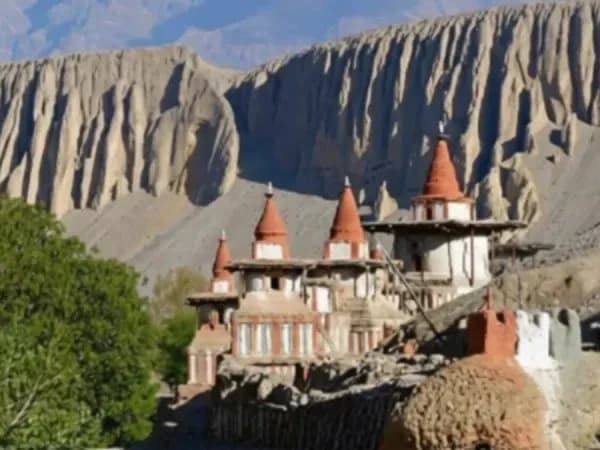
Trekking in Nepal in September 2027: Weather, Best Treks and Departures
Plan a September 2027 trek in Nepal: monsoon-tail weather, why Upper Mustang works, which treks to avoid and our departures on 6, 13, 20 and 27 September.
Read More
Trekking in Nepal in March 2027: Weather, Best Treks and Departures
Plan a March 2027 trek in Nepal: weather figures, the treks that suit the month, crowds, festivals and our departures on 8, 15, 22 and 29 March.
Read More
Trekking in Nepal in April 2027: Weather, Best Treks and Departures
Plan an April 2027 trek in Nepal: weather figures, the treks that suit the month, crowds, the Manthali flights and our departures on 5, 12, 19 and 26 April.
Read More Chat with Shreejan