
Why Do Everest Base Camp Trek Prices Vary So Much Between Companies?

Written by Shreejan Simkhada, CEO of The Everest Holiday and third-generation Himalayan guide. TAAN Member #1586.
I'm Shreejan Simkhada, founder of The Everest Holiday. Every week someone sends me three quotes for "the same" Everest Base Camp trek and asks why one says $1,050, another says $1,450 and a third says $3,800. It is the most sensible question a trekker can ask, and it is the one most companies hope you never ask, because the honest answer means opening up the quote and showing you every line inside it.
So that is what this post does. I am going to walk you through the anatomy of an EBC quote the way I build ours: what the money actually pays for, what the cheapest operators quietly remove, why international brands charge double for the identical Nepali crew, and how to compare any two quotes line by line so nobody can hide anything from you. If you want the full day-by-day spending breakdown instead, that lives in our Everest Base Camp trek cost guide for 2027. This post is about the why, not the what.
And if you would rather just ask me directly, send your quotes over on WhatsApp (+977 9810351300). I will tell you what is inside each one, including where ours would lose on price. That offer is genuine, because a trekker who understands quotes almost always books with a transparent operator.
Why do Everest Base Camp trek prices vary so much between companies?
Because "Everest Base Camp trek" is not a fixed product. Two quotes with the same trek name can differ in the number of acclimatisation days, whether Lukla flights are included, how you reach Ramechhap in peak season, whether the porter is insured, what the guide is paid, how many strangers share your group, and who keeps the margin. The market spread in 2026 runs from around $1,000 at the budget end, through $1,400 to $2,500 for a properly run guided package with a Kathmandu operator, to $2,500 and beyond $4,000 through international brands and luxury programmes. Almost none of that spread is profit. Most of it is things being present in one quote and absent in another.
The uncomfortable truth of this industry is that price differences are mostly subtraction, not negotiation. A company does not reach $1,000 by being clever. It reaches $1,000 by removing days, removing welfare costs, removing inclusions and moving them onto the trail where you pay them yourself, often without realising the total has crept past the "expensive" quote you rejected.
What actually sits inside an Everest Base Camp quote?
Every EBC quote, whatever the headline number, is built from the same components. Here is how the three price bands typically handle each one. This is the table I wish someone had shown me when we started in 2016.
| Line item | Budget quote (~$1,000–1,200) | Proper local quote ($1,400–2,500) | International brand ($2,500–4,500) |
|---|---|---|---|
| Itinerary length | 10–11 days, acclimatisation trimmed | 12–14 days with two rest days built in | 12–15 days, similar walking plan |
| Acclimatisation days | Often one, sometimes none | Two (Namche 3,440 m and Dingboche 4,410 m) | Two, same villages |
| Lukla flights | Sometimes excluded or "on request" (roughly $207–255 per person each way in 2026) | Included both ways, booked early for morning slots | Included |
| Ramechhap transfer (peak season) | Shared night bus, or left for you to arrange | Arranged private or small-group vehicle | Arranged |
| Guide | May be an unlicensed "friend of the office" on low pay | Government-licensed, fairly paid (market rate roughly $25–35 per day plus food and lodging) | The same licensed Nepali guide, subcontracted |
| Porter and welfare | One porter for 3–4 trekkers, insurance unclear | One porter per two trekkers, 10 kg each, insured, equipped, fed and housed | Same porters, via the local subcontractor |
| Permits | Sometimes billed separately on arrival | Khumbu Pasang Lhamu (~$23), TIMS (~$13) and Sagarmatha National Park (~$25) included, per NTB | Included |
| Meals | Often breakfast only, or capped menus | Three meals daily on the trek | Three meals daily |
| Group size | 12–16 to make the maths work | Small groups or private departures | 10–16 typically |
| Where the margin goes | Squeezed from crew wages and your safety days | Kathmandu office, crew wages, contingency | Overseas marketing, Western offices, 25–50% markup on the local operator actually running your trek |
Read that last row twice. In the budget column, the discount is funded by the people carrying your bag and by your own acclimatisation. In the international column, the premium funds glossy catalogues and city-centre offices thousands of miles from Nepal. The middle column is where the money and the trek actually meet.
Why is the cheapest EBC quote usually a 10- or 11-day itinerary?
Because days are the biggest single cost in a trek, and they are the easiest thing to delete without the customer noticing. Every day on the mountain means guide wages, porter wages, food, rooms and logistics. Remove two days and a company can undercut everyone. The problem is that the two days removed are almost always the acclimatisation days at Namche Bazaar and Dingboche, and those are not rest days in any leisurely sense. They are the medical core of the itinerary.
At Base Camp you are standing at 5,364 m with roughly half the oxygen available at sea level. Your body adapts to that, but only on its own timetable. The standard, physiologically sensible EBC itinerary climbs high and sleeps low, with a full extra night at 3,440 m and another at 4,410 m. Compress that into a 10-day dash and you are asking your body to do in days what it needs closer to two weeks to do safely. The result shows up on the trail every season: headaches at Tengboche, vomiting at Lobuche, and helicopter evacuations that cost far more than the money saved on the package. A cheap trek you do not finish is the most expensive trek there is.
So when a quote comes in hundreds of dollars under everyone else, do not ask "how are they so cheap?" Ask "how many nights between Lukla and Base Camp?" If the answer is fewer than ten on the way up and down combined, the discount is being paid for with your acclimatisation.
Why do international brands charge $2,500+ for the identical Nepali crew?
Because almost no international adventure brand operates its own treks in Nepal. They subcontract to a Kathmandu company, which employs the guide who walks beside you and the porter who carries your duffel. Industry analyses of EBC pricing consistently put the markup at 25 to 50 per cent over the local operator's price, and the same standard trek that a registered Kathmandu agency sells for $1,200 to $1,800 is commonly listed at $2,500 to $4,500 through overseas brands.
To be fair to them, you do get something for it: brand familiarity, a booking process in your home time zone, and consumer protection schemes in your own country. Those things have value, and for some travellers they are worth paying for. What you are not getting is a better guide, a safer itinerary or nicer teahouses, because the person leading you holds the same Nepali licence either way. In many cases it is literally the same individual who leads local direct bookings the week before. I have written a fuller comparison in our post on booking with a local company versus an international brand, so I will not repeat it here. The short version: the premium buys reassurance at home, not quality on the mountain.
What do budget operators actually cut to hit $1,000?
The subtraction happens in predictable places. Having run treks in the Khumbu for a decade, these are the cuts I see again and again when a trekker shows me a suspiciously cheap quote:
- Acclimatisation days. The first and most dangerous cut, covered above. Two days deleted can shave a meaningful slice off any quote.
- Porter welfare. Overloading one porter across three or four trekkers, skipping accident insurance, and providing no proper clothing or lodging allowance. A porter's true all-in cost, with wages, food, accommodation and insurance, runs to roughly $40 a day. Companies that pay less are taking it from someone who cannot argue.
- Guide licensing and pay. A government-licensed guide with first-aid training and years of Khumbu experience earns more than an unlicensed cousin sent up to "lead" a group. You will not see the difference on the quote. You will see it the first time someone shows AMS symptoms at 4,900 m.
- Flights and transfers. Some budget quotes exclude the Lukla flights entirely, which adds roughly $415 to $510 return per person at 2026 fares. Others include the flight but send you to Ramechhap on a crowded shared night bus rather than a private vehicle, turning the pre-dawn transfer into an ordeal before your trek begins.
- Group size. Sixteen trekkers per departure spreads fixed costs thin. It also means walking at the pace of the group average and getting a fraction of the guide's attention.
- Hidden extras. Permits billed "at cost" on arrival, breakfast-only meal plans, "service charges" appearing at final payment, and pressure for tips that quietly subsidise the underpaid crew. By the time you fly home, the $1,000 trek has often cost more than the $1,400 one.
What are the red flags when comparing EBC trek quotes?
You do not need to be an industry insider to protect yourself. Any of the following should make you pause, and two or more together should make you walk away:
- An itinerary of 11 days or fewer that still claims to reach Base Camp "safely", or one that hides the day count altogether.
- Fewer than two acclimatisation days, or acclimatisation days scheduled below 3,400 m where they do little.
- No published day-by-day itinerary. If a company will not write down where you sleep each night, it can change anything later.
- Vague inclusions: "permits extra", "flights on request", "meals as per plan" with no plan attached.
- No visible government registration or tourism licence numbers. Legitimate operators display them; ours are published on our legal documents page.
- No stated evacuation protocol. Ask "what happens, step by step, if I develop AMS at Lobuche?" A serious operator answers immediately. A cheap one changes the subject.
- Silence on porter policy. Ask what the porter carries, whether they are insured and what they are paid. Hesitation tells you everything.
- A price that requires full payment upfront by bank transfer with no card or gateway option, and reviews that arrive in bursts rather than steadily across years.
For the fuller version of this checklist, including how to verify a company's registration before you pay anything, see our guide on how to choose a trekking company in Nepal, or the shorter 2027 comparison checklist.
How do I compare two EBC quotes line by line?
Put the quotes side by side and force each one to answer the same nine questions. Where a quote is silent, email the company and make them answer in writing; the speed and clarity of the reply is itself a data point.
- How many days total, and how many nights above 3,400 m before the push to Base Camp?
- Are both Lukla flights included, and what happens in peak season when flights operate from Ramechhap?
- Is the guide government-licensed, and how many times have they led this exact route?
- What is the porter ratio, weight limit and insurance arrangement?
- Are all permits included in the price shown?
- How many meals a day, and are there menu caps?
- What is the maximum group size on my departure date?
- What is the written procedure if I get sick at altitude, and who pays for what?
- What exactly is excluded? Get the list. Every honest company has one.
Then re-price both quotes as if everything were included. Add the flights, permits, transfers and missing meals to the cheap quote. Nine times out of ten the gap shrinks to a few hundred dollars, and what remains is the difference between an insured, fairly paid crew with proper acclimatisation and a compressed dash run on squeezed wages. Framed that way, most people stop finding the cheap quote attractive.
Where does our own price sit in all of this?
Our Everest Base Camp Trek 12 Days runs at $1,399 budget, $2,499 standard and $4,999 luxury, and the itinerary is published line by line on that page: every village, every sleeping altitude, both acclimatisation days, both flights, all permits and three meals a day. I set those tiers deliberately against the anatomy above. The $1,399 tier proves a fair-wage, full-acclimatisation trek does not need an international brand's markup. The higher tiers change the comfort, not the safety; the itinerary, guide standard and crew welfare are identical across all three, which is exactly the difference I explained in what the standard versus luxury price difference actually buys.
We are a family-run Kathmandu company, we employ our crew directly, and every number on our quotes survives the nine questions above, because I wrote the quotes to survive them. That is the whole trick of this post: I am not asking you to trust us. I am asking you to interrogate everyone, including us, the same way.
Should you just pick the mid-priced quote then?
No. Price band alone proves nothing; a $1,600 quote can hide the same cuts as a $1,000 one, and an expensive quote can simply be inefficient. The method is what protects you: demand the published itinerary, count the nights above 3,400 m, confirm the crew's licensing and insurance, and re-price everything to include the exclusions. The right company is the one whose quote gets clearer the harder you look at it.
If you have quotes in hand right now, send them to me on WhatsApp at +977 9810351300 and I will go through them with you line by line, no obligation. And if you would rather start from a quote with nothing hidden in it, our 12-day Everest Base Camp trek is open for 2027 departures. Either way, do not hand anyone your money until their quote has answered all nine questions. Yours in the mountains, Shreejan.
Planning a trip to Nepal?
Drop us your details and tell us what you have in mind. We will put together a personalised plan and get back to you.
Not sure which Nepal trek is right for you?
Take our free 2-minute quiz and get personalised recommendations based on your fitness, experience, and travel style.
Find Your Perfect Trek →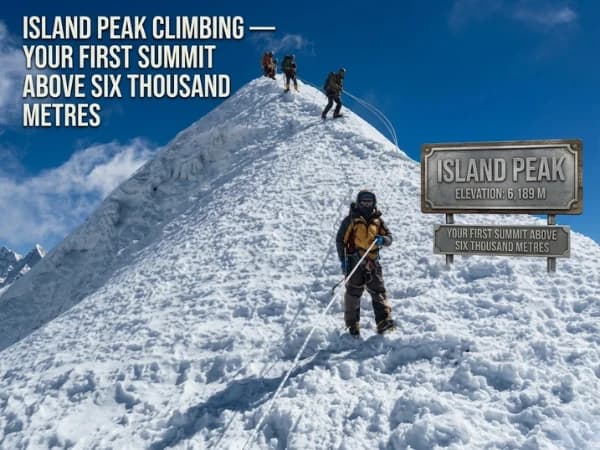
Can You Climb a Nepal Trekking Peak Solo? Guide Rules, Fitness and Which First Peak (2027)
You can book a Nepal trekking peak as a solo client but you cannot climb one alone. The guide and Sherpa rules, what it costs for one person, fitness, kit, insurance and which peak to climb first.
Read More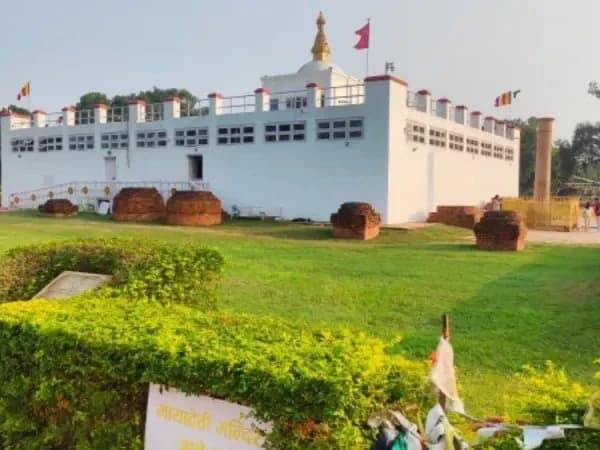
Nepal Buddhist Circuit in 7 Days: Lumbini, Kathmandu Valley Sites, Cost and Who It Suits (2027)
How our 7-day Nepal Buddhist Circuit runs from Kathmandu to Lumbini and back, which sites it covers, what each tier costs, the best months and who it suits.
Read More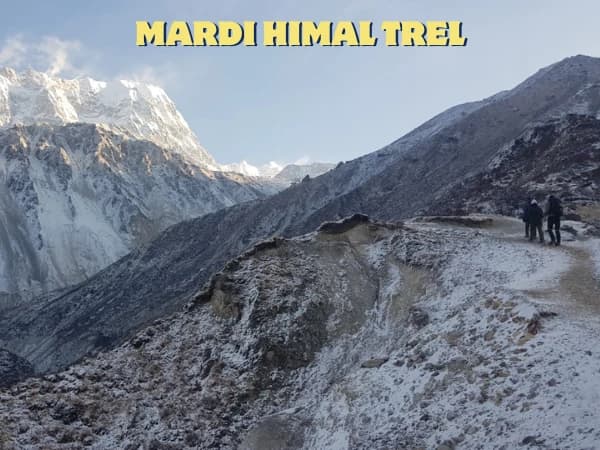
Mardi Himal and Khopra Danda in 12 Days: What the Combined Trek Is Like, Cost and Who It Suits (2027)
Two quiet Annapurna ridges in one 12-day private trek from Pokhara. How the combined trek runs, how hard it is, what it costs against the two single treks, and who it suits.
Read More Chat with Shreejan