
Manaslu in October offers everything the Annapurna Circuit does with 90% fewer trekkers. The Larkya La crossing in autumn is trekking at its finest.
Govt Regd. No.: 147653/072/073
Travel Agency Licence: 2838/072
Manaslu Circuit in Autumn: The Best-Kept Secret of October Trekking

Every October, thousands of trekkers fly into Kathmandu and head straight for the Annapurna Circuit or Everest Base Camp. I do not blame them. Those treks are iconic for good reason. But there is a third option that most people never consider, and it is the one I personally recommend to experienced trekkers who want something extraordinary: the Manaslu Circuit in autumn.
I first trekked the Manaslu Circuit with my father when I was nineteen. We crossed Larkya La in early November, in fresh snow, with not another soul in sight. That memory still ranks as one of the most powerful experiences of my life. The pass, the silence, the Tibetan prayer flags snapping in the wind, the feeling of being somewhere genuinely remote. Manaslu gives you what the popular routes cannot: true wilderness combined with deep Tibetan culture, wrapped in some of the most dramatic mountain scenery in the Himalayas.
Is Manaslu Circuit or Annapurna better in autumn?
I know that is a bold claim. The Annapurna Circuit is rightly considered one of the great treks of the world. But hear me out, because the comparison is instructive.
Crowds
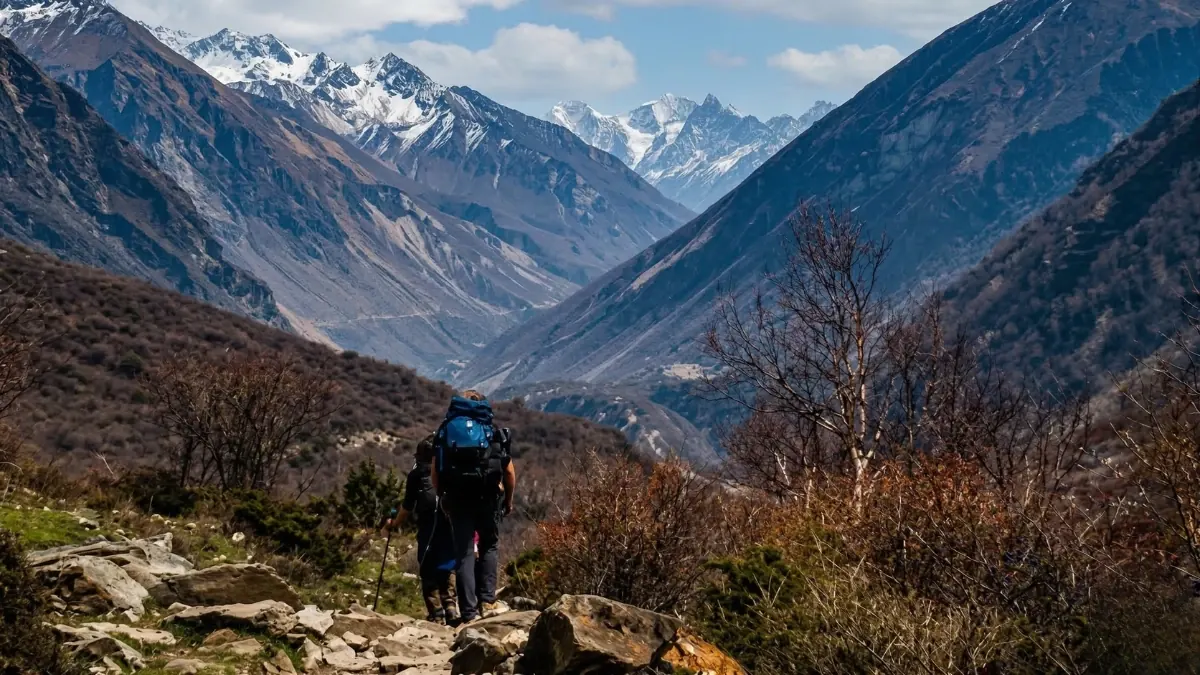
The Annapurna Circuit sees roughly 30,000 to 40,000 trekkers per year. Manaslu sees around 7,000 to 9,000. In October, the busiest month for both, the difference on the ground is stark. On the Annapurna Circuit, you will share teahouses with dozens of other groups. On Manaslu, you might share a dining room with two or three other parties. Some nights, especially north of Samagaon, you will be the only guests in the lodge.
Cultural Authenticity
The Annapurna Circuit passes through Gurung and Thakali villages that have been hosting trekkers for decades. These are wonderful communities, but the trekking infrastructure is mature and polished. On Manaslu, you pass through Tibetan-influenced villages where Buddhism is not a tourist attraction but a living, breathing daily practice. Monks chant in the mornings. Mani walls stretch for hundreds of metres. Stone houses have not been converted into gift shops. The restricted area permit requirement has kept development slow, and that is precisely what makes Manaslu special.
The Pass
Both circuits cross a high pass. The Annapurna Circuit goes over Thorong La at 5,416 metres. Manaslu goes over Larkya La at 5,160 metres. Larkya La is slightly lower but arguably more dramatic, with a sweeping glacier approach and views of Manaslu itself (8,163m, the world's eighth highest peak) that make your jaw drop. In autumn, the pass conditions are excellent. The snow is manageable, the visibility is outstanding, and the cold is intense but brief.
Duration and Difficulty
The Manaslu Circuit takes 14 to 18 days depending on your pace and side trips. The Annapurna Circuit takes a similar timeframe. Fitness requirements are comparable. If you can do one, you can do the other. The difference is that Manaslu feels harder because the infrastructure is more basic and the terrain is more rugged. That is part of the appeal.
Do you need a guide and permit for Manaslu Circuit?
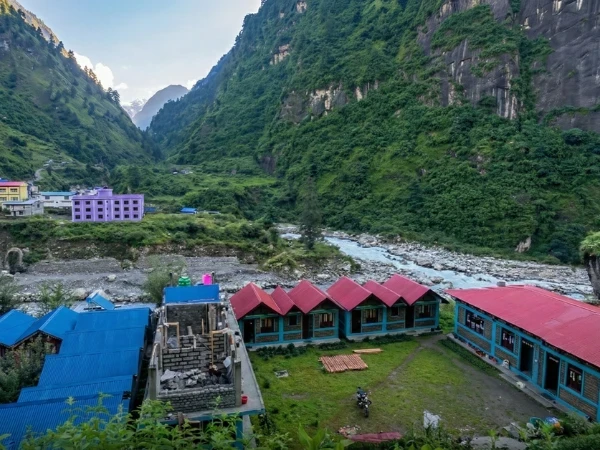
Manaslu is classified as a restricted area by the Nepal government. This means you cannot trek independently. You need a licensed agency, a registered guide, and a special restricted area permit (RAP). You must also trek with at least one other person, though solo travellers can often be paired with another group.
Some trekkers see the restricted area requirement as a hassle. I see it as the single best thing about Manaslu. The permit cost is higher than a standard trekking permit, and the bureaucratic requirements filter out casual visitors. The result is a trail that retains its wildness and a culture that has not been eroded by mass tourism.
The restricted area permit for Manaslu costs USD 100 per person per week in the peak season (September to November). You also need an Annapurna Conservation Area permit and a Manaslu Conservation Area permit. We handle all of this paperwork as part of our Manaslu Circuit Trek package. You do not need to visit any government offices. For full permit details, check our 2026 permits guide.
What is the Tibetan village culture like on Manaslu Circuit?
The Manaslu Circuit follows the Budhi Gandaki River valley north into the mountains, crossing from Hindu lowlands into Buddhist highlands. The cultural transition is one of the most fascinating aspects of the trek.
Lower Valley: Soti Khola to Jagat
The first few days are subtropical. Rice paddies, banana trees, and warm, humid air. The villages here are predominantly Hindu, and in October, you may catch the tail end of Dashain celebrations. Prayer flags begin to appear alongside Hindu shrines. The two traditions have coexisted here for centuries.
Middle Valley: Jagat to Samagaon
As you climb, the landscape becomes drier and the culture becomes distinctly Tibetan. Deng, Namrung, and Lho are all Tibetan-Buddhist villages with ancient monasteries, mani walls carved with mantras, and villagers who speak a Tibetan dialect. In autumn, harvest activities are in full swing. You will see families drying grain on flat rooftops, pressing mustard oil, and preparing for the long winter ahead.
Samagaon (3,530m) is the cultural heart of the trek. The village sits beneath the massive south face of Manaslu, and its monastery, Ribum, dates back several centuries. If you arrive on a clear October morning, the view of Manaslu from Samagaon is one of the most photographed scenes on any Nepal trek.
Upper Valley: Samagaon to Samdo
Above Samagaon, the landscape becomes stark and high-altitude. Samdo (3,860m) is the last village before Larkya La. It sits in a windswept basin surrounded by glaciated peaks. The people here are ethnic Tibetans who historically traded salt and wool across the border with Tibet. The border crossing is now closed to trekkers, but the cultural connections remain strong. In autumn, the clear skies make this section of the trek visually striking, with snow-capped peaks in every direction. Related: Manaslu Circuit Trek: Nepal's Last Great Wilderness Trek.
What is crossing Larkya La like in October and November?
The Larkya La crossing is the crux of the Manaslu Circuit. Here is what to expect in autumn.
October Conditions
October is the ideal month for crossing Larkya La. The pass is typically clear of heavy snow, though there may be a thin layer on the upper sections. Daytime temperatures at the pass hover around minus 5 to minus 10 degrees Celsius, but with the autumn sun and no wind, it feels manageable. The approach from the east side follows a glacial moraine with spectacular views of the Manaslu glacier. Most groups start the crossing before dawn to reach the pass by mid-morning, when the light is best and the weather is most stable.
November Conditions
By November, the pass becomes more challenging. Fresh snow is more likely, and temperatures at the top can drop to minus 15 to minus 20 degrees Celsius before sunrise. The approach trail may be icy. Crampons or microspikes are not usually required in early November, but by mid to late November, they become advisable. Our guides carry them as standard equipment from late October onwards.
The pass rarely closes completely in November, but there have been seasons where heavy early snowfall has made the crossing difficult. Our team monitors weather forecasts daily during the trek and adjusts the itinerary if conditions demand it. Safety always comes first.
If you are concerned about altitude on the pass, our detailed guide on acclimatisation explains exactly how your body responds to height and what to watch for.
How cold is the Manaslu Circuit in autumn?
| Location | Altitude | October Daytime | October Night | November Daytime | November Night |
|---|---|---|---|---|---|
| Soti Khola | 730m | 25 to 30°C | 15 to 20°C | 22 to 27°C | 12 to 16°C |
| Jagat | 1,340m | 20 to 25°C | 10 to 14°C | 16 to 21°C | 6 to 10°C |
| Namrung | 2,660m | 14 to 18°C | 2 to 6°C | 10 to 14°C | -2 to 2°C |
| Samagaon | 3,530m | 10 to 14°C | -2 to 2°C | 6 to 10°C | -6 to -2°C |
| Samdo | 3,860m | 8 to 12°C | -5 to 0°C | 4 to 8°C | -10 to -5°C |
| Dharamsala (Larkya BC) | 4,460m | 4 to 8°C | -10 to -5°C | 0 to 4°C | -15 to -10°C |
| Larkya La Pass | 5,160m | -5 to 0°C | N/A | -10 to -5°C | N/A |
The temperature swing between day and night is dramatic on Manaslu, especially above 3,500 metres. A four-season sleeping bag is essential. Our packing list guide has the full gear recommendations. Related: Manaslu vs Langtang: Nepal's Two Most Underrated Treks Compared.
Teahouses and Food on the Manaslu Circuit
I want to be honest about this, because it is a common source of anxiety for trekkers considering Manaslu: the teahouse quality on the Manaslu Circuit is more basic than what you will find on the Annapurna Circuit or the Everest Base Camp trek.
In the lower sections (Soti Khola to Jagat), lodges are simple but adequate. Rooms have twin beds with thin mattresses. Toilets are mostly squat-style. Hot showers are available but not always reliable.
From Jagat to Samagaon, the quality improves. Several newer lodges have been built in recent years with better insulation and Western-style toilets. Samagaon has the best accommodation on the trail.
Above Samagaon, things get basic again. Dharamsala (Larkya Base Camp) is a stone hut with dormitory-style sleeping. It is cold, crowded, and not particularly comfortable. But it is also one of the most memorable nights of the trek, huddled in a high-altitude shelter with fellow trekkers, preparing for the pass crossing at dawn.
Food throughout the circuit is hearty and filling. Dal bhat is the standard, supplemented by noodle soups, fried rice, and chapati. At higher elevations, options narrow. By Dharamsala, you are basically eating noodle soup and biscuits. Our guide on teahouse realities and our food guide will help you set the right expectations.
Who Should Trek Manaslu in Autumn?
Manaslu is not a beginner trek. I recommend it for people who meet at least two of these criteria:
- You have trekked at altitude before (above 4,000 metres)
- You are comfortable with basic accommodation and limited menu options
- You value cultural immersion and solitude over creature comforts
- You have two to three weeks available
- You are physically fit enough to walk six to eight hours per day on uneven terrain
If this is your first trek in Nepal, I would suggest starting with the Everest Base Camp trek or the Annapurna Base Camp trek. Both are excellent introductions to Himalayan trekking. Once you have that experience under your belt, come back for Manaslu.
How are porters treated on the Manaslu Circuit trek?
The Manaslu Circuit is one of the more physically demanding routes for porters, especially the Larkya La crossing. At The Everest Holiday, our porters carry a maximum of 20 kilograms (including their own belongings), receive the same food and accommodation as trekkers, and are equipped with proper footwear and clothing for the pass.
This is not something every agency guarantees. We have written extensively about porter welfare in Nepal because it matters to us and it should matter to you when choosing an agency.
How do you get to the Manaslu Circuit trailhead?
The Manaslu Circuit starts at Soti Khola, which is reached by a seven to eight hour jeep drive from Kathmandu via Arughat. The road is rough, particularly the final section. It is not pleasant, but it is part of the adventure. We provide a private jeep with an experienced driver who knows this road well.
The trek ends at Dharapani, which sits on the Annapurna Circuit route. From Dharapani, it is a six to seven hour drive back to Kathmandu via Besisahar. Some trekkers choose to continue onto the Annapurna Circuit from Dharapani, combining two great treks into one extended expedition.
Frequently Asked Questions
Is the Manaslu Circuit harder than the Annapurna Circuit?
They are comparable in terms of physical difficulty. Both involve crossing a pass above 5,000 metres and walking for two weeks or more. Manaslu feels more rugged because the trail is less developed and the terrain is wilder. The Larkya La crossing is slightly lower than Thorong La (5,160m vs 5,416m), but the approach is steeper. Overall, if you can do one, you can do the other.
Can I trek Manaslu solo?
Yes, since 22 March 2026. Nepal scrapped the old two-trekker minimum for restricted areas on that date, so we can now arrange a Manaslu permit for a single trekker. What has not changed is the guide: the restricted area regulations still require a licensed guide and a registered agency, so you walk the circuit with a guide rather than entirely alone. If you would rather share the cost, we can also pair you with another solo trekker on your dates.
How much does the Manaslu restricted area permit cost?
The restricted area permit costs USD 100 per person per week during peak season (September to November) and USD 75 per week in other months. You also need an Annapurna Conservation Area permit (NPR 3,000) and a Manaslu Conservation Area permit (NPR 3,000). All permit costs are included in our package price.
Is there mobile phone signal on the Manaslu Circuit?
Intermittently. NTC (Nepal Telecom) has coverage in some of the larger villages like Samagaon and Samdo. Ncell is less reliable. Above Samagaon, signal is patchy to non-existent. Some teahouses offer WiFi for a fee, but speeds are very slow. Plan to be mostly offline for the duration of the trek. For many people, that is part of the appeal.
When is the last date to cross Larkya La in autumn?
There is no fixed closing date. The pass remains physically crossable well into December in most years. However, conditions deteriorate significantly from mid-November onwards. We recommend completing the Larkya La crossing before the third week of November for the safest and most enjoyable experience.
What if I cannot make the pass due to weather?
Our guides monitor weather conditions throughout the trek. If Larkya La is unsafe on the planned crossing day, we wait for a window or, in rare cases, retrace the route back to Samagaon and exit via the same valley. This has happened to us twice in fifteen years. Safety is never negotiable.
How much does the Manaslu Circuit autumn trek cost?
The Manaslu Circuit is the trek I recommend to people who have done Everest and Annapurna and want something deeper, wilder, and more culturally rich. Autumn is the best time to do it. Our Manaslu Circuit Trek package includes everything: permits, guide, porter, accommodation, meals, and transfers.
Send us a WhatsApp message on +977 9810351300 or email [email protected]. We will get back to you quickly with available dates and pricing.
About the Author: Shreejan Simkhada is the CEO of The Everest Holiday and a third-generation Himalayan guide. The Everest Holiday is a TAAN member (#1586), and he has personally trekked the Manaslu Circuit more than a dozen times. He believes it is the most underrated trek in Nepal and will tell anyone who asks.
Autumn Manaslu (Oct-Nov) is the quieter alternative to EBC. Our Manaslu Circuit Trek (12 Days) is private (your group only, no strangers), 2027 dates open, From USD $799. WhatsApp us for tailored 2027 dates and current departures.
Planning a trip to Nepal?
Drop us your details and tell us what you have in mind. We will put together a personalised plan and get back to you.
Not sure which Nepal trek is right for you?
Take our free 2-minute quiz and get personalised recommendations based on your fitness, experience, and travel style.
Find Your Perfect Trek →Need Help? Call Us+977 9810351300orChat with us on WhatsApp
Related Trek Packages
 US$1,499
19 DaysMax 20
(24 reviews)
Manaslu Circuit Trek - 12 Days | Remote Larkya La Pass Expedition
Starts From
ExploreUS$799
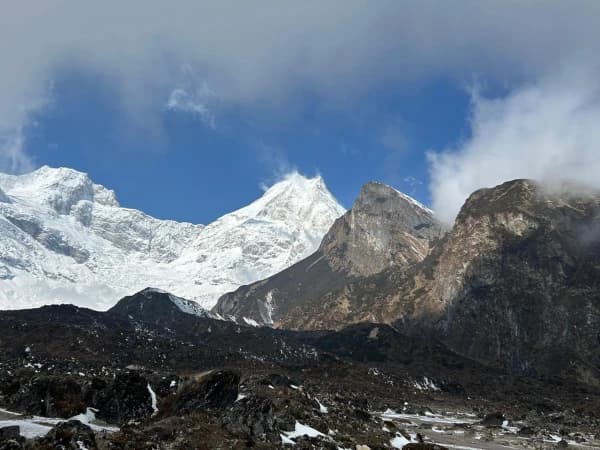 US$1,438
21 DaysMax 20
Manaslu with Nar Phu Valley Trek - 21 Days | Hidden Himalayan Jewel
Starts From
ExploreUS$1,438
Latest Travel Blogs
Christmas and New Year Treks from Pokhara 2026/27: 3 to 5 Days
<p>Short treks from Pokhara for Christmas and New Year 2026/27: Panchase 3 days, Poon Hill 4 days and Mardi Himal 5 days. Weather, snow, what is open, and prices by group size.</p>
Read More
Thamdanda and Surke: The Road Head for Everest Base Camp by Road
Thamdanda is the road head where our Everest Base Camp trek by road starts and ends on foot. How to get there from Phaplu and what the first walk to Paiya is like.
Read MorePoon Hill Trek Permits 2027: ACAP, TIMS, Cost and What You Need
Poon Hill needs two permits: ACAP at NPR 3,000 and a TIMS card at NPR 2,000. Who arranges them, where they are checked, SAARC rates and the 2027 trek prices.
Read More Chat with Shreejan