
Month-specific guide to the Annapurna Circuit in October. Thorong La pass conditions, weather by elevation, crowd levels, and packing for the full 5,000m range.
Govt Regd. No.: 147653/072/073
Travel Agency Licence: 2838/072
Annapurna Circuit in October: Pass Conditions, Weather, and Trail Guide

Update, 7 October 2026: The Besisahar to Chame road is under repair and should be ready in a few days (as at 6 October). The Beni to Jomsom road is closed for repairs, and reopening is expected in mid-October. We check 48 hours before departure; if the road is not open we move your dates free.
Is October the Best Month for the Annapurna Circuit?
It is the most popular month, and for good reason. October combines post-monsoon clarity, comfortable temperatures, and the highest chance of crossing Thorong La pass without weather disruption. If you can only choose one month for the Annapurna Circuit, October is the safest bet.
That said, "best" comes with asterisks. October is also the busiest month on the circuit. Teahouses in Manang fill up, the trail between Thorong Phedi and Muktinath can feel congested, and you may share your sunrise view of Dhaulagiri with fifty other trekkers. Whether that bothers you depends on your priorities.
What Is the Weather Like?
The monsoon typically ends in late September, leaving behind clear skies and cleaned air. October is dry, stable, and warm by Himalayan standards.
Lower elevations (800-2,500m): Daytime temperatures of 20 to 28°C. Warm enough for a T-shirt during walking hours. Evenings are pleasant, around 12 to 18°C. This section (Besisahar to Chame) feels almost tropical in early October.
Mid elevations (2,500-4,000m): Daytime 10 to 18°C, nights dropping to 0 to 5°C. The stretch through Pisang, Manang, and Yak Kharka is crisp and clear. Morning frost is common but melts by 9am.
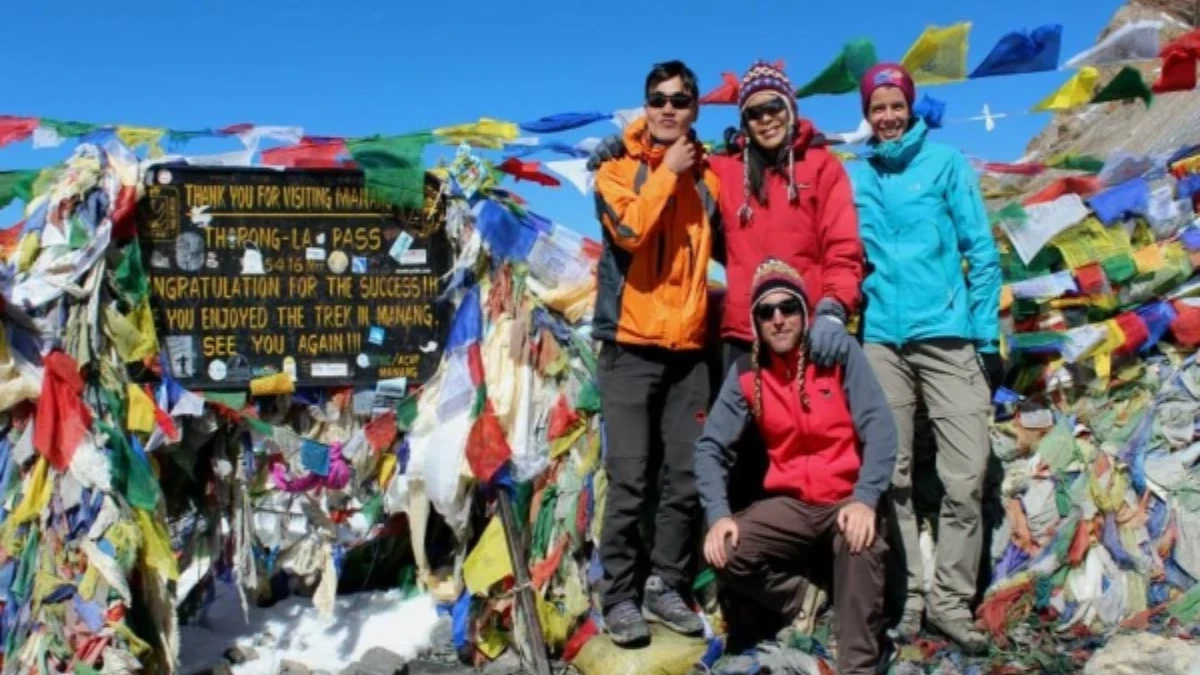
Thorong La Pass (5,416m): Daytime -5 to 5°C, nights -15 to -20°C at Thorong Phedi. The pass itself is exposed and windy: temperatures can feel 10 degrees colder with wind chill. Most groups cross between 5am and 10am before afternoon wind picks up.
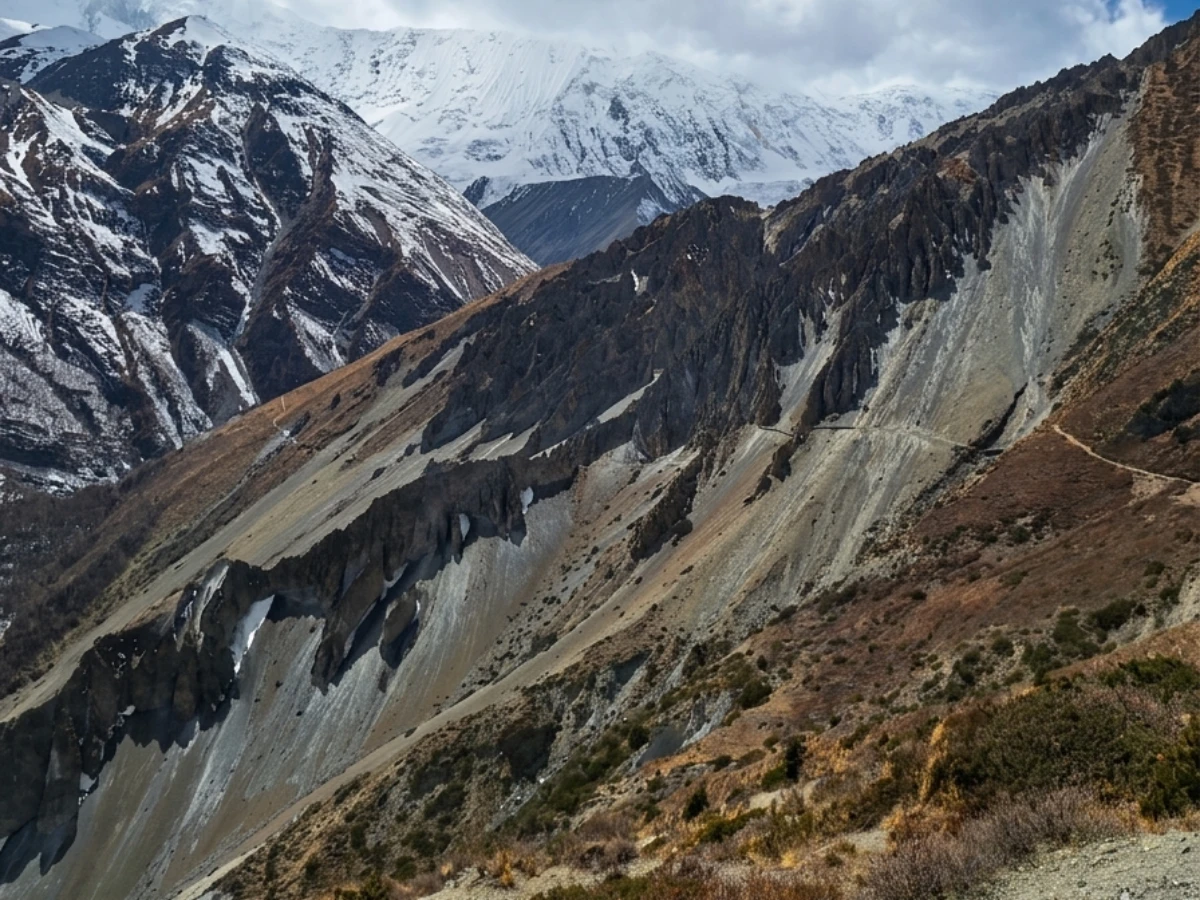
Muktinath side (3,800m): Drier and warmer than the northern approach. The descent from Thorong La into the Kali Gandaki valley is dramatic, you drop from snow and ice into arid, desert-like terrain within a few hours.
How Crowded Is the Trail in October?
Busy, but not overwhelming. The Annapurna Circuit is 160 to 230km depending on your route, so the crowd spreads out more than on the shorter EBC trek. You will see the most people between Manang and Muktinath, this 3-day section is the highlight, and everyone converges here.
The lower section from Besisahar to Chame is quieter because many trekkers now drive the first section. If you walk the full circuit from Besisahar, you will have the trail largely to yourself for the first 4 to 5 days.
Teahouse booking matters in October. Our guides call ahead to reserve rooms, especially in Manang (acclimatisation stop), Thorong Phedi (base of the pass), and Muktinath. Walking in without a booking during peak October week risks sleeping in a dining room, which happens more often than you would think. Related: Annapurna Circuit October 2026: The Last Big Departure Before Snow Closes Thorong La.
What Makes October Special on the Circuit?
Three things that other months cannot match:
1. The Thorong La crossing: October is the most reliable month for the crossing. The pass is snow-free in most years, weather windows are reliable, and conditions are as forgiving as a 5,416m mountain pass gets. The guide still decides on the day, and strong wind or a late snowfall can delay a crossing even in October.
2. The views: Post-monsoon clarity means Annapurna I, Dhaulagiri, Manaslu, and the Nilgiri peaks are consistently visible. The air has been washed clean by four months of rain, and the visibility can stretch 100km or more on the best days.
3. The diversity: The circuit passes through more ecological zones than any other trek in Nepal, subtropical forest, temperate pine, alpine meadow, arid desert, and high mountain. In October, each zone is at its most photogenic. The lower forests are green, the meadows are golden, and the high passes are dusted with early season snow.
What Should You Pack for October?
The circuit covers a 4,600m elevation range, so you need layers for every temperature from 28°C to -20°C. The key is a layering system rather than heavy single pieces.
Essentials: Moisture-wicking base layers, a fleece mid-layer, a down jacket (we provide one free of charge), waterproof outer shell, trekking trousers (zip-off legs are useful for the lower section), warm hat and gloves for above 4,000m, sun hat and sunscreen for the Kali Gandaki valley.
For Thorong La: Thermal base layers, insulated gloves, balaclava or buff for wind protection, and a sleeping bag rated to -15°C. The pre-dawn crossing is the coldest part of the entire trek.
We also provide a sleeping bag and a down jacket free on every tier, and a duffel bag for your main luggage on the Standard and Luxury packages. Your porter carries it, so your daypack only needs water, snacks, camera, and a spare layer.
Full list in our Annapurna Circuit packing guide.
How Long Does the Circuit Take in October?
The classic circuit takes 12 to 21 days depending on your starting point and side trips. Most trekkers complete it in 14 to 17 days. Our standard Annapurna Circuit package is optimised for the best balance of pace, acclimatisation, and highlights.
Key timing considerations for October:
Acclimatisation: You must spend at least one rest day in Manang (3,540m) before attempting Thorong La. Rushing this is the single biggest mistake on the circuit, and it happens more often in October because trekkers see clear weather and want to push ahead.
Thorong La crossing: Most groups leave Thorong Phedi at 4 to 5am. The crossing usually takes 7 to 10 hours, depending on weather, snow and your walking pace. Starting early avoids afternoon wind and gives you the best chance of clear views from the top.
Side trips: October is ideal for side trips to Tilicho Lake (4,919m) and Ice Lake (4,620m) near Manang. Both are frozen or partially frozen, surrounded by stark mountain scenery, and significantly less crowded than the main trail.
How Much Does It Cost?
The Annapurna Circuit is generally cheaper than the EBC trek because permits cost less and teahouse prices are lower in the Annapurna region. Our packages include the guide, porter, meals, accommodation, permits (ACAP and TIMS), and transport to and from the trailhead.
Budget roughly $15 to $20 per day for extras above what the package includes: hot showers, Wi-Fi, snacks, and tips. For a detailed breakdown, read our Nepal trekking cost guide.
October vs Other Months for the Annapurna Circuit
October vs March-April: October is drier and clearer. Spring is warmer at lower elevations with rhododendron blooms. October has slightly better pass conditions. Both are excellent.
October vs November: October is warmer and busier. November is colder and quieter with equally good visibility. Late November risks snow on Thorong La.
October vs December-February: Winter circuits are possible but challenging. Heavy snow can close Thorong La for days, temperatures at the pass drop below -30°C, and many teahouses close. Not recommended for first-time trekkers.
Ready to Trek the Annapurna Circuit in October?
October departures fill early, especially the second and third weeks, which are the most requested. If you are planning for October 2026, message us on WhatsApp to check dates and group availability.
For more about the route itself, read our complete Annapurna Circuit guide covering the full itinerary, daily distances, and what to expect at every stop.
October AC has the clearest Thorong La days. Our Annapurna Circuit Trek (12 Days) is private (your group only, no strangers), 2027 dates open, From USD $720. WhatsApp us for tailored 2027 dates and current departures.
Planning a trip to Nepal?
Drop us your details and tell us what you have in mind. We will put together a personalised plan and get back to you.
Not sure which Nepal trek is right for you?
Take our free 2-minute quiz and get personalised recommendations based on your fitness, experience, and travel style.
Find Your Perfect Trek →Need Help? Call Us+977 9810351300orChat with us on WhatsApp
Latest Travel Blogs
Trekking in Nepal in September 2027: Weather, Best Treks and Departures
Plan a September 2027 trek in Nepal: monsoon-tail weather, why Upper Mustang works, which treks to avoid and our departures on 6, 13, 20 and 27 September.
Read More
Trekking in Nepal in March 2027: Weather, Best Treks and Departures
Plan a March 2027 trek in Nepal: weather figures, the treks that suit the month, crowds, festivals and our departures on 8, 15, 22 and 29 March.
Read More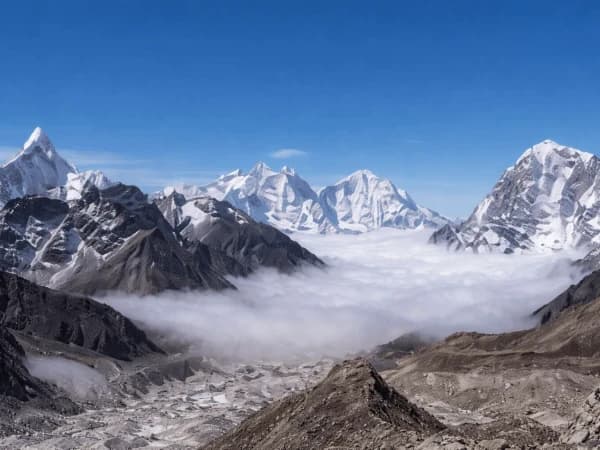
Trekking in Nepal in April 2027: Weather, Best Treks and Departures
Plan an April 2027 trek in Nepal: weather figures, the treks that suit the month, crowds, the Manthali flights and our departures on 5, 12, 19 and 26 April.
Read More Chat with Shreejan