

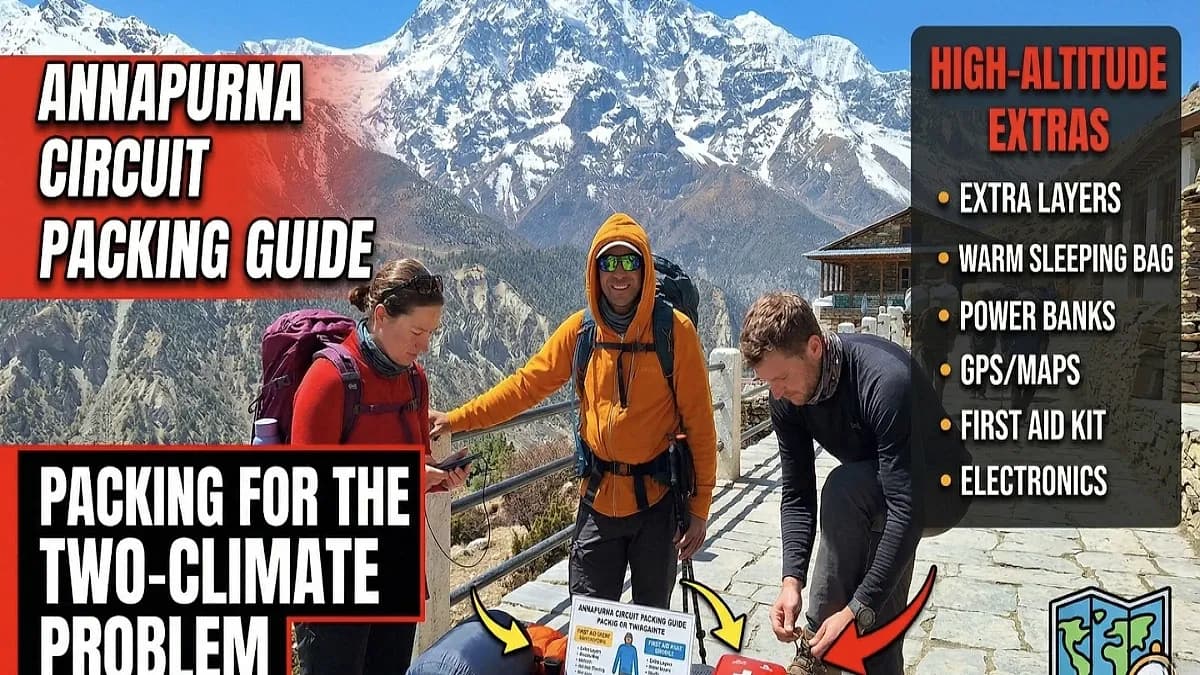
The Annapurna Circuit has a packing problem that no other trek in Nepal shares. You start in subtropical heat: humid, sweaty, thirty degrees in the shade, insects buzzing around your ankles. Twelve days later you are standing on Thorong La Pass at 5,416 metres in minus fifteen, wind shearing across the ridge hard enough to rip the hood off your jacket. Everything you need for both extremes has to fit in a single duffel bag weighing no more than thirteen kilograms.
Most packing lists treat the Circuit like Everest Base Camp with different scenery. They are wrong. The Circuit demands gear for conditions that EBC trekkers never encounter: tropical sun, leeches in wet season, river valley dust, and a temperature swing of forty-five degrees from bottom to top. Here is what actually works, learned from years of watching trekkers get it right and get it painfully wrong.
What is the temperature range on the Annapurna Circuit?
The first three days of the Circuit, whether you walk from Besisahar or drive to Chame, take you through Nepal's middle hills. The air is warm and thick. You sweat through your shirt by mid-morning. Mosquitoes find you at every rest stop. The vegetation is dense subtropical forest, the rivers are wide and brown, and the path often runs alongside or on a gravel road where passing jeeps throw up clouds of dust that coat everything you own.
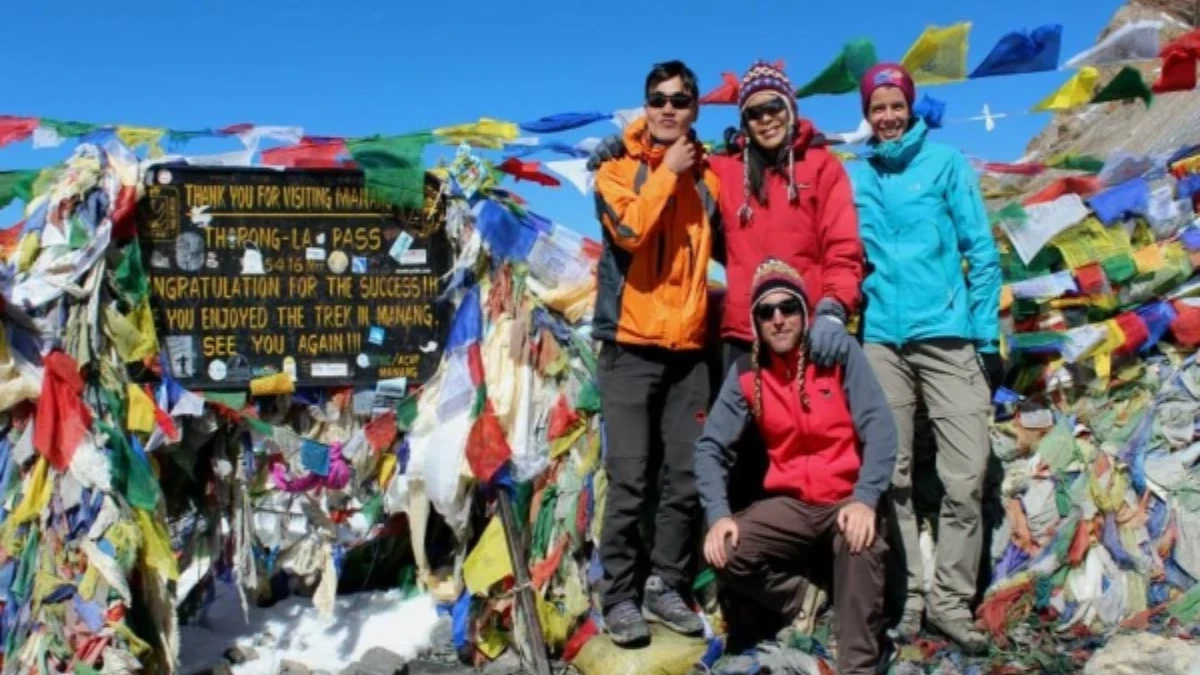
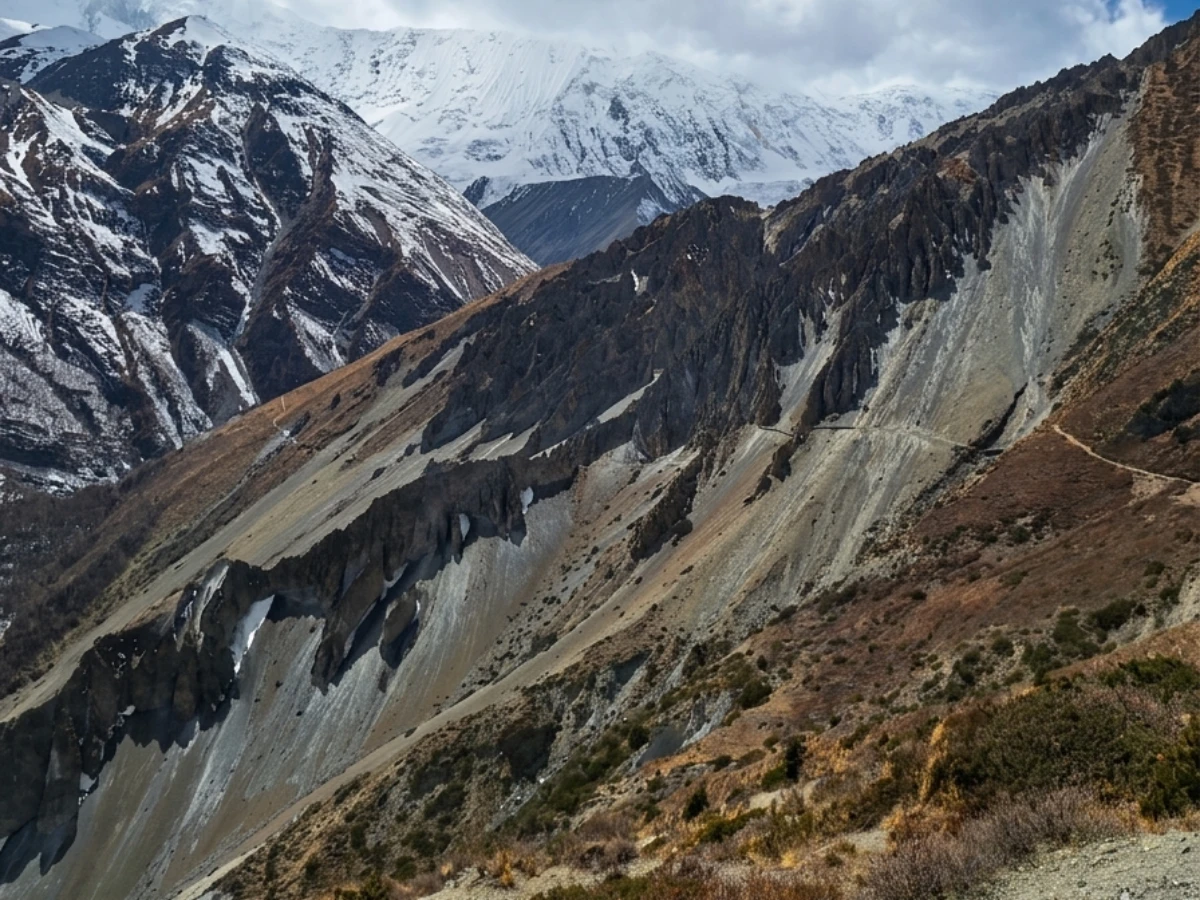
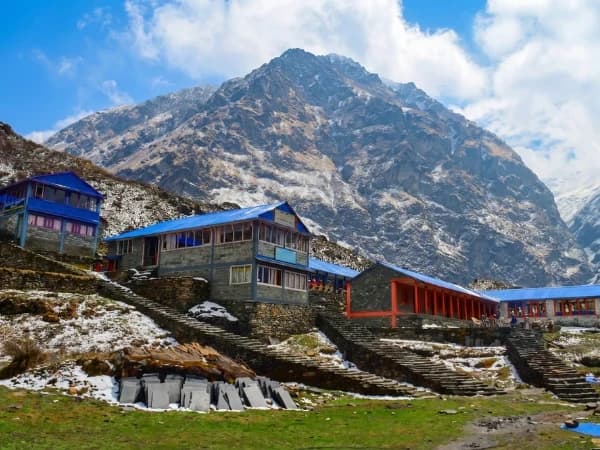
Then the landscape changes. Pine forests replace the jungle. The air sharpens. By Manang at 3,540 metres, the evenings are cold enough for a down jacket. By Thorong Phedi at 4,525 metres, the temperature drops below freezing after dark. And on the pass itself, which you cross in the predawn darkness starting at three or four in the morning, the wind chill can reach minus twenty-five.
You need to pack for both worlds. The trick is that most of your cold-weather gear serves double duty, the fleece jacket that keeps you warm at altitude also works as an evening layer in the lower valleys. The waterproof shell that protects against the Thorong La wind also keeps you dry in the rain that falls below two thousand metres. The skill is choosing items that work across the full range rather than packing separate wardrobes for hot and cold.
What base layers do you need for the Annapurna Circuit?
Three moisture-wicking base layer tops. Not two, three. On the lower sections of the Circuit, you will sweat through a base layer by lunchtime in a way that does not happen on EBC's cooler, drier terrain. Having a dry top to change into at the teahouse makes an outsized difference to comfort.
Merino wool is ideal, it breathes in heat, insulates when wet, and resists odour through days of continuous wear. Synthetic fabrics are the budget alternative and work nearly as well. Cotton is forbidden. This is the single rule that applies to every trek in Nepal without exception. Cotton absorbs moisture, holds it against your skin, and turns you into a shivering, miserable, hypothermia-risk mess the moment the temperature drops.
What warm layers should you pack for the Annapurna Circuit?
One fleece jacket, medium weight, not too bulky, something you can stuff into a daypack side pocket when the afternoon sun hits. One lightweight down jacket, the layer that comes out at Manang and stays on until Muktinath. The down jacket is your survival garment above four thousand metres. It goes on when the sun drops, it stays on through dinner, and you may well sleep in it at Thorong High Camp.
One waterproof and windproof shell with a hood. On the Circuit, this pulls double duty, rain protection in the lower valleys and wind protection on and above the pass. It does not need to be heavy or expensive. It needs to stop water from outside reaching your warm layers inside.
What trousers should you pack for the Annapurna Circuit?
Two or three pairs of trekking trousers with zip-off legs. The zip-off feature was invented for the Annapurna Circuit. Below Chame, you unzip the legs and walk in shorts. Above Manang, you zip them back on and add thermal leggings underneath. One garment, two climates, no wasted space.
One pair of thermal base layer leggings for sleeping and for layering on the pass day. One pair of lightweight waterproof overtrousers for rain days in the lower valleys and snow on Thorong La.
And here is the thing nobody mentions: shorts. Actual shorts. Not zip-offs-converted-to-shorts but a lightweight pair of running or hiking shorts for the first two to three days when the heat is oppressive and your trekking trousers feel like wearing a duvet. EBC trekkers never need shorts. Circuit trekkers who forget them regret it by Dharapani.
What hats and gloves do you need for the Annapurna Circuit?
A warm beanie for everything above Manang and especially for the three-in-the-morning Thorong La start. A sun hat with a brim for the lower valleys where the sun beats down through humid air. Two buffs, they serve as neck warmers, face covers against road dust, sweat bands in the heat, and emergency everything at altitude.
Sunglasses with UV400 protection. Snow blindness on Thorong La is a real and preventable injury. Thin liner gloves for the Manang-to-Muktinath section. Thick insulated gloves or mittens for the pass itself, your hands will be the first thing to go numb in the predawn darkness.
What boots and socks do you need for the Annapurna Circuit?
Waterproof, ankle-high trekking boots broken in before you arrive. This applies to every trek in Nepal and the Annapurna Circuit is no exception. Four to five pairs of wool or merino socks. Camp shoes or sandals for teahouse evenings, your feet will be grateful for the release after eight hours in boots through dust and heat.
And the Circuit-specific item that no EBC packing list mentions: gaiters. On the approach to Thorong La, if there has been recent snowfall, the trail can be knee-deep in fresh powder. Gaiters keep snow out of your boots and your feet dry. They weigh almost nothing and pack flat. If you do not need them, they cost you nothing in space. If you need them and do not have them, your feet pay the price.
What sleeping bag rating do you need for the Annapurna Circuit?
A sleeping bag rated to minus fifteen Celsius. Thorong High Camp at 4,900 metres is brutally cold at night, the walls are thin, the wind finds every gap, and the teahouse blankets are not enough. A silk liner adds warmth and hygiene.
What extra gear is unique to the Annapurna Circuit?
Here is where the Annapurna Circuit packing list diverges meaningfully from Everest Base Camp.
Insect repellent. Below two thousand metres on the Circuit, mosquitoes and sandflies are present and persistent, especially during and after monsoon season. EBC does not have this problem, the altitude is too high for most insects. On the Circuit, a small bottle of DEET-based repellent or a treated buff prevents days of itchy misery.
A dust mask or buff for road sections. Between Besisahar and Chame, jeeps and motorbikes share the trail. In dry season, each vehicle throws up a cloud of fine brown dust that coats your face, your lungs, and your camera lens. A buff pulled up over your nose and mouth is the simple solution.
Leech socks. In early or late season, June, September, sometimes October after rain, leeches are present on the lower sections of the trail below 2,500 metres. They are harmless but deeply unpleasant. Long socks pulled up over your trouser legs and tucked in tightly prevent them from reaching skin. Salt or a lighter flame removes them if they attach, but prevention is vastly preferable to cure.
A head torch with fresh batteries. Every trek needs a head torch, but on the Circuit it is specifically critical for the Thorong La crossing. You start walking at three or four in the morning in complete darkness. The trail is steep, rocky, and exposed. Your head torch is the difference between seeing where your feet land and not seeing where your feet land at five thousand metres in the dark.
Electronics and Documents
Phone, cable, and a twenty-thousand-milliamp-hour power bank, the same as any Nepal trek. Charging above Manang costs two hundred to five hundred rupees per device and outlets are limited. Your power bank is your independence from the teahouse socket queue.
A universal adapter. Your passport, travel insurance documentation, and cash, the same as every Nepal trek. ATMs exist in Chame and Jomsom but are unreliable. Carry enough cash from Kathmandu for the full twelve days.
What should you not pack for the Annapurna Circuit?
Cotton. Jeans. Heavy books. A laptop. Full-size toiletry bottles. The Annapurna Circuit packing list should weigh thirteen kilograms in the duffel and five to seven in the daypack, the same target as EBC but carrying gear for a wider range of conditions. If you are over weight, the first things to remove are the items you packed "just in case." On a twelve-day trek, "just in case" items are almost never needed and always heavy.
How is Annapurna Circuit packing different from Everest Base Camp?
Everest Base Camp is a cold trek from start to finish. You pack for cold and altitude and nothing else. The Annapurna Circuit is a hot trek that becomes a cold trek that becomes an extreme-altitude trek and then finishes in a desert. The range is wider. The demands are more varied. And the reward for packing well, for having the right layer at the right moment across forty-five degrees of temperature variation, is twelve days of comfort through one of the most diverse landscapes any trail on earth has to offer.
For the complete Annapurna Circuit gear list and what we include, see our Annapurna Circuit Trek page. We provide a sleeping bag rated to minus fifteen and a down jacket free on every tier, Budget included, and a duffel bag as well on the Standard and Luxury packages.
The Annapurna Circuit packing list is the same as any Nepal trek packing list with one important addition: wind protection. Thorong La Pass at 5,416 metres is exposed and the wind can be brutal. A good windproof shell jacket and windproof trousers are not optional; they are the difference between crossing the pass and turning back.
We provide a free sleeping bag and down jacket on every tier of our Annapurna Circuit treks, and a duffel bag as well on the Standard and Luxury packages.
WhatsApp:+977 9810351300
Email:[email protected]
Written by Shreejan Simkhada, CEO of The Everest Holiday and third-generation Himalayan guide. TAAN Member #1586.
AC packing list: pair with our 2026 dates. Our Annapurna Circuit Trek (12 Days) is private (your group only, no strangers), 2026 dates open, From USD $720. WhatsApp us for tailored 2026 dates and current departures.

 Chat with Shreejan