
Spring turns the Annapurna Sanctuary trail into a tunnel of rhododendrons. The amphitheatre views are best before 10am. Here is what to expect.
Govt Regd. No.: 147653/072/073
Travel Agency Licence: 2838/072
Annapurna Base Camp Trek in Spring: Rhododendrons and Clear Mornings

Short answer: Spring on the Annapurna Base Camp trek runs from March to May. Late March to mid-April is the best window, when rhododendrons bloom between about 2,500 and 3,500 m and the trail is less crowded than in autumn. Early March can still have snow above 3,000 m, and nights at ABC (4,130 m) stay well below freezing. Walk it on our Annapurna Base Camp trek.
Annapurna Base Camp Trek in Spring: Rhododendrons and Clear Mornings
Somewhere between Ghorepani and Tadapani, in the last week of March, the forest catches fire. Not with flame, but with colour. Rhododendron trees fifteen metres tall bloom in waves of crimson, pink, and white, their flowers so dense they block the sky in places. The trail cuts through tunnels of blossom, petals scattered on the stone steps beneath your boots. Above the treeline, snow still clings to the peaks, and the contrast between the red forest below and the white mountains above is something a camera cannot quite capture, though every trekker tries.
Spring at Annapurna Base Camp is one of Nepal's best-kept secrets. Most international trekkers default to autumn, leaving the March-to-May window less crowded, more colourful, and, in many ways, more rewarding. This is the case for going in spring.
Spring Season in the Annapurna Region: When Exactly?
Spring trekking season in Nepal runs from early March to late May, but not all of those weeks are equal. Here is how the season breaks down for the ABC trek specifically.
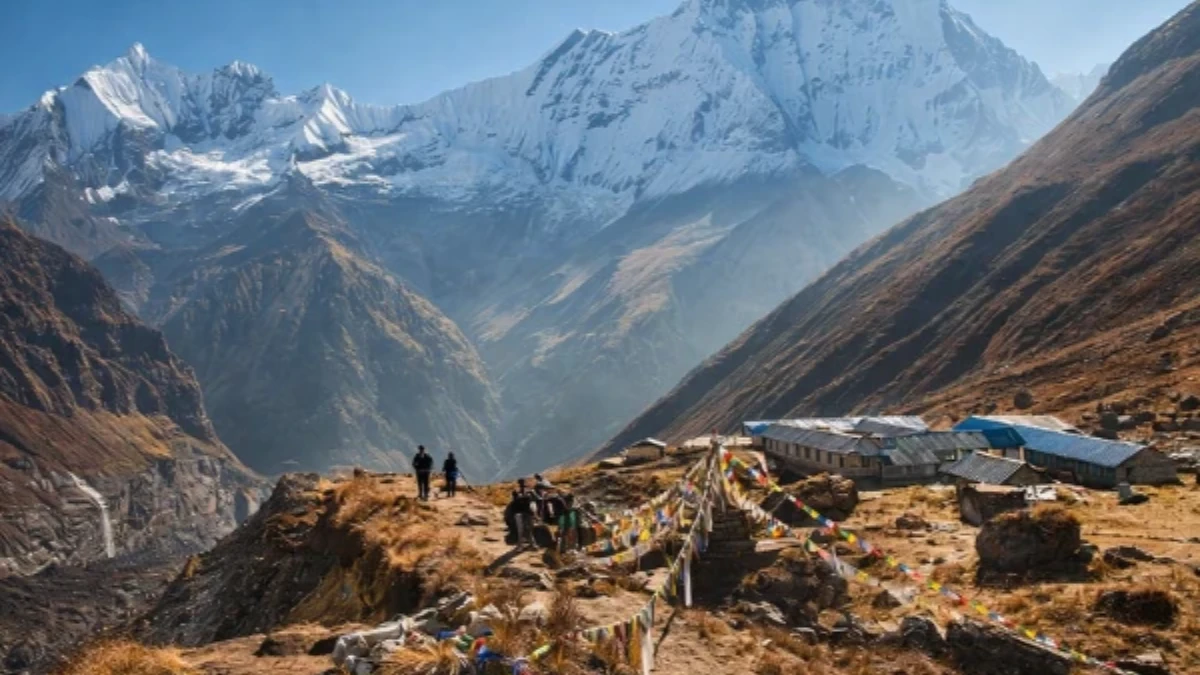
Early March (1st to 15th): Transitional. Lower elevations are warming up, but above 3,000 metres the trail can still have winter snow. Rhododendrons have not yet bloomed at higher altitudes. Nights at MBC and ABC remain cold (minus eight to minus twelve). This period suits trekkers who want quiet trails and do not mind colder conditions.
Late March to mid-April: The sweet spot. Rhododendrons peak between 2,500 and 3,500 metres. Temperatures at ABC are manageable (minus five to plus three overnight). Skies are generally clear in the morning, with clouds building in the afternoon. This is the window I recommend for most spring trekkers.
Late April to May: Warmer at lower elevations, sometimes uncomfortably so below 2,000 metres. Haze increases as pre-monsoon moisture builds. Mountain views can be obscured by afternoon cloud earlier each day. The rhododendrons at lower altitudes are finished, though late bloomers at higher altitudes may still be showing colour. May is the least reliable month for views.
When do rhododendrons bloom on the Annapurna Base Camp trek?
Nepal has over thirty species of rhododendron, and the ABC trail passes through some of the densest concentrations in the country. The blooms are altitude-dependent, which means the display moves uphill as spring progresses.
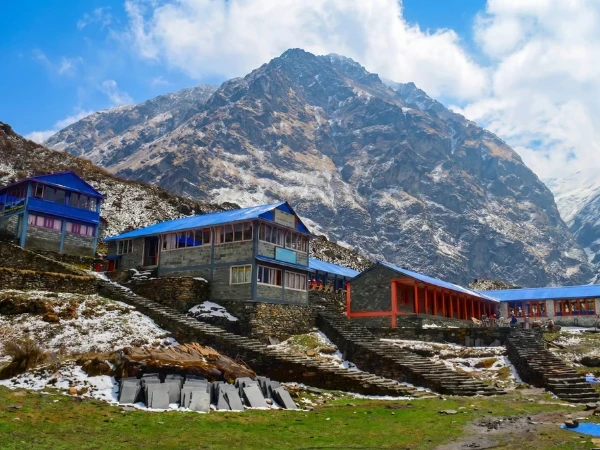
- 1,500 to 2,000 metres (Nayapul to Ghandruk area): Red and pink rhododendrons bloom first, typically by mid-March. The trees here are large, some over a hundred years old, with trunks as thick as your waist.
- 2,000 to 2,800 metres (Ghandruk to Chhomrong): Peak bloom from late March to early April. This is where the displays are most spectacular, with multiple species overlapping in colour. The trail between Ghandruk and Tadapani is particularly dense with blooms.
- 2,800 to 3,500 metres (Chhomrong to Deurali): Bloom arrives in mid-April. The trees are smaller and more gnarled at these altitudes, with pink and white species dominating. By this elevation, you are walking through cloud forest with moss-draped branches and rhododendrons growing as epiphytes on other trees.
- Above 3,500 metres: The treeline ends, and rhododendrons give way to scrub and alpine meadow. No blooms up here, but the wildflowers in the open ground above Deurali begin showing in late April.
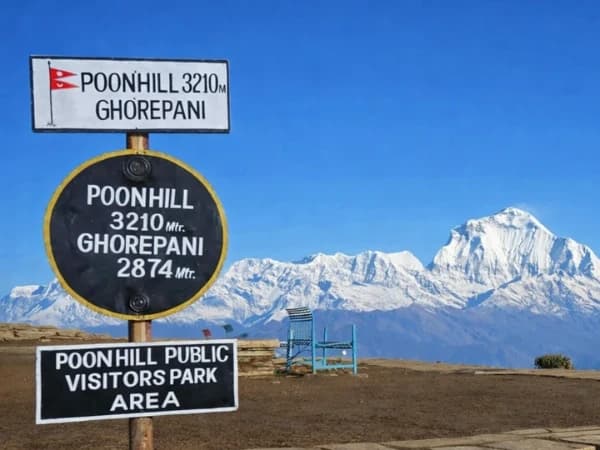
If rhododendrons are your primary motivation, aim for the last week of March or first week of April, and build your itinerary to spend time in the 2,000 to 3,000 metre zone. The section between Ghorepani and Tadapani (accessible as a side trip from the main ABC route) is the single best rhododendron trail in the Annapurna region. The nearby Poon Hill Trek passes through this same forest and is worth considering if flowers matter more to you than reaching base camp.
How cold is the Annapurna Base Camp trek in spring?
| Location | Altitude | March Daytime | March Night | April Daytime | April Night |
|---|---|---|---|---|---|
| Nayapul | 1,070m | 22-28°C | 10-14°C | 26-32°C | 14-18°C |
| Ghandruk | 1,940m | 16-22°C | 5-10°C | 18-24°C | 8-12°C |
| Chhomrong | 2,170m | 14-20°C | 3-8°C | 16-22°C | 5-10°C |
| Bamboo | 2,310m | 12-18°C | 2-6°C | 14-20°C | 4-8°C |
| Deurali | 3,174m | 6-12°C | -4 to 0°C | 8-14°C | -2 to 2°C |
| MBC | 3,700m | 2-8°C | -8 to -3°C | 4-10°C | -5 to 0°C |
| ABC | 4,130m | 0-6°C | -12 to -5°C | 2-8°C | -8 to -3°C |
The key difference between spring and autumn at the same altitudes is that spring mornings tend to be clearer and spring afternoons tend to be cloudier. The thermal patterns shift as the pre-monsoon moisture builds. This means early starts matter even more in spring than in autumn. By 11am, cloud often begins creeping into the valleys. By 2pm, the peaks may be partially or fully obscured. Sunrise and the first few hours after are your golden window for views.
Does it rain on the Annapurna Base Camp trek in spring?
This is where spring differs most from autumn, and it is the part most guides gloss over. In autumn, rain is rare after the monsoon ends. In spring, rain is possible, particularly in April and May.
Here is the reality. March sees very little rain in the Annapurna region. Perhaps one or two light showers across the entire month, usually in the afternoon. April brings slightly more moisture. You might experience an afternoon rain shower every three to four days, lasting an hour or two. These are not monsoon downpours. They are light to moderate showers that pass quickly. May is wetter, with rain becoming more frequent and heavier as the monsoon approaches.
What does this mean practically? Pack a good rain jacket and a waterproof cover for your backpack, even in March. Accept that you might get an afternoon shower. But do not let the possibility of spring rain deter you. The mornings are almost always clear, and the rain, when it comes, is brief and manageable.
One important note: rain at lower elevations often falls as snow above 3,500 metres. An April afternoon shower in Bamboo might mean a light dusting of snow at MBC. This rarely accumulates enough to block the trail, but it can make the final approach to ABC slippery. Trekking poles help. So does starting early.
Is spring a good time to trek Annapurna Base Camp?
When travellers ask me about the Annapurna Base Camp trek, they almost always ask about October. And October is wonderful. But spring has several advantages that deserve more attention.
Fewer Trekkers on the Trail
Spring receives roughly 60 to 70 percent of autumn's trekker numbers on the ABC route. The trail is noticeably quieter, teahouse availability is better, and the overall pace feels more relaxed. If you found the idea of busy EBC trails off-putting, spring ABC is the antidote.
The Flowers
Autumn has golden light and post-monsoon clarity. Spring has flowers. Not just rhododendrons, though those dominate, but also orchids, magnolias, primulas, and dozens of wildflower species that carpet the alpine meadows above the treeline. The biodiversity on the ABC trail in spring is remarkable. Birdwatchers will spot species that migrate to higher altitudes as temperatures rise.
Longer Days
In March and April, you get roughly an extra hour of daylight compared to November. This means more time on the trail, later sunsets, and more flexibility with your daily schedule. It also means warmer evenings in the teahouse dining rooms, since the sun heats the buildings longer.
Warmer Low-Altitude Sections
The walk from Nayapul to Chhomrong is genuinely warm in spring. You can trek in shorts and a t-shirt for the first two days, which is a welcome change from the layering-up that autumn requires from day one.
Spring ABC: Who It Suits Best
Spring ABC is an excellent choice for first-time trekkers who want a slightly warmer and less crowded experience. It is also ideal for anyone interested in botany, photography of flowers and landscapes, or birdwatching. The trail is at its most alive in spring, in the literal, biological sense.
If you are a photographer, spring mornings offer the best conditions: clear skies, fresh snow on the peaks, and the rhododendron forest providing foreground colour that is simply not available in autumn. The contrast between red blooms and white mountains is a shot that sells cameras.
If you are trekking with someone who is nervous about cold, spring is more forgiving. The temperatures at ABC are still cold overnight, but the lower-altitude sections are considerably warmer than in autumn, and the whole thing feels less wintry.
What treks can I combine with Annapurna Base Camp in spring?
If you have more than ten days in Nepal, spring is an excellent season to combine ABC with another trek in the region.
The Mardi Himal Trek starts from the same area and takes five to seven days. You could do ABC first, return to Pokhara for a rest day, then head out on Mardi Himal for a completely different perspective on the same mountain range. Mardi Himal's ridge walk offers views down into the Annapurna Sanctuary from above, which is a fascinating complement to standing inside it at ABC.
For a more ambitious combination, the Annapurna Circuit in spring is spectacular, though Thorong La Pass (5,416m) may still have significant snow in March. April is the safer bet for the Circuit.
Alternatively, consider pairing ABC with the Langtang Trek near Kathmandu. Different mountain range, different culture (Tamang rather than Gurung), and a completely different landscape. Spring in Langtang brings its own rhododendron displays and, in late March, the yak cheese factories reopen for the season.
What should I pack for Annapurna Base Camp in spring?
Your packing list for spring ABC is similar to autumn with a few adjustments.
- Rain gear is more important. A proper waterproof jacket (not just water-resistant) and a pack cover. In autumn you might not use them. In spring, particularly April, you probably will.
- Lighter base layers for low altitude. The walk to Chhomrong can be hot in April. Bring a moisture-wicking t-shirt and convertible trousers.
- Insect repellent. Leeches are not active until the monsoon, but mosquitoes and other insects are more present in spring than in autumn at lower elevations.
- Same sleeping bag as autumn. Nights at MBC and ABC are cold regardless of season. A bag rated to minus ten is still the minimum.
- Sun protection remains critical. Spring sun at altitude is fierce. SPF 50, quality sunglasses, hat with a brim.
Do I need a guide or permit for Annapurna Base Camp?
All permit requirements are identical across seasons. You need ACAP and TIMS, both arranged in Kathmandu or Pokhara. The mandatory guide regulation applies in spring as it does year-round. Costs do not vary seasonally for permits.
Guide and porter costs may be slightly lower in spring than peak autumn, as demand is reduced. However, the difference is marginal. Expect USD 25 to 35 per day for a guide and USD 20 to 28 per day for a porter. Our ABC trek package includes guide, porter, permits, accommodation, and meals, so you do not need to negotiate separately.
For context on what guides and porters do and why their work matters, read our piece on porter welfare in Nepal.
Is the Annapurna Base Camp trek safe in spring?
Spring has one safety consideration that autumn does not: avalanche risk. The warming temperatures in March and April can trigger snow releases on steep slopes, particularly above Deurali and on the approach to MBC. The ABC trail passes through a known avalanche zone between Deurali and MBC, and there have been fatal incidents in the past.
This is not a reason to avoid spring ABC. It is a reason to trek with an experienced guide who knows the danger zones, monitors conditions, and makes informed decisions about when to move and when to wait. Our guides are trained in avalanche awareness and carry communication equipment to receive weather updates. If conditions are unsafe, they will adjust the itinerary. Your safety is always the priority.
Frequently Asked Questions
When do the rhododendrons bloom on the ABC trail?
The peak bloom varies by altitude. At 1,500 to 2,000 metres, expect blooms from mid-March. At 2,000 to 3,000 metres, late March to mid-April. At 3,000 to 3,500 metres, mid to late April. For the best overall display, plan your trek for the last week of March or first week of April.
Is spring or autumn better for the ABC trek?
Both are excellent. Autumn offers more reliable clear skies and post-monsoon mountain views. Spring offers rhododendron blooms, fewer trekkers, and warmer lower-altitude walking. If clear mountain views are your top priority, choose October. If flowers, quiet trails, and a more varied landscape appeal to you, choose spring.
Will I see snow on the trail in spring?
In March, there may be residual winter snow above 3,500 metres, particularly in shaded areas. By April, the trail to ABC is usually clear, though fresh overnight snowfall is possible at MBC and ABC. This is typically light and melts by midmorning. It rarely blocks the trail or causes serious delays.
Is the ABC trek safe for older trekkers in spring?
Yes. We regularly guide trekkers in their sixties and seventies on the ABC route. Spring's warmer daytime temperatures and moderate altitude make it one of the more accessible high-altitude treks. For more on trekking at an older age, see our guide to trekking in Nepal over 60.
Can I extend the trek to include Poon Hill?
Absolutely. A Poon Hill detour adds two to three days and takes you through the best rhododendron forest in the region. The sunrise from Poon Hill over the Annapurna and Dhaulagiri ranges is a highlight in its own right. Many spring trekkers combine ABC with the Poon Hill loop for a twelve to fourteen-day itinerary that covers the best of the Annapurna region.
Do I need acclimatisation days on the ABC trek in spring?
Most itineraries build in gradual altitude gain rather than dedicated rest days. The progression from Nayapul (1,070m) to ABC (4,130m) over seven to nine days provides natural acclimatisation. However, if you feel symptoms above 3,000 metres, an extra night at Deurali or MBC is a sensible precaution. Read our full acclimatisation guide before your trek.
A Spring Morning at Annapurna Base Camp
I leaves you with this. It is 5:45am in early April. You are standing outside the teahouse at ABC in a down jacket and woolly hat, your fingers wrapped around a metal cup of hot tea. The sky is still dark to the west, but to the east, behind Machhapuchhre, a band of orange is spreading. The peaks are black silhouettes. Then the first light touches Annapurna I, and the summit turns gold. Within minutes, the entire amphitheatre is lit. Below you, in the valley you climbed through yesterday, the rhododendron forest is a dark red carpet stretching down towards Chhomrong. Snow crystals on the ground around your feet catch the new light and sparkle.
Nobody is talking. Nobody needs to.
If that sounds like something worth walking towards, get in touch.
WhatsApp:+977 9810351300
Email:[email protected]
Written by Shreejan Simkhada, CEO of The Everest Holiday and third-generation Himalayan guide. Licensed by TAAN (Trekking Agencies' Association of Nepal) #1586. Leading treks across Nepal since 2016.
Spring ABC (Mar-May) is rhododendron season. Our Annapurna Base Camp Trek (9 Days) is private (your group only, no strangers), 2027 dates open, From USD $725. WhatsApp us for tailored 2027 dates and current departures.
Planning a trip to Nepal?
Drop us your details and tell us what you have in mind. We will put together a personalised plan and get back to you.
Not sure which Nepal trek is right for you?
Take our free 2-minute quiz and get personalised recommendations based on your fitness, experience, and travel style.
Find Your Perfect Trek →Need Help? Call Us+977 9810351300orChat with us on WhatsApp
Related Trek Packages
 US$1,020
9 DaysMax 20
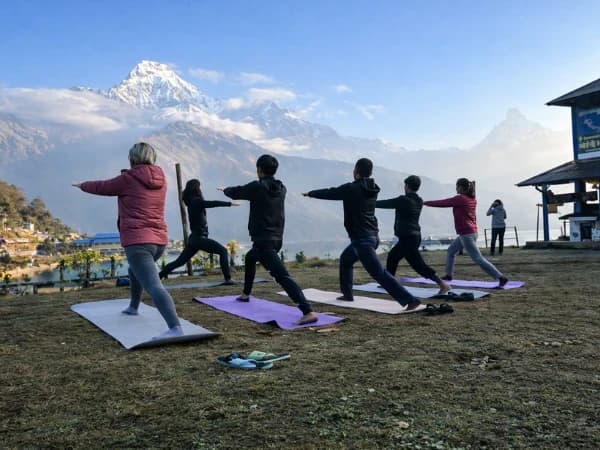
Ghorepani Poon Hill Yoga Trek - 9 Days Itinerary and Costs
Starts From
ExploreUS$1,020
Latest Travel Blogs
Christmas and New Year Treks from Pokhara 2026/27: 3 to 5 Days
<p>Short treks from Pokhara for Christmas and New Year 2026/27: Panchase 3 days, Poon Hill 4 days and Mardi Himal 5 days. Weather, snow, what is open, and prices by group size.</p>
Read More
Thamdanda and Surke: The Road Head for Everest Base Camp by Road
Thamdanda is the road head where our Everest Base Camp trek by road starts and ends on foot. How to get there from Phaplu and what the first walk to Paiya is like.
Read MorePoon Hill Trek Permits 2027: ACAP, TIMS, Cost and What You Need
Poon Hill needs two permits: ACAP at NPR 3,000 and a TIMS card at NPR 2,000. Who arranges them, where they are checked, SAARC rates and the 2027 trek prices.
Read More Chat with Shreejan